
Criminalizing Dissent: Redefining Protest as Terrorism
Examining how states leverage anti-terrorism statutes against activists.
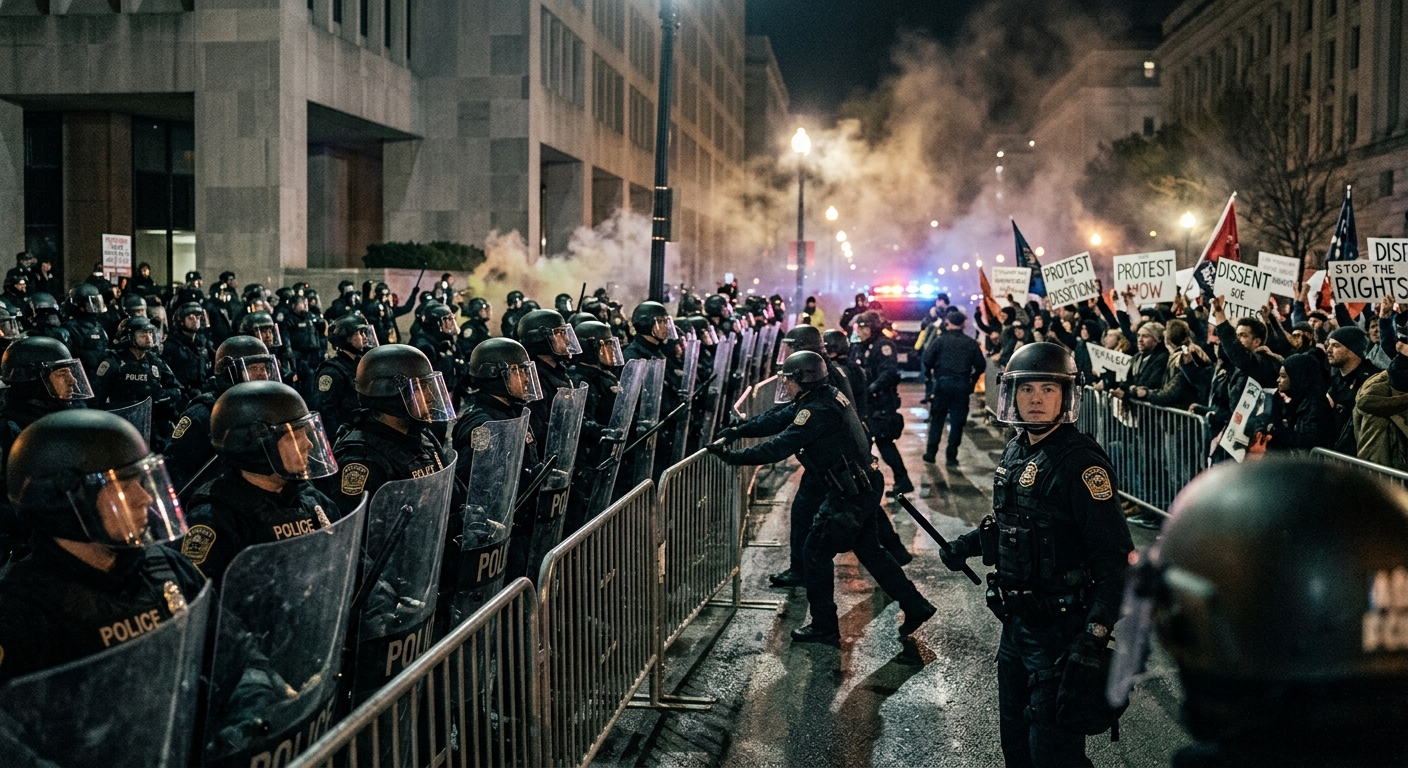
Introduction: The Escalating Stakes of Civil Disobedience
For decades, civil disobedience has served as a cornerstone of American democracy, functioning as a vital mechanism for marginalized voices to demand systemic change. From the sit-ins of the Civil Rights Era to contemporary environmental encampments, public disruption has long been a recognized, albeit contentious, tool for social progress. However, in recent years, a profound shift has occurred in how state authorities prosecute public demonstrations. What was once handled as localized civil disobedience—resulting in misdemeanor charges such as trespassing, disorderly conduct, or minor property damage—is increasingly being funneled through the severe and stigmatizing lens of domestic terrorism.
This paradigm shift is not a mere accident of prosecutorial zeal; it is the result of deliberate legislative expansions. By lowering the threshold of what constitutes a terroristic act, state governments are equipping themselves with a formidable legal arsenal designed to crush highly organized protest movements. Critics argue that by conflating vandalism or civil disruption with terrorism, the state undermines foundational First Amendment rights, creating a hostile environment where citizens fear participating in lawful assemblies. The escalating stakes underscore a critical friction point in modern jurisprudence: the precarious balance between maintaining public order and preserving the constitutional right to dissent.
The Anatomy of Broad Anti-Terrorism Statutes
Legal Ambiguity and Prosecutorial Discretion
To understand how environmental defenders and social justice advocates find themselves labeled as terrorists, one must examine the specific mechanics of newly amended state statutes. Historically, federal and state definitions of terrorism hinged on acts that resulted in or intended to cause mass casualties or catastrophic destruction. For instance, traditional guidelines established by federal law enforcement strictly outline domestic terrorism as violent, criminal acts committed by individuals to further ideological goals, usually involving extreme danger to human life and safety.
However, recent state-level legislative overhauls have introduced significant legal ambiguity, divorcing the concept of terrorism from severe bodily harm. By injecting broad phrasing such as “intent to intimidate or coerce a civilian population” or “intent to alter government policy,” lawmakers have granted prosecutors immense discretionary power. Consequently, an individual chained to a bulldozer or participating in a march where a window is shattered can technically meet the statutory criteria for domestic terrorism, simply because their underlying motive is political and directed at a government entity.
The Shift from Vandalism to Terrorism Charges
The implications of this legal elasticity are profound and heavily tilt the scales of justice. Traditional criminal justice frameworks already possess robust tools for penalizing property destruction. Arson, vandalism, and trespassing carry specific, proportionate penalties. When a terrorism enhancement is applied, a standard property crime is elevated into a severe felony, often accompanied by draconian prison sentences ranging from two to three decades.
This strategy of “overcharging” functions as a powerful deterrent. Beyond the threat of a lengthy prison sentence, domestic terrorism charges drastically impact the immediate pretrial phase. Accused individuals frequently face insurmountable bail amounts or are denied bail outright under the presumption that they are threats to national security. This drains resources from civil rights organizations and legal defense funds, signaling to broader social movements that the state will leverage its most extreme punitive measures against any form of direct action.
Historical Precedents: State Responses to Social Movements
The instinct of state authorities to deploy heavy-handed legal tactics against disruptive social movements is not a novel phenomenon. During the 1960s, intelligence agencies and local police departments frequently utilized expansive surveillance and conspiracy charges to dismantle civil rights and anti-war organizations. The rhetoric of “protecting national security” was routinely invoked to justify the aggressive suppression of various grassroots activist networks.
Similarly, during the late 1990s and early 2000s, the so-called “Green Scare” saw environmental and animal rights activists targeted under federal laws meant to protect animal enterprises. Lawmakers argued that economic disruption of specific industries equated to terroristic activity, prompting severe pushback from civil liberties groups who pointed out that these laws prioritized corporate profits over free speech. Today’s legislative climate mirrors these historical precedents, but with enhanced statutory backing at the local and state levels. By codifying broad definitions of terrorism into state criminal codes, modern governments are formalizing a playbook that has historically been used to stifle progressive political movements.
Constitutional Crossroads: First Amendment Protections vs. Public Order
The “Chilling Effect” on Protected Speech
The core danger of misapplying terrorism statutes lies in their inevitable infringement upon First Amendment protections. The United States Constitution vigorously safeguards the right to assemble peacefully and petition the government for a redress of grievances. When the state blurs the line between a passionate, albeit disruptive, protest and a coordinated terroristic attack, it triggers a profound “chilling effect” across civil society.
Citizens who might otherwise attend a permitted rally or engage in peaceful civil disobedience may opt out entirely, terrified that the actions of a few rogue individuals could result in mass arrests and collective terrorism charges. The United States legal tradition has long held that guilt by association is antithetical to constitutional justice; an individual cannot be held criminally liable for the actions of a group merely by being present. Yet, the sweeping application of domestic terrorism laws against diffuse, decentralized activist networks challenges this bedrock constitutional principle.
International Human Rights Concerns
The weaponization of counter-terrorism laws against activists has not gone unnoticed by the international community. Bodies such as the United Nations have issued statements cautioning governments against utilizing national security frameworks to silence environmental defenders and political dissenters. International human rights law dictates that counter-terrorism measures must be strictly proportionate and tightly defined. When states utilize these laws to punish individuals protesting municipal infrastructure projects or corporate expansions, they risk violating international norms regarding freedom of expression and peaceful assembly, lending a veneer of legitimacy to authoritarian-leaning policing tactics.
A Case Study in Legislative Reach: The Georgia Context
Analyzing the Statute’s Mechanisms
Perhaps the most glaring modern example of this legal trend is found in the state of Georgia. Prior to 2017, Georgia’s statutory code defined domestic terrorism as an act intended to kill or injure at least ten individuals, aligning closely with the traditional understanding of catastrophic mass violence. However, the state legislature dramatically amended the code in subsequent years.
The revised statute eliminated the mass casualty threshold. Instead, it expanded the definition to include crimes intended to “disable or destroy critical infrastructure” or acts meant to “alter, change, or coerce the policy of the government.” Because the definition of “critical infrastructure” is exceedingly broad, and the foundational goal of almost all protests is to alter government policy, the statute created a perfect storm for prosecuting demonstrators. When activists later mobilized to protest the construction of a sprawling law enforcement training center, prosecutors utilized this exact statute to charge dozens of individuals with domestic terrorism—many of whom were accused of acts typically classified as mere trespassing or minor property damage.
Comparison of Offenses
To illustrate the severity of this shift, consider the following breakdown of how traditional charges compare to domestic terrorism enhancements under broad state laws:
| Action / Offense | Traditional Charge | Traditional Penalty (Approximate) | Terrorism Enhancement Penalty |
|---|---|---|---|
| Occupying private or restricted land | Criminal Trespass (Misdemeanor) | Up to 1 year in jail | 5 to 35 years in prison |
| Damaging construction equipment | Vandalism / Property Damage | 1 to 5 years (depending on monetary value) | Up to 35 years in prison |
| Refusing to leave a protest site | Disorderly Conduct | Fines, probation, or minor jail time | Lengthy felony sentences if labeled part of a terror network |
The Nationwide Ripple Effect: Are Other States Following Suit?
The legal experimentation occurring in states like Georgia is serving as a blueprint for other jurisdictions across the United States. Following widespread demonstrations against fossil fuel pipelines and the racial justice uprisings of recent years, numerous state legislatures introduced bills explicitly designed to heighten penalties for protests occurring near critical infrastructure.
States in the Midwest, South, and West have aggressively pushed legislation that mirrors these broad legal mechanisms. By framing pipeline construction sites, government administrative buildings, and local law enforcement facilities as critical infrastructure, states can legally escalate a sit-in into a terror-related felony. This coordinated national legislative push indicates a systemic effort to insulate corporate and state interests from robust public accountability by radically redefining the legal parameters of dissent.
Frequently Asked Questions (FAQs)
- What is the traditional definition of domestic terrorism?
Traditionally, both federal and state laws defined domestic terrorism as violent, criminal acts intended to cause mass casualties, severe bodily harm, or catastrophic destruction, primarily motivated by ideological, political, or religious goals. It historically required a very high threshold of violence directed against human life. - How does the First Amendment protect protesters?
The First Amendment protects the rights to free speech, peaceful assembly, and the ability to petition the government for redress. While it does not protect physical violence or the destruction of property, it strictly prohibits the government from punishing individuals for their political views or from holding peaceful attendees broadly liable for the illegal actions of others at a demonstration. - Why are standard property crimes now being charged as terrorism?
Recent legislative amendments to state laws have expanded the definition of domestic terrorism to include acts that target “critical infrastructure” or attempt to “coerce government policy.” Consequently, if a person commits a standard property crime, like vandalism, during a political protest, prosecutors can argue the overarching intent was to coerce the government, thereby triggering the severe terrorism statute. - What is the “chilling effect” in legal terms?
A chilling effect occurs when vague, broad, or overly punitive laws cause individuals to self-censor or refrain from exercising their constitutional rights out of fear of severe legal retaliation. In the context of public protests, the threat of an expansive terrorism sentence can deter perfectly lawful civil participation.
Safeguarding Democratic Expression in the 21st Century
The classification of environmental activists and civil rights organizers as domestic terrorists represents a dangerous escalation in the policing of public dissent. While the state undoubtedly possesses a legitimate interest in maintaining public order and preventing physical violence, the sweeping application of anti-terrorism statutes to encompass minor property crimes and civil disobedience fundamentally threatens the democratic process.
If the legal definition of terrorism continues to expand to include standard protest activities, the vital feedback loop between the government and its citizens will be severely compromised. Pushing back against these charges relies heavily on community organizers, independent journalism, and well-funded legal defense networks dedicated to civil liberties. History has proven time and again that today’s criminalized dissent often becomes tomorrow’s celebrated civil rights victory. Lawmakers, judges, and civil society must rigorously interrogate and challenge these overbroad statutes to ensure that the right to demand systemic change is protected, rather than persecuted.
References
- Georgia Code Title 16, Chapter 11, Article 6 (2024) — Justia Law. 2024-03-28. https://law.justia.com/codes/georgia/2024/title-16/chapter-11/article-6/
- Domestic Terrorism: Definitions, Terminology, and Methodology — Federal Bureau of Investigation (FBI). 2020-11-01. https://www.fbi.gov/file-repository/fbi-dhs-domestic-terrorism-definitions-terminology-methodology.pdf/view
- Mandates of the Special Rapporteur on the promotion and protection of human rights and fundamental freedoms while countering terrorism — Office of the United Nations High Commissioner for Human Rights (OHCHR). 2023-10-24. https://spcommreports.ohchr.org/TMResultsBase/DownLoadPublicCommunicationFile?gId=28489
- Responding to Domestic Terrorism: A Crisis of Legitimacy — Harvard Law Review. 2023-05-09. https://harvardlawreview.org/forum/vol-136/responding-to-domestic-terrorism-a-crisis-of-legitimacy/
Similar Articles








Read full bio of medha deb


