
Understanding Criminal Interference With Fair Housing Rights
How federal law protects residents from violence, threats, and intimidation that target their right to fair and equal housing opportunities.
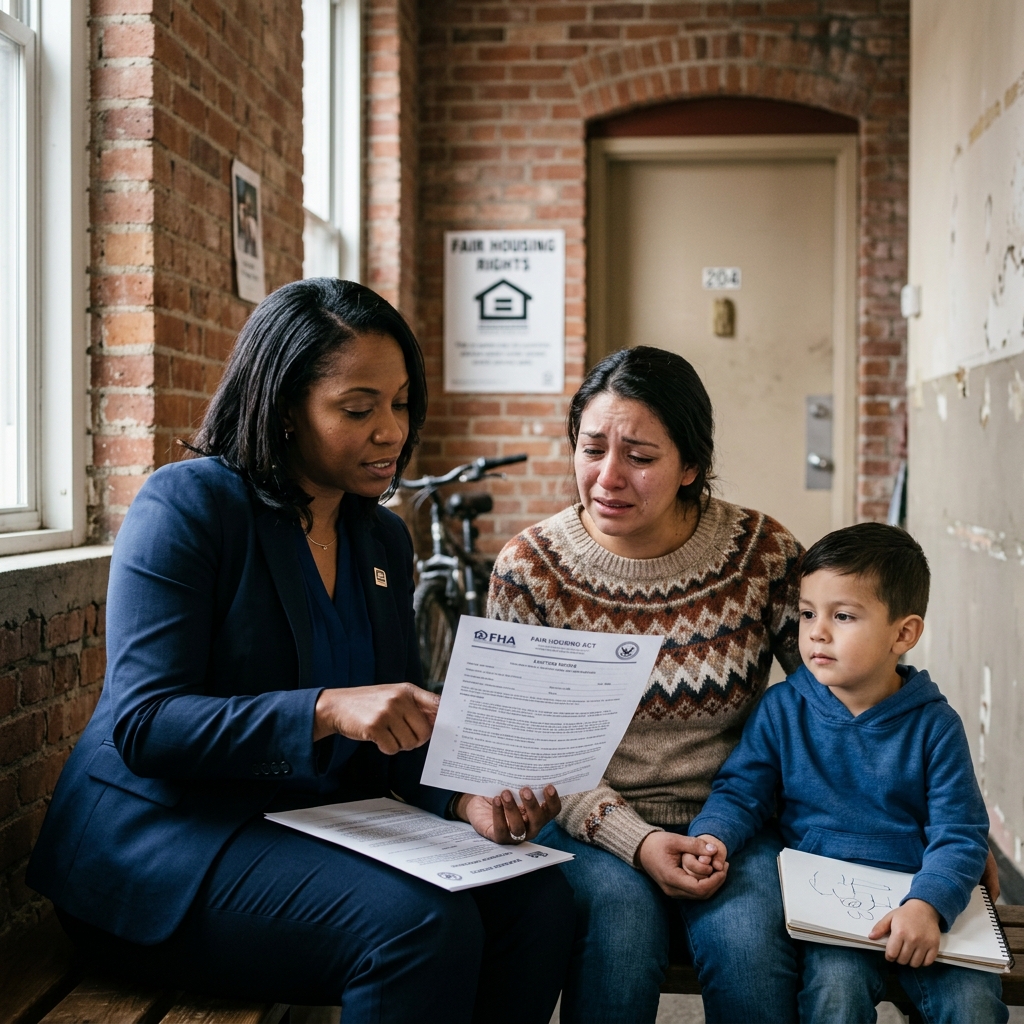
Fair and equal access to housing is a core civil right in the United States. Federal law not only prohibits discrimination in housing, it also criminalizes the use of force, threats, and violent intimidation aimed at preventing people from exercising their fair housing rights. When bias-motivated conduct crosses the line into violence or threats of violence, the U.S. Department of Justice (DOJ) can pursue criminal prosecutions that may result in prison sentences and fines.
Fair Housing Rights: The Civil Rights Foundation
The Fair Housing Act, codified at 42 U.S.C. 3601–3619, is the primary federal law that protects people against discrimination in the sale, rental, and financing of housing. It applies to landlords, property managers, real estate companies, lenders, municipalities, insurance providers, and other entities involved in housing markets.
Under the Fair Housing Act, it is unlawful to discriminate in housing because of:
- Race or color
- Religion
- Sex (including certain protections against sexual harassment)
- National origin
- Familial status (for example, families with children under 18)
- Disability
These are often referred to as protected characteristics. The Act bars both overt discriminatory actions—like refusing to rent to someone because of their race—and more subtle practices that make housing unavailable or less accessible to protected groups.
When Discrimination Becomes a Crime
Most Fair Housing Act enforcement is civil: victims can seek compensation, injunctive relief, and policy changes through complaints or lawsuits. However, a separate category of cases involves criminal interference—situations in which individuals use or threaten force to deny or punish the exercise of fair housing rights.
Federal criminal law allows DOJ to prosecute conduct such as:
- Using violence or threats to stop someone from renting or buying a home
- Assaulting or harassing residents because of their race, religion, or other protected characteristic
- Damaging property or setting fires in order to drive tenants out of a neighborhood
- Threatening advocates, real estate agents, or organizations that assist people seeking fair housing
In these cases, the focus is not only on discriminatory intent but also on the use of force or threat of force to interfere with rights that are guaranteed under the Fair Housing Act.
Examples of Criminal Interference Conduct
Criminal interference with fair housing rights often overlaps with hate crimes and acts of intimidation. According to DOJ, typical forms of conduct that may trigger criminal investigation and prosecution include:
- Cross burnings in front of a home to terrorize residents based on race
- Arson or fire bombings directed at homes or apartments
- Vandalism targeting a person’s dwelling or housing-related facilities
- Written threats, such as letters or notes, threatening violence if someone moves into or remains in a neighborhood
- Verbal threats of serious harm designed to drive residents away
- Physical assaults on people attempting to rent, buy, or occupy housing
These acts are especially serious when they are motivated by bias against protected characteristics and are intended to prevent people from using or enjoying housing. Many of these actions can violate both general criminal laws (such as assault or arson statutes) and specialized civil rights provisions that focus on fair housing.
Key Legal Concepts: Force, Threats, and Interference
Criminal fair housing prosecutions typically revolve around three core elements:
- Use of force – Actual physical violence or destructive acts, such as assaulting a tenant or setting fire to a residence.
- Threat of force – Statements, messages, or symbolic acts that convey a serious intent to use violence if the victim continues to exercise housing rights.
- Interference with rights – Conduct aimed at stopping, punishing, or discouraging someone’s lawful housing activities, including renting, buying, occupying, or advocating for the fair housing rights of others.
To support a criminal charge, the government must typically show that the conduct was willful—that is, the person acted knowingly and intentionally—and that it was connected to the victim’s exercise of housing rights or assistance to others seeking such rights.
Who Is Protected and in What Context?
Criminal interference protections extend broadly to people engaged in housing-related activities, including:
- Individuals seeking to rent or buy housing
- Persons actually occupying a dwelling, whether as tenants or owners
- People involved in housing-related services, such as housing organizations, advocacy groups, lenders, and real estate professionals
- Individuals who assist or encourage others in exercising fair housing rights, including community advocates and lawyers
Protected activity can include searching for housing, negotiating leases or purchase agreements, applying for financing, using community facilities associated with housing, or participating in organizations that support fair housing.
Intersection With Civil Fair Housing Enforcement
Criminal interference exists alongside a robust system of civil enforcement under the Fair Housing Act. People who experience housing discrimination or related harassment have several civil avenues:
- Filing an administrative complaint with the U.S. Department of Housing and Urban Development (HUD)
- Submitting a complaint to a state or local fair housing agency, where available
- Bringing a private lawsuit in state or federal court seeking damages and injunctive relief
HUD investigates civil claims of discrimination and harassment and may refer cases to DOJ when there is evidence of force or threats of force that could warrant a criminal investigation. Civil and criminal proceedings can coexist: a single incident of violent discrimination may lead to both civil remedies (such as compensation and policy changes) and criminal prosecution.
Penalties and Consequences for Offenders
Penalties for criminal interference with fair housing rights vary depending on the severity of the conduct and the harm caused. Under federal civil rights and hate crime statutes, consequences can include:
- Imprisonment for using force or threats to interfere with housing rights, with longer sentences when bodily injury, weapons, fire, or explosives are involved
- Substantial fines imposed by federal courts following conviction
- Enhanced penalties when the offense results in serious bodily injury, death, kidnapping, or other aggravated conduct
- Criminal record that can affect future employment, housing, and other opportunities
These criminal penalties are separate from any civil damages or regulatory sanctions that may be imposed under the Fair Housing Act or related laws. In practice, high-profile cases of violent housing discrimination are often treated as serious federal civil rights crimes and may be prosecuted aggressively.
How Victims Can Seek Help and Report Crimes
People who believe they have been subjected to violence, threats, or intimidation related to their housing rights have several options for seeking help and initiating investigations.
Immediate Safety Steps
- Call local law enforcement or emergency services if there is an immediate threat.
- Document incidents with dates, descriptions, photographs, and copies of written threats.
- Preserve physical evidence, such as damaged property or hateful symbols, where safe to do so.
Reporting to Federal Civil Rights Authorities
Beyond local authorities, victims may contact federal agencies:
- Department of Justice, Civil Rights Division – Criminal Section: Responsible for directing investigations and prosecutions of criminal fair housing interference.
- HUD: Receives fair housing complaints and refers matters to DOJ if a criminal investigation may be warranted.
Complaints can describe the discriminatory motive, the nature of the threats or violence, and the connection to housing activities—for example, trying to move into a neighborhood or helping others secure housing.
Harassment and Hostile Environment in Housing
Not all harmful conduct involves explicit threats or overt violence. The Fair Housing Act also recognizes unlawful harassment that interferes with housing rights, which may be addressed through civil enforcement.
HUD and courts commonly distinguish between:
- Quid pro quo harassment – When a housing benefit (such as approval of a lease) is conditioned on accepting unwanted conduct, often of a sexual nature.
- Hostile environment harassment – Unwelcome conduct based on a protected characteristic that is severe or pervasive enough to interfere with a person’s ability to use and enjoy their home.
To succeed in a civil hostile environment claim, a person generally must show that the harassment was motivated by a protected characteristic and was serious enough to affect their housing rights. When harassment includes threats of violence, the same facts may support both civil and criminal action.
Criminal Records, Discrimination, and Fair Housing
While having a criminal record is not itself a protected characteristic under the Fair Housing Act, housing policies that rely on criminal history can still raise fair housing concerns. For example, blanket rules that refuse to rent to anyone with a criminal record may disproportionately affect certain racial or ethnic groups and thereby create discriminatory effects.
Federal guidance from HUD explains that housing providers should consider:
- The nature and severity of any criminal conduct
- How recent the conduct was
- Evidence of rehabilitation and mitigating circumstances
- Whether policies have an unjustified discriminatory impact on protected groups
Using arrest records alone—as opposed to convictions or guilty pleas—may be unlawful under the Fair Housing Act if it results in unjustified disparate impact. In some instances, people with disabilities whose criminal history is linked to their disability may be entitled to reasonable accommodations in criminal record policies.
Criminal Interference vs. Civil Discrimination: A Comparison
| Aspect | Criminal Interference With Fair Housing Rights | Civil Fair Housing Discrimination |
|---|---|---|
| Primary focus | Use or threat of force to interfere with housing rights. | Discriminatory policies or practices that deny or restrict housing based on protected characteristics. |
| Typical conduct | Violence, cross burnings, arson, fire bombings, serious threats, assaults. | Refusals to rent or sell, discriminatory terms, harassment, disparate impact policies. |
| Enforcement | Criminal prosecution by DOJ, possible incarceration and fines. | Civil complaints to HUD or state/local agencies; private lawsuits. |
| Consequences | Criminal record, prison sentences, financial penalties. | Damages, injunctive relief, policy changes, civil penalties. |
| Standard of proof | “Beyond a reasonable doubt” in criminal court. | “Preponderance of the evidence” in most civil proceedings. |
Frequently Asked Questions (FAQs)
1. What kinds of incidents might be treated as criminal interference with fair housing rights?
Incidents that involve violence or serious threats aimed at stopping someone from moving into, staying in, or helping others access housing can be treated as criminal interference. Examples include cross burnings, arson against homes, assaults on tenants or prospective tenants, and explicit threats of harm directed at people because of their race, religion, national origin, or other protected characteristic.
2. Does every act of housing discrimination qualify as a crime?
No. Many forms of housing discrimination—such as refusing to rent to a family with children or implementing a policy that has unjustified discriminatory effects—are handled through civil enforcement under the Fair Housing Act. Criminal cases are reserved for situations involving force or threats of force used to interfere with housing rights.
3. How do I know whether to contact HUD, DOJ, or local police?
If you face an immediate threat or have been assaulted, contacting local law enforcement is critical for your safety. For discriminatory or harassing practices, you may file a complaint with HUD or a state or local fair housing agency. If your experience includes violence or serious threats, HUD or your local agency may refer the matter to DOJ’s Civil Rights Division for potential criminal investigation.
4. Can criminal interference laws protect people who advocate for fair housing?
Yes. Federal criminal protections extend not only to individuals directly seeking housing but also to those who aid, encourage, or advocate for fair housing rights. Violence or threats aimed at silencing housing advocates, legal aid workers, or community organizers can fall within the scope of criminal interference statutes.
5. What if a landlord uses my criminal record to deny me housing—does that relate to criminal interference?
Using criminal records to deny housing is generally a civil fair housing issue, not criminal interference. However, such policies can violate the Fair Housing Act if they result in unjustified discriminatory effects on protected groups or if they involve intentional discrimination. In those situations, you may have grounds for a civil fair housing complaint, and in some cases, people with disabilities may request reasonable accommodations in criminal record policies.
References
- § 3631 – Criminal Interference With Fair Housing Rights — Combs & Waterkotte, LLC. 2023-05-01. https://www.combswaterkotte.com/federal-criminal-statutes/hate-crime-acts/3631-criminal-interference-with-fair-housing-rights/
- Criminal Interference With Fair Housing Rights — U.S. Department of Justice, Civil Rights Division. 2022-03-10. https://www.justice.gov/crt/criminal-interference-fair-housing-rights
- The Fair Housing Act — U.S. Department of Justice, Civil Rights Division. 2023-01-12. https://www.justice.gov/crt/fair-housing-act-1
- Fair Housing for People with a Criminal Record — Disability Law Center. 2021-06-15. https://disabilitylawcenter.org/resources/fair-housing-for-people-with-a-criminal-record/
- Fair Housing Protections for Formerly Incarcerated and Justice-Involved Older Adults — Justice in Aging. 2021-09-20. https://justiceinaging.org/fair-housing-protections-for-formerly-incarcerated-and-justice-involved-older-adults/
- Fighting Hate Where We Live: How the Fair Housing Act Protects Against Harassment — Brown, Goldstein & Levy. 2020-08-11. https://browngold.com/blog/fighting-hate-where-we-live-how-the-fair-housing-act-protects-against-harassment/
Similar Articles








Read full bio of medha deb




