Criminal Fines in the Justice System: Rights, Limits, and Consequences
Learn how criminal fines work, who sets them, and what happens if you cannot afford to pay in the U.S. justice system.
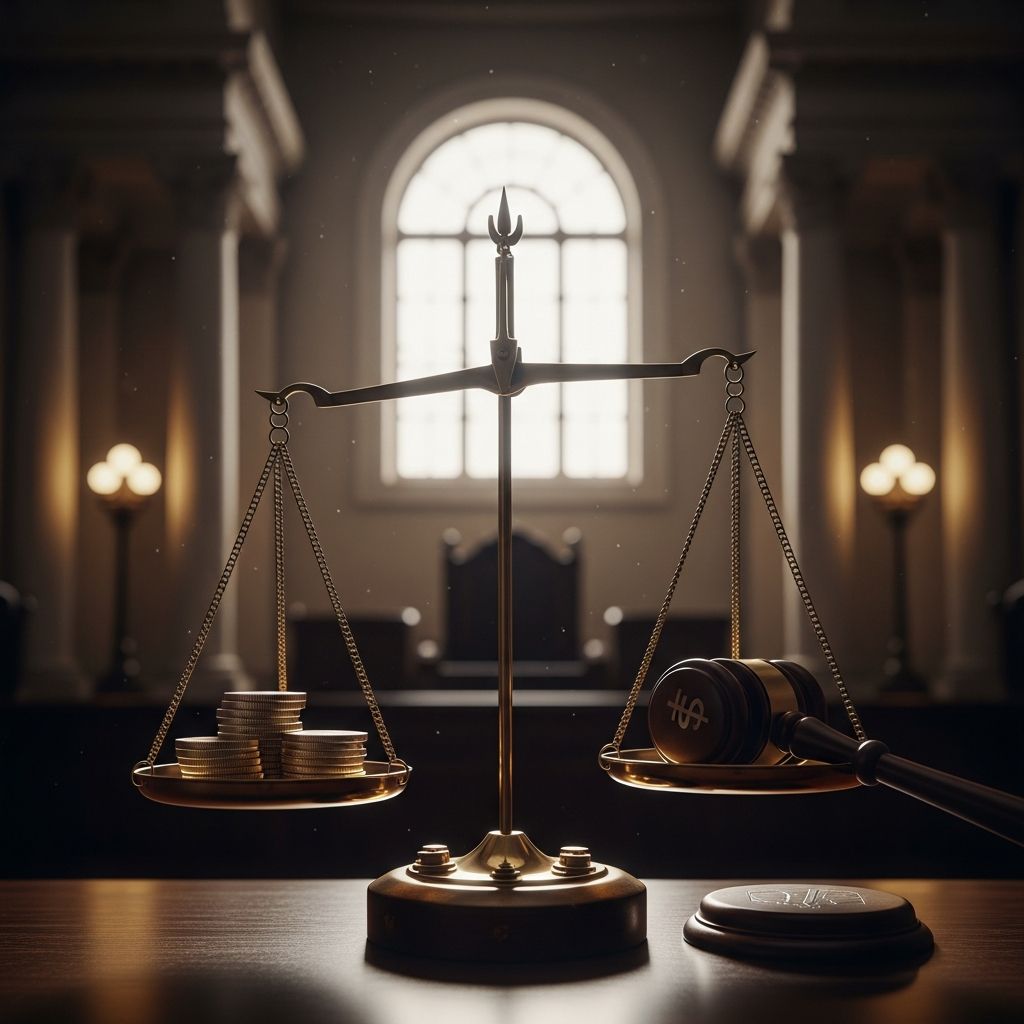
Criminal Fines in the Justice System: A Practical Guide
Criminal fines are one of the most common penalties courts impose, especially for minor offenses, but the rules that govern how they are set, collected, and enforced are more complex than many people realize.
This guide explains how fines work in the criminal justice system, what legal protections limit excessive or unfair fines, and what options may exist if you cannot afford to pay.
1. What Is a Criminal Fine?
A criminal fine is a court-ordered payment imposed as punishment for breaking the law. Fines are used for:
- Infractions (such as traffic violations)
- Misdemeanors (less serious crimes)
- Felonies (more serious crimes, often in addition to probation or incarceration)
Lawmakers and courts rely on fines to punish unlawful conduct and to discourage others from committing similar offenses. In practice, fines are usually:
- Set in statutes or local ordinances as a dollar range or maximum amount
- Chosen within that range by a judge, prosecutor, or through a plea agreement
- Often paired with other penalties, such as probation, community service, or jail time
Fines vs. Fees and Restitution
Criminal cases often involve several types of monetary obligations. They are related but legally distinct:
| Type | Main Purpose | Who Receives the Money? |
|---|---|---|
| Fine | Punish unlawful conduct and deter future offenses | Government (state, county, or city) |
| Fee / Cost | Recover costs of running the justice system (e.g., court operations) | Government agencies or specific programs |
| Restitution | Compensate victims for direct financial losses | Individual victims or victim-compensation funds |
Fines are the core punishment. Fees and surcharges may be added on top of fines, and restitution is ordered separately to address harm to victims.
2. When and Why Courts Impose Fines
Every state authorizes courts to impose fines at multiple stages of the criminal process. Fines are common because they appear, at least on the surface, to be a less intrusive option than jail or long-term supervision.
Common Situations Where Fines Are Used
- Traffic and ordinance violations – speeding, parking, minor municipal code violations
- Low-level misdemeanors – disorderly conduct, minor theft, public intoxication
- As part of a plea deal – agreeing to pay a fine in exchange for reduced charges or less jail time
- Alongside other sanctions – paying a fine while also serving probation or a short jail sentence
In lower-level cases, fines are sometimes the only punishment, particularly where lawmakers and courts wish to avoid incarceration but still impose a clear consequence.
Policy Goals Behind Fines
According to research and policy guidance, fines are supposed to advance several goals:
- Accountability – requiring people who break the law to bear a tangible consequence
- Deterrence – discouraging repeat offenses and signaling to the public that conduct is not tolerated
- Proportional punishment – offering a penalty that is less harsh than incarceration for less serious misconduct
However, many studies have found that fines and other monetary charges can also deepen poverty and increase the risk of further justice-system involvement if they are set without regard to ability to pay.
3. Legal Limits: Excessive Fines and Constitutional Rights
Although governments have broad power to impose fines, that power is not unlimited. The U.S. Constitution and every state constitution include protection against excessive fines.
The Excessive Fines Clause
The Eighth Amendment to the U.S. Constitution states that “excessive fines” shall not be imposed. In 2019, the U.S. Supreme Court confirmed that this protection applies to state and local governments, not just the federal government. This means that:
- Fines must bear a reasonable relationship to the seriousness of the offense
- Fines cannot be used solely as a revenue-raising tool without a genuine penal purpose
- Excessive fines may be challenged in court and sometimes reduced or overturned
While the Supreme Court has not adopted a single numerical test for “excessive,” courts generally consider the nature of the offense, the harm caused, and the relationship between the fine and the defendant’s conduct.
Ability to Pay and Due Process
Federal law also protects people who genuinely cannot afford to pay. In a key decision, the Supreme Court held that it is unconstitutional to imprison someone solely because they are unable to pay court-ordered fines, without first determining whether nonpayment is willful.
That ruling requires courts to:
- Consider whether the person has the actual financial ability to pay
- Distinguish between people who cannot pay and those who choose not to pay
- Explore alternative sanctions for people who are genuinely indigent, such as payment plans or community service
Despite these protections, research shows that many people are still jailed or sanctioned in ways that effectively punish poverty, such as driver’s license suspensions or probation violations for unpaid fines.
4. How Courts Decide Fine Amounts
Fine amounts typically come from a combination of law and judicial discretion.
Statutory Ranges and Mandatory Fines
Most criminal laws include a maximum fine or a range of permissible amounts. For example, a misdemeanor statute might authorize up to a certain dollar amount, while some traffic codes assign set fine levels for specific violations.
In some types of cases, legislatures have created mandatory minimum fines that judges must impose if a person is found guilty. These can be particularly challenging for low-income defendants because they leave little room for individualization.
Judicial Discretion and Individual Factors
Within the statutory range, judges often have authority to adjust the fine based on case-specific factors. These may include:
- The seriousness of the offense and any harm caused
- The defendant’s prior criminal record
- The defendant’s income, assets, and financial obligations
- Whether the defendant is supporting dependents
- Other penalties also being imposed (such as jail, probation, or restitution)
Several states now explicitly require courts to assess a defendant’s ability to pay before imposing or enforcing fines, and some statutes direct courts to consider alternatives when payment would cause undue hardship.
Day-Fine and Income-Based Models
Some jurisdictions, in the United States and abroad, have experimented with day-fine or income-based systems. Under these models:
- The law sets a number of “fine units” based on the seriousness of the offense
- The court multiplies those units by an amount tied to the defendant’s daily income
- Wealthier individuals pay higher absolute amounts, but the penalty is similar in terms of workdays required to pay
Research on day-fine systems has suggested that they can improve fairness and collection rates when properly implemented.
5. Paying Fines: Deadlines, Plans, and Consequences
Once a court imposes a fine, it will also set terms for payment. These terms are crucial because they determine whether a person can realistically comply without sacrificing basic needs.
Typical Payment Rules
Courts commonly use one or more of the following approaches:
- Immediate payment – full amount due on the day of sentencing
- Short-term deadline – payment due within a set number of days or weeks
- Installment plan – smaller payments over several months or longer
- Payment as a condition of probation – ongoing supervision until fines are paid
In some systems, courts or clerks charge additional fees to set up payment plans or to collect overdue amounts, which can significantly increase total debt for people who lack money up front.
What Happens If You Do Not Pay?
Nonpayment can carry serious consequences, particularly when courts do not distinguish between inability and refusal to pay. Possible responses include:
- Late fees or interest added to the outstanding balance
- Collections actions such as wage garnishment or tax refund intercepts, where state law allows
- Driver’s license suspension for unpaid traffic and certain criminal fines in some jurisdictions
- Extension of probation or additional supervision requirements
- Warrants or jail time if the court finds that nonpayment is willful and the person had the means to pay
Although “debtors’ prisons” are formally illegal, incarceration is still used in many places to enforce criminal justice debt, sometimes before courts fully assess ability to pay.
6. Incarceration and Nonpayment: Key Protections
Federal and state law place important limits on locking people up over unpaid fines. Courts and policymakers have gradually strengthened those protections, though problems remain.
When Jail May Be Used
In most jurisdictions, a person may legally face jail time for nonpayment of a criminal fine only if:
- The court holds a hearing on the reasons for nonpayment
- The judge finds that the person had the ability to pay but willfully refused
- No adequate alternative measures would achieve the purposes of the original sentence
Some states also allow people to “work off” fines at a specified credit per day in jail, but this approach raises serious fairness concerns when the original debt is unaffordable to begin with.
Reforms Limiting Jail for Nonpayment
Several states have enacted reforms to reduce incarceration for unpaid fines, such as:
- Requiring courts to ask detailed questions about income and expenses before imposing or enforcing fines
- Prohibiting revocation of probation or supervision solely for nonpayment unless willfulness is proven
- Providing alternatives like community service, treatment, or job-skills programs as substitutes for monetary sanctions
- Eliminating or limiting driver’s license suspensions tied to unpaid fines
Data from states that have implemented such changes show large reductions in the number of people jailed for nonpayment, without evidence of increased crime.
7. Alternatives to Traditional Fines
Because fixed-dollar fines can have harsher effects on low-income people than on wealthier defendants, many policymakers and courts have explored alternative approaches.
Common Alternative Sanctions
- Community service – allowing people to perform unpaid work for public or nonprofit organizations instead of paying money
- Educational or treatment programs – substituting classes or counseling for part of the monetary penalty
- Reduced or waived fines – lowering the amount owed based on verified financial hardship
- Extended payment plans – spreading payments over a longer time to make them more manageable
- Income-based fines – tying fine amounts to the defendant’s earnings, as in day-fine systems
Policy groups and legal organizations emphasize that fines should be designed so that people can realistically comply without being pushed into homelessness, hunger, or other severe hardship.
Best Practices for Fair Fines
Expert recommendations for more equitable fine systems often include:
- Assessing ability to pay before setting fine amounts
- Limiting the use of fines for revenue generation
- Ensuring that nonpayment consequences do not criminalize poverty
- Providing clear information to defendants about what they owe and how to challenge unaffordable obligations
- Collecting and publishing data on fines, fees, and related outcomes to support oversight and reform
8. Practical Steps If You Cannot Afford to Pay a Fine
This article does not provide legal advice, but research and official guidance highlight several steps people commonly take when they are unable to pay court-imposed fines.
Ask About Payment Options Early
Before a payment deadline passes, it may be possible to:
- Request a payment plan or more time to pay
- Ask for a hearing on your ability to pay
- Provide documentation of income, housing costs, medical expenses, and dependent care
Some jurisdictions require courts to consider these factors when they are raised.
Explore Alternatives Through the Court
Depending on local law and court practices, you may be able to ask the judge to:
- Convert part of the fine to community service
- Reduce or waive certain fees or surcharges that are not mandatory
- Revisit the total amount due after a period of good behavior or completion of programs
Legal aid organizations, public defenders, or local bar association referral services may be able to provide advice tailored to the laws in your state.
Frequently Asked Questions (FAQs)
Q1: Are fines always cheaper than going to jail?
Not necessarily. Although fines are less restrictive than incarceration, they can become very expensive once additional fees, surcharges, and collection costs are added, especially for low-income defendants.
Q2: Can the government jail me just because I am poor and cannot pay?
Courts are not allowed to jail someone solely because they are unable to pay. Before using incarceration, a judge should determine whether nonpayment is willful and consider alternatives.
Q3: Do I have a right to a payment plan?
State laws differ. Some require courts to offer payment plans or alternatives for people who cannot pay at once, while others leave the decision to judicial discretion. You can usually ask the court whether a plan is available.
Q4: How do fines affect people with low incomes?
Research shows that fixed fines and additional fees can lead to mounting debt, credit damage, license suspensions, and even jail for people who cannot afford to pay, deepening poverty and racial disparities in the system.
Q5: Are there efforts to reform how fines work?
Yes. Many states and localities have reviewed their fine and fee practices, adopted ability-to-pay standards, reduced or eliminated certain fees, and limited the use of jail or license suspensions for unpaid court debt.
References
- Assessing Fines and Fees in the Criminal Justice System — National Conference of State Legislatures. 2023-02-01. https://www.ncsl.org/civil-and-criminal-justice/assessing-fines-and-fees-in-the-criminal-justice-system
- FINES, FEES, AND BAIL: Payments in the Criminal Justice System — Council of Economic Advisers, Executive Office of the President. 2015-12-01. https://obamawhitehouse.archives.gov/sites/default/files/page/files/1215_cea_fine_fee_bail_issue_brief.pdf
- Fines and Fees in American Courts: A Framework for Policy Reform — National Center for State Courts. 2021-05-01. https://ncaj.org/sites/default/files/2021-05/Fines%20and%20Fees%20in%20American%20Courts.pdf
- Fees & Fines — Brennan Center for Justice. 2023-06-15. https://www.brennancenter.org/topics/criminal-justice/changing-incentives/fees-fines
- Fines and Fees — Vera Institute of Justice. 2022-09-01. https://www.vera.org/ending-mass-incarceration/criminalization-racial-disparities/fines-and-fees
- The Justice System — Bureau of Justice Statistics, U.S. Department of Justice. 2020-10-01. https://bjs.ojp.gov/justice-system
- Understanding the Basics of Criminal Law — University of Pittsburgh School of Law. 2023-01-10. https://online.law.pitt.edu/blog/understanding-the-basics-of-criminal-law
Similar Articles








Read full bio of medha deb