
Criminal and Civil Consequences of Fatal Car Accidents
Understanding when a driver can face jail, lawsuits, and insurance claims after an accidental death in a car crash.
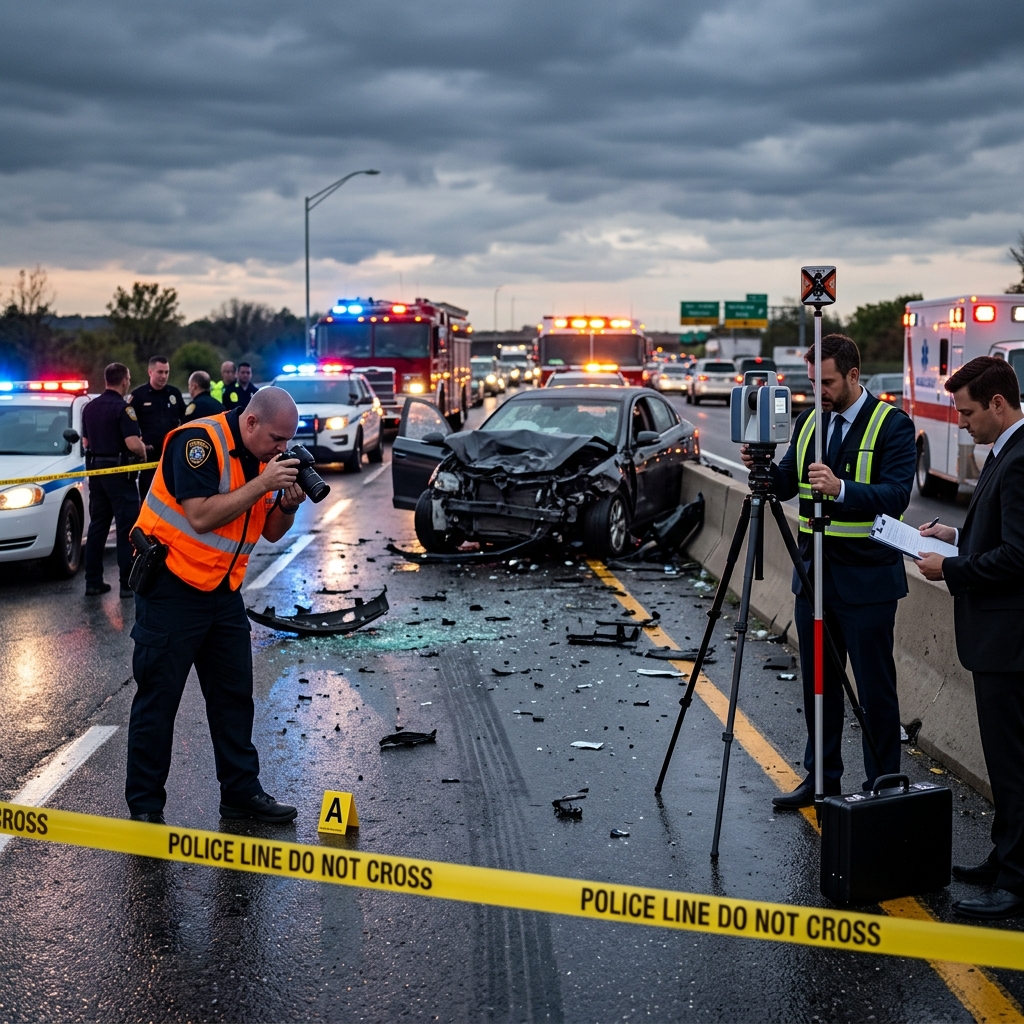
When a person dies in a car crash, the event is devastating for everyone involved. Even if the collision was unintentional, the driver who caused the crash may face criminal prosecution, civil lawsuits, and long‑term financial and personal consequences. Understanding how the law responds to a fatal accident can help drivers, victims, and families navigate an overwhelming situation.
This article explains how authorities investigate a death on the road, when jail is possible, how wrongful death lawsuits work, and what practical steps are critical after a fatal collision. It does not provide legal advice for any specific case, but offers a structured overview of key legal issues that commonly arise.
Accidental Death vs. Legal Responsibility
A car crash is often described as an “accident,” but the legal system focuses less on labels and more on whether any person was legally at fault. A death may be truly unavoidable, or it may result from negligence, recklessness, or even intentional misconduct. The difference determines whether criminal charges or civil liability are possible.
What Makes a Death “Accidental” in Law?
In many legal contexts, an accidental death is one that occurs without intent and without legal negligence. For example, if a driver is obeying all traffic laws, driving at a safe speed, and a sudden unforeseeable mechanical failure causes a crash, the event may be treated as a tragic accident with no fault.
However, if the death occurs because a driver violated a duty—such as speeding through a red light or driving while impaired—the law may treat the event as a wrongful death, exposing the driver to civil claims and possible criminal charges.
| Type of Death | Key Legal Feature | Typical Consequences |
|---|---|---|
| Accidental death (no fault) | No breach of legal duty proven | Insurance benefits only, no liability lawsuit |
| Wrongful death in a crash | Negligence, recklessness, or intentional act | Possible criminal charges and civil wrongful death claim |
Negligence and Duty of Care on the Road
Every driver has a duty of care to operate a vehicle reasonably and follow traffic laws to protect others on the road. When a driver fails to meet that duty and someone dies, courts often analyze the situation as negligence.
- Duty of care: Drivers must obey traffic signals, speed limits, and rules of the road, and stay reasonably alert.
- Breach: Actions such as texting while driving, running a red light, or driving intoxicated may be considered breaches of duty.
- Causation: The breach must directly lead to the crash and the death, not merely occur in the background.
- Damages: The victim’s family must show real losses such as medical costs, funeral expenses, lost income, and emotional harm.
These elements are central both in criminal investigations (to determine whether a crime occurred) and in civil wrongful death claims (to determine liability for compensation).
Immediate Legal Steps After a Fatal Car Crash
When a crash causes serious injury or death, certain actions are not just recommended—they are often legally required. Failing to follow these duties may itself lead to criminal charges, such as felony hit‑and‑run.
Actions Drivers Are Generally Required to Take
- Stop and remain at the scene: In many jurisdictions, leaving the scene of a crash involving death or injury is a serious crime.
- Call emergency services: Drivers are typically required to call 911 or local emergency numbers to report the accident and request medical assistance.
- Provide information: Laws often require drivers to share their name, contact information, driver’s license number, and insurance details with law enforcement or involved parties.
- Avoid destroying evidence: Tampering with the scene or hiding evidence may lead to additional criminal charges.
For example, Colorado law makes it a felony to leave an accident scene where a person has died, and a conviction can result in a class 3 felony and automatic license revocation. Other states have comparable hit‑and‑run statutes.
Practical Steps to Protect Your Rights
Beyond legal requirements, certain practical actions can help protect an involved driver’s rights and ensure a thorough investigation:
- Cooperate with police, but be cautious about admissions: Drivers should answer basic questions and comply with lawful orders, while avoiding unnecessary statements about fault until they have legal counsel.
- Document the scene: If possible, taking photos or videos of vehicle positions, road conditions, and visible injuries can help reconstruct what happened.
- Seek medical care: Even a driver who feels uninjured may have shock or hidden injuries. Medical records can later become important evidence.
- Contact an attorney promptly: Given the risk of criminal charges and civil claims, speaking with a qualified lawyer early is highly advisable.
When Can a Driver Go to Jail for an Accidental Death?
Jail or prison time is typically possible when a fatal crash involves a violation of criminal law. The specific charge depends on the facts and on the state’s statutes, but prosecutors often consider whether the driver’s conduct went beyond simple negligence.
Common Criminal Charges in Fatal Car Crashes
- Vehicular homicide or vehicular manslaughter: These charges usually apply when a death results from reckless or grossly negligent driving, such as excessive speeding, racing, or extreme distraction.
- DUI causing death: If the driver was impaired by alcohol or drugs, many states have specific statutes with severe penalties for causing a death while under the influence.
- Involuntary manslaughter or negligent homicide: These broader charges may be used when a death is caused by careless behavior that does not reach the level of recklessness but still violates a criminal duty.
- Felony hit‑and‑run: Leaving the scene of a fatal crash is frequently treated as a separate felony, even if the original collision was not intentional.
Convictions can lead to incarceration, probation, fines, and a permanent criminal record, as well as loss of driving privileges. The exact penalty depends on the statute and the circumstances, such as prior convictions or aggravating factors.
Factors That Influence Whether Charges Are Filed
Prosecutors generally review the complete investigation before deciding whether to file charges. Factors that may influence their decision include:
- Degree of carelessness or recklessness: Mere error in judgment may not lead to charges, while blatant disregard for safety often does.
- Presence of alcohol or drugs: Impairment usually increases the likelihood of prosecution and harsher penalties.
- Traffic law violations: Running a red light, speeding in a school zone, or illegal passing can be strong evidence of negligence.
- Prior driving history: Previous DUI or reckless driving convictions can weigh against the driver.
- Evidence collected by police and experts: Crash reconstruction, witness accounts, and physical evidence all matter.
In some cases, authorities may conclude that the death was unavoidable given the circumstances, and no criminal charges are brought. In others, even a single lapse can lead to serious accusations when the consequence is fatal.
Civil Liability: Wrongful Death Lawsuits After a Crash
Separate from criminal prosecution, the family of a person who dies in a car accident may bring a civil lawsuit for wrongful death. The goal is not to imprison the driver, but to obtain financial compensation for the losses caused by the death.
Elements of a Wrongful Death Claim
To succeed in a wrongful death lawsuit, the plaintiff—often a surviving spouse, child, or representative of the estate—must generally prove four core elements.
- Duty of care: The defendant owed a duty to the deceased, such as the duty to drive safely.
- Breach of duty: The defendant acted or failed to act in a way that violated that duty, such as speeding, distracted driving, or impaired driving.
- Causation: The breach directly caused the crash and the resulting death, commonly described as “proximate cause.”
- Damages: The death must have caused measurable economic and emotional losses to the surviving family members or beneficiaries.
These elements closely mirror the basic structure of negligence law and are widely recognized across U.S. jurisdictions.
Who Can File a Wrongful Death Lawsuit?
States vary in who may file and when, but common rules include:
- Surviving spouse: Frequently has the first right to bring a claim in the months or years immediately after death.
- Children of the deceased: May gain the right to file if the spouse does not, or after a specified period.
- Parents or other relatives: In some jurisdictions, parents may file if there is no spouse or children, or if statutes grant them explicit rights.
- Personal representative of the estate: Often responsible for filing on behalf of all beneficiaries.
Wrongful death claims are usually subject to a statute of limitations, a deadline by which the lawsuit must be filed. For instance, Colorado generally requires such claims to be filed within two years of the date of death.
Types of Compensation Available
If liability is proven, a wrongful death case may include several categories of damages:
- Economic damages: Medical bills related to the final injury, funeral and burial costs, lost wages and future earnings, and other financial contributions the deceased would have provided.
- Non‑economic damages: Compensation for grief, loss of companionship, emotional distress, and loss of guidance or support.
- Punitive damages: In some states, additional damages may be awarded when the defendant’s conduct was especially reckless or intentional.
Certain jurisdictions impose caps on non‑economic damages in wrongful death cases, limiting the amount that can be awarded for emotional harms. Colorado, for example, sets a specific upper limit that is periodically adjusted.
The Role of Insurance in Fatal Car Accidents
Insurance often plays a central role after a fatal crash, both in compensating the victim’s family and in protecting the driver from personal financial ruin.
Liability Insurance
Most drivers carry liability coverage, which can pay damages up to policy limits when the insured is legally responsible for a death or serious injury. Wrongful death settlements or verdicts are often funded by liability insurance, although the driver may still be personally responsible for amounts beyond the policy limit.
Accidental Death Benefits
Some life or accident policies provide accidental death benefits, paying a fixed amount when a qualifying accidental death occurs. These benefits do not require proving negligence; instead, the question is whether the death meets the policy’s definition of an accident.
Key differences between wrongful death compensation and accidental death benefits include:
- Source of payment: Wrongful death damages are paid by the liable party or their insurer; accidental death benefits are paid under an insurance contract.
- Proof required: Wrongful death requires proof of fault; accidental death benefits typically require proof of cause within policy terms.
- Type of damages: Wrongful death can cover both economic and non‑economic damages; accidental death benefits are usually fixed sums without punitive or emotional components.
Emotional and Practical Impact on Involved Drivers
A driver whose actions contributed to a fatal crash often faces not only legal consequences, but also intense emotional effects. Guilt, anxiety, and fear about the future are common. While legal representation is essential, psychological support can also be critical.
Helpful strategies may include:
- Seeking counseling or therapy: Professional support can help drivers process guilt and trauma.
- Building a support network: Trusted family members, friends, and community resources can provide stability.
- Staying engaged with the legal process: Understanding what is happening can reduce uncertainty and help make informed decisions.
Frequently Asked Questions
Does every fatal car accident lead to criminal charges?
No. Prosecutors typically file charges only when there is evidence of a criminal violation, such as reckless driving, DUI, or leaving the scene. Some fatal crashes are determined to be unavoidable and do not result in criminal prosecution.
If a death was truly an accident, can there still be a wrongful death lawsuit?
A lawsuit is possible only if the plaintiff can prove negligence or fault. If no breach of duty can be shown, the death is considered accidental for legal purposes and any recovery is usually through insurance benefits rather than a wrongful death claim.
Can a driver be sued even after being acquitted in criminal court?
Yes. Criminal and civil cases are separate. An acquittal does not prevent the victim’s family from filing a wrongful death lawsuit, which uses a lower burden of proof (preponderance of the evidence) than criminal cases.
How long do families have to file a wrongful death case?
Deadlines vary by state. Many jurisdictions give families around two years from the date of death to file, though the exact time limit and who can file in each period are governed by state statute.
Should a driver involved in a fatal crash speak to an attorney?
Yes. Because a fatal accident can lead to serious criminal charges and substantial civil liability, consulting a knowledgeable lawyer early is strongly recommended.
References
- What Happens if You Accidentally Kill Someone in a Car Accident? — Charles E. Boyk Law Offices. 2024-02-15. https://www.charlesboyk-law.com/blog/what-happens-if-you-accidentally-kill-someone-in-a-car-accident/
- Wrongful Death in Car Accidents — TorHoerman Law. 2026-01-05. https://www.torhoermanlaw.com/legal-guides/ultimate-car-accident-lawsuit-guide/wrongful-death-in-car-accidents/
- What Happens if You Hit Someone With Your Car by Accident, and They Die? — Milanfar Law Firm, PC. 2025-10-10. https://www.milanfarlaw.com/blog/2025/10/what-happens-if-you-hit-someone-with-your-car-by-accident-and-they-die/
- Denver Fatal Car Accident Attorney — Tenge Law Firm, LLC. 2025-06-01. https://www.tengelaw.com/denver-car-accident-attorney/fatal-car-accidents/
- Denver Wrongful Death Lawyer — Springer & Steinberg, P.C. 2024-09-01. https://www.springersteinberg.com/personal-injury/denver-wrongful-death-lawyer/
- Colorado Revised Statutes Title 42. Vehicles and Traffic § 42-4-1601 — Colorado General Assembly. 2023-01-01. https://codes.findlaw.com/co/title-42-vehicles-and-traffic/co-rev-st-sect-42-4-1601/
- 8 Key Differences Between Wrongful Death and Accidental Death — Bennett & Bennett, P.C. 2023-11-01. https://bennettlegal.com/wrongful-death-vs-accidental-death-key-differences/
- Accidental Death Benefits: What Makes an Accident an Accident? — Munich Re US Life. 2022-05-10. https://www.munichre.com/us-life/en/insights/best-practices/accidental-death-benefits-what-makes-an-accident-an-accident.html
Similar Articles








Read full bio of Sneha Tete




