
When Criminal Acquittal Still Leads to Civil Liability
How one incident can produce both a failed criminal prosecution and a successful civil lawsuit, and what that means for victims and defendants.
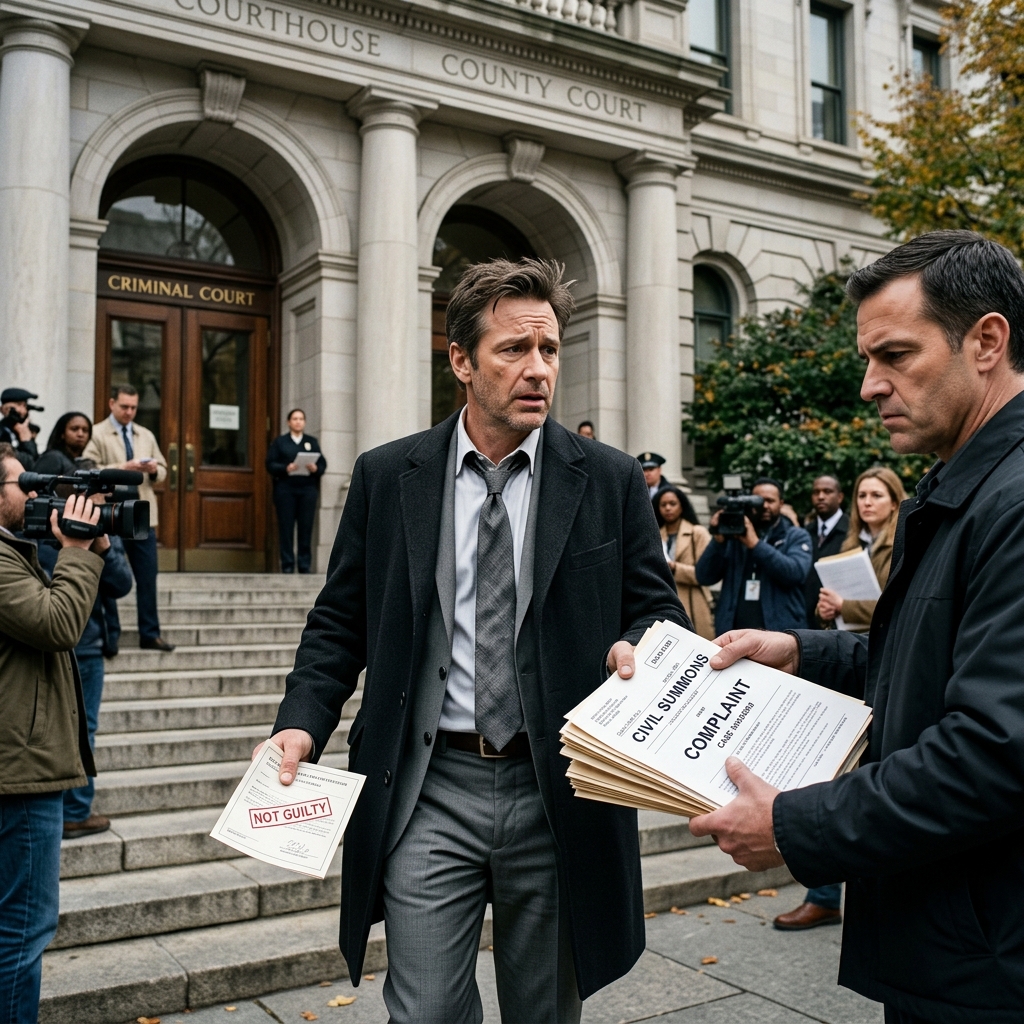
It surprises many people to learn that a person can be acquitted in criminal court but later be found liable in a civil lawsuit based on the very same incident. This apparent contradiction is not a flaw in the legal system; it is a direct consequence of how criminal and civil law are structured, the different goals they serve, and the different standards of proof they use.
This article explains why outcomes can diverge between criminal and civil courts, what it means for victims and defendants, and how to think strategically if you are considering civil action after a criminal case.
Criminal Law vs. Civil Law: Two Systems, Different Purposes
Criminal and civil cases often grow out of the same behavior, such as a physical assault, drunk driving crash, or financial fraud. Yet the two systems are designed to answer different questions and protect different interests.
| Feature | Criminal Case | Civil Case |
|---|---|---|
| Who brings the case? | Government prosecutor or district attorney, representing society. | Private party (individual, business, or sometimes government) called the plaintiff. |
| Primary goal | Determine guilt and, if proven, punish crime to protect the public. | Resolve a dispute and compensate or otherwise remedy harm to the plaintiff. |
| Main outcome | Possible jail or prison, probation, fines, or other penalties. | Money damages, court orders to do or stop doing something, or other civil remedies. |
| Standard of proof | “Beyond a reasonable doubt” – highest standard in the system. | “Preponderance of the evidence” – more likely than not, just over 50%. |
| Key rights for the accused | Presumption of innocence, right to counsel (including court-appointed in many cases), right to remain silent, and other constitutional protections. | Fewer automatic rights; typically no guarantee of free lawyer and different discovery rules. |
Because criminal punishment may involve loss of liberty, the law builds in higher protections for the accused, including the demanding “beyond a reasonable doubt” standard. Civil court, by contrast, focuses on making injured parties whole and uses a lower standard which reflects the typical monetary nature of the remedy.
Standards of Proof: The Core Reason Outcomes Diverge
The single most important reason a defendant can walk out of criminal court acquitted but later lose a civil trial is the burden of proof applied in each system.
Beyond a Reasonable Doubt (Criminal)
In a criminal case, the prosecution must convince the judge or jury that there is no reasonable doubt about the defendant’s guilt. This does not mean absolute certainty, but it requires a very high level of confidence. If jurors believe there is a realistic, reasonable chance that the defendant did not commit the crime, they must vote not guilty.
- Protects against wrongful loss of liberty.
- Reflects society’s view that imprisoning an innocent person is an especially serious injustice.
- Often difficult to meet when evidence is limited, witnesses are inconsistent, or forensic proof is inconclusive.
Preponderance of the Evidence (Civil)
In a civil case, the plaintiff usually must prove that their version of events is more likely than not true – just tipping the scales above 50%. If the evidence shows a greater than even chance that the defendant caused the harm, the jury can find liability.
- Lower threshold than criminal cases.
- Allows victims to succeed even when some doubt remains.
- Reflects that the typical consequence is financial responsibility, not incarceration.
Because these standards differ so sharply, the same set of facts can lead to competing outcomes: a defendant acquitted criminally yet held responsible civilly for injuries or losses.
How One Incident Can Produce Both Criminal and Civil Proceedings
Some behavior violates both criminal statutes and civil duties. A drunk driver, for example, may face criminal charges for driving under the influence and civil claims for negligently causing injuries and property damage. The two cases are separate, and neither outcome automatically controls the other.
Common scenarios that can generate both types of cases include:
- Violent acts: Assault, battery, and other intentional harms can be prosecuted as crimes and also lead to civil claims for personal injury.
- Impaired or reckless driving: Criminal DUI or reckless driving charges combined with civil suits for medical costs, lost income, and pain and suffering.
- Financial misconduct: Criminal fraud or embezzlement paired with civil claims for repayment and additional damages.
- Sexual misconduct: Criminal sexual assault charges and civil claims for physical and emotional harm.
In each of these situations, different parties are asserting different interests:
- The government seeks to enforce public laws and deter criminal behavior.
- The victim seeks compensation, recognition of wrongdoing, and sometimes court orders to prevent future harm.
Why a Defendant Might Lose Civilly After Winning Criminally
When the same incident is litigated twice, one in criminal court and one in civil court, it is entirely possible for a defendant to prevail in the criminal case and later lose the civil case. Several legal and practical factors drive this outcome.
Different Standards, Different Thresholds
The most obvious reason is the different burden of proof. Evidence that fails to eliminate reasonable doubt may still be strong enough to make the plaintiff’s story more likely than not.
- Criminal jurors might conclude, “We cannot be sure beyond a reasonable doubt.”
- Civil jurors might later conclude, “On balance, the evidence supports the plaintiff’s account.”
Distinct Legal Issues and Claims
The criminal case addresses specific statutory crimes (for example, homicide or fraud), while the civil case may involve negligence, intentional torts, or breach of duties that do not perfectly match criminal elements. A failure to prove all elements of a crime does not mean the defendant was careful or blameless in a civil sense.
Consider these simplified differences:
- Criminal homicide charges may require proof of intent or extreme recklessness.
- Civil wrongful death claims may require only proof that the defendant failed to act as a reasonably careful person and caused the death.
Evidence and Procedural Rules
Evidence rules, discovery processes, and strategies differ between criminal and civil cases. New witnesses may appear, documents may be uncovered during civil discovery, or parties may be compelled to provide information that was not available to prosecutors.
- Civil litigants often use extensive discovery tools such as depositions and interrogatories.
- The defendant may choose to testify in civil court even if they remained silent in the criminal case.
- Additional expert opinions can be developed specifically for the civil trial.
Role of Public Pressure and Resources
Prosecutors must balance limited public resources and may narrow their case to charges they believe are provable beyond a reasonable doubt. Victims pursuing civil claims may introduce a broader narrative and different theories of liability, making it easier to meet the lower civil standard.
Is This Double Jeopardy? Why the Answer Is No
People often ask whether facing both criminal and civil proceedings for the same incident violates the constitutional ban on double jeopardy. Double jeopardy protects against being tried twice criminally for the same offense by the same sovereign; it does not bar a separate civil lawsuit arising from the same facts.
Key distinctions include:
- Criminal prosecution is an exercise of the government’s power to punish crime.
- Civil lawsuits are private actions seeking remedies, usually money damages.
- Because the nature and purpose of the proceedings differ, courts allow both to proceed independently.
Thus, an acquittal in criminal court does not shield a defendant from civil liability and does not trigger double jeopardy protections.
What Victims Should Consider After a Criminal Case Ends
Victims and families understandably place a great deal of emotional weight on the criminal verdict. If the defendant is acquitted or convicted on lesser charges, they may wonder whether any additional legal remedies are possible. Often, civil litigation remains a viable path.
Potential Civil Remedies
Civil law offers tools that criminal courts do not. Depending on the facts and jurisdiction, victims may seek:
- Compensatory damages for medical expenses, therapy costs, lost income, and property damage.
- Non-economic damages for pain, suffering, emotional distress, or loss of companionship.
- Punitive damages in some cases, designed to deter especially egregious conduct.
- Injunctive orders requiring a party to take or refrain from specific actions.
Even if the criminal court did not impose punishment, civil court can recognize the harm and require the responsible party to bear financial consequences.
Timing and Coordination with Criminal Proceedings
In many situations, victims and their attorneys monitor the criminal case while preparing for possible civil litigation. Strategy considerations may include:
- Whether to wait for the criminal case to conclude before filing, to avoid conflicts or interference.
- How testimony and evidence in the criminal trial might be used or examined in the civil case.
- Whether the criminal verdict influences settlement negotiations in civil court.
While an acquittal can affect perceptions, it is not legally determinative in civil proceedings because of the different burden of proof.
What Defendants Need to Understand About Civil Exposure
Defendants who have just weathered a criminal trial may assume the case is over once the verdict is issued. That assumption can be dangerously incomplete. There may still be civil exposure for injuries, financial losses, or emotional harms.
Civil Risk Exists Even After Acquittal
An acquittal or dismissal of charges does not automatically eliminate potential civil claims. The alleged victim or their family may still sue, especially in personal injury or wrongful death contexts.
Defendants should be aware that:
- Civil plaintiffs can rely on much of the same factual foundation but present it under a different legal theory.
- Statements made during the criminal case may surface in civil litigation.
- Insurance coverage (such as auto or homeowner’s policies) may become central in resolving civil claims.
The Role of Legal Counsel
Because civil cases involve different procedural rules and remedies, defendants often need separate civil counsel or continued representation focused on civil risk. An attorney can help:
- Assess potential civil claims likely to arise from the incident.
- Communicate with insurers and manage coverage issues.
- Develop strategies for defense or settlement.
FAQs: Criminal Acquittal and Civil Liability
Can I sue someone even if the criminal case against them was dismissed or resulted in acquittal?
Yes. A criminal dismissal or acquittal does not prevent a civil lawsuit. The civil court applies a lower burden of proof and may find liability even when criminal guilt was not established beyond a reasonable doubt.
Does a criminal conviction guarantee success in civil court?
Not automatically, though a criminal conviction can be powerful evidence. Each civil claim still must be proved under civil standards, and the defendant may raise defenses unique to civil law. The criminal outcome often influences settlement discussions but does not replace civil procedures.
Is it possible to have both cases at the same time?
Yes. In some situations, criminal and civil cases proceed in parallel. Courts and lawyers must navigate scheduling and evidentiary issues to avoid unfair prejudice, but it is common for prosecutors and civil attorneys to work on the same underlying events in different forums.
Who pays damages in civil cases that follow criminal proceedings?
If the plaintiff wins, the defendant is generally responsible for paying damages. In many personal injury cases, insurance policies may cover part or all of the judgment, subject to policy terms and exclusions. Intentional misconduct may not be covered by some policies.
Do I need a lawyer to pursue a civil case after a criminal trial?
While some people file civil claims on their own, consulting with an attorney is usually wise. Civil litigation involves complex deadlines, evidence rules, and negotiation with insurers and defense counsel. A lawyer can evaluate the strength of your case and the likely range of outcomes.
Key Takeaways for Navigating Both Systems
Understanding how criminal and civil courts interact can help both victims and defendants make informed decisions. Consider these practical points:
- An acquittal in criminal court does not end all legal exposure; civil claims may still be available.
- Victims should not assume that a disappointing criminal verdict forecloses every path to accountability.
- Different standards of proof and separate legal goals explain why results often diverge between the two systems.
- Legal advice in both criminal and civil contexts is critical when serious injury, death, or major financial loss is involved.
When one incident leads to both criminal and civil proceedings, the legal journey can be long and emotionally taxing. Yet the availability of two distinct systems is precisely what permits both public enforcement of laws and private redress for harm. Recognizing the differences between them helps explain how someone can lose a criminal case, win a civil trial, or experience the reverse—and why, in many instances, those outcomes are not contradictions but reflections of a complex legal landscape.
References
- The Difference Between a Civil and Criminal Case — The Mississippi Bar. 2024-05-01. https://www.msbar.org/for-the-public/consumer-information/the-difference-between-a-civil-and-criminal-case/
- What Is the Difference Between Civil and Criminal Law? — U.S. Chamber Institute for Legal Reform. 2023-06-15. https://instituteforlegalreform.com/blog/civil-vs-criminal-law/
- Three-Minute Legal Talks: How do Criminal and Civil Cases Differ? — University of Washington School of Law. 2025-02-10. https://www.law.uw.edu/news-events/news/2025/how-do-criminal-and-civil-cases-differ/
- The Differences Between Criminal Court and Civil Court — LawHelpNY, Empire Justice Center. 2022-11-20. https://www.lawhelpny.org/resource/the-differences-between-criminal-court-and-ci-1
- Types of Cases — California Courts Self-Help Guide. 2024-08-30. https://selfhelp.courts.ca.gov/types-cases
Similar Articles








Read full bio of Sneha Tete




