
How Crime Victims Can File Complaints Against DOJ Employees
A practical, plain-language guide to using the federal complaint process when a Department of Justice employee fails to respect your rights as a crime victim.
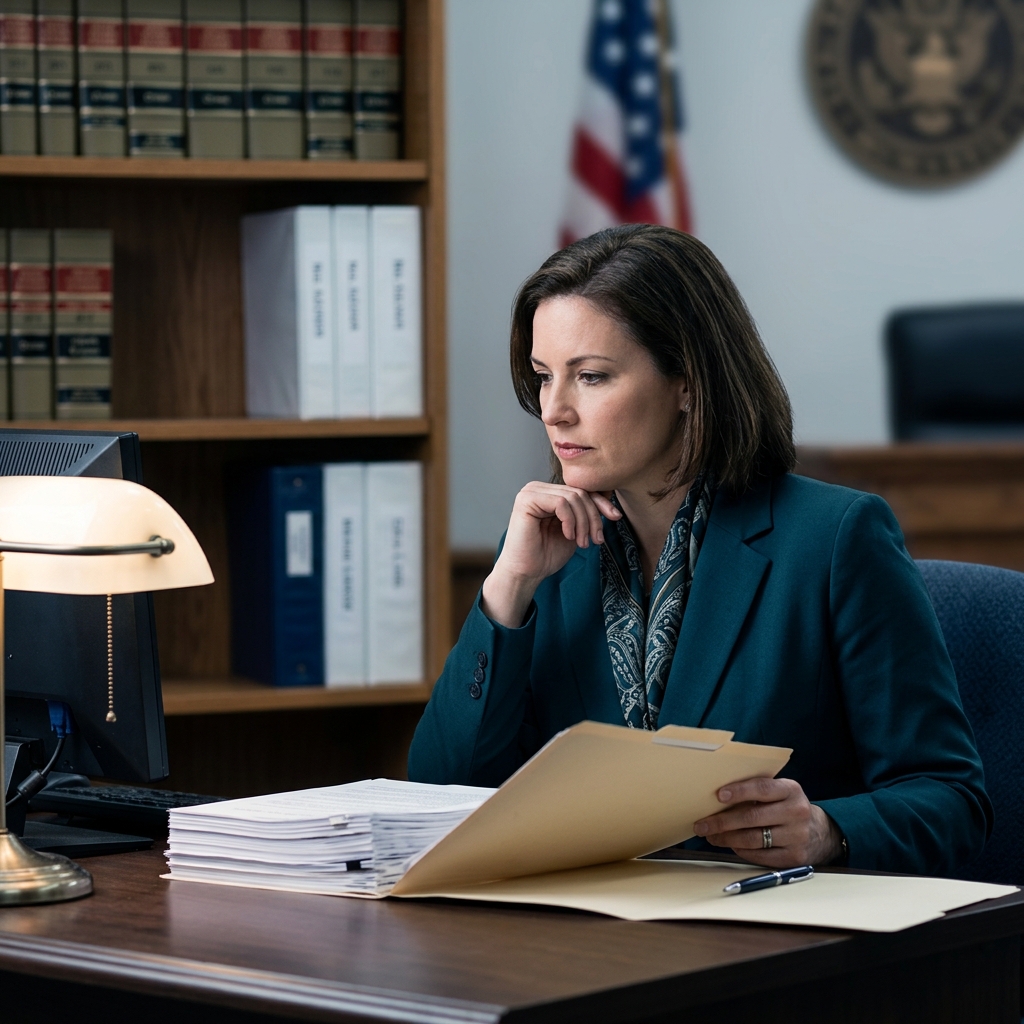
Crime victims in the federal system are entitled to specific rights, including fair treatment, safety, information about the case, and a voice in important court proceedings. When a Department of Justice (DOJ) employee fails to respect these rights, victims have access to a formal complaint process created under the Crime Victims’ Rights Act (CVRA) of 2004. This article explains how that complaint process works, what it can and cannot do, and how victims can use it effectively.
1. Background: Crime Victims’ Rights and DOJ Obligations
The Crime Victims’ Rights Act is a federal law that gives victims of federal crimes a set of enforceable rights in criminal proceedings, and places duties on federal agencies, including DOJ, to uphold those rights. These rights must be respected by prosecutors, law enforcement agents, and other DOJ personnel who interact with victims.
1.1 Core Rights Under the Crime Victims’ Rights Act
Under the CVRA, qualifying crime victims generally have rights such as:
- The right to be treated with fairness and respect for dignity and privacy.
- The right to reasonable protection from the accused and persons acting on the accused’s behalf.
- The right to accurate and timely notice of public court proceedings.
- The right to attend public court proceedings unless the judge finds that testimony would be affected.
- The right to be heard at important hearings, including release, plea, sentencing, or parole-related proceedings.
- The right to confer with the government attorney handling the case.
- The right to restitution as provided by law.
- The right to proceedings free from unreasonable delay.
These rights are primarily enforced in federal criminal cases, but the CVRA also directs DOJ to establish a complaint process to address failures by DOJ employees.
1.2 DOJ’s Responsibility to Provide a Complaint Process
The CVRA requires DOJ to create a system through which victims can submit complaints alleging that DOJ employees have not provided required rights. This internal process is designed to:
- Receive and review victim complaints about alleged rights violations.
- Investigate those complaints within DOJ.
- Provide corrective or disciplinary action when appropriate, such as additional training or formal discipline.
Importantly, this process is aimed at addressing the conduct of DOJ employees—not at directly changing the outcome of a criminal case.
2. What the DOJ Complaint Form Is (and Is Not)
DOJ publishes a specific complaint form for victims who wish to report the failure of a DOJ employee to provide rights under the CVRA. Understanding the purpose of this form helps set clear expectations.
2.1 Intended Purpose of the Complaint Form
The official complaint form is used to allege that a DOJ employee failed to provide one or more rights guaranteed by federal law to a crime victim. According to DOJ guidance, the form is designed for victims who want DOJ to consider:
- Corrective action (such as training or altered practices) to prevent similar problems.
- Disciplinary action toward the employee if investigation supports the complaint.
The form covers failures to provide rights such as notification, the opportunity to be heard, reasonable protection, or proper treatment. It is an internal accountability tool.
2.2 Limits of the Complaint Form
The complaint form does not function as an appeal of a judge’s decision or as a direct way to change court orders. Key limitations include:
- It does not automatically reverse plea agreements, sentences, or other judicial rulings.
- It does not award compensation or restitution on its own.
- It is separate from any motion a victim might file in court to enforce CVRA rights.
Victims who want direct relief in a criminal case—such as being heard at a specific hearing—may need to assert rights in the district court under CVRA’s enforcement provisions, sometimes with legal counsel.
3. When It May Be Appropriate to File a Complaint
Not every concern or disagreement with the government’s handling of a case requires a formal complaint. It is generally appropriate to use the DOJ complaint form when an identifiable DOJ employee fails to provide a specific right recognized under the CVRA or related statutes.
3.1 Examples of Situations That May Warrant a Complaint
Situations that could justify filing include:
- You were never notified of a plea hearing or sentencing, despite being a qualifying victim entitled to notice and an opportunity to be heard.
- A DOJ employee refused to confer with you about major decisions in the case, such as a plea agreement, when CVRA rights apply.
- You were denied attendance at public court proceedings without a lawful basis.
- Repeated failures occurred to inform you of the defendant’s release or escape despite statutory requirements.
- You were consistently treated in a manner that was demeaning, dismissive, or retaliatory because you attempted to exercise your rights.
In each example, the focus is on whether a DOJ employee failed to fulfill a legal obligation toward a crime victim, rather than on discretionary decisions about the prosecution strategy itself.
3.2 Issues Better Handled Through Other Channels
Some concerns may be better addressed through different mechanisms:
- Disagreement with charging decisions or plea terms: These may be strategic choices by prosecutors and not necessarily CVRA violations.
- Judicial rulings that limit victim participation: Relief typically requires motions or appeals in court, not solely an internal complaint.
- Civil rights discrimination by grant recipients or other entities: These may belong with the Office for Civil Rights within DOJ’s Office of Justice Programs.
- General misconduct unrelated to victim rights (such as fraud or corruption): DOJ offers separate reporting avenues for waste, fraud, and abuse.
When in doubt, victims may consult a victim advocate, legal aid, or attorney to decide whether the CVRA complaint process is appropriate.
4. Overview of the Complaint Process
While details can vary by component, the CVRA-related complaint process typically follows a structured sequence, from completing the form to internal review.
4.1 Core Steps in Filing and Review
| Step | What the Victim Does | What DOJ Does |
|---|---|---|
| 1. Identify the issue | Clarify what right was not provided and which DOJ employee was involved. | None yet; this is preparatory work for the victim. |
| 2. Obtain the form | Access the official complaint form concerning failure to provide crime victim rights. | DOJ makes the form publicly available as a resource. |
| 3. Complete the form | Provide contact information, case details, description of alleged rights violations, and names or offices of involved employees. | Receives the completed form through designated channels. |
| 4. Submit the complaint | Submit the form as instructed, which may involve mailing or electronic transmission depending on current DOJ guidance. | Routes the complaint to appropriate officials or offices for review. |
| 5. Internal review | Wait for DOJ to evaluate and, if necessary, investigate the complaint. | Examines facts, consults records and staff, and determines whether a rights violation occurred. |
| 6. Corrective/disciplinary response | May receive notification of outcome, though the form focuses on internal action rather than victim remedies. | Implements training, policy changes, or personnel action if warranted, and may track compliance metrics. |
The complaint form itself typically explains where it should be sent and what information is necessary for review.
4.2 Information Commonly Required on the Form
While specific fields may change over time, victims can expect to provide at least:
- Victim contact details (name, address, telephone, and email).
- Case information (case name, docket number, and identifying details if known).
- DOJ component and employee involved (e.g., U.S. Attorney’s Office, FBI, or other DOJ office).
- Description of the alleged failure, including dates, events, and which rights were not provided.
- Any supporting documentation such as letters, emails, or notices you did or did not receive.
Providing specific, factual information helps DOJ evaluate the complaint more accurately.
5. Relationship to Other DOJ Complaint Pathways
DOJ maintains several mechanisms for reporting problems, including civil rights discrimination, professional misconduct, and waste or fraud. The crime victim rights complaint form fits into this broader framework but focuses on a distinct issue: failures to provide CVRA rights by DOJ employees.
5.1 Other Common DOJ Reporting Channels
Victims and members of the public may encounter several distinct complaint options, such as:
- Civil Rights Reporting Portal: For discrimination or civil rights violations, including by law enforcement or grant recipients.
- Office of Professional Responsibility (OPR): For professional misconduct by DOJ attorneys.
- Inspector General or similar offices: For waste, fraud, abuse, or misconduct within DOJ.
- Office for Civil Rights (Office of Justice Programs): For civil rights complaints against DOJ-funded programs or recipients.
Each pathway has its own forms and procedures. The CVRA complaint form is specifically designed for crime victims alleging failures in the provision of legal rights by DOJ employees.
5.2 Why Multiple Processes Matter for Victims
Because victim experiences often involve both treatment and legal rights, it is important to match the complaint with the right process. For instance:
- If a victim believes they were targeted or treated differently due to race, disability, or national origin, a civil rights complaint might be more appropriate.
- If the concern is that DOJ employees ignored a statutory right to notice or participation, the CVRA complaint form is more relevant.
In some cases, victims may use more than one process when a situation involves multiple issues (e.g., both rights violations and discriminatory treatment).
6. Practical Tips for Victims Considering a Complaint
Filing a complaint can feel overwhelming, especially when victims are already coping with the effects of crime. The following practical suggestions may help make the process more manageable and effective.
6.1 Preparing Before You File
- Gather documentation: Collect letters, emails, notices, and any written information you received (or did not receive) that relate to the alleged rights violations.
- Write a timeline: Note key dates, events, and interactions with DOJ employees that show how the rights issue developed.
- Identify specific rights: List which rights you believe were violated (e.g., notice of hearings, right to confer, right to be heard).
- Consult a victim advocate: Many victim assistance programs can help clarify options and provide emotional support.
6.2 Completing the Form Clearly and Calmly
- Use specific examples rather than general statements (for example, “I was not told about the sentencing hearing on [date]” instead of “I am always left out”).
- Focus on facts and rights, not only on frustration or anger, even though those feelings are understandable.
- If you are unsure whether something is a legal right, consider mentioning it as a concern but clearly separate facts from your opinions.
- Check that your contact information is accurate so DOJ can reach you if additional information is needed.
6.3 After You Submit
- Save a copy of the complaint and any attachments for your records.
- Understand that internal review may take time, depending on the complexity of your case and workload.
- Continue to assert your rights directly in court when appropriate, as the complaint process is not a substitute for legal motions.
- Seek support from family, friends, or victim advocacy organizations while you wait; the complaint process can be emotionally taxing.
7. Frequently Asked Questions (FAQs)
7.1 Does the DOJ complaint form apply to all crime victims?
The form is intended for victims of federal crimes whose rights arise under federal law, including the Crime Victims’ Rights Act. State or local victims may have similar rights and complaint processes under state law, but those are handled by different authorities, not DOJ.
7.2 Can I use the complaint form to change a sentencing decision?
No. The complaint form is not an appeal of a court’s decision and does not directly alter sentencing or other judicial rulings. To seek changes in court outcomes, victims may need to work with an attorney to file CVRA motions or other appropriate legal actions in the court handling the case.
7.3 Will the DOJ employee be punished if I file a complaint?
Not necessarily. The complaint triggers a review process; disciplinary or corrective action will depend on the facts found during investigation and DOJ’s internal policies. Possible outcomes range from additional training to formal discipline, or findings that no violation occurred.
7.4 Is there a deadline for submitting a complaint?
Deadlines may depend on DOJ policy and the nature of the complaint. In general, it is wise to file as soon as practical after discovering the alleged rights violation, so records and memories are fresher. Victims should review the current instructions on the complaint form or DOJ site for any specified time limits.
7.5 What if my complaint involves discrimination as well as victim rights?
If a situation appears to involve both failure to provide CVRA rights and discrimination based on factors like race, national origin, or disability, victims may need to use more than one reporting mechanism. For discrimination, they might contact DOJ’s civil rights complaint channels, such as the Office for Civil Rights or the Civil Rights Reporting Portal. For CVRA issues, they would still use the specialized complaint form.
7.6 Can I get help filling out the complaint form?
Yes. Victim advocacy organizations, legal aid clinics, or private attorneys can assist victims with understanding their rights and completing the form. Many communities have victim assistance programs that explain rights and help document violations.
References
- Crime Victims’ Rights Act: Increasing Awareness, and Ensuring Compliance — U.S. Government Accountability Office (GAO-09-54). 2008-12-17. https://www.gao.gov/assets/a284374.html
- Report a Crime or Submit a Complaint — U.S. Department of Justice. 2024-03-15 (access date approximate). https://www.justice.gov/action-center/report-crime-or-submit-complaint
- Office for Victims of Crime — Office of Justice Programs, U.S. Department of Justice. 2024-05-01 (access date approximate). https://ovc.ojp.gov/
- Victims’ Rights — Victim Assistance Program. 2023-06-01 (access date approximate). https://victimassistanceprogram.org/victim-rights/
- Complaint Alleging Failure of Department of Justice Employee to Provide Rights to a Crime Victim Under the Crime Victims’ Rights Act of 2004 — U.S. Department of Justice Resource. 2006-01-01 (access date approximate). https://www.justice.gov/resource/complaint-alleging-failure-department-justice-employee-provide-rights-crime-victim-under
Similar Articles








Read full bio of Sneha Tete




