
Credit Card Surcharges: What Shoppers Need to Know
Understand when card surcharges are legal, where they are restricted, and how to spot hidden fees before you pay.
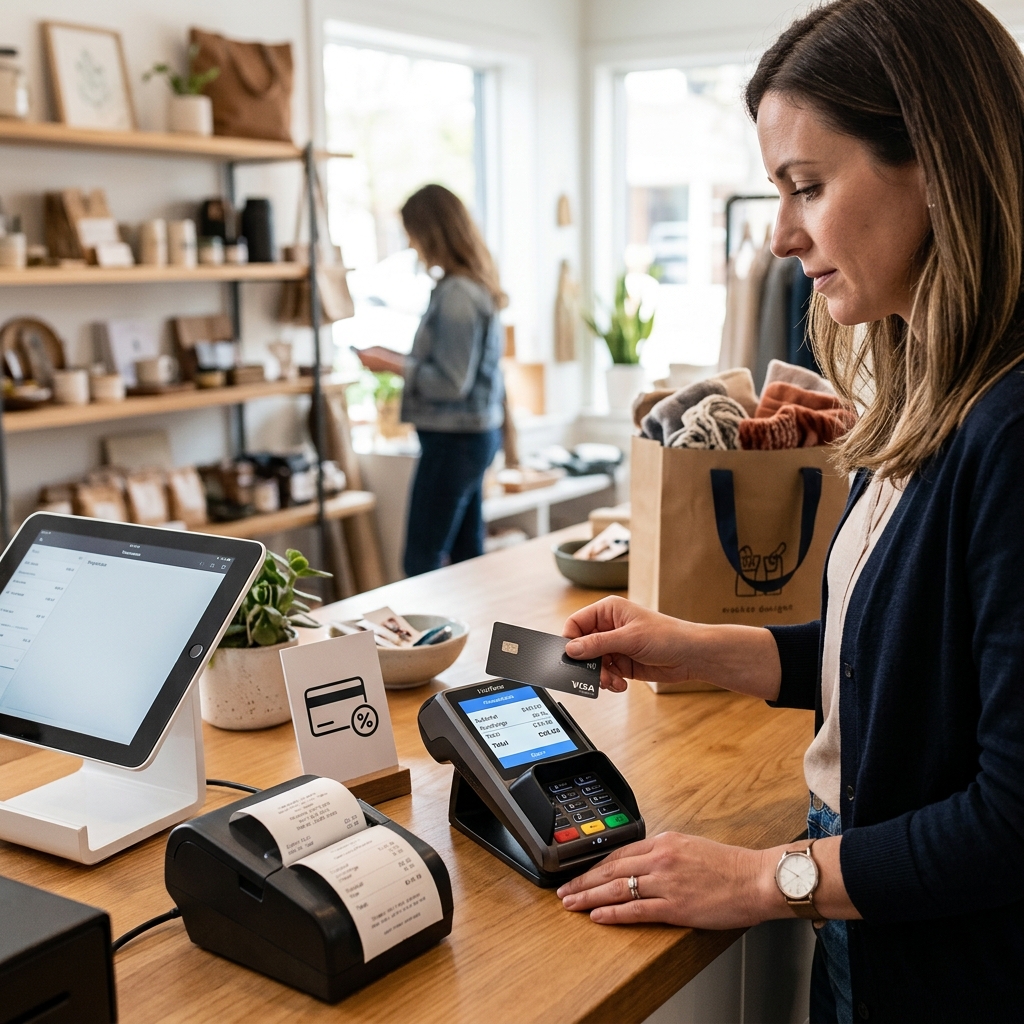
Why Card Surcharges Matter at Checkout
Credit card surcharges are extra fees some merchants add when a customer pays with a credit card instead of cash or another low-cost method. For shoppers, these charges can be surprising because they may appear only at the end of a transaction, after the price seemed fixed. For businesses, the fee is often used to offset payment processing expenses rather than absorb them as overhead.
The key issue for consumers is not just whether a surcharge exists, but whether it is disclosed properly and allowed under the law where the purchase takes place. In the United States, the rules vary by state, and merchants must also follow card-network requirements for notice and disclosure.
How a Surcharge Differs from Other Payment Fees
A surcharge is not the same thing as a convenience fee, service fee, or tax. A surcharge is tied specifically to the choice to use a credit card. That means the customer is being charged more because of the payment method, not because of the product or service itself.
This distinction matters because merchants generally may not label a card surcharge as something else in order to disguise it. Clear disclosure is one of the most important compliance rules, and the fee should be presented in a way that lets the shopper understand the total price before paying.
What the Legal Landscape Looks Like in the United States
The legal treatment of credit card surcharges is uneven across the country. According to the National Conference of State Legislatures, several states and Puerto Rico prohibit surcharges on credit card transactions, while other states allow them with restrictions.
NCSL identifies California, Colorado, Connecticut, Florida, Kansas, Maine, Massachusetts, New York, Oklahoma, Texas, and Puerto Rico among jurisdictions with laws limiting or prohibiting these charges, though the precise enforceability and scope can differ by state. Other summaries note that some states allow surcharges only if they do not exceed the merchant’s actual cost of acceptance or if the merchant gives required notice.
| Category | Examples | General Rule |
|---|---|---|
| Prohibited or tightly restricted | Connecticut, Maine, Massachusetts, Puerto Rico | Merchants generally may not add a credit card surcharge. |
| Allowed with conditions | New York, Colorado, California, Texas, Kansas | Merchants may surcharge only within statutory and disclosure limits. |
| Generally permitted under network rules | Most other states | Surcharges are usually allowed if notice and cap requirements are followed. |
Why Disclosure Rules Are So Important
Even where surcharges are permitted, merchants usually have to tell customers in advance. Visa states that U.S. merchants who surcharge must notify the card network and their acquirer at least 30 days before starting, limit surcharging to credit cards, and clearly disclose the practice at the point of sale and on receipts.
Clear disclosure protects consumers from unexpected price changes. It also prevents merchants from using surcharges in a confusing or misleading way. In practice, this means the customer should be able to see the total price, or at minimum understand that a fee will be added if payment is made by credit card.
States Where Shoppers Should Pay Special Attention
Some jurisdictions have especially strict rules. New York, for example, has been the subject of detailed disclosure requirements that focus on how prices are shown to consumers. Other states, such as Colorado and Illinois, are often described as limiting the amount that can be added, either through a percentage cap or by tying the surcharge to processing cost.
Texas is also noteworthy because state law historically prohibited surcharges, but later court rulings created an enforcement issue that made the state’s ban effectively unenforceable in some contexts. For consumers, this means that the legality of a fee can depend not just on the state name, but on current court decisions, statutory changes, and the type of card used.
Credit Cards, Debit Cards, and Prepaid Cards Are Not Treated the Same
One of the most important consumer protections is the rule that surcharges generally apply only to credit cards, not debit cards or prepaid cards. Visa explicitly requires merchants that surcharge to limit the practice to credit card transactions and not apply the fee to debit or prepaid card payments.
This distinction matters because a terminal or cashier error could lead to a fee being added to the wrong card type. Consumers who use debit cards should be alert to any extra line item that appears after the card is swiped or inserted. If a fee is added to a debit transaction, the merchant may be violating the applicable rules even if it claims the charge is a surcharge.
How Much Can a Merchant Charge?
The amount of a surcharge is not unlimited. Some sources summarize the general cap as around 3% in many places, but state-specific restrictions can be lower, and card-network limits also apply.
Visa states that the surcharge cannot exceed the merchant discount rate for the applicable card, and in no event may it exceed 4%. Other state summaries report lower caps in certain jurisdictions, such as Colorado and Illinois, and some states require the fee to match actual acceptance cost rather than a flat rate.
What Shoppers Can Do Before Paying
- Look for posted signs near the register, on menus, or on the checkout screen that mention card surcharges.
- Check whether the merchant shows the surcharge before the final payment step.
- Compare the cash price and card price if both are listed.
- Review the receipt to confirm that any fee is labeled clearly and matches what was disclosed.
- Ask whether debit cards are treated differently from credit cards if the fee seems unexpected.
When a Surcharge May Be a Problem
A surcharge may raise concerns if the merchant fails to disclose it, charges it on a debit card, adds more than the permitted amount, or operates in a state where such fees are banned or heavily restricted.
Another red flag is confusion about whether the fee is a true surcharge or simply a higher advertised price. Businesses are generally allowed to set different prices for different payment methods when those prices are presented honestly and in compliance with the relevant rules, but they should not surprise customers after the transaction is nearly complete.
Why Businesses Use Surcharges at All
Merchants often impose surcharges because credit card processing reduces their margins. Payment processing fees can be especially difficult for small businesses that sell low-ticket items or operate in competitive markets.
From the business side, a surcharge is meant to shift part of the cost of accepting cards to the customer choosing that payment method. From the consumer side, it can feel like a hidden add-on unless it is clearly disclosed and relatively modest.
Practical Questions Consumers Often Ask
- Can a store charge a fee just because I used my credit card?
- In many states, yes, but only if the merchant follows state law and card-network rules on disclosure and amount.
- Can the same store charge me on one card but not another?
- Merchants may treat credit cards differently from debit or prepaid cards, but they must apply the rules consistently and lawfully.
- What if I was not told about the fee beforehand?
- That may indicate a disclosure problem, especially if the jurisdiction requires advance notice or posted signage.
- Is a surcharge the same in every state?
- No. State law, court decisions, and network rules all influence whether the practice is allowed and how much may be charged.
How to Read a Receipt Carefully
When a surcharge is added, it should appear as a separate line item rather than being buried in the subtotal or mislabeled as a tax. That separation makes it easier for customers to verify what they agreed to pay.
If the receipt does not match the posted policy, consumers should save a copy and raise the issue with the merchant. In some cases, the discrepancy may be a simple clerical error. In others, it may point to a compliance problem that should not be ignored.
FAQs
Are credit card surcharges legal everywhere?
No. Some states and territories prohibit them, while others allow them only under specific conditions.
Can a merchant add a surcharge to debit card purchases?
Generally no. Card-network rules and state rules commonly restrict surcharges to credit card transactions only.
How much can a surcharge be?
It depends on the state and the card network, but it is often capped and may not exceed actual processing cost or a set percentage limit.
What should I do if a surcharge was not disclosed?
Ask the merchant for clarification, keep the receipt, and compare the charge with any posted notice or menu pricing.
References
- Credit or Debit Card Surcharges Statutes — National Conference of State Legislatures. 2025-xx-xx. https://www.ncsl.org/financial-services/credit-or-debit-card-surcharges-statutes
- Credit Card Surcharge Laws by State (2026) — AllayPay. 2026-xx-xx. https://allaypay.com/blog/processing/credit-card-surcharge-laws-by-state/
- Guide to Credit Card Surcharging Laws in Texas for MSPs — FlexPoint. 2026-xx-xx. https://www.getflexpoint.com/credit-card-surcharging-us-states/texas
- A guide to credit card surcharges for businesses — Stripe. 2025-xx-xx. https://stripe.com/resources/more/credit-card-surcharges-explained-what-businesses-need-to-know
- Credit card surcharge laws by state explained for 2025 — LawPay. 2025-xx-xx. https://www.lawpay.com/about/blog/credit-card-surcharge-rules/
- Can a business charge a fee for using a credit card? — Texas State Law Library. 2025-xx-xx. https://www.sll.texas.gov/faqs/credit-card-surcharge/
- Surcharging Credit Cards – Q&A for Merchants — Visa. 2024-xx-xx. https://usa.visa.com/dam/VCOM/download/merchants/surcharging-faq-by-merchants.pdf
Similar Articles








Read full bio of medha deb




