
Creating A Valid Will In New York State: 2025 Checklist
Master the essentials of drafting, signing, and validating a will under New York law to secure your legacy effectively.
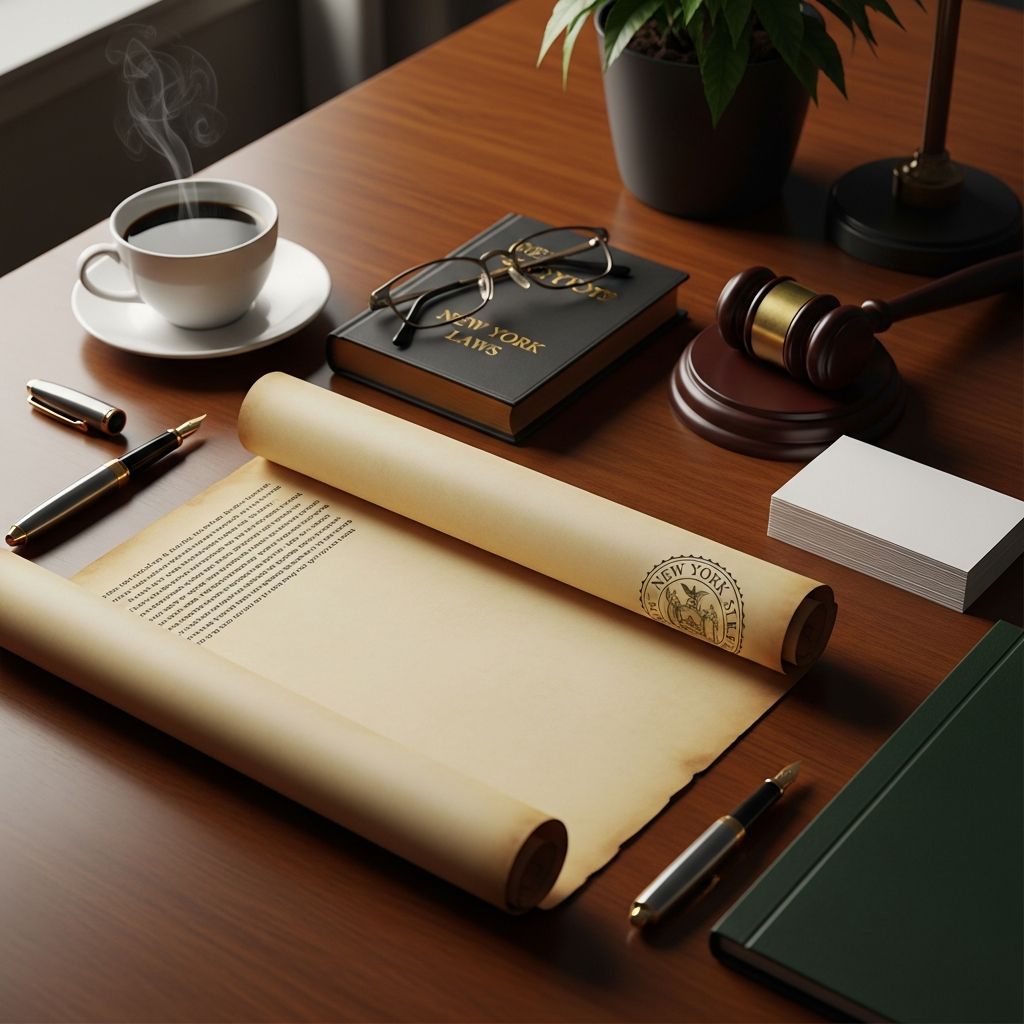
Establishing a will in New York ensures your assets are distributed according to your wishes after death, avoiding intestacy laws that dictate state-controlled distribution. New York’s Estates, Powers and Trusts Law (EPTL) sets rigorous standards for validity, emphasizing testamentary capacity, proper execution, and witnessing to prevent disputes.
Essential Qualifications for Drafting a Will
To qualify as a testator in New York, you must be at least 18 years old and possess sound mind, meaning the ability to understand the nature of your assets, recognize natural heirs, and comprehend the will’s effects. This testamentary capacity protects against claims of incapacity or coercion. Courts assess this at signing time, requiring clear intent without undue influence or fraud.
- Age minimum: 18 years, with no exceptions for minors unless military service applies.
- Mental competence: Ability to make rational decisions about property and family.
- Voluntary action: Free from pressure, deception, or manipulation.
Without these, the will risks invalidation during probate, leading to intestate succession where assets go to spouses, children, or parents per EPTL § 4-1.1.
Core Formalities for a Legally Binding Document
New York demands wills be in writing, signed by the testator at the end, and witnessed by at least two individuals who also sign in the testator’s presence. The testator must declare the document as their will, ensuring witnesses understand its purpose. Signatures need not be on the same page but must appear together logically.
| Requirement | Description | Consequence of Non-Compliance |
|---|---|---|
| In Writing | Physical or typed document; handwritten allowed if witnessed properly. | Invalid unless holographic exception applies. |
| Testator’s Signature | At document’s end, in ink. | Will rejected by Surrogate’s Court. |
| Two Witnesses | Sign after testator declares it their will; present simultaneously or sequentially. | No probate acceptance; intestacy rules apply. |
| Declaration | Verbal acknowledgment to witnesses. | Potential fraud/undue influence challenges. |
Self-proving affidavits from witnesses, notarized post-signing, streamline probate by avoiding testimony.
Handwritten Wills: Limited Acceptance in NY
Holographic wills—entirely handwritten and unsigned by witnesses—are generally invalid in New York, unlike some states. Exceptions exist for active military members or seafarers, valid for three years post-service under EPTL § 3-2.2. For civilians, any unwitnessed handwriting fails strict statutory tests, risking total asset forfeiture to heirs-at-law.
Courts prioritize formal execution to verify authenticity, rejecting standalone handwriting absent extraordinary proof.
Appointing an Executor: Key Responsibilities
Designate an executor (or personal representative) to manage probate, pay debts, file taxes, and distribute assets. Choose someone trustworthy, organized, and residing in New York for efficiency—out-of-state executors face added hurdles. Name alternates to avoid court appointment if primary declines.
- Inventory assets and secure them.
- Notify beneficiaries and creditors.
- Handle Surrogate’s Court filings within months of death.
- Distribute per will after clearances.
Revoking or Updating Your Will
Marriage, divorce, birth, or asset changes necessitate updates. Revocation occurs via physical destruction, new will with revocation clause, or written instrument. Partial updates use codicils—amendments following same formalities—but full rewrites prevent conflicts. Review every 3-5 years or post-life events.
Probate Process: From Filing to Distribution
After death, the executor files the will with the county Surrogate’s Court, proving validity via witnesses or affidavits. Probate timelines vary: small estates (<$50,000) use simplified procedures; larger ones require full administration, lasting 9-18 months. Fees are statutory, based on estate value (2-5%).
Intestate estates follow: spouse gets first $50,000 plus half; children split remainder. Wills override this, but non-probate assets (joint accounts, beneficiaries) pass directly.
Electronic Wills: Emerging Legal Framework
As of 2025, New York debates electronic wills via proposed EPTL amendments (A09497). If enacted, electronic wills require text-readable format, testator signature (digital/physical), two state-domiciled witnesses signing within 30 days in physical/electronic presence, and filing with Unified Court System within 30 days—or invalid.
Key mandates:
- Bold, conspicuous disclosure warning of formalities.
- Audit trails for tamper-evidence.
- Notary acknowledgments under seal.
- Court custody post-filing.
Critics note ambiguities: paper wills potentially qualifying as ‘electronic,’ lacking tamper-proofing, and military will inconsistencies. Legislation aims for modernization but demands precision to uphold intent.
DIY vs. Professional Assistance
Individuals can draft wills without lawyers if formalities are met, but complexities like trusts, taxes, or disputes favor attorneys. Online tools help simple cases, but errors invite litigation. Costs: DIY free; lawyer $500-$2,500. For blended families or businesses, pros ensure compliance.
Common Pitfalls and Prevention Strategies
Avoid invalidation by:
- Using disinterested witnesses (non-beneficiaries).
- Signing in one session.
- Storing securely, informing executor of location.
- Excluding oral promises; everything in writing.
Fraud claims arise from secrecy or influence; video recordings aid proof but aren’t substitutes for statutes.
Frequently Asked Questions
Can I make a will without a lawyer in New York?
Yes, as long as you meet age, capacity, writing, signature, and two-witness rules. However, professional review minimizes risks for complex estates.
Are handwritten wills legal in New York?
Generally no, except for military or mariners during service. All others need witnesses.
What if my will lacks witnesses?
It’s invalid; courts apply intestacy laws. Witnesses confirm voluntary execution.
Will electronic wills be allowed soon?
Proposed bills (2025) outline rules including filing mandates; monitor EPTL updates.
How do I choose an executor?
Select reliable, local individuals; name backups. They handle probate duties.
Planning Beyond the Basics
Integrate wills with powers of attorney, healthcare proxies, and trusts for comprehensive planning. New York’s 2026 tax changes loom, urging action before cliffs. Consult EPTL for specifics; local bars offer resources.
References
- Will New York Law Allow for the Electronic Execution of Wills? — NY Estate Litigation Blog. 2025-07. https://www.nyestatelitigationblog.com/2025/07/articles/probate/will-new-york-law-allow-for-the-electronic-execution-of-wills/
- How to make a will in New York — FreeWill. Recent access 2026. https://www.freewill.com/learn/how-to-make-a-will-in-new-york
- Report on the Proposed Electronic Wills Act in NY — New York City Bar Association. Recent. https://www.nycbar.org/reports/report-on-the-proposed-electronic-wills-act-in-ny/
- NY Probate, Wills & Executors: The 2025/2026 Guide — Morgan Legal NY. 2025. https://www.morganlegalny.com/ny-probate-wills-executors-the-2025-2026-guide/
- Requirements of Executing a Proper Will in New York — Stephen Bilkis & Associates. Recent. https://estatelawyer.1800nynylaw.com/practice-areas/new-york-probate-lawyers/new-york-estate-planning-lawyer/requirements-of-executing-a-proper-will-in-new-york/
- LEGALease: Why You Need a Will — New York State Bar Association. Recent. https://nysba.org/legalease-why-you-need-a-will/
- Bill Text: NY A09497 | 2025-2026 — LegiScan. 2025. https://legiscan.com/NY/text/A09497/2025
Similar Articles








Read full bio of Sneha Tete


