
Creating a Parenting Plan That Works for Your Family
A practical, child-focused guide to building a clear parenting plan after separation or divorce.
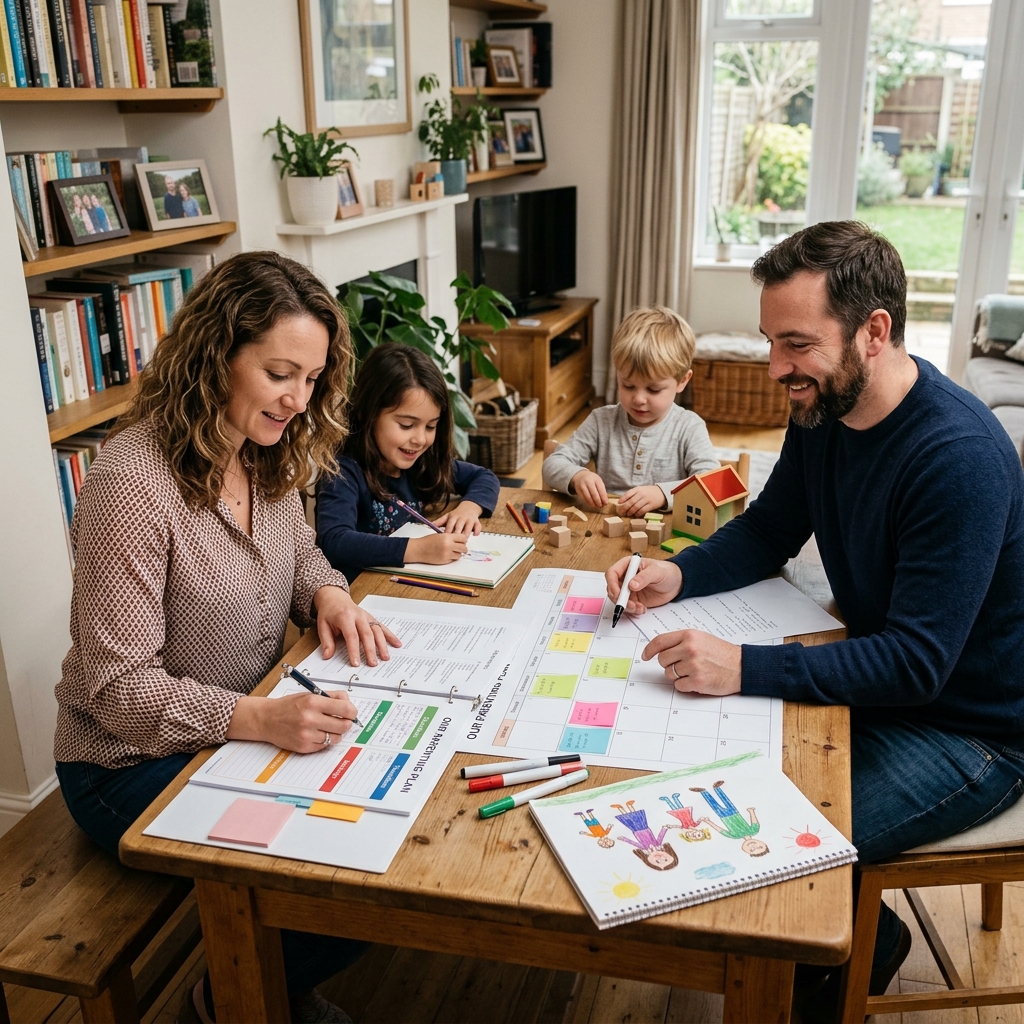
A well-thought-out parenting plan is one of the most useful tools separating or divorcing parents can create. It sets out how you will raise your children while living in different homes, and it focuses on making life as stable and predictable as possible for them.
This guide explains what a parenting plan is, why it is important, and how to design one that is realistic, child-focused, and tailored to your family’s circumstances.
1. What Is a Parenting Plan?
A parenting plan is a written agreement that explains how parents will share responsibilities for their children after they separate or divorce. It usually covers:
- Parenting time – when the children will be with each parent
- Decision-making – how important decisions about the children will be made
- Communication – how parents will exchange information and stay in touch about the children
- Problem-solving – what happens if the parents disagree in the future
In many places, the law encourages parents to create detailed parenting plans because clear expectations tend to reduce conflict and provide more stability for children. A parenting plan can sometimes be made legally binding if it is included in a court order or separation agreement, so it is important to get legal advice in your jurisdiction before signing.
2. Why Parenting Plans Matter for Children
Research consistently shows that conflict between parents, rather than separation itself, is what most harms children’s well-being. When parents agree in advance on routines, responsibilities, and decision-making, they are less likely to argue in front of their children or place children in the middle of disputes.
A thoughtful parenting plan can help children because it:
- Gives them a predictable schedule so they know where they will sleep and who will pick them up.
- Shows that both parents remain committed to their care.
- Reduces uncertainty about holidays, travel, and special events.
- Helps parents handle disagreements privately and constructively.
Parents also benefit from having clear guidelines. A detailed plan can:
- Limit misunderstandings about times and responsibilities.
- Help parents plan work schedules, childcare, and activities.
- Provide a framework for adjusting arrangements as children grow and circumstances change.
3. Key Principles of a Strong Parenting Plan
Every family is different, but most effective parenting plans share several core features.
- Child-focused: The plan should put the best interests of the child ahead of convenience for either parent. This includes looking at the child’s age, health, schooling, ties to community, and relationships with each parent.
- Clear and specific: Vague language like “reasonable parenting time” often leads to disputes. Concrete details about schedules, exchanges, and communication are more helpful.
- Realistic: The plan needs to fit work schedules, distance between homes, and the child’s school and activities.
- Flexible where possible: Life changes. A good plan builds in ways to adjust times and responsibilities without having to return to court for every minor change.
- Respectful: The plan should encourage polite communication and shield children from adult disagreements.
4. Parenting Time and Living Arrangements
One of the most important parts of a parenting plan is the parenting time schedule: where the children will live and when they will be with each parent.
4.1 Building a Regular Parenting Schedule
When designing a regular weekly or bi-weekly schedule, consider:
- The child’s school and daycare hours
- Parents’ work and shift patterns
- Travel time between homes and school
- The child’s activities, friendships, and routines
Some children do well with frequent transitions between homes, while others prefer longer blocks of time in one place. For younger children, more frequent but shorter contact with each parent may support attachment. Older children may cope well with schedules that involve several days with each parent at a time.
4.2 Weekdays, Weekends, and Holidays
The plan should distinguish between the regular school-year schedule and special times like holidays and summer. Many parents choose to alternate long weekends and school breaks so that each parent has meaningful, relaxed time with the children.
| Area | Questions to Answer |
|---|---|
| School days | Who handles drop-offs and pick-ups? Where do the children stay on school nights? |
| Weekends | Are weekends alternated, shared, or attached to the week schedule? |
| Holidays and special days | How are major holidays, birthdays, and cultural or religious events shared? |
| Vacations | How much notice is required? Are there limits on travel locations or length of trips? |
| Transportation | Who is responsible for driving or other transport? Where do exchanges happen? |
4.3 Transportation and Exchanges
To prevent confusion and conflict, the plan should state:
- Where exchanges will occur (home, school, neutral public place)
- Who is responsible for drop-off and pick-up on each occasion
- How delays or emergencies will be handled (for example, a requirement to call or text as soon as possible)
- Who pays for transportation costs when parents live far apart
5. Decision-Making Responsibility
A parenting plan should clearly explain how important decisions about the children will be made. Decision-making may be shared, divided by topic, or primarily held by one parent with a duty to consult the other.
5.1 Everyday Choices vs. Major Decisions
Most plans distinguish between:
- Day-to-day decisions, such as meals, bedtime, and household rules in each home.
- Major decisions, such as education, non‑emergency health care, religious upbringing, and significant extracurricular commitments.
Day-to-day decisions are usually made by the parent caring for the children at that time. For major decisions, decide in advance whether parents must reach joint agreement or whether one parent has the final say after consultation.
5.2 Areas of Decision-Making to Clarify
It can be helpful to address specific categories, for example:
- Education: school choice, special education services, tutoring, and permission for school trips.
- Health and medical care: family doctor and dentist, vaccinations, therapy or counselling, and non-emergency procedures.
- Religious or cultural matters: participation in religious education, ceremonies, and important cultural practices.
- Activities: sports, arts, and other programs that may affect both parents’ schedules and finances.
6. Communication Between Parents
Co‑parenting is easier when there are clear rules about how you will exchange information about the children. A parenting plan can reduce tension by setting expectations for what, how, and when you will communicate.
6.1 What Information Will Be Shared?
Parents usually need to share information about:
- School reports, meetings, and notices
- Medical appointments and health updates
- Changes in contact details (phone numbers, email, home address)
- Travel plans and temporary changes to the child’s address
- Significant events affecting the child’s well-being
6.2 How Will You Communicate?
To reduce misunderstandings, many plans specify communication methods, such as:
- Email for non-urgent information
- Text messaging or phone calls for time-sensitive matters
- Specialized co‑parenting communication apps
- In-person discussions at agreed times
For parents with high conflict, written communication (email or apps) can provide a clear record and limit emotional exchanges.
6.3 Emergency and Child-to-Parent Contact
The plan should address:
- How parents will contact one another in emergencies involving the child
- How quickly parents are expected to respond to urgent messages
- How children can contact the other parent during parenting time (for example, regular phone or video calls)
7. Health, Safety, and Daily Expectations
Children generally benefit when rules and expectations are reasonably consistent in both homes, especially around health and safety.
7.1 Health Care and Special Needs
Your parenting plan can include:
- Who schedules routine medical and dental appointments
- How both parents will access medical information and records
- Agreements on medications, therapy, and counselling
- How emergency room visits or urgent care will be communicated
If a child has disabilities or special health needs, the plan should address how parents will coordinate services and explain any special training or information the other parent must have to care safely for the child.
7.2 Safety, Discipline, and Screen Use
Plans often include shared expectations about:
- Supervision and safe use of cars, bicycles, or recreational vehicles
- Alcohol, cannabis, or other substances in the home
- Bedtimes, homework, and general discipline approaches
- Children’s use of phones, gaming, social media, and the internet
The goal is not to make both homes identical, but to avoid extreme differences that might confuse children or put them at risk.
8. Changing the Plan and Resolving Disagreements
No plan can foresee every future situation. Children grow, parents change jobs, and families move. Parenting plans work best when they contain a clear process for change and problem-solving.
8.1 Reviewing and Updating the Plan
You can build into your plan:
- Regular review dates (for example, every year, or after a major transition like starting school)
- A process for proposing changes in writing
- How much notice is needed before making a significant change to the parenting schedule
Parents may agree to discuss changes when:
- The child reaches a new developmental stage
- A parent’s work schedule changes substantially
- The family relocates or the distance between homes increases
8.2 Mediation and Other Dispute Resolution Options
Many governments and community organizations provide mediation or conciliation services to help parents develop and adjust parenting plans. In mediation, a neutral professional helps parents identify issues, explore options, and reach an agreement, but does not make decisions for them.
Your plan can say that if a dispute arises, you will:
- Try to resolve it directly within a set timeframe
- Use mediation, parenting coordination, or another agreed service
- Consider legal advice or court only if other efforts fail
Including a clear dispute resolution process can prevent disagreements from escalating and reduce the time and cost of court involvement.
9. Making Your Parenting Plan Official
Depending on your jurisdiction, there may be different ways to formalize a parenting plan. In many places, parents can:
- Include the plan in a separation agreement prepared with the help of lawyers.
- Ask a court to turn their plan into a court order as part of a divorce or parenting application.
- Use a government or court-connected mediation program to develop and document the plan.
Parents should get legal advice to understand the consequences of signing a parenting plan, especially how it may be enforced or changed later.
10. Practical Tips for Writing Your Plan
When you are ready to put your plan into writing, the following tips can help.
- Use clear, simple language: Write the plan in plain terms that both parents can easily understand.
- Organize by topic: Group sections under headings such as parenting time, decision-making, communication, and problem-solving.
- Think long-term: Consider how the plan will work as your child gets older and needs change.
- Stay respectful: Avoid blame or criticism in the written document; focus on the child’s needs.
- Get help if needed: Legal professionals, mediators, and family justice services can provide guidance and templates.
11. Frequently Asked Questions (FAQs)
Do we need a lawyer to make a parenting plan?
You can draft a parenting plan yourselves, but it is wise for each parent to get independent legal advice before signing. A lawyer can explain how the plan fits local laws, how it may be enforced, and what to consider before agreeing long term.
Is a parenting plan legally binding?
Whether a parenting plan is legally binding depends on your jurisdiction and how it is formalized. In many places, a plan becomes enforceable when it is included in a court order or separation agreement. Check local laws or speak with a family law professional to understand the rules where you live.
Can we change the parenting plan later?
Yes. Parenting plans are meant to evolve as children grow and circumstances change. Many plans include a review schedule and a process for proposing changes. Significant changes may need new court orders if your plan is part of an existing order.
What if we cannot agree on a plan?
If you cannot reach agreement on some or all of the issues, you can ask for help from mediation or conciliation services, or seek legal advice. As a last resort, a court can make decisions about parenting arrangements based on the child’s best interests.
Should children be involved in creating the plan?
Children should not be asked to choose between parents, but their needs and views can be considered in an age‑appropriate way. Parents or professionals may speak with the child to understand their routines, worries, and preferences, and then use that information to shape the plan without making the child responsible for decisions.
References
- Issues to Consider When Making Arrangements About the Children — Department of Justice Canada. 2002-01-01. https://publications.gc.ca/collections/collection_2013/jus/J4-25-2002-eng.pdf
- Parenting Plan Guide — Association of Family and Conciliation Courts (AFCC). 2020-01-01. https://www.afccnet.org/Portals/0/PDF/AFCC-O-Parenting-Plan-Guide%20(Jan%202020)1.pdf
- Parenting Plan Checklist: Information to Help You Get Started — Department of Justice Canada. 2021-01-01. https://www.justice.gc.ca/eng/fl-df/parent/ppc-lvppp/index.html
- Issues to Consider When Making Arrangements About the Children (re parenting plan communication and changes) — Department of Justice Canada. 2002-01-01. https://publications.gc.ca/collections/collection_2013/jus/J4-25-2002-eng.pdf
- Parenting Plan Mediation — Government of Prince Edward Island, Justice and Public Safety. 2023-01-01. https://www.princeedwardisland.ca/en/information/justice-and-public-safety/parenting-plan-mediation
Similar Articles








Read full bio of medha deb


