
Creating a Legally Solid Boat Bill of Sale
Learn how to draft a clear, legally sound boat bill of sale that protects both buyer and seller and simplifies registration and titling.
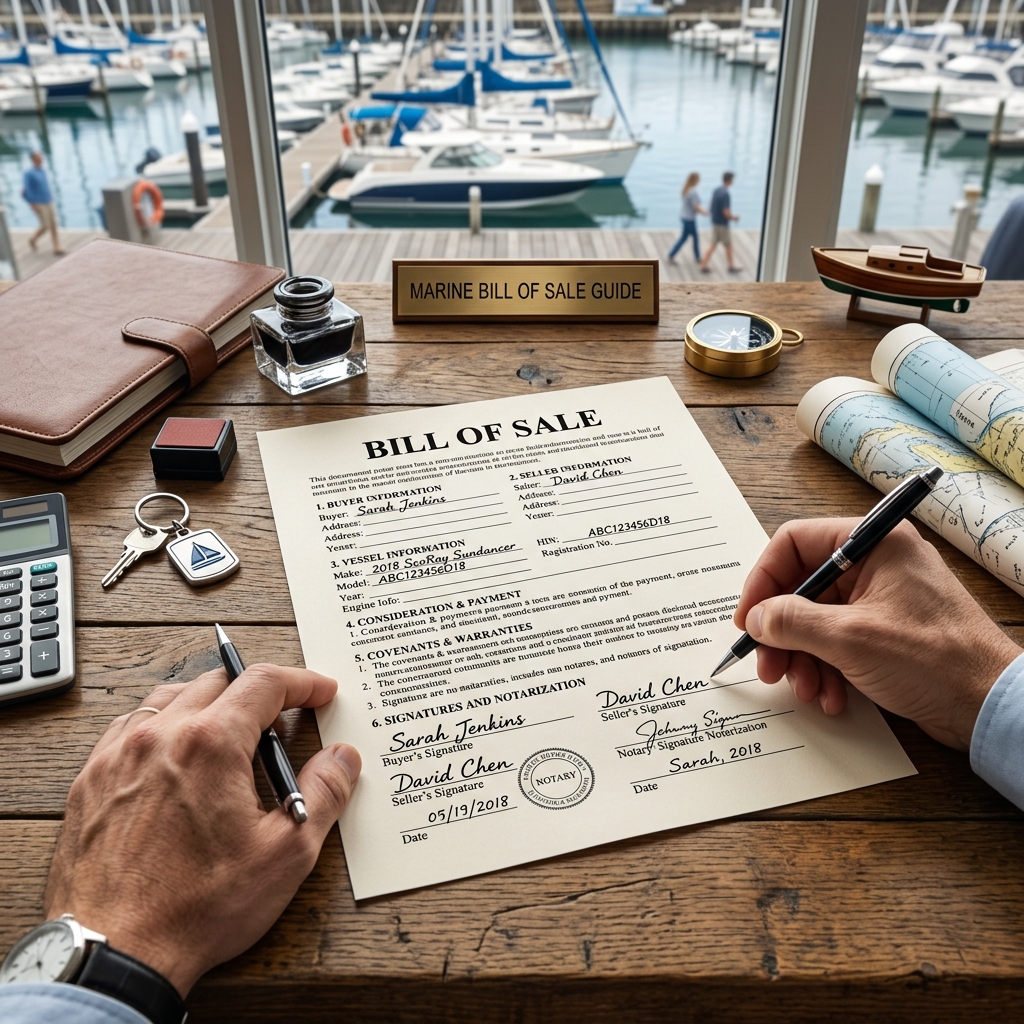
A boat bill of sale is the core document that records the transfer of ownership when a vessel is bought or sold. It captures who is involved in the transaction, what is being sold, the price, and the terms under which the boat changes hands. When prepared correctly, it helps prevent disputes, supports registration and titling, and provides proof of ownership for insurance and financing.
Why a Boat Bill of Sale Matters
Many private boat sales take place between individuals rather than through dealers, which means there is no standard purchase contract automatically provided. In these situations, a well-drafted bill of sale is not just a formality; it is often a legal necessity.
- Proof of ownership: The buyer needs a bill of sale to show that they lawfully acquired the vessel and to register or title it, especially in states where a signed bill of sale is required by the boat registration authority.
- Evidence of the transaction: The document records the agreed price, date, and terms, which can be critical if tax authorities or regulators later question the sale.
- Protection from later claims: A clear statement that the seller owns the boat and that it is free of liens (unless disclosed) helps prevent future disputes over outstanding loans or security interests.
- Support for warranties or “as-is” sales: The bill of sale can indicate whether the boat is sold with any seller warranty or strictly “as-is” with no promises about condition.
Because boat transactions often involve significant value, taking the time to prepare a careful bill of sale is an important risk-management step for both sides.
Core Elements Every Boat Bill of Sale Should Include
While formats may vary, certain details are widely recognized as essential to a legally useful boat bill of sale.
1. Buyer and Seller Identification
The first section usually identifies the parties who are entering into the transaction:
- Full legal names of buyer and seller
- Mailing addresses, including city, state, and ZIP code
- Optional but helpful: phone numbers and email addresses for future contact
Using legal names (rather than nicknames) and current addresses helps authorities match the transaction to registration records and reduces confusion.
2. Date and Location of the Sale
The bill of sale should clearly show when and where the sale occurred:
- Date of sale: Indicates when ownership and risk pass from seller to buyer.
- City and state where the sale took place: Useful for tax and legal purposes and may affect which law governs the transaction.
Accurate dating is especially important if multiple documents (such as a title and registration card) must line up chronologically.
3. Detailed Description of the Boat
The boat description is one of the most critical sections. Authorities and insurers rely on this information to identify the vessel.
- Make and model of the boat
- Year of manufacture
- Style or type (e.g., sailboat, cabin cruiser, fishing boat)
- Length, often in feet
- Hull Identification Number (HIN) for boats built after 1972, or another serial number for older vessels.
- Registration or title number, if applicable
- Primary color and any distinctive secondary colors or striping
Including this level of detail helps ensure the buyer can later register and title the exact vessel purchased without ambiguity.
4. Engine and Motor Information (If Applicable)
Most motorized boats have engines that are separately identified. For these vessels, it is wise to list engine details in the bill of sale:
- Engine brand and model
- Serial number
- Year of manufacture
- Horsepower and engine size/displacement
If an outboard motor is included, mention whether it is part of the sale price or priced separately. This can matter if the buyer later replaces the engine or sells it independently.
5. Trailer and Additional Equipment
Many boat sales include a trailer or other accessories. These items should be clearly listed to avoid disputes over what was, or was not, included:
- Trailer description: brand, model, year, and serial number or VIN
- Trailer length, width, and capacity, if known
- Any other included items, such as life jackets, paddles, electronics, covers, or safety gear
If a trailer is not part of the deal, the bill of sale can expressly state that no trailer is included.
6. Purchase Price and Payment Terms
The financial part of the bill of sale should be clear enough that both parties agree on exactly what is being paid and how:
- Total purchase price, written numerically and optionally in words
- Currency (usually U.S. dollars)
- Form of payment: cash, check, money order, certified check, bank transfer, or other method
- Any installment or payment plan terms, including schedule and interest, if applicable
Some jurisdictions review sale prices for tax purposes, so the written amount should match any title and registration documents submitted.
7. Ownership, Liens, and Condition Statements
To reduce risk, a good bill of sale normally includes basic legal statements:
- Ownership: A declaration that the seller is the lawful owner of the boat and has the right to sell it.
- Liens and encumbrances: A statement that the vessel is free of liens unless specifically listed, or that any outstanding loan has been satisfied.
- Condition: Whether the boat is sold “as-is” without any warranty, or with specific guarantees about condition or performance.
Where a loan was previously secured by the boat, the buyer may need a separate lien release letter to complete titling.
8. Signatures and Notarization
The bill of sale only becomes effective once signed by the parties. At a minimum, it should have:
- Signature lines for the seller (or all co-owners where required)
- Signature line for the buyer
- Printed names under each signature
- Dates of signature
Some states require notarization of signatures for certain boat transactions or recommend it for added security. Including a space for a notary acknowledgment can make it easier if notarization is needed or desired.
Suggested Layout: Sample Boat Bill of Sale Structure
The table below shows a typical way to organize information in a boat bill of sale. It is not a fixed template, but can help you visualize how the parts fit together.
| Section | Key Contents |
|---|---|
| Party Details | Buyer and seller names, addresses, contact information |
| Sale Information | Date of sale, location (city, state) |
| Boat Description | Make, model, year, style, length, HIN, color, registration/title number |
| Engine Details | Brand, model, serial number, year, horsepower, displacement |
| Trailer & Extras | Trailer description, VIN/serial, size, capacity; accessories included |
| Price & Payment | Total price, payment method, any installment terms |
| Legal Statements | Ownership, liens, condition (as-is or warranty), governing law |
| Signatures | Buyer and seller signatures, printed names, dates, notary block if needed |
State Requirements and Registration Considerations
Boat registration and titling procedures vary by state, but many authorities ask for a bill of sale as part of the documentation when a vessel changes hands.
- Some states require specific forms or information to accompany an application for boat registration or title, including the bill of sale signed by the last registered owner.
- Jurisdictions may expect the bill of sale to list the location and date of sale, boat description, and HIN or other serial number.
- Tax departments or revenue agencies might review sale prices and investigate values that appear suspiciously low.
Because of these differences, both buyers and sellers should verify their state’s current requirements on the official website of the relevant boat or wildlife agency before completing the transaction.
Practical Tips for Sellers
Sellers can reduce legal and practical problems by being methodical about the documentation around a boat sale.
- Prepare the boat and paperwork in advance: Clean the vessel, gather maintenance records, locate the title and registration documents, and confirm the HIN and engine serial numbers.
- Verify co-owner signatures: Where more than one owner appears on the title, check whether all must sign the sale documents or whether any one of them can sign. Some forms require all owners to execute the transfer.
- Address outstanding loans: If a lender has a security interest, pay off the loan or arrange a payoff statement and lien release so the buyer can title the boat without complications.
- Keep a copy: Retain a copy of the signed bill of sale for your records in case questions arise later about the transaction or tax filings.
Practical Tips for Buyers
Buyers can protect themselves by carefully reviewing the bill of sale and verifying that it includes all necessary information.
- Confirm vessel identity: Check that the HIN, engine serial number, and registration numbers on the document match those physically present on the boat.
- Ask about liens: Request written confirmation of any loan payoff or lien release so you are not surprised by later claims from creditors.
- Make sure all included items are listed: If the price includes a trailer or valuable accessories, confirm that they appear in the bill of sale with sufficient detail.
- Understand “as-is” language: If the boat is sold without warranties, recognize that you are accepting the risk of existing defects and consider having a professional inspection before signing.
Common Mistakes to Avoid
Even simple oversights can cause headaches after a boat sale. The following errors come up frequently and are relatively easy to avoid:
- Missing HIN or serial numbers: Omitting key identifiers may delay registration or raise questions about the boat’s history.
- Incomplete signatures: Failing to obtain all required signatures, especially when multiple owners appear on the title, can invalidate the transfer.
- Unclear price or payment terms: Vague wording about the total price or payment schedule may lead to disputes.
- No mention of liens: Leaving lien information out entirely can create problems if a lender later claims a security interest in the vessel.
FAQs About Boat Bills of Sale
Do I always need a written boat bill of sale?
In most private boat transactions, a written bill of sale is strongly recommended, and some states require it for registration or titling. Even where not strictly required by law, it provides clear evidence of ownership and transaction details.
Is a handwritten bill of sale acceptable?
A handwritten bill of sale can be legally valid if it includes the necessary information, is legible, and is properly signed by both parties. However, typed or printed documents are often easier to read and less prone to mistakes.
Do I need to have the bill of sale notarized?
Notarization is not always mandatory, but certain states or particular transactions may require it or strongly encourage it. Adding a notary acknowledgment section gives you the flexibility to obtain notarization if desired.
What if the boat is sold with a trailer and outboard motor?
When multiple items are involved, list each separately with its own identifiers. Include the trailer’s brand, model, year, and serial number or VIN, and the engine’s brand, model, and serial number. This clarity helps avoid later confusion over what was included in the sale.
Can a bill of sale be used instead of a title?
No. A bill of sale records the purchase, while a title is the formal evidence of legal ownership issued by a state agency. In many places, the buyer will need both a properly signed title and a bill of sale to complete the ownership transfer.
References
- Boat Bill of Sale Form — FormSwift. 2023-06-01. https://formswift.com/boat-bill-of-sale
- Free Boat Bill of Sale Template Example — DocuSign. 2022-11-10. https://www.docusign.com/templates/boat-bill-of-sale
- Boat Bill Of Sale Guide with Examples — Boat Trader Blog. 2023-05-15. https://www.boattrader.com/research/boat-bill-of-sale/
- Title a Boat — Commonwealth of Pennsylvania, Pennsylvania Fish and Boat Commission. 2024-02-20. https://www.pa.gov/services/fishandboat/title-a-boat
- Buyer and Sellers Guide to Titled Boat Sales — Wisconsin Department of Natural Resources. 2021-09-01. https://dnr.wisconsin.gov/sites/default/files/topic/Permits/vehicleRegistrations/SamplebillofSale.pdf
- Free Boat (Vessel) Bill of Sale Template — eSign. 2023-04-18. https://esign.com/bill-of-sale/boat/
- Pennsylvania Boat Bill of Sale — eForms. 2022-08-05. https://eforms.com/bill-of-sale/pa/pennsylvania-boat-bill-of-sale/
Similar Articles








Read full bio of Sneha Tete


