
Roommate Contract: Essential Guide For Shared Homes
Essential guide to creating a roommate contract that prevents conflicts, clarifies finances, and fosters harmonious shared living.
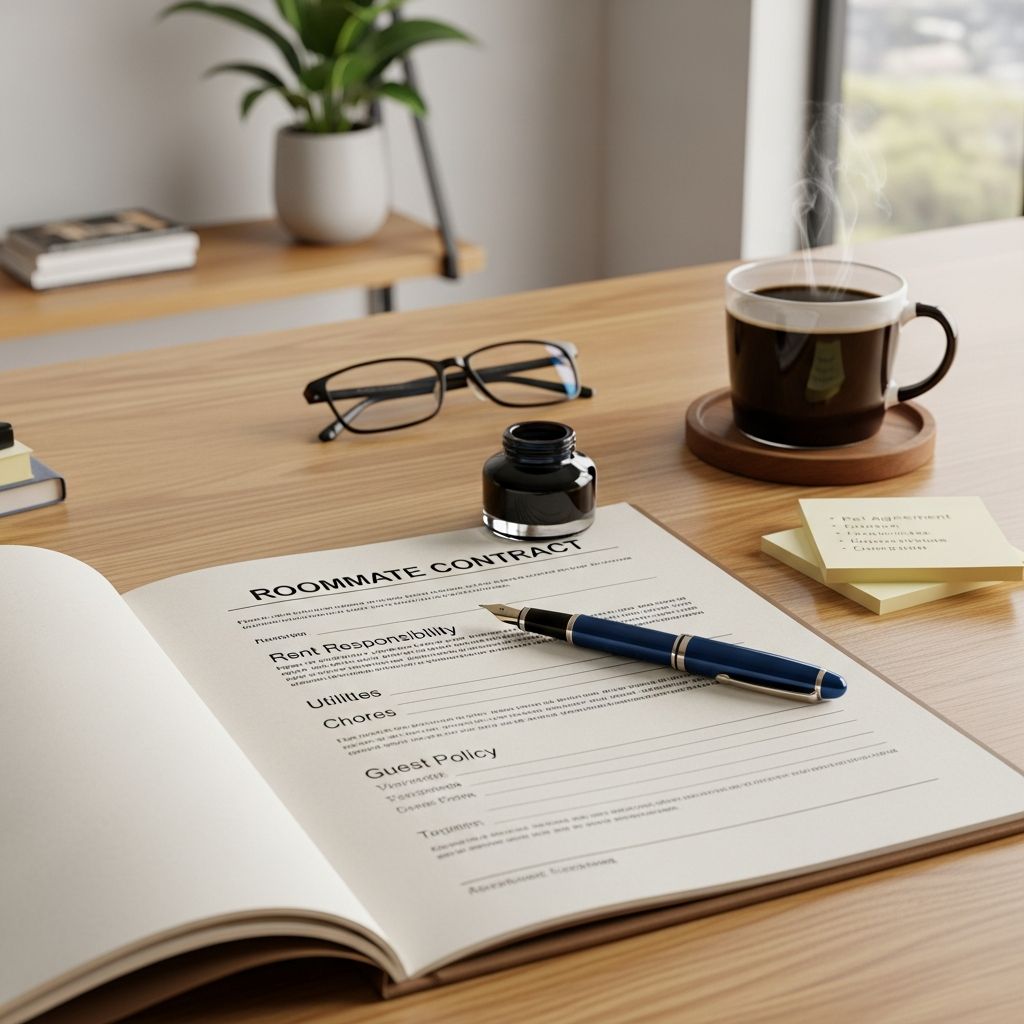
Sharing a living space with others can be rewarding but often leads to misunderstandings without clear guidelines. A well-drafted roommate contract serves as a foundational document that outlines expectations, financial responsibilities, and behavioral norms among co-tenants. This agreement supplements the primary lease with the landlord, focusing exclusively on inter-roommate relations to minimize conflicts and promote accountability.
Why Every Shared Household Needs a Roommate Contract
In shared rentals, disputes frequently arise over money, cleanliness, or personal space. Statistics from housing authorities indicate that unclear arrangements contribute to a significant portion of tenant evictions and small claims filings. A roommate contract mitigates these risks by establishing mutual consent on key issues upfront.
- Prevents Financial Disputes: Clearly defines who pays what and when, reducing arguments over late bills.
- Promotes Cleanliness and Order: Assigns chores and maintenance duties fairly.
- Sets Boundaries for Guests and Noise: Ensures respect for everyone’s privacy and rest.
- Provides Exit Strategies: Details procedures for early departures or replacements.
While not always legally mandated, such contracts gain enforceability when signed voluntarily and contain precise terms, as supported by contract law principles from state housing codes.
Core Components of an Effective Roommate Contract
A robust roommate contract must cover essential areas to be comprehensive. Begin with basic identifiers like full names, the property address, and the agreement’s effective date. Then, delve into specifics tailored to your household.
Financial Obligations Breakdown
Money matters form the backbone of most agreements. Detail rent splits, which may be equal or proportional to room size or income.
| Expense Type | Division Method | Payment Due Date | Responsible Party |
|---|---|---|---|
| Rent | Equal shares (e.g., $800 each) | 1st of month | All roommates |
| Electricity | Proportional to usage | 15th of month | Designated payer |
| Internet | Equal shares | 10th of month | All roommates |
| Security Deposit | $500 per person | Refund upon move-out | Pro-rated deductions |
Include provisions for security deposits, specifying contributions and how deductions for damages will be handled. Utilities should list providers and tracking methods, such as apps for splitting bills automatically.
Household Chores and Maintenance
Dividing labor prevents resentment. Create a rotating schedule for tasks like vacuuming, dishwashing, and trash removal.
- Weekly deep clean: Kitchen and bathrooms on Sundays.
- Daily responsibilities: Load dishwasher after use.
- Outdoor maintenance: Shared yard work bi-weekly.
Appoint a chore coordinator to monitor compliance and adjust schedules quarterly.
Personal Space and Shared Areas
Define private versus communal zones. Bedrooms are typically private, while kitchens, living rooms, and bathrooms are shared.
- No entering private rooms without permission.
- Shared fridge sections labeled for each person.
- Furniture ownership tracked to avoid replacement disputes.
Behavioral Guidelines for Peaceful Co-Living
Beyond finances and chores, rules on daily conduct ensure harmony.
Guest Policies and Overnight Stays
Guests can strain relationships if unregulated. Limit overnight visitors to three nights per month per roommate, requiring 24-hour notice to others.
- No guests during quiet hours (10 PM – 7 AM).
- Romantic partners count as guests unless approved otherwise.
- Party hosts clean up immediately after.
Noise, Pets, and Lifestyle Rules
Establish quiet hours and media volume limits. Pet policies should specify types, care duties, and fees if applicable. Smoking or substance use rules must align with lease terms and local ordinances.
- Quiet hours: 10 PM to 8 AM weekdays.
- Pets: Only with unanimous approval; owner handles all costs.
- No smoking indoors; designated outdoor areas only.
Handling Conflicts and Early Terminations
Even the best plans face challenges. Include a step-by-step dispute resolution process: first, direct discussion; second, mediated talks; third, binding arbitration or small claims court.
For move-outs, require 30 days’ notice. The departing roommate must find a suitable replacement subject to group approval, or cover rent until filled. Joint liability under the main lease means all remain accountable to the landlord.
Legal Considerations and Enforceability
Roommate contracts are binding contracts under common law if they meet offer, acceptance, and consideration standards. However, they cannot supersede the primary lease or violate fair housing laws. Consult state-specific resources for nuances, such as California’s joint liability rules for co-tenants.
Sign in counterparts, date, and keep copies. Notarization adds weight but isn’t required.
Sample Roommate Contract Template
Customize this outline for your needs:
Roommate ContractDate: [Insert Date]Property: [Address]Roommates: [Names]1. Rent: [Details]2. Utilities: [Details]3. Chores: [Schedule]4. Guests: [Rules]5. Termination: [Terms]Signatures: _________________ _________________ _________________Frequently Asked Questions
What makes a roommate contract legally enforceable?
It must be clear, signed by all parties, and not contradict the main lease or laws. Courts uphold them in small claims for breaches like unpaid shares.
Can a roommate contract override the landlord’s lease?
No, it supplements only inter-roommate terms. All must comply with landlord rules.
How do we handle someone skipping chores?
Include penalties like fines donated to a shared fund or extra duties for the next offender.
Is mediation required before court?
Your contract can mandate it to save time and money; many states encourage alternative dispute resolution.
What if a roommate moves out early?
They remain liable for rent unless a replacement is approved; cover their share otherwise.
Steps to Implement Your Roommate Contract
- Discuss Openly: Hold a group meeting to agree on terms.
- Draft and Review: Use templates, then let everyone suggest edits.
- Sign and Distribute: Get signatures and share digital copies.
- Review Annually: Update as circumstances change.
Implementing these steps fosters trust and longevity in shared living.
References
- Roommate Lease Agreement Template — AILawyer.pro. 2024. https://ailawyer.pro/templates/roommate-agreement
- Shared Housing Policy – Roommate Agreement — California Department of Housing and Community Development (HCD). 2024-06-14. https://www.hcd.ca.gov/sites/default/files/docs/grants-and-funding/esg/shared-housing-policy-roommate-agreement.pdf
- Form – Roommate Agreement — Berkeley School of Law Student Legal Services (.edu). 2020-09. https://sls.berkeley.edu/wp-content/uploads/2020/09/Form-Roommate-Agreement.pdf
- Free Roommate Agreement Template — DocuSign. Accessed 2026. https://www.docusign.com/templates/roommate-agreement
- 13 Items You Absolutely Must Include in a Roommate Agreement — ApartmentGuide. Accessed 2026. https://www.apartmentguide.com/blog/roommate-agreement-essential-topics/
Similar Articles








Read full bio of medha deb




