
Covenant Marriage: Extra Commitment, Different Rules
Explore how covenant marriages add counseling, stricter divorce grounds, and a stronger legal emphasis on lifelong commitment.
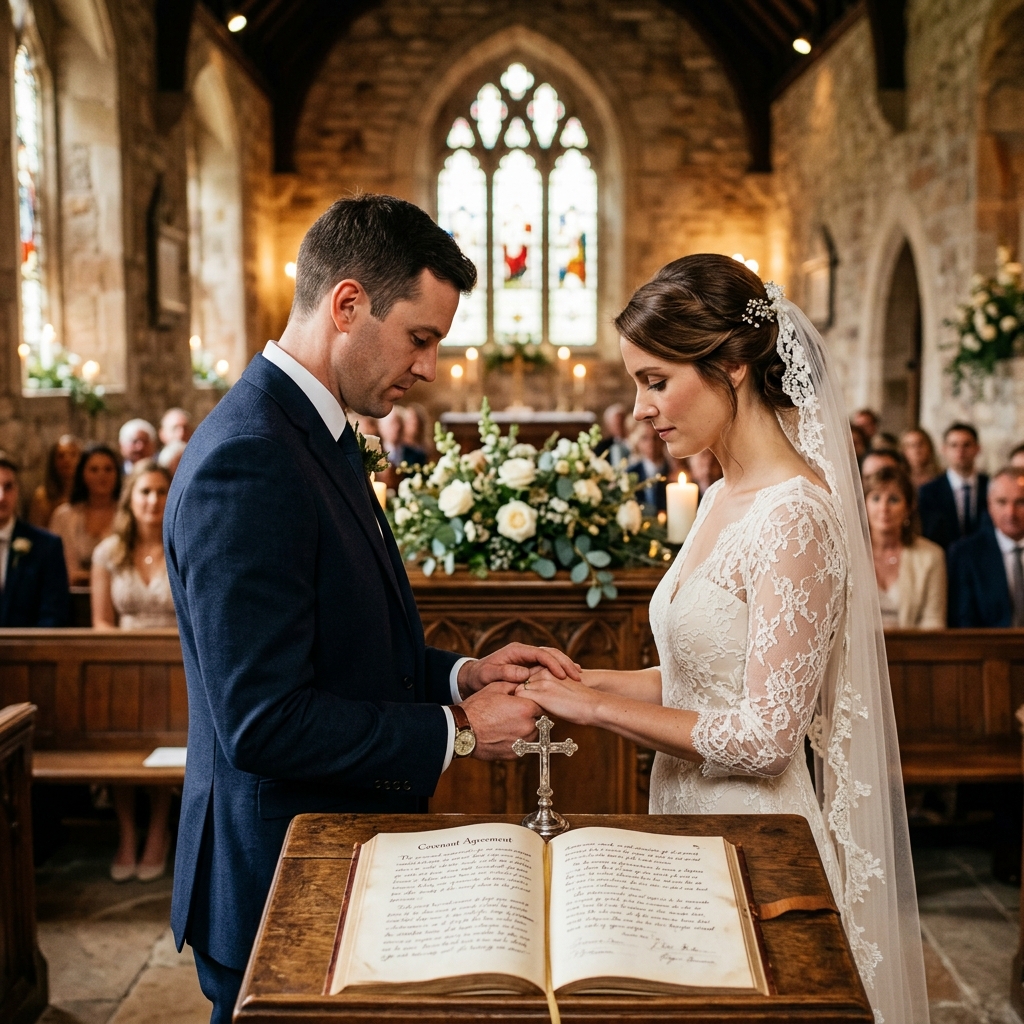
Covenant marriage is a distinct legal option for couples who want their wedding vows to come with stronger, formal commitments and more limited paths to divorce. It adds counseling requirements, stricter grounds for ending the marriage, and a clear legal statement that the relationship is intended to last for life. This article explains how covenant marriages work, where they’re available, and what to weigh before choosing one.
What Is a Covenant Marriage?
A covenant marriage is a form of civil marriage in which spouses agree to take extra steps before marrying and to accept tighter restrictions if they later seek separation or divorce. In essence, the couple tells the state: we want our marriage to be treated as a lifelong covenant, not just a standard contract that can be dissolved on broad no-fault grounds.
In covenant marriage states, the law typically requires:
- Premarital counseling that explains the seriousness of marriage and the responsibilities spouses owe each other.
- Written declarations of intent confirming that the parties understand they are entering a lifelong relationship.
- Agreement to seek counseling if serious marital problems arise, before filing for separation or divorce.
- Limited grounds for divorce, usually focused on fault-based reasons like adultery, abuse, or long-term separation.
This framework is designed to promote durable marriages and discourage quick or impulsive divorces, while still allowing exit in serious circumstances such as violence, criminal behavior, or abandonment.
Where Are Covenant Marriages Recognized?
Covenant marriage is not a nationwide option. According to legal reference materials, it is currently recognized in only three U.S. states: Arizona, Arkansas, and Louisiana. In these states, couples can usually choose between a traditional marriage license and a covenant marriage license, or convert an existing marriage to a covenant marriage under specified procedures.
Because only a small number of states offer this framework, couples must consider how moving across state lines could affect enforcement or recognition of the special rules. However, the underlying marital status is still recognized as a valid marriage in other states; what may differ is how particular covenant-specific limitations on divorce are treated in another jurisdiction. That question often requires individualized legal advice.
Key Features That Distinguish Covenant Marriage
While every state’s detailed statutes differ, covenant marriages commonly share several core legal features.
| Feature | Standard Marriage | Covenant Marriage |
|---|---|---|
| Premarital Counseling | Usually optional, driven by personal or religious choice. | Legally required, often with a counselor or clergy, before the license is issued. |
| Declaration of Intent | Basic marriage license application; no special statement about lifelong commitment. | Formal declaration that marriage is intended to be for life and that both parties understand its obligations. |
| Grounds for Divorce | No-fault grounds (e.g., irreconcilable differences) often available without proving specific misconduct. | Restricted to defined grounds such as adultery, felony conviction, abuse, abandonment, or lengthy separation. |
| Counseling Before Divorce | May be encouraged but not usually mandated by law. | Spouses typically must seek counseling when major marital difficulties arise or before requesting separation or divorce. |
| Separation Periods | Varies; many states allow divorce after relatively short separation or without any separation. | Often require longer periods living apart for separation-based divorce, especially where children are involved. |
Legal Requirements Before Entering a Covenant Marriage
Couples considering a covenant marriage must complete additional steps beyond a standard license. Though details differ by jurisdiction, common requirements include:
- Premarital counseling sessions that cover the nature of marriage, communication, conflict resolution, and legal responsibilities. These may be conducted by clergy or a licensed marriage counselor.
- Full disclosure of information that could seriously affect the decision to marry, such as prior marriages, criminal history, or significant health concerns.
- Declaration of intent signed by both parties, often stating that:
- They understand marriage is a lifelong commitment.
- They will seek counseling if marital difficulties arise.
- They accept restricted grounds for divorce.
- Filing the declaration and license application with the appropriate clerk or court office.
- Payment of any filing fees associated with the covenant marriage license or conversion of an existing marriage to covenant status.
In some states, couples who are already married under a standard license may later convert their relationship into a covenant marriage by filing the necessary declaration and meeting counseling requirements. This step can be attractive for spouses who wish to formally recommit to their marriage under stricter rules.
Limited Grounds for Separation and Divorce
The most distinctive legal feature of covenant marriage is the way it limits the grounds for legal separation and divorce. Traditional no-fault divorce allows couples to end their marriage without proving wrongdoing, usually based on concepts like irreconcilable differences. Covenant marriages generally move away from this model.
Typical Grounds for Legal Separation
In some covenant marriage laws, spouses may seek legal separation (living apart under court order while still married) only for serious fault-based reasons. Examples include:
- Adultery by the other spouse.
- Abandonment or leaving the marital home for a specified time without justification.
- Habitual substance abuse, such as chronic alcohol or drug misuse.
- Cruel treatment or severe ill-treatment, including physical or sexual abuse.
- Serious criminal conduct, such as a felony conviction accompanied by a significant prison sentence.
Typical Grounds for Divorce
Where covenant marriage is available, statutes often specify that a spouse may obtain a divorce only after counseling and only for limited grounds such as:
- Adultery by the other spouse.
- Felony conviction of the other spouse, with imprisonment at hard labor or a severe sentence.
- Abandonment for at least one year.
- Physical or sexual abuse of the spouse or a child.
- Extended separation, such as living separate and apart for two years, or shorter periods when preceded by judicial separation or involving abuse.
- In some frameworks, serious substance abuse or domestic violence may also be specified as grounds.
These rules emphasize protection from serious harm while making divorce more difficult in cases of simple incompatibility or emotional drift. Spouses must often show that one of the legally defined conditions has occurred and that any separation periods have been satisfied.
Why Some Couples Choose Covenant Marriage
Couples opt for covenant marriage for a variety of personal, moral, and religious reasons. Common motivations include:
- Desire for a formal, lifelong commitment: The legal framework reinforces the idea that marriage is meant to be permanent and not easily dissolved.
- Alignment with religious beliefs: Covenant marriage laws emerged partly in response to faith-based concerns about rising divorce rates and the availability of no-fault divorce.
- Emphasis on counseling and communication: Required premarital counseling and agreement to seek help during crises can encourage couples to address problems proactively.
- Symbolic weight: Signing a declaration of intent and accepting stricter legal rules can feel like a deeper pledge than a standard marriage license.
- Public statement of values: Some couples view choosing a covenant marriage as a way to signal their commitment to stability and responsibility toward children and community.
Potential Drawbacks and Risks
Covenant marriage is not risk-free. The same features that promote durability may create challenges if the relationship deteriorates.
- Reduced flexibility to exit: Limited grounds for divorce can prolong difficult or unhappy marriages where there is no clear fault that fits statutory categories.
- Longer separation periods: Statutes may require couples to live apart for extended periods before a separation-based divorce is available, which can be emotionally and financially taxing.
- Need to prove fault: In abuse or adultery cases, a spouse may have to gather evidence and litigate sensitive facts in court, increasing stress and potential safety concerns.
- Complexity during relocation: Moving to a state that does not recognize covenant marriage can raise questions about how the special rules apply, often necessitating legal advice.
- Impact on children and finances: A longer legal process may affect child custody, property division, and support arrangements by delaying resolution.
Practical Considerations Before Choosing a Covenant Marriage
Because covenant marriage changes the legal landscape of the relationship, couples should approach the decision with care. Helpful steps include:
- Discuss expectations thoroughly: Talk openly about views on divorce, conflict resolution, finances, parenting, and faith before considering a covenant framework.
- Consult a family law attorney: A local lawyer can explain how covenant marriage statutes operate in your state and how they might affect you in scenarios like infidelity, abuse, or relocation.
- Engage seriously in counseling: Use required counseling not as a formality, but as a chance to examine compatibility, communication patterns, and shared goals.
- Consider future uncertainty: Lives change. Health issues, job loss, and evolving beliefs can all transform a marriage; think about whether stricter legal rules are still acceptable under those possibilities.
- Evaluate alternatives: Some couples may prefer a traditional marriage combined with private commitments—such as marital agreements, ongoing counseling, or faith community support—rather than statutory restrictions.
Frequently Asked Questions About Covenant Marriage
Is covenant marriage only religious?
No. Covenant marriage is a civil marriage recognized by state law, though it often appeals to couples for religious or moral reasons and may involve counseling from clergy. The legal rights and duties of spouses still arise from state statutes, not religious rules.
Can a couple convert an existing marriage into a covenant marriage?
In some states, yes. For example, Arizona allows couples with a regular marriage to file a written declaration of intent, complete counseling, and pay a filing fee to convert their marriage to covenant status. Procedures and forms vary by jurisdiction, so spouses should check with local courts or legal counsel.
Does covenant marriage prevent divorce completely?
No. Divorce remains possible, but it is restricted to specific grounds like adultery, abuse, serious crime, abandonment, or extended separation periods. The goal is not to ban divorce, but to limit it to more serious circumstances and ensure that couples have attempted counseling where appropriate.
Do covenant marriages provide different financial rights?
Generally, covenant marriage affects how and when divorce can occur, not the basic rules governing property division, support, or child custody. Those issues are still determined by each state’s family law statutes and court decisions. However, the timing and grounds of divorce can indirectly influence financial outcomes.
Is covenant marriage recognized outside the three states that offer it?
The marital status itself is recognized as a valid marriage in other states, but those states may not apply or enforce the special covenant-specific restrictions on divorce in the same way. Because interstate recognition issues can be complex, spouses should seek legal advice if they plan to move or file actions in another state.
Is Covenant Marriage Right for You?
Covenant marriage appeals to couples who want a legal structure that mirrors their belief that marriage should be lifelong and dissolved only for serious reasons. It reinforces commitment through counseling and restricted divorce grounds, yet leaves room for exit when safety, abuse, or severe breakdowns occur.
At the same time, this framework can limit options if a relationship becomes deeply unhappy but does not meet specific fault-based grounds. For some spouses, a traditional marriage with robust personal commitments and access to counseling may offer a better balance between flexibility and responsibility.
Ultimately, covenant marriage is a significant legal and personal choice. Couples should reflect on their values, examine statutory details in their state, and have candid conversations—with each other and with professionals—before deciding whether to pledge this extra level of commitment.
References
- Covenant marriage | Wex | US Law — Legal Information Institute, Cornell Law School. 2023-05-01. https://www.law.cornell.edu/wex/covenant_marriage
- Covenant Marriage — Louisiana Department of Health. 2022-08-15. https://ldh.la.gov/page/695
- Covenant Marriage Info — Lafayette Parish Clerk of Court. 2021-11-10. https://www.lpclerk.com/covenant-marriage-info
- Covenant Marriage In Louisiana — LouisianaLawHelp.org. 2023-04-20. https://louisianalawhelp.org/resource/covenant-marriage-in-louisiana
- Information on Applying for a Covenant Marriage License in Arizona — AzCourtHelp.org. 2023-06-01. https://azcourthelp.org/topics/marriage/covenant-marriage
- Covenant marriage — Wikipedia (summary of legal framework; primary statutory details drawn from cited state sources). 2023-03-10. https://en.wikipedia.org/wiki/Covenant_marriage
Similar Articles








Read full bio of medha deb


