
Counterfeit Purses in NYC: When Buying Becomes a Crime
Learn how New York law treats counterfeit handbags and other fake goods, and when buyers themselves can face arrest, fines, or even jail.
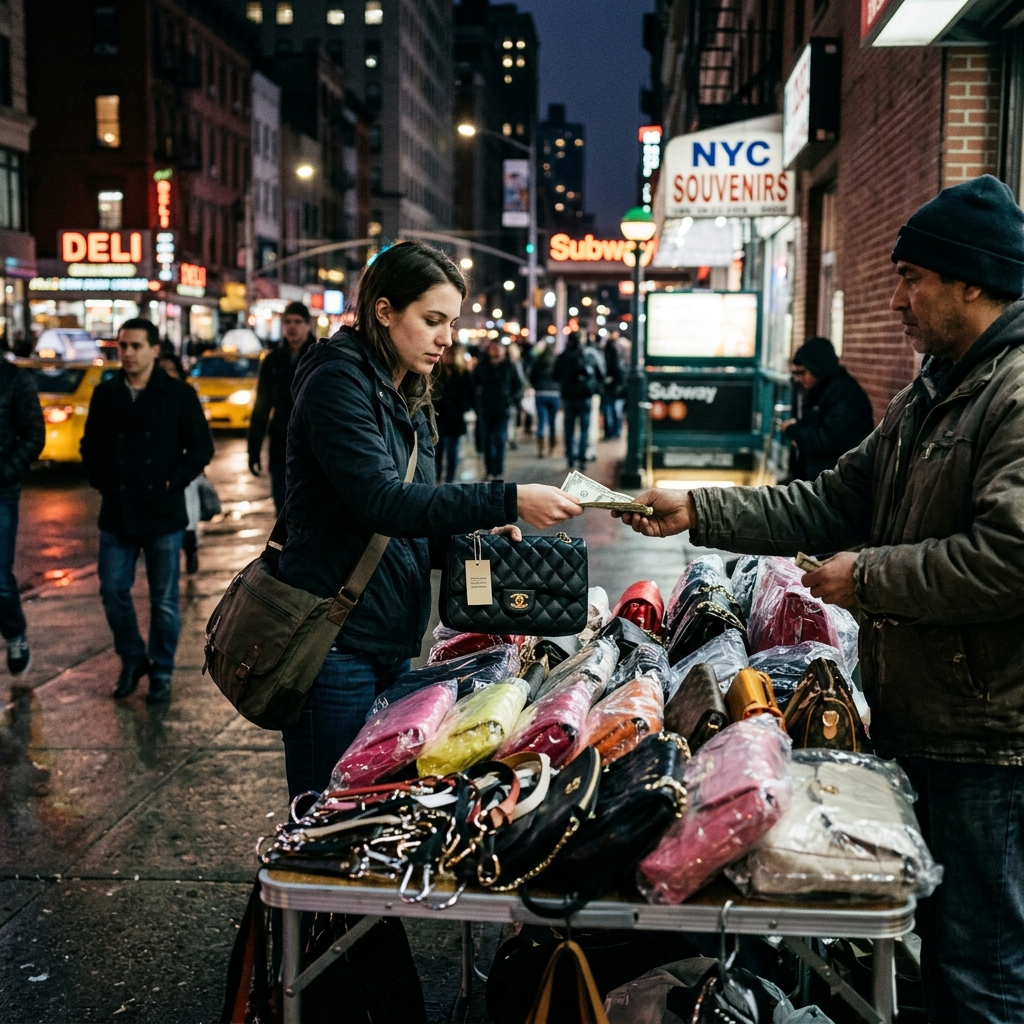
New York City is famous for designer fashion – and for street vendors selling “designer” handbags at suspiciously low prices. Many shoppers assume that buying a fake purse is a harmless bargain, or at worst a minor ethical lapse. In reality, trademark counterfeiting laws in New York and under federal law can turn what looks like a routine purchase into a serious legal problem in certain circumstances.
This article explains how counterfeit laws work, why New York has focused on sellers rather than casual buyers, and when purchasing a fake handbag or other counterfeit item in NYC might expose you to criminal or civil liability. It is informational and not a substitute for advice from a licensed attorney.
Understanding What Counts as a Counterfeit
Before looking at penalties, it is important to understand what “counterfeit” means in a legal sense. Trademark counterfeiting laws do not cover every imitation product or look‑alike design; they target goods that misuse protected trademarks.
Key elements of a counterfeit trademark
- Use of a protected mark: The item bears a logo, brand name, or other mark that belongs to a trademark owner, such as a luxury fashion label.
- Unauthorized use: The trademark owner has not granted permission for that mark to be used on the goods.
- Confusingly similar or identical: The mark is identical to, or so close to, the genuine trademark that consumers are likely to believe the goods are authentic.
- Applied to the same type of goods: The fake mark is used on products of the same category as the real goods – for example, a purse with a luxury handbag logo.
When these elements are present, law enforcement and trademark owners may treat the handbag as a counterfeit good, exposing sellers and traffickers to criminal charges and civil suits.
Counterfeits vs. knockoffs
Not every imitation is a counterfeit. Some items mimic a style or color scheme but avoid using the logo or brand name. Those may still raise legal issues under trademark or trade dress law, but they are less likely to fall under criminal counterfeiting statutes that focus on fake marks.
New York’s Trademark Counterfeiting Laws
New York has specific criminal statutes addressing trademark counterfeiting. These laws primarily target manufacturing, distribution, and sale of goods bearing counterfeit marks, rather than casual possession.
Trademark counterfeiting in the third degree
Under New York Penal Law § 165.71, trademark counterfeiting in the third degree occurs when a person, with intent to deceive or defraud another or evade lawful restrictions, knowingly manufactures, distributes, sells, offers for sale, or possesses counterfeit trademarks to affix to goods.
| Element | Description |
|---|---|
| Conduct | Manufacturing, distributing, selling, offering for sale goods with counterfeit trademarks, or possessing a counterfeit mark to place on goods. |
| Knowledge | Person must know the trademark is counterfeit. |
| Intent | Intent to deceive or defraud, or to evade a lawful restriction on sale or distribution. |
| Offense level | Class A misdemeanor. |
| Potential penalty | Up to 1 year in jail and a fine that can reach $1,000, plus possible probation. |
In practice, this statute is often applied to people who sell counterfeit handbags and other goods on the street or through retail operations, rather than buyers who purchase a single item for personal use.
Higher degrees and felony exposure
New York law also provides more severe versions of trademark counterfeiting when the value of counterfeit goods is higher or the conduct is more serious. Once the value of counterfeit items exceeds certain thresholds, charges can be elevated to felony levels, carrying longer potential prison terms and higher fines.
While specific thresholds vary by statute, the general pattern is that the more valuable the counterfeit merchandise involved, the greater the possible criminal exposure for the person selling or trafficking those goods.
Federal Law: Trafficking in Counterfeit Goods
Beyond state law, federal authorities can prosecute counterfeiting under 18 U.S.C. § 2320, which criminalizes trafficking in counterfeit goods and services.
What counts as trafficking
Under § 2320, trafficking includes transporting, transferring, or disposing of counterfeit goods, as well as making or selling them. The statute focuses on knowing, intentional use of counterfeit marks in commerce.
- Knowledge: The person must know that the mark used is counterfeit.
- Intent: The person must intentionally use or traffic in the counterfeit goods as if they were genuine.
Federal penalties for counterfeit trafficking
| Type of offense | Maximum fine | Maximum imprisonment |
|---|---|---|
| General trafficking in counterfeit goods | Up to $2,000,000 | Up to 10 years |
| Second offense (general) | Up to $5,000,000 | Up to 20 years |
| Offense causing serious bodily injury | Up to $5,000,000 | Up to 20 years |
| Offense resulting in death | Potential life imprisonment | Life |
These penalties illustrate why large‑scale counterfeit operations are treated as serious federal crimes and why law enforcement devotes resources to disrupting them.
Is Buying a Fake Purse in NYC Itself Illegal?
For casual shoppers, the central question is whether simply buying a counterfeit handbag can be a crime. The answer depends on the jurisdiction, your intent, and the quantity or value of goods involved.
New York law and buyers
Current New York counterfeiting statutes focus on manufacturing, distribution, sale, and possession for sale of counterfeit goods, rather than the act of purchasing a single item for personal use. In other words:
- Buying a counterfeit item with no intent to resell it for profit or deceive others typically does not fall within the core conduct defined in New York’s trademark counterfeiting statutes.
- However, if you purchase counterfeit goods with the intention of reselling them or using them in a business, you can be treated as a distributor or seller and prosecuted under the same laws.
Past proposals in New York City have explored criminalizing the purchase of counterfeit goods directly, reflecting concern over demand for fake items. Legal scholarship notes that, at the time of those discussions, there were no federal, state, or local laws that expressly punished buyers for purchases alone; enforcement has instead centered on sellers.
Federal law and personal-use purchases
Federal law similarly focuses on trafficking and intentional use of counterfeit marks in commerce. According to guidance cited by practitioners, purchasing counterfeit products solely for personal use is generally not prohibited under federal law. However:
- If you buy fake handbags with the intent to resell, you may be viewed as trafficking in counterfeit goods under 18 U.S.C. § 2320.
- If your conduct supports a broader counterfeit scheme – for example, acting as a middleman or supplier – you can be charged as part of that operation.
When Buyers Can Face Criminal Liability
Even though a single purchase for personal use is unlikely to trigger counterfeiting charges, buyers are not always free from risk. Their conduct can cross into criminal territory when certain factors are present.
Intent to resell or distribute
Buying counterfeit handbags with the purpose of reselling them, whether on the street, online, or through a store, can make the buyer a participant in the counterfeiting supply chain.
- Resale for profit: Purchasing a batch of fake purses specifically to sell them as designer bags could be treated as manufacturing or distributing counterfeit goods.
- Online sales: Listing counterfeit handbags on e‑commerce platforms or social media marketplaces as genuine items can expose you to counterfeiting charges and civil suits from trademark owners.
Knowledge and intent
Both New York and federal statutes require some form of knowledge and intent.
- If you know the handbags are fake and buy them to resell as authentic, this supports the mens rea (mental state) required for criminal counterfeiting.
- If you genuinely believed the goods were authentic, lack of knowledge can be a defense, though proving this may require receipts, communications with the seller, or other evidence.
Large quantities or high values
Buying large numbers of counterfeit items or items of very high claimed value increases the risk of serious charges. As the total value of goods rises, New York law allows escalation to higher degrees of counterfeiting, potentially including felonies.
Non-Criminal Consequences for Buyers
Even if you avoid criminal charges, purchasing fake handbags in NYC can still have significant consequences.
Civil liability
Trademark owners can seek civil remedies against those who infringe their marks. In serious cases where a buyer turns into a reseller, companies may sue for damages, injunctions, and destruction of counterfeit goods.
Seizure of goods
Authorities such as U.S. Customs and Border Protection (CBP) can seize counterfeit imports at ports of entry. New York law also allows police to seize and potentially destroy counterfeit goods discovered in enforcement actions.
For the individual consumer, this can mean losing items ordered from overseas websites if they are intercepted and identified as counterfeit.
Safety and quality risks
Beyond legal issues, counterfeit goods can pose safety risks. CBP notes that counterfeit items often bypass safety testing and may use substandard materials, leading to hazards for consumers. Although handbags are not generally life‑threatening, the broader counterfeit market includes electronics, personal care items, and children’s products that might be dangerous.
Practical Tips for Shoppers in NYC
If you shop in New York and want to avoid legal and ethical problems associated with counterfeit handbags, several practical steps can reduce your risk.
- Purchase from authorized retailers: Buying directly from brand stores or verified department stores reduces the chance of unknowingly purchasing counterfeits.
- Be wary of deals that seem too good: Deeply discounted “designer” bags from street vendors, truck sales, or unverified online sellers are often counterfeit.
- Check authenticity markers: Examine logos, stitching, hardware, and serial numbers. Many brands publish guidance on identifying genuine items.
- Avoid buying in bulk: Purchasing many “designer” bags from questionable sources can make you look less like a consumer and more like a reseller.
From a legal standpoint, the safest course is to avoid knowingly supporting counterfeit markets, especially when your purchases are tied to resale or business activity.
Defenses When Accused of Counterfeiting
If a buyer or small reseller in NYC is accused of involvement in counterfeit handbag sales, several legal issues become important.
Lack of knowledge
Demonstrating that you did not know the item was counterfeit can be a significant defense. Evidence may include:
- Receipts and invoices showing you bought from a seller represented as legitimate.
- Communications in which the seller claimed the goods were authentic.
- Steps you took to verify authenticity, such as checking serial numbers or consulting brand resources.
Lack of intent to defraud
Both New York and federal counterfeiting laws require intent to deceive, defraud, or evade restrictions. If you did not intend to present handbags as genuine designer items or to mislead buyers, that can influence how charges are evaluated.
Value and quantity challenges
In felony cases, the prosecution often must show that the value of counterfeit goods exceeds statutory thresholds. Disputes over how value is calculated – for example, whether to use the genuine item’s price or the counterfeit’s sale price – can affect charge severity.
Frequently Asked Questions
1. Can I be arrested in NYC just for carrying a fake designer purse?
Carrying a single counterfeit handbag for personal use, without intent to resell or deceive others, is not the primary focus of New York’s trademark counterfeiting statutes, which target manufacturing, distribution, sale, and possession for sale. However, circumstances matter, and law enforcement may investigate if they believe you are involved in selling or trafficking counterfeit goods.
2. Is it illegal to buy fake handbags online and ship them to New York?
Buying counterfeit goods online for personal use is generally not directly criminal under federal law, but authorities such as CBP can seize counterfeit items entering the country, and trademark owners may pursue civil claims in serious cases. If your purchases are tied to resale or a business, you may be exposed to counterfeiting or trafficking charges.
3. What if I resell a counterfeit purse without realizing it is fake?
Lack of knowledge can be an important factor. Counterfeiting statutes typically require that you know the mark is counterfeit and intend to deceive or evade legal restrictions. If you genuinely believed the item was genuine and can demonstrate that belief, that may be relevant to your defense. You should seek legal counsel immediately if confronted with such allegations.
4. Could New York change the law to punish buyers directly?
Legal scholarship has discussed proposed local laws that would impose criminal penalties on purchasers of counterfeit goods in New York City. Such proposals reflect concern that demand for counterfeits fuels broader illegal activity. Whether such laws are enacted depends on legislative decisions and constitutional considerations, and readers should monitor current statutes and city ordinances for any changes.
5. Do counterfeit handbags really harm anyone?
While a single purchase may seem harmless, the counterfeit trade is linked to economic losses for legitimate businesses, unsafe products, and broader criminal networks. Government agencies emphasize that trafficking in counterfeit goods can carry heavy penalties and pose risks beyond the immediate transaction.
References
- New York Penal Law § 165.71 – Trademark Counterfeiting in the Third Degree — Tilem & Associates, P.C. 2019-07-01. https://www.tilemlawfirm.com/new-york-crimes-by-penal-code/new-york-penal-law-165-71-trademark-counterfeiting-in-the-third/
- NY Penal Law § 165.71: Trademark counterfeiting in the third degree — Crotty Saland PC. 2020-02-10. https://criminaldefense.1800nynylaw.com/new-york-penal-code/new-york-penal-law-165-71-trademark-counterfeiting-in-the-third/
- New York City Counterfeit Culture Is Alive And Well — Heiferman Law Group. 2020-01-23. https://www.heifermanlaw.com/2020/01/23/new-york-city-counterfeit-culture-is-alive-and-well/
- Criminalizing the Purchase of Counterfeit Goods — Seton Hall Journal of Legislation and Public Policy. 2013-03-01. https://scholarship.shu.edu/cgi/viewcontent.cgi?article=1055&context=shlj
- The Truth Behind Counterfeits — U.S. Customs and Border Protection. 2023-06-15. https://www.cbp.gov/trade/fakegoodsrealdangers
- Trafficking in Counterfeit Goods | 18 U.S. Code § 2320 — Federal Criminal Attorneys. 2022-11-05. https://www.thefederalcriminalattorneys.com/trafficking-counterfeit-goods
- Is Buying Counterfeit Goods a Federal Crime? — Hirsch Law Group. 2023-04-20. https://hirschlawgroup.com/is-buying-counterfeit-goods-a-federal-crime/
Similar Articles








Read full bio of Sneha Tete




