
Business Entity Transformation: Corporation to LLC Conversion
Navigate the pathways to transform your corporate structure into an LLC efficiently.
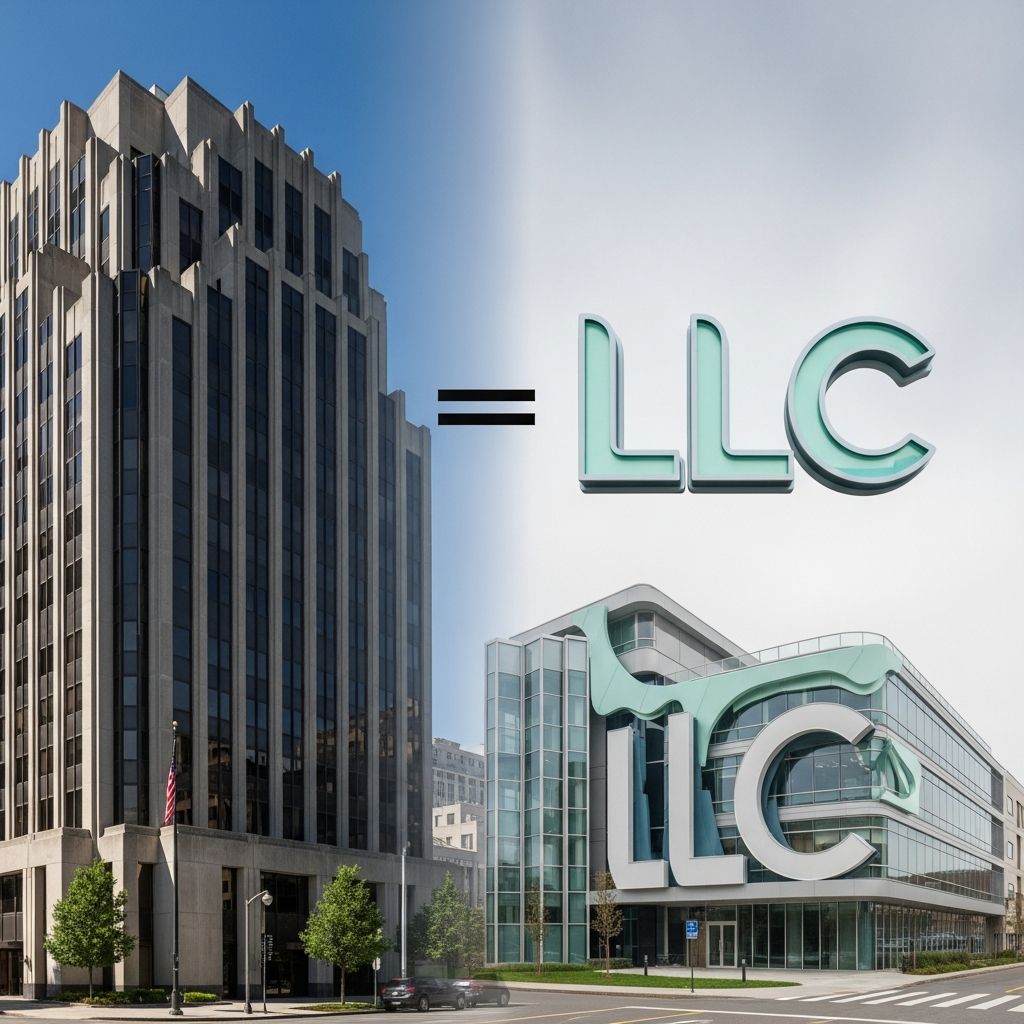
Understanding Business Entity Conversion: From Corporation to LLC
Transforming a corporation into a limited liability company (LLC) represents a significant strategic decision for business owners seeking operational flexibility and financial advantages. This fundamental shift in business structure requires careful planning, adherence to state regulations, and awareness of both procedural and tax-related consequences. The conversion process varies substantially depending on your state’s statutory framework and the specific circumstances of your business.
The Three Primary Pathways for Converting Your Corporate Structure
Businesses pursuing conversion have access to three distinct methodologies, each with varying levels of complexity and expense. Understanding which approach suits your situation requires knowledge of what your state permits and the unique characteristics of your business operation.
Direct Statutory Conversion: The Modern Streamlined Approach
The most straightforward conversion method involves utilizing your state’s statutory conversion provisions, a relatively contemporary legal framework that has gained adoption across numerous states. This method allows a corporation to transform directly into an LLC through a simplified filing process with minimal bureaucratic obstacles.
The statutory conversion approach eliminates the need to establish a separate entity first. Instead, the existing corporation undergoes a legal metamorphosis, becoming an LLC through the filing of specific state-approved documentation. All corporate assets, liabilities, contracts, and other legal rights automatically transfer to the newly formed LLC without requiring separate transactions.
This conversion style typically demands the preparation of a conversion plan, shareholder approval through voting procedures, and submission of conversion documentation (often labeled as a certificate of conversion, articles of conversion, or statement of conversion depending on state nomenclature) to the secretary of state’s office. Filing fees vary considerably among states, ranging from minimal charges to more substantial amounts depending on jurisdiction-specific regulations.
Statutory Merger: An Alternative When Direct Conversion Unavailable
When a state does not authorize direct statutory conversion, the statutory merger method provides an alternative pathway that accomplishes similar objectives with additional procedural requirements. This approach involves creating a new LLC while maintaining the original corporation as a separate legal entity during the transition.
The merger process requires establishing the new LLC first, then orchestrating a merger between the corporation and the newly created LLC. Like statutory conversions, statutory mergers automatically transfer all corporate assets and liabilities to the surviving entity. However, this method requires maintaining two distinct entities throughout the process and necessitates formal dissolution documentation for the original corporation after merger completion.
Statutory mergers typically involve preparing merger agreements, obtaining written consent from both the corporation’s shareholders and the LLC’s members, exchanging stock for membership interests, filing merger certificates with state authorities, and subsequently dissolving the original corporation through appropriate state filings.
Nonstatutory Conversion: The Traditional and Complex Route
Businesses operating in states lacking statutory conversion or merger provisions face the nonstatutory conversion method, representing the most intricate and expensive pathway. This approach essentially requires dissolving the corporation and establishing a new LLC as separate transactions, with all asset and liability transfers occurring manually rather than automatically.
The nonstatutory method necessitates forming a new LLC, individually transferring each corporate asset to the new entity, individually transferring each corporate liability, exchanging shareholder stock for LLC membership interests, and formally liquidating and dissolving the original corporation. This process demands substantial documentation, legal oversight, and coordination of multiple simultaneous transactions.
Essential Steps for Implementing Corporate Transformation
Establishing Your Conversion Plan and Obtaining Approvals
Most states requiring conversion authorization mandate preparation of a formal conversion plan outlining the transformation details and the rights, responsibilities, and interests of the resulting LLC. The conversion plan must address various elements specified by individual state statutes, which vary considerably in scope and detail requirements.
Once the conversion plan is prepared, state law typically requires approval from the corporation’s board of directors followed by shareholder voting. The specific voting threshold depends on state law and potentially on provisions within your corporate bylaws or articles of incorporation. Some jurisdictions may specify alternative approval procedures when a formal conversion plan is not required.
Document Preparation and Filing Requirements
The conversion necessitates preparing and filing multiple documents with your state’s secretary of state office. Beyond the conversion certificate itself, you may need to file articles of organization establishing the LLC’s formation, which typically includes information regarding management structure, registered agent designation, and principal business location.
State filing fees accompany document submission, with costs varying significantly among jurisdictions. The conversion filing is typically accompanied by a check or electronic payment, though some states offer expedited processing options for additional fees. Documentation requirements vary substantially, so consulting your specific state’s business entity regulations ensures compliance with all procedural mandates.
Tax Registration and Administrative Updates
Converting business entities involves complex tax considerations and administrative requirements beyond the core legal transformation. Federal tax identification numbers (EINs) require attention, as most converting businesses prefer retaining the corporation’s existing EIN rather than obtaining a new number. The IRS treats corporate-to-LLC conversions as deemed liquidations for tax purposes, creating specific tax consequences that depend on the conversion methodology employed.
Beyond federal considerations, state tax registrations, unemployment insurance accounts, sales tax permits, and other regulatory registrations must be updated to reflect the new LLC structure. Business licenses, professional permits, and industry-specific authorizations may require notification or reissuance under the LLC name and structure.
Comparative Analysis of Conversion Methodologies
| Conversion Method | Complexity Level | Typical Timeline | Cost Range | Automatic Asset Transfer |
|---|---|---|---|---|
| Statutory Conversion | Low | 2-4 weeks | $500-$2,000 | Yes |
| Statutory Merger | Medium | 4-8 weeks | $1,000-$3,500 | Yes |
| Nonstatutory Conversion | High | 8-16 weeks | $3,000-$10,000+ | No |
Tax Implications and Financial Consequences
Converting a corporation to an LLC triggers significant tax ramifications that business owners must understand before proceeding. The IRS treats corporate-to-LLC conversions as complete corporate liquidations, potentially resulting in capital gains taxation at both the corporate and shareholder levels.
The specific tax outcome depends on whether the corporation was structured as a C Corporation or an S Corporation, the value of corporate assets relative to shareholder basis, the existence of accumulated earnings and profits, and the elected tax treatment of the LLC post-conversion. Some conversions may result in minimal tax consequences, while others could generate substantial tax liabilities requiring careful planning and potentially phased implementation strategies.
Tax basis considerations also vary based on conversion methodology. In some scenarios, shareholders receive carryover basis in their LLC interests, while in others, the LLC receives assets at fair market value basis. These distinctions significantly affect future tax consequences during asset dispositions or LLC terminations, making professional tax guidance essential before conversion initiation.
State-Specific Requirements and Variations
Conversion procedures differ dramatically among states, with some offering streamlined statutory conversion pathways while others provide only merger or nonstatutory alternatives. Florida, for example, permits statutory conversions requiring preparation and approval of a conversion plan followed by filing a certificate of conversion and articles of organization with the Florida Department of State.
States like New York implement strict regulatory controls on corporate-to-LLC mergers, requiring compliance with both New York Business Corporation Law and New York LLC Law provisions, which can substantially complicate and extend the conversion timeline. Some states lack any statutory authority for business entity conversions, forcing affected businesses toward nonstatutory approaches.
Businesses must research their specific state’s business entity statutes, consult with the secretary of state’s office, and potentially engage legal counsel to understand applicable requirements, available methodologies, and expected timelines. State-specific forms, filing fees, and procedural requirements vary sufficiently that one-size-fits-all guidance cannot adequately address individual conversion situations.
When Professional Legal Assistance Becomes Essential
While some straightforward conversions through statutory pathways may proceed with minimal legal involvement, most situations benefit substantially from professional guidance. Conversion processes involve complex legal documentation, shareholder notification and voting procedures, asset and liability transfer considerations, and tax planning that extends beyond typical business owner expertise.
Professional advisors can ensure all state-specific requirements receive proper attention, that tax consequences are accurately calculated and minimized through strategic planning, that shareholder interests are protected, and that all documentation meets state standards for successful conversion. The modest investment in professional guidance frequently prevents costly errors or incomplete conversions requiring remedial action.
Addressing Specific Scenarios and Complications
Certain business situations complicate standard conversion procedures and require modified approaches. Corporations holding significant operating losses may face restrictions on statutory conversion in some states, potentially necessitating nonstatutory approaches. Businesses with heavily depreciated assets or complex asset bases may encounter regulatory resistance to direct conversions.
Corporations with minimal or no assets can often convert simultaneously with dissolution, simplifying procedures considerably. Businesses with multiple classes of stock, preferred shareholders, or complex ownership structures require additional attention to ensure all interests receive appropriate treatment during conversion.
Corporations subject to franchise taxes, professional licensing requirements, or industry-specific regulations must verify that LLC structure conversion doesn’t disrupt licensing status or create regulatory compliance problems. Some professional service providers, for instance, face restrictions on LLC structure eligibility in certain jurisdictions.
Frequently Asked Questions About Corporate Conversion
Q: Can I convert my corporation to an LLC without dissolving the corporation first?
A: Yes, if your state permits statutory conversion or merger. These methods automatically transfer all corporate assets and liabilities to the LLC without requiring separate dissolution procedures. However, if your state lacks these provisions, you must pursue the nonstatutory route, which effectively involves dissolution and new entity formation.
Q: How long does the conversion process typically require?
A: Timeline depends on your conversion methodology. Statutory conversions usually complete within 2-4 weeks, while statutory mergers typically require 4-8 weeks. Nonstatutory conversions may extend 8-16 weeks or longer due to manual asset transfers and multiple filings.
Q: Will my business lose its employer identification number during conversion?
A: Not necessarily. Most conversions allow the LLC to retain the corporation’s existing EIN. However, the IRS may require EIN changes in certain circumstances, particularly if the LLC elects different tax treatment than the original corporation.
Q: What are the primary tax consequences of converting a C Corporation to an LLC?
A: The IRS treats corporate-to-LLC conversions as complete liquidations, potentially triggering capital gains taxes at both corporate and shareholder levels. The specific tax impact depends on asset valuations, shareholder basis, accumulated earnings, and the chosen conversion methodology.
Q: Do I need legal assistance to complete a corporate conversion?
A: While statutory conversions in states offering this option can proceed with minimal legal involvement, professional guidance is highly recommended to ensure compliance with all state requirements, proper tax planning, correct documentation, and protection of all shareholder interests.
Q: What happens to my corporation’s contracts and agreements during conversion?
A: In statutory conversions and mergers, contracts and agreements automatically transfer to the LLC by operation of law. However, some contracts may contain change-of-control provisions that could be triggered. Review important agreements before conversion to identify potential issues.
References
- Converting a Corporation to an LLC: An Overview — Nolo. Accessed 2026. https://www.nolo.com/legal-encyclopedia/converting-corporation-s-corporation-llc.html
- How to Change a Corporation to an LLC Without Dissolving the Corporation — LegalZoom. Accessed 2026. https://www.legalzoom.com/articles/how-to-change-a-corporation-to-an-llc-without-dissolving-the-corporation
- How to Convert C Corp to LLC: A Complete Guide — BBC Incorporate. Accessed 2026. https://bbcincorp.com/offshore/articles/convert-c-corp-to-llc-how-and-why
- Conversion of a C Corporation to an LLC — The Tax Adviser. 2019. https://www.thetaxadviser.com/issues/2019/jun/conversion-c-corporation-llc/
- Why Change From Inc to LLC? — ZenBusiness. Accessed 2026. https://www.zenbusiness.com/why-change-from-inc-to-llc/
- Statutory Conversion and Entity Change — Wolters Kluwer. Accessed 2026. https://www.wolterskluwer.com/en/expert-insights/statutory-conversions-llcs-corporations-other-business-entities
- Conversion of Corporation to LLC Raises EIN Retention Questions — The Tax Adviser. 2010. https://www.thetaxadviser.com/issues/2010/jul/clinic-story-06-jul-2010/
Similar Articles








Read full bio of Sneha Tete


