Corporal Punishment in U.S. Schools: Legal Status Today
Unpacking the current legality, state variations, and ongoing debates surrounding physical discipline in American classrooms.
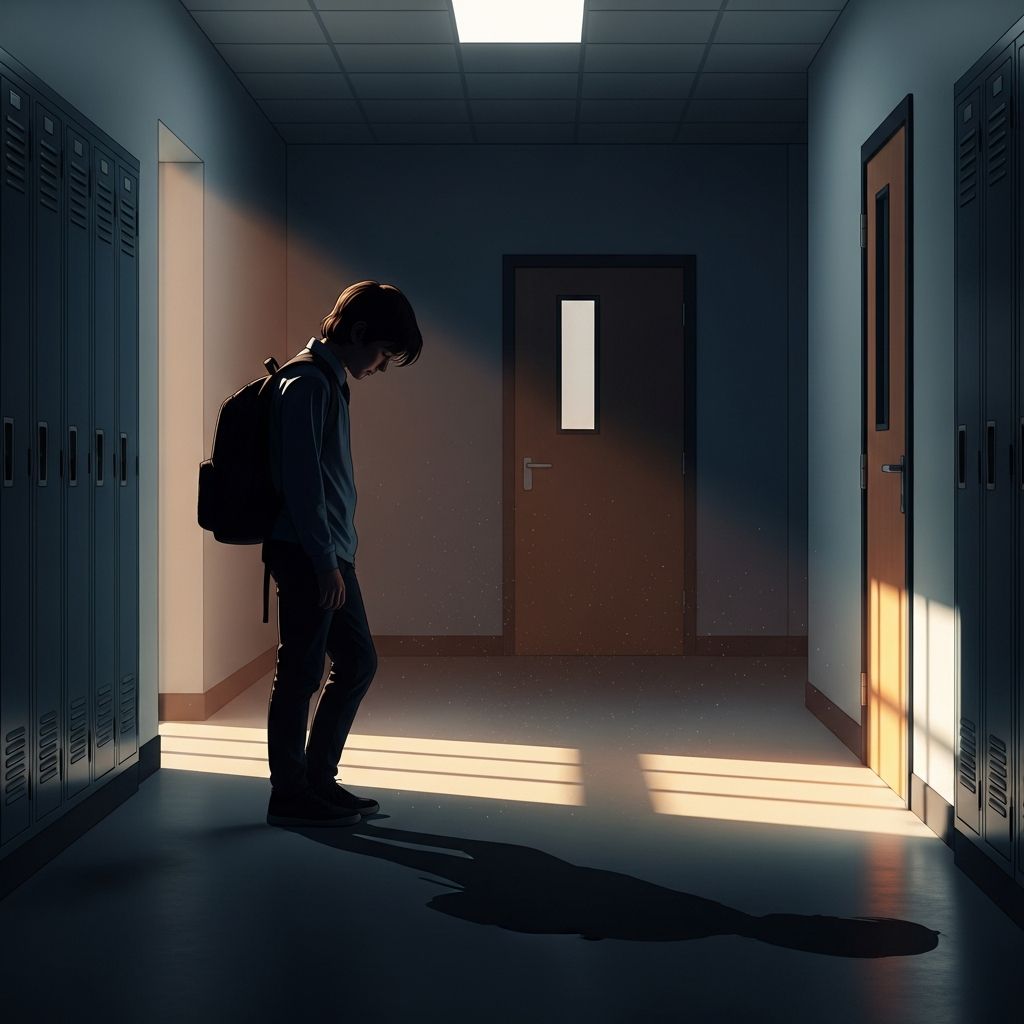
Corporal punishment, defined by the U.S. Department of Education as paddling, spanking, or other physical force used to discipline students, remains legal in public schools across 17 states as of 2024, affecting over 160,000 children annually in those jurisdictions. This practice persists despite widespread bans in most developed nations and growing opposition from health organizations, creating a patchwork of policies that varies significantly between public and private institutions nationwide.
Historical Foundations and Supreme Court Precedent
The roots of school corporal punishment in the United States trace back to common law traditions, but its modern constitutional standing was solidified by the 1977 Supreme Court case Ingraham v. Wright. In this landmark 5-4 decision, the Court ruled that the Eighth Amendment’s prohibition on cruel and unusual punishment does not extend to typical school disciplinary actions, affirming states’ rights to regulate such practices without requiring prior notice or hearings. This ruling has framed ongoing debates, distinguishing school settings from prisons or juvenile facilities where physical punishment of adults and minors is banned.
Since Ingraham, no federal legislation has overridden state authority, leaving reform to legislatures. Efforts like the Protecting Our Students in Schools Act, reintroduced in Congress multiple times (e.g., 2020, 2021), seek to prohibit it in federally funded schools but have not passed. Meanwhile, public health bodies, including the World Health Organization, classify corporal punishment as a violation of children’s rights to physical integrity and freedom from degrading treatment.
Current Legal Landscape: State-by-State Breakdown
As of 2024, corporal punishment is explicitly legal in public schools in 17 states, practiced in 14, with six others lacking clear prohibitions—totaling permissive environments in over 20 jurisdictions. Private schools face fewer restrictions, banned comprehensively in only five states: Illinois, Iowa, Maryland, New Jersey, and New York.
The table below summarizes the status for public and private schools, reflecting recent changes like Colorado’s 2023 ban (HB 1191) and Idaho’s similar prohibition.
| State | Public Schools | Private Schools | Notable Updates |
|---|---|---|---|
| Alabama | Legal | Legal | High usage reported |
| Alaska | Banned (1989) | Legal | |
| Arizona | Legal (no use) | Legal | |
| Arkansas | Legal | Legal | |
| California | Banned (1986) | Legal | |
| Colorado | Banned (2023) | Banned (publicly funded) | HB 1191 |
| Florida | Parental consent req. (2025); banned for disabilities | Legal | |
| Georgia | Legal | Legal | |
| Idaho | Banned (2023) | Legal | |
| Illinois | Banned (1994) | Banned (2024) | |
| Indiana | Legal | Legal | |
| Iowa | Banned (1989) | Banned (1989) | |
| Kansas | Legal (no use) | Legal | |
| Kentucky | District-banned (2023) | Legal | All public districts prohibit |
| Louisiana | Banned for disabilities (2017) | Legal | |
| Maryland | Banned (1993) | Banned (2023) | |
| Mississippi | Banned for disabilities (2019) | Legal | |
| Missouri | Legal | Legal | |
| North Carolina | District-banned (2018) | Legal | All public districts prohibit |
| New Jersey | Banned (1867) | Banned (1867) | |
| New York | Banned (1985) | Banned (2023) | |
| Oklahoma | Banned for disabilities w/o consent (2017) | Legal | |
| South Carolina | Legal | Legal | |
| Tennessee | Banned for disabilities w/o consent (2018) | Legal | |
| Texas | Legal | Legal | High usage |
| Wyoming | Legal (no use) | Legal | Proposed liability bill (2023) |
Southern states like Alabama, Mississippi (pre-2019 partial ban), and Texas report the highest incidence, with disparities notably affecting Black students and those with disabilities.
Prevalence and Demographic Disparities
Over 160,000 students face corporal punishment yearly, primarily via paddling, concentrated in 19 states (as of earlier data, now 17). Usage has declined since the 1970s, but persists where legal. Racial inequities are stark: Black students, 17% of enrollment in permissive states, comprise over 50% of paddled children. Students with disabilities also face higher risks, prompting targeted bans in states like Louisiana, Mississippi, Oklahoma, and Tennessee.
- Key Stats: 14 states actively practice it; no federal data mandate, but U.S. Dept. of Education Civil Rights Data Collection tracks incidents.
- Trends: Bans expanded post-2010s; e.g., Kentucky and North Carolina districts self-imposed prohibitions despite state law.
- Private vs. Public: Private schools, less regulated, allow it in 45 states.
Health and Educational Impacts: Expert Consensus
Major organizations urge bans. The American Academy of Pediatrics (2023) recommends replacing corporal punishment with positive behavior supports, citing risks of physical injury, mental health issues, and worsened academic outcomes. The World Health Organization deems it a rights violation, linking it to impaired development. Research shows no long-term behavioral benefits and potential for increased aggression.
Trauma-informed approaches are rising, with 32 states now banning it in public schools per some tallies, though enforcement varies.
Recent Reforms and Legislative Momentum
Progress accelerates: Colorado and Idaho banned in 2023; Florida mandates consent from 2025; Maryland and New York extended to privates. Wyoming’s 2023 bill exposes staff to lawsuits. Federal pushes, like Sen. Chris Murphy’s 2023 Protecting Our Students Act, target funded schools. Advocates push for full prohibitions, noting bans in 128 countries and all but one other developed nation (Singapore).
Alternatives to Physical Discipline
Effective substitutes include:
- Positive Behavioral Interventions and Supports (PBIS): Data-driven, school-wide systems reducing disruptions by 20-60%.
- Restorative Justice: Focuses on repairing harm through dialogue.
- Mindfulness and Social-Emotional Learning (SEL): Builds self-regulation.
- Parent-School Partnerships: Consent-based policies in evolving states.
These yield better outcomes without legal risks or health harms.
Frequently Asked Questions
Is corporal punishment legal in my state’s public schools?
Check the state table above; it’s legal in 17 states like Texas and Alabama but banned in 33 plus D.C. Local districts may prohibit even if state law allows.
What about private schools?
Legal in 45 states; only five ban it outright. Parental choice applies.
Can parents opt out or consent?
Varies: Florida requires consent (2025); others like Oklahoma for disabilities need it. No universal right.
Has usage declined?
Yes, dramatically since 1970s, but 160,000+ incidents persist yearly.
Why no federal ban?
Ingraham v. Wright defers to states; bills stall in Congress despite support.
Looking Ahead: Toward Nationwide Change?
With expert consensus and state trends, full abolition nears, prioritizing student well-being over outdated methods. Monitoring bills like Wyoming’s will shape the future.
References
- Corporal Punishment in U.S. Public Schools: Prevalence, Disparities… — PMC / Gershoff et al. 2018-01-01. https://pmc.ncbi.nlm.nih.gov/articles/PMC5766273/
- School corporal punishment in the United States — Wikipedia (sourced data). 2024-01-01. https://en.wikipedia.org/wiki/School_corporal_punishment_in_the_United_States
- Corporal Punishment in Schools Still Legal in Many States — National Education Association. 2024-01-01. https://www.nea.org/nea-today/all-news-articles/corporal-punishment-schools-still-legal-many-states
- USA – End Corporal Punishment of Children — End Corporal Punishment. 2024-01-01. https://endcorporalpunishment.org/reports-on-every-state-and-territory/usa/
- Corporal Punishment in Public Schools in the United States — Prevent Child Abuse America. 2023-06-09. https://preventchildabuse.org/wp-content/uploads/2023/06/PCA-Corporal-Punishment-One-Pager-June-9-2023-1.pdf
- The State of Corporal Punishment in U.S. Public Schools — APSAC. 2025-11-01. https://apsac.org/wp-content/uploads/2025/11/20058.pdf
- Corporal Punishment in U.S. Public Schools — Society for Research in Child Development. 2024-01-01. https://www.srcd.org/research/corporal-punishment-us-public-schools
Similar Articles




Read full bio of Sneha Tete