Corporal Punishment Laws for Parents in America
Exploring the legal boundaries of disciplining children with physical methods across US states and effective non-violent alternatives.
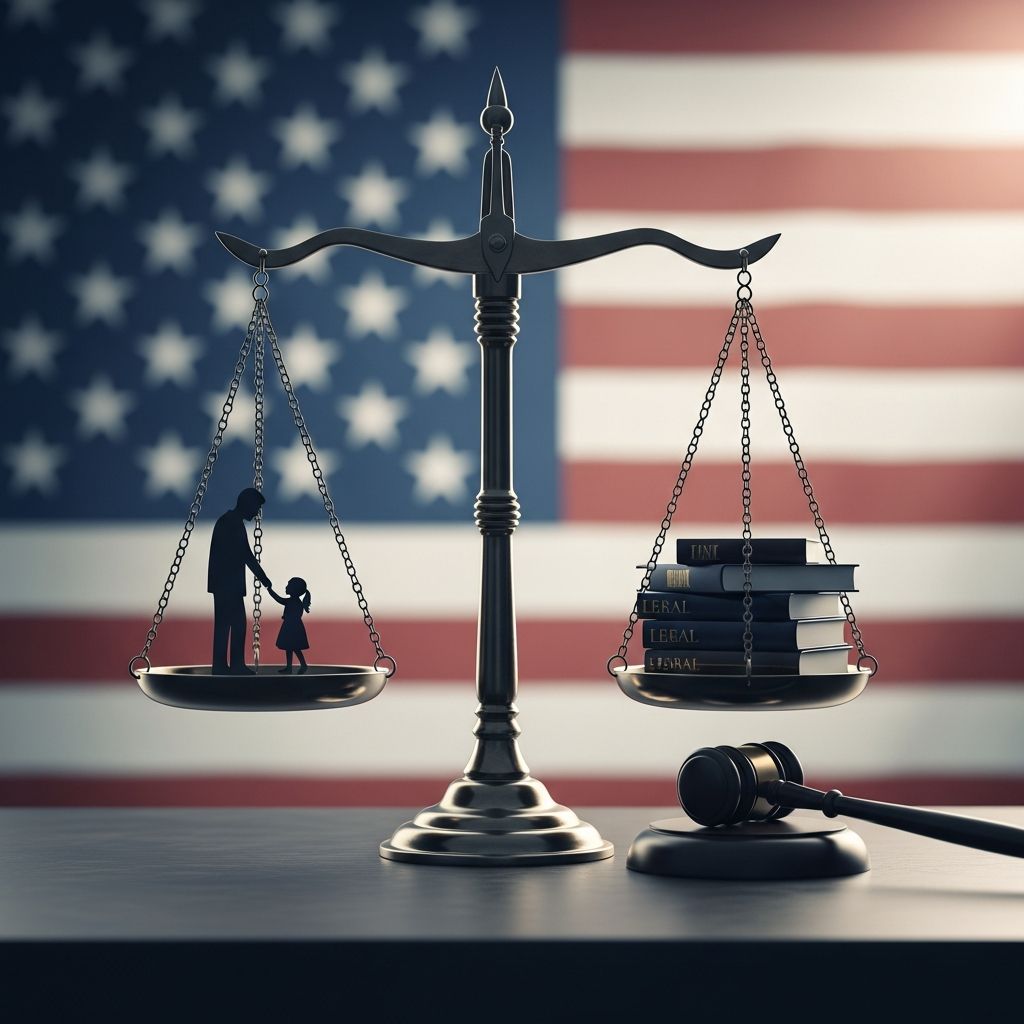
Physical discipline remains a contentious issue in the United States, where parents hold significant leeway to correct their children’s behavior through moderate force, though boundaries exist to prevent abuse. In all 50 states, parents can legally use reasonable physical punishment at home without facing criminal charges, provided it does not cause injury or substantial harm.
Legal Framework Governing Parental Discipline
The US Constitution and state statutes uphold parental authority in child-rearing, including the right to impose “reasonable” corporal punishment. Federal law, such as the Child Abuse Prevention and Treatment Reauthorization Act, distinguishes this from abuse by defining the latter as actions causing “serious physical or emotional harm.” No national ban exists on home-based physical discipline, contrasting with over 50 countries that have prohibited it entirely.
State laws typically grant parents immunity from assault or battery charges if the force is deemed corrective and proportionate. For instance, Minnesota’s statute allows “reasonable force” for restraint or correction, and courts have upheld this in overturning abuse convictions. This framework balances family autonomy with child protection, but interpretations vary by jurisdiction.
State-by-State Variations in Home Discipline
While uniform in permitting home corporal punishment, states differ in phrasing and judicial application. In Massachusetts, the Supreme Judicial Court in 2015 outlined a “reasonableness” test: force must relate to a legitimate purpose, like discipline, and avoid excessive methods such as closed-fist strikes or use on vulnerable areas. Utah’s Supreme Court in 2017 reversed a juvenile ruling against belt-spanking parents, insisting prosecutors prove actual “harm”—defined as physical, emotional, or developmental injury—beyond normal disciplinary effects.
| State Example | Key Ruling/Statute | Outcome |
|---|---|---|
| Massachusetts | 2015 Supreme Judicial Court guidelines | Overturned conviction; defined reasonable force limits |
| Utah | 2017 Supreme Court | Reversed abuse finding for belt use without proven harm |
| Minnesota | Sec. 609.379 | Allows reasonable force; appeals court protections |
These cases illustrate how courts prioritize parental rights unless clear evidence of injury emerges. Nationally, attitudes persist in favor of spanking, though research links it to negative outcomes like increased aggression.
When Discipline Crosses into Child Abuse
The line between lawful correction and criminal abuse hinges on injury severity. Bruises, welts, or lasting marks often trigger investigations by child protective services. A California case saw a judge rule in favor of a mother who struck her child with a wooden spoon causing bruises, citing parental discipline rights. However, repeated or severe incidents can lead to charges.
Prosecutors must demonstrate unreasonableness: excessive force, implements causing undue pain, or targeting face/head. Tools like belts or switches are not inherently illegal if moderated, but outcomes depend on context—child’s age, intent, and aftermath. Federal reporting mandates compel professionals to flag suspicions, potentially escalating to removal from home.
Corporal Punishment Beyond the Family Home
Outside homes, restrictions tighten. Corporal punishment is banned in most childcare, residential facilities, and juvenile detention nationwide. In schools, 19 states still permit it, primarily in the South, but 31 prohibit paddling or similar. Recent reforms include Colorado’s 2023 ban in public and funded private schools, and Wyoming’s push to expose staff to lawsuits.
- Public Schools: Allowed in states like Texas, Alabama; banned elsewhere.
- Private Settings: Varies; public funding often mandates bans.
- Daycare/Foster Care: Prohibited universally to safeguard vulnerable children.
International bodies like the UN Committee on the Rights of the Child urge full prohibition, viewing all physical punishment as violence, but the US has not ratified the treaty.
Scientific Insights on Physical Discipline Impacts
Peer-reviewed studies reveal risks: children subjected to spanking show higher rates of mental health issues, antisocial behavior, and cognitive delays later in life. A comprehensive review by Gershoff and Grogan-Kaylor analyzed decades of data, finding no positive effects and consistent harms. Despite this, cultural norms sustain the practice, with surveys indicating 70-80% of US parents spank at some point.
Longitudinally, physical punishment correlates with perpetuating violence cycles, as disciplined children are more likely to strike peers or future offspring. These findings fuel advocacy for bans, mirroring global declines post-legislation in countries like Sweden.
Promising Legislative Shifts and Federal Efforts
Momentum builds against school corporal punishment. Colorado’s HB 1191 (2023) exemplifies progress by barring it statewide. Federally, the 2023 SEEVAC Act (HR 4798) targets child violence broadly, promoting evidence-based prevention without directly banning home use. Advocacy groups like End Corporal Punishment push for home prohibitions, citing UN recommendations for awareness campaigns and non-violent alternatives.
Public education is key: states could emulate successful international models combining laws with parent training to shift norms.
Effective Alternatives to Physical Discipline
Child development experts advocate positive methods that foster self-regulation without harm. These evidence-backed strategies outperform punishment in building compliance and emotional health.
- Positive Reinforcement: Praise good behavior to encourage repetition; e.g., “Great job sharing toys!”
- Time-Outs: Brief isolation (1 minute per year of age) for cooling off, followed by discussion.
- Privilege Loss: Temporarily remove screens or playtime for rule-breaking, linking consequences logically.
- Clear Expectations: Set age-appropriate rules upfront and consistently enforce.
- Restorative Practices: Have children repair harm, like apologizing or fixing damage.
Programs like ACT (Attachment and Child Discipline) reduce spanking by 50% through nurturing training. Modeling calm behavior teaches self-control best.
| Method | Benefits | Application Age |
|---|---|---|
| Praise & Rewards | Boosts self-esteem, quick compliance | All ages |
| Time-Outs | Promotes reflection without resentment | 2+ years |
| Logical Consequences | Teaches accountability naturally | 4+ years |
| Empathy Building | Develops emotional intelligence | 3+ years |
Implementing these requires patience but yields lasting results, aligning with legal safety margins.
Practical Advice for Parents Facing Scrutiny
If investigated, document context: photos of minor marks, witness accounts, and discipline logs. Consult family law attorneys early. Avoid implements leaving visible evidence, prioritizing verbal methods amid shifting norms.
Community resources like parenting classes mitigate risks and equip families for positive change.
Frequently Asked Questions (FAQs)
Is spanking legal in my state?
Yes, reasonable spanking is legal in all 50 states for parents at home, but excess causing injury is abuse.
What counts as ‘reasonable’ force?
Courts assess proportionality to misbehavior, child’s age, and absence of serious harm; guidelines exclude blows to head or excessive pain.
Can schools paddle my child?
In 19 states yes, if policy allows; banned in 31 and expanding.
Are there federal laws banning spanking?
No, homes are unregulated federally; focus is on abuse reporting.
What are the best non-physical discipline tools?
Time-outs, praise, privilege removal, and clear rules—proven safer and more effective.
Has any state banned all home corporal punishment?
No US state has; all permit reasonable parental force.
References
- USA – End Corporal Punishment of Children — Global Initiative to End All Corporal Punishment of Children. 2024-08. https://endcorporalpunishment.org/reports-on-every-state-and-territory/usa/
- Physical punishment of children by US parents: moving beyond debate — Gershoff ET, Grogan-Kaylor A. National Library of Medicine. 2016-11-17. https://pmc.ncbi.nlm.nih.gov/articles/PMC6967056/
- Understanding the laws on how you can discipline your children — LawHelpNY.org. Accessed 2026. https://www.lawhelpny.org/resource/understanding-the-laws-on-how-you-can-discipl
- Alternatives to Physical Punishment — Emory University School of Medicine. Accessed 2026. https://med.emory.edu/departments/pediatrics/divisions/neonatology/dpc/alternatives-physical-punishment.html
- Therapist’s Corner – 6 Alternatives to Punishment — Child Abuse Foundation of Broward. Accessed 2026. https://www.cafb.org/therapists-corner-6-alternatives-to-punishment/
- How Can Parents Discipline Without Spanking? — Nemours KidsHealth. Accessed 2026. https://kidshealth.org/en/parents/spanking.html
Similar Articles








Read full bio of Sneha Tete