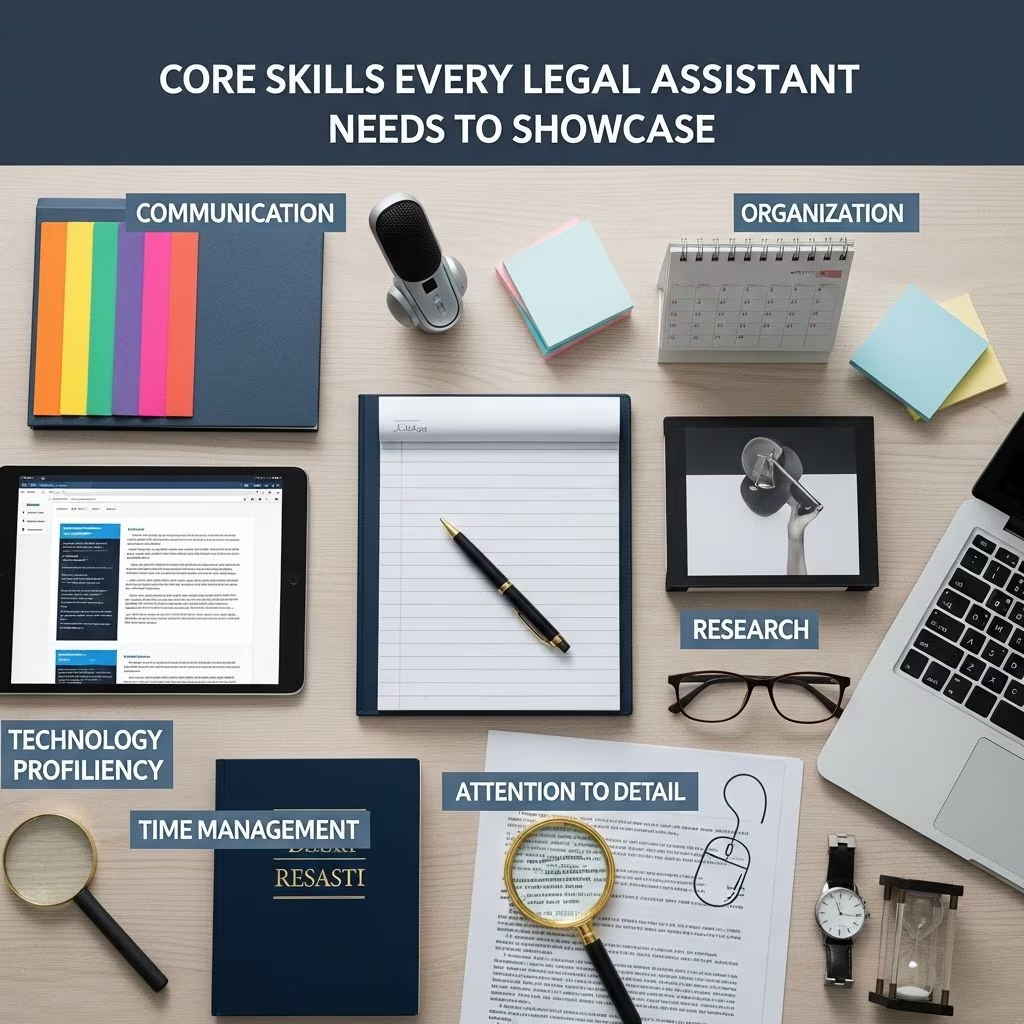
Law firms and legal departments increasingly rely on skilled legal assistants to keep cases, clients, and deadlines under control. Strong credentials are helpful, but your long-term success depends on the mix of practical abilities you bring to the role and how well you present them on your resume and in interviews.
This guide breaks down the most important competencies for legal assistants today, why employers value them, and concrete ways to develop and highlight these strengths in your job search materials.
Why Skills Matter More Than Job Titles
Job titles such as legal assistant, legal secretary, or paralegal vary widely among organizations. What hiring managers consistently look for, however, is evidence that you can:
- Support attorneys efficiently under strict deadlines
- Maintain accurate records and documents
- Communicate clearly with clients and courts
- Use modern technology and legal software effectively
- Handle sensitive information with professionalism and discretion
Focusing on skills rather than titles helps you demonstrate your value no matter where you gained your experience—law firms, corporate legal departments, government agencies, or internships.
Foundational Skills Every Legal Assistant Should Develop
While each practice area has its own nuances, certain abilities appear in almost every legal assistant job description. The sections below explain those core skills and offer examples of how to show them on a resume.
1. Precision and Attention to Detail
Legal work turns on accuracy. A wrong date, misspelled party name, or missing exhibit can delay a filing or even harm a client’s position. Employers expect legal assistants to review every document with a meticulous eye.
Strong attention to detail includes:
- Checking names, dates, citations, and formatting in pleadings and correspondence
- Verifying that exhibits, signatures, and notarizations are complete
- Maintaining consistent file naming and version control
- Spotting inconsistencies between draft documents and source records
How to show it on your resume:
- “Proofread and formatted 40+ court filings per month with zero rejected submissions over 12 months.”
- “Maintained detailed case chronologies and document indexes for multi-party litigation.”
2. Organizational and Time Management Strength
Legal assistants juggle overlapping court deadlines, attorney calendars, client meetings, and internal tasks. Organizational skills enable you to keep all of those moving parts on track and avoid missed cutoffs, which can have serious consequences in litigation and transactional work.
Key elements of this skill set include:
- Creating and updating case checklists and deadline calendars
- Prioritizing tasks by urgency and importance
- Keeping both physical and digital files easy to navigate
- Coordinating schedules across attorneys, clients, and court personnel
How to show it on your resume:
- “Managed calendars and deadlines for three attorneys handling 80+ active matters.”
- “Implemented a digital folder structure that reduced time to locate documents by 30%.”
3. Strong Written and Verbal Communication
Legal assistants serve as a communication hub among attorneys, clients, experts, and court staff. Clear, professional communication—both in writing and in person—is essential for moving cases forward smoothly.
Communication skills involve:
- Drafting letters, emails, and simple legal documents using appropriate tone and format
- Listening carefully to instructions, asking clarifying questions, and confirming next steps
- Explaining procedures to clients in plain language, without giving legal advice
- Communicating courteously with court clerks and opposing counsel
How to show it on your resume:
- “Drafted routine correspondence and client updates for attorney review, reducing turnaround time on communications.”
- “Served as primary point of contact for 50+ active clients, ensuring prompt responses to inquiries.”
4. Legal Research and Information Gathering
Many legal assistants help locate cases, statutes, regulations, and background facts that attorneys use in their analysis. Even when formal legal research is handled by attorneys or paralegals, legal assistants often gather procedural rules and local court requirements.
Effective research skills include:
- Using online legal databases and court websites to find relevant materials
- Identifying filing rules, deadlines, and formatting requirements for specific courts
- Organizing research results into clear summaries or reference tables
- Checking that authorities are current and still valid under applicable law
How to show it on your resume:
- “Researched local and federal court rules to ensure compliance with filing requirements.”
- “Compiled fact research from public records and online databases to support case preparation.”
5. Technology Fluency and Software Skills
Modern law practices depend heavily on digital tools for document management, time tracking, e-filing, and communication. Employers increasingly seek legal assistants who are comfortable learning new platforms and troubleshooting basic tech problems.
Useful technology skills include:
- Proficiency in word processing, spreadsheets, and presentation software
- Experience with legal case management or document management systems
- Understanding of electronic filing systems used by courts
- Basic awareness of data security when handling sensitive information
How to show it on your resume:
- “Regularly prepared e-filings in state and federal courts using electronic portals.”
- “Managed case data and deadlines using cloud-based case management software.”
6. Knowledge of Legal Terminology and Procedures
Legal assistants do not give legal advice, but they must understand the language and processes of the legal system to carry out instructions accurately. Knowing the difference between common pleadings, motions, and orders helps avoid miscommunication and errors.
Core procedural knowledge covers:
- Basic civil and/or criminal procedure depending on the practice
- Common document types (complaints, answers, motions, subpoenas, discovery requests)
- Stages of a case from initial intake through resolution
- Standard timelines for filings, responses, and hearings
How to show it on your resume:
- “Prepared initial drafts of pleadings and discovery requests based on attorney instructions.”
- “Coordinated service of process and tracked deadlines for responses and hearings.”
7. Confidentiality and Professional Ethics
Legal assistants regularly handle highly sensitive personal, financial, and business information. Ethical rules require law office staff to preserve client confidentiality and support the attorney’s professional obligations.
Professional ethics include:
- Protecting client files and digital records against unauthorized access
- Avoiding discussion of cases in public or with unauthorized individuals
- Understanding when to direct legal questions to an attorney instead of answering
- Following firm policies on conflicts of interest and document retention
How to show it on your resume:
- “Handled confidential client records in compliance with firm privacy policies.”
- “Trained new staff on confidentiality procedures and secure document handling.”
8. Interpersonal Skills and Client Service
For many clients, their primary day-to-day contact is the legal assistant. High emotional stakes, financial stress, and unfamiliar procedures can make clients anxious or frustrated. Strong interpersonal skills help you maintain professionalism while providing calm, courteous support.
Important interpersonal competencies include:
- Demonstrating empathy without making promises about case outcomes
- Managing expectations around timelines and attorney availability
- Remaining composed when dealing with upset or demanding callers
- Working collaboratively with attorneys, paralegals, and other staff
How to show it on your resume:
- “Maintained positive client relationships, contributing to high client satisfaction ratings.”
- “Collaborated with a cross-functional legal team to support complex litigation matters.”
Balancing Hard Skills and Soft Skills
Legal assistant roles require both technical capabilities and people-oriented strengths. The table below summarizes how these two categories complement each other.
| Hard (Technical) Skills | Soft (Interpersonal) Skills |
|---|---|
| Document formatting and proofreading | Active listening and empathy |
| Knowledge of legal procedures and terminology | Teamwork and collaboration |
| Use of case management and e-filing systems | Adaptability in fast-changing situations |
| Legal research and data gathering | Professional client communication |
| Calendar and deadline management | Problem-solving under time pressure |
How to Strengthen Your Legal Assistant Skill Set
If you are just entering the legal field or aiming for promotion, targeted development can make you a stronger candidate. Consider these strategies to upgrade your abilities.
Targeted Learning and Training
- Enroll in paralegal or legal assistant courses that cover procedure, ethics, and legal writing through accredited institutions.
- Take short online classes on business writing, Excel, or project management to sharpen office skills.
- Attend webinars hosted by bar associations or legal organizations to stay current on practice changes.
Practice with Realistic Documents and Scenarios
- Download sample pleadings and contracts from reputable sources and practice reformatting or proofreading them.
- Create mock case files and practice building a chronology, index, and deadline chart.
- Role-play phone calls with a friend: one acting as a client or court clerk, the other as the legal assistant.
Build Technology Confidence
- Explore the advanced features of word processors, including styles, tables of contents, and mail merge.
- Experiment with secure cloud storage tools to understand folder structures and permissions.
- Review public tutorials for leading legal software platforms to familiarize yourself with common workflows.
Translating Skills into a Compelling Resume
Once you have identified and strengthened your abilities, your next task is to present them clearly to employers. Use your resume to connect your skills to specific results.
Highlight Skills in Multiple Sections
- Summary: Emphasize your top 3–5 strengths that match the job posting.
- Experience: Use bullet points to tie each skill to a concrete accomplishment or responsibility.
- Skills list: Include both technical tools (e.g., specific software) and core competencies (e.g., case management, client communication).
- Education/Training: Mention coursework that reinforces your knowledge of legal procedure, research, or writing.
Use Employer-Friendly Language
When possible, mirror terms used in reputable descriptions of paralegal and legal assistant work so your skills are easily recognized by recruiters and applicant tracking systems. Examples of employer-friendly phrases include:
- “Managed high-volume document production and filing”
- “Coordinated with court personnel regarding scheduling and procedures”
- “Prepared and organized discovery materials”
- “Supported attorneys in trial preparation, including exhibit lists and witness files”
Frequently Asked Questions (FAQs)
Q: Do I need prior law firm experience to develop legal assistant skills?
A: No. Many skills—such as organization, attention to detail, customer service, and document formatting—can be built in other office or administrative roles and then transferred to a legal setting. You can supplement that background with targeted legal courses and self-study in procedures and terminology.
Q: Which skill should I focus on first if I am new to the legal field?
A: Start with strong written communication and document formatting, then add basic knowledge of legal terminology and court procedures. These foundations will make it easier to follow attorney instructions and avoid common mistakes in filings and correspondence.
Q: How can I demonstrate confidentiality and ethics to an employer?
A: Emphasize any experience handling private records—such as medical, financial, or HR documents—and mention training in privacy or data protection. In interviews, be ready to describe how you would protect client information and when you would escalate an issue to an attorney.
Q: Are technology skills really necessary if I am strong with paperwork?
A: Yes. Courts, firms, and corporate legal departments increasingly rely on electronic filing and digital document management. Being able to adapt quickly to software systems, understand basic data security, and troubleshoot simple technology issues makes you more efficient and more attractive to employers.
Q: How often should I update my legal assistant skills?
A: Treat your skills as an ongoing project. Rules, procedures, and technology tools change regularly. Review your abilities at least once a year, seek feedback from supervisors, and pursue short training opportunities to keep your knowledge current and your resume competitive.
References
- Paralegals and Legal Assistants — U.S. Bureau of Labor Statistics. 2024-04-17. https://www.bls.gov/ooh/legal/paralegals-and-legal-assistants.htm
- A Guide to Legal Assistant Skills for Job Seekers — Indeed Editorial Team. 2024-02-23. https://www.indeed.com/career-advice/resumes-cover-letters/legal-assistant-skills
- Must-Have Skills of a Legal Virtual Assistant in 2025 — Rossa Inc. 2024-01-05. https://rossainc.com/must-have-skills-of-a-legal-virtual-assistant-in-2025/
- Future-Proofing Your Career: Legal Staff Skills Firms Want in 2025 — LawCrossing. 2023-11-09. https://www.lawcrossing.com/article/900056616/Future-Proofing-Your-Career-Legal-Staff-Skills-Firms-Want-in-2025/
- Essential Communication Skills for Legal Assistants in 2025 — Northwest Career College. 2024-03-12. https://www.northwestcareercollege.edu/blog/essential-communication-skills-for-legal-assistants-in-2025/
- What 4 Skills Should Paralegals Have in 2025? — University of Cincinnati Online. 2023-09-20. https://www.online.uc.edu/blog/paralegal-skills
- The Top 10 Skills for Legal Assistants — BOS Staffing. 2020-07-26. https://www.bosstaff.com/2020/07/26/legal-assistant-skills/