
Elements Of A DUI Case: 4 Key Factors Prosecutors Rely On
Understand what prosecutors must prove to sustain a DUI charge in most states.
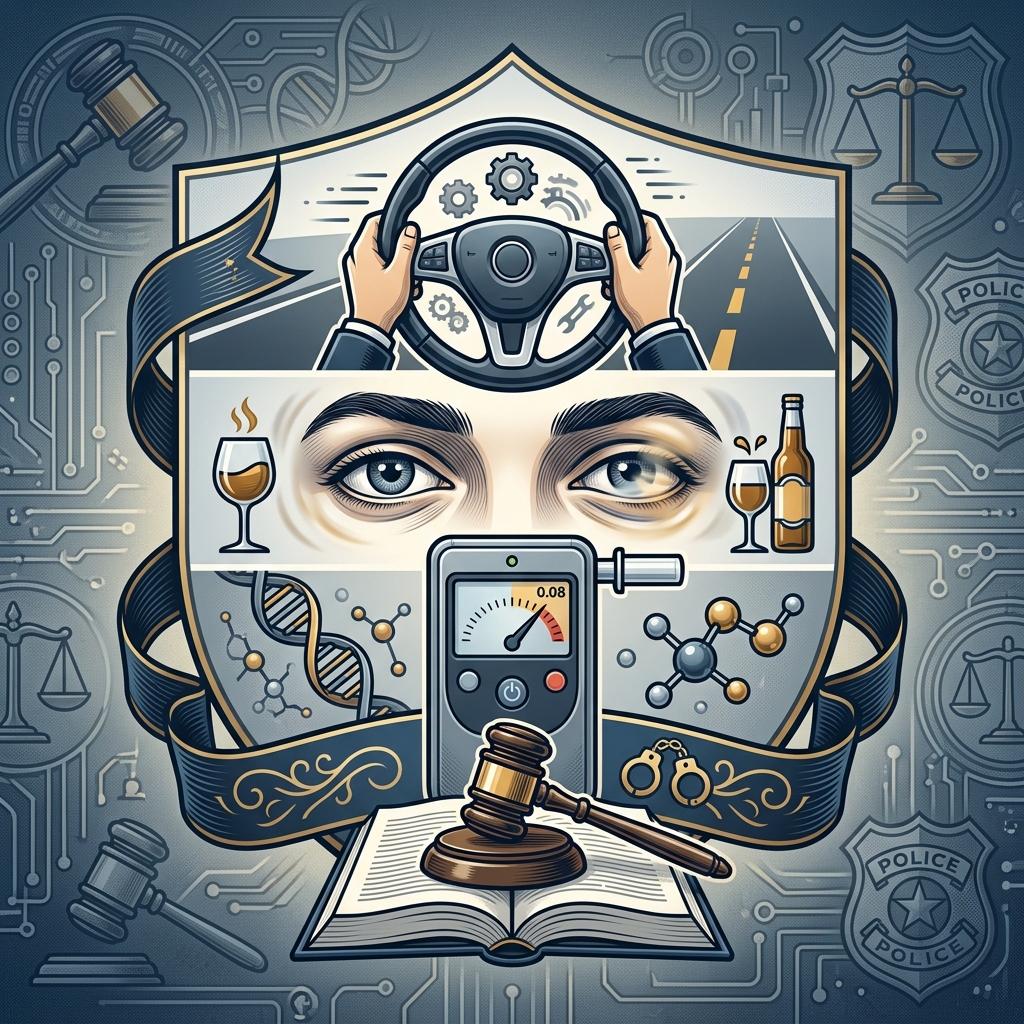
Driving under the influence cases are built around a small set of legal elements, but each one can be heavily disputed. In most states, a prosecutor must show that a person either drove or controlled a vehicle while impaired by alcohol, drugs, or another intoxicating substance, or that the person’s blood alcohol concentration was at or above the legal limit.
That basic idea sounds simple, but the details matter. DUI laws vary by state, and the outcome often depends on how the law defines driving, what counts as intoxication, and what evidence the government can use to prove its case.
What a DUI Case Usually Requires
Although state statutes differ, DUI charges generally rest on two core ideas: the person must have been operating a vehicle, and the person must have been impaired or above a legal alcohol threshold.
Some states focus on observable impairment. Others allow a conviction based on a specific blood alcohol concentration, even if the driver did not appear visibly intoxicated. These are often called per se DUI laws because the BAC number itself is enough to establish the offense.
| Common DUI element | What prosecutors try to prove |
|---|---|
| Vehicle operation | The person drove, operated, or had actual physical control of a vehicle. |
| Impairment or BAC | The person was under the influence or had a BAC at or above the legal limit. |
| Jurisdiction | The conduct happened within the state or court’s authority. |
| Proof beyond a reasonable doubt | The evidence is strong enough to support a conviction. |
Driving, Operating, or Controlling the Vehicle
The first issue in many DUI cases is whether the accused was actually driving or otherwise in control of the vehicle. In some jurisdictions, the law reaches beyond active driving and includes being in actual physical control of the car.
That phrase can cover situations where a person is seated in the driver’s seat, has the keys available, or has the ability to start or move the vehicle, even if the vehicle is parked. Some states require more than mere presence near a car, while others treat vehicle control more broadly.
This distinction matters because a person does not always need to be caught in motion. A driver asleep behind the wheel, sitting in a parked car with the engine running, or using the vehicle’s systems can still face a DUI charge depending on state law.
- Active driving is the clearest form of operation.
- Actual physical control can be enough in some states.
- Key possession, engine status, and seat position may all matter.
- State definitions control how broad the charge can be.
Alcohol, Drugs, and Other Intoxicants
DUI laws are not limited to alcohol. Many statutes also cover illegal drugs, prescription medications, and even over-the-counter substances if they alter mental functioning or impair safe driving.
Some people assume that only obvious drunkenness leads to a DUI. In reality, a person can be charged if a chemical substance affects coordination, judgment, reaction time, or the ability to operate a vehicle safely.
This broader approach is important because officers may rely on behavior, field observations, or laboratory testing when alcohol is not the only concern. A person using a lawful medication may still be charged if the medication causes impairment.
Impairment as a Legal Standard
Where prosecutors rely on impairment rather than a BAC number, they must show that the substance affected the driver’s normal faculties or made the person less safe to drive.
Evidence of impairment often includes a combination of observations: slurred speech, unsteady balance, poor coordination, delayed responses, bloodshot eyes, or an odor of alcohol. Driving behavior can also matter. Weaving, speeding, failure to stay in a lane, or erratic braking may support the claim that the driver was impaired.
Impairment is usually proved through a totality of the circumstances, not one fact alone. A single clue may not be enough, but multiple indicators can create a stronger case for the prosecution.
The Role of the BAC Test
Many DUI cases turn on a blood alcohol concentration, or BAC, test. Most states set the adult legal limit at 0.08 percent, although exact rules can vary by state and by driver category.
Under a per se law, the government does not need to prove visible impairment if the BAC is at or above the statutory limit. That means a person may face liability even if they believe they were driving carefully.
Testing can involve a breath sample, blood sample, or urine sample, depending on the jurisdiction and circumstances. The reliability of that testing can become a major issue in the case, especially if the device was not calibrated, the sample was mishandled, or the test was administered improperly.
- Breath tests are common roadside or station-based tools.
- Blood tests may be used when a more precise measurement is needed.
- Urine tests may appear in some drug-related investigations.
- Test accuracy can be challenged through scientific and procedural defenses.
How Police and Prosecutors Build the Case
A DUI case usually begins with an officer’s observations. Police may notice poor lane control, speeding, a traffic violation, or other unusual driving behavior that prompts a stop. Once contact is made, officers often look for physical signs of impairment and may ask questions, request field sobriety exercises, or seek chemical testing.
Evidence in DUI cases can include the officer’s report, body camera footage, witness statements, dash camera video, breath or blood results, and the driver’s own statements. Refusal to submit to testing may also have consequences under state law.
Prosecutors usually try to combine all available evidence into one narrative: the vehicle was being driven or controlled, the driver displayed signs of intoxication, and test results or other proof confirm impairment.
Why Jurisdiction and Timing Matter
A DUI charge must also be supported by facts showing that the offense occurred within the court’s authority. That can sound technical, but it is a standard part of criminal procedure. The location of the stop, the route driven, and the timing of alcohol or drug consumption can all affect the case.
Timing is especially important in BAC cases. A test taken after driving may not perfectly reflect the driver’s level at the moment of operation, which creates room for dispute. Defense lawyers often focus on whether the test accurately shows the person’s condition at the relevant time.
Common Defenses to a DUI Charge
The defense strategy depends on the facts, but many DUI cases are attacked by challenging one or more of the required elements.
- There was no actual driving or control of the vehicle.
- The observed behavior had another cause, such as fatigue, illness, or medication.
- The officer lacked a valid reason for the stop or investigation.
- The testing process was flawed or the equipment was unreliable.
- The BAC result did not accurately reflect the level at the time of driving.
- The state cannot prove impairment beyond a reasonable doubt.
These defenses do not automatically defeat a case, but they can weaken the prosecution’s proof. Because each element must be established beyond a reasonable doubt, a serious problem with one element can change the result.
What Happens After a Conviction
DUI penalties vary widely, but consequences often include fines, license suspension, required education or treatment, probation, and possible jail time. Repeat offenses usually carry harsher penalties, and some states treat aggravated or repeat DUI offenses as felonies.
A conviction can also affect insurance costs, employment, professional licensing, and the ability to drive for work or family responsibilities. Some states offer limited driving privileges or restricted licenses, but those are not automatic and usually depend on the person’s history and the specific offense.
Because the penalties are so significant, the legal classification of the offense matters as much as the immediate facts of the arrest.
Frequently Asked Questions
Can someone be charged with DUI without driving?
Yes, in some states. If the law includes actual physical control, a person may be charged even without the vehicle moving, depending on the circumstances.
Is a BAC of 0.08 always enough for a conviction?
In many states, yes for adult drivers under standard per se laws, but the exact rule depends on the jurisdiction and the type of driver involved.
Does DUI always involve alcohol?
No. DUI laws often cover drugs, prescription medicine, and other intoxicating substances that impair driving ability.
Can field sobriety tests alone prove a DUI?
Field tests are important evidence, but they are usually part of a larger case. Prosecutors commonly combine them with officer observations and chemical test results.
What if the driver refused testing?
Refusal can trigger separate consequences under state law, including license penalties, and may also be used as evidence in some cases.
Why the Element-by-Element Analysis Matters
DUI law is often discussed in broad terms, but convictions are won or lost on details. The prosecution has to connect the driver, the vehicle, the substance, the level of impairment, and the legal standard in the state’s statute.
That is why two cases that look similar on the surface can end very differently. One case may have a strong BAC result and clear driving evidence; another may rely only on a shaky stop, uncertain observations, or a disputed test result. In DUI law, the elements are the roadmap, and every piece of proof must fit them.
References
- Elements of a DUI Offense — FindLaw. 2024-05-01. https://www.findlaw.com/dui/charges/elements-of-a-dui-offense.html
- The Elements of a Georgia DUI Case — DUI.Info. 2024-01-01. https://www.dui.info/the-elements-of-a-georgia-dui-case
- Florida Statutes § 316.193 — The Florida Legislature. 2025-01-01. https://www.leg.state.fl.us/statutes/index.cfm?App_mode=Display_Statute&URL=0300-0399/0316/Sections/0316.193.html
- Missouri DWI Laws — NCDD. 2024-01-01. https://www.ncdd.com/missouri-dwi-laws
- DUI/DWI | Maryland People’s Law Library — Maryland Courts / People’s Law Library. 2024-01-01. https://www.peoples-law.org/duidwi
- Driving While Intoxicated (DWI) — Missouri Department of Revenue. 2024-01-01. https://dor.mo.gov/driver-license/revocation-reinstatement/dwi.html
- Traffic and Safety – Influenced Driving — Illinois State Police. 2024-01-01. https://isp.illinois.gov/TrafficSafety/InfluencedDriving
- 2025 Florida Statutes, § 316.193 — Florida Legislature. 2025-01-01. https://www.leg.state.fl.us/statutes/index.cfm?App_mode=Display_Statute&URL=0300-0399/0316/Sections/0316.193.html
- Is a DUI a Felony or Misdemeanor Charge? — Mothers Against Drunk Driving. 2024-01-01. https://madd.org/is-a-dui-a-felony-or-misdemeanor-charge/
Similar Articles








Read full bio of Sneha Tete




