Understanding Copyright and Copyleft: Legal Frameworks
Explore how copyright protects creators while copyleft enables collaborative innovation and shared knowledge.
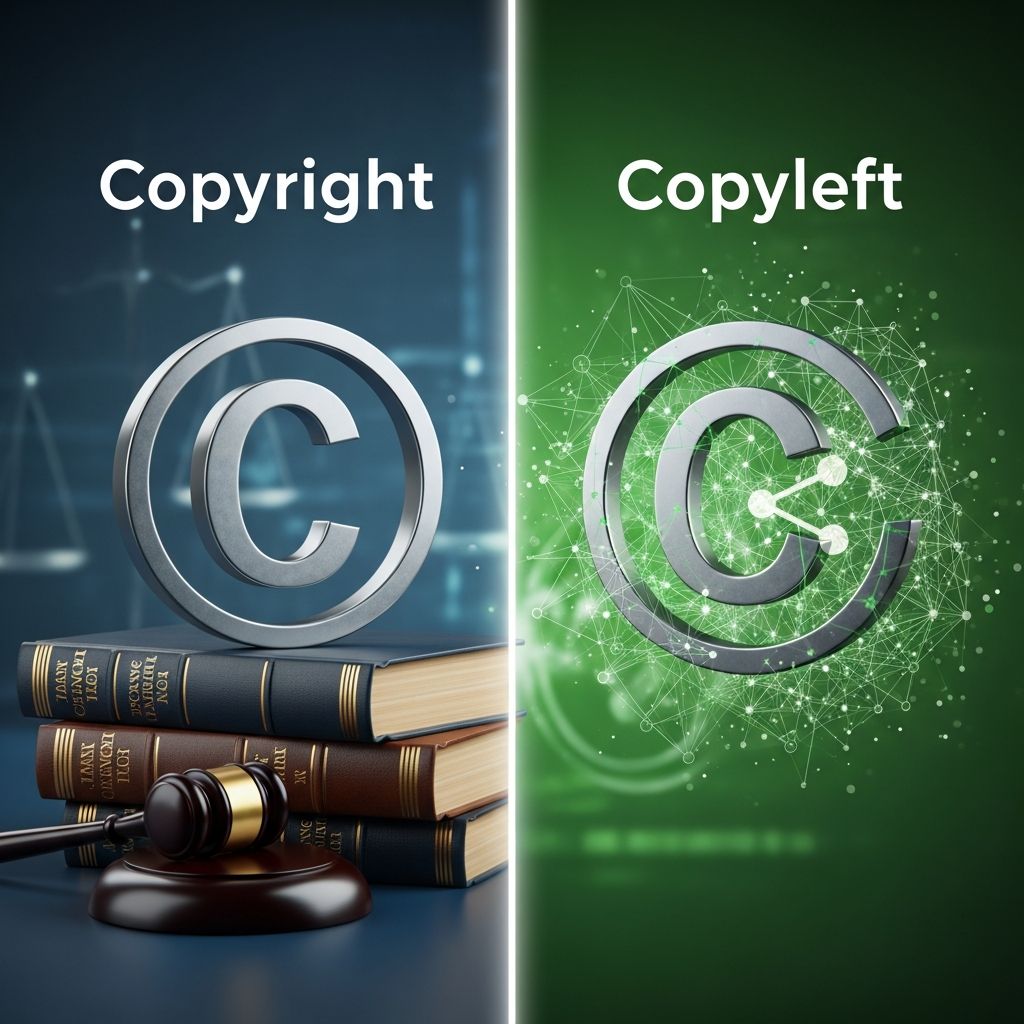
The Foundation of Creative Protection: Copyright and Copyleft Explained
The digital age has fundamentally transformed how we create, share, and distribute creative works. Two distinct legal frameworks govern these processes: copyright and copyleft. While these terms sound similar, they represent fundamentally opposing philosophies about how creative works should be managed and distributed. Copyright establishes exclusive ownership rights, whereas copyleft enables widespread sharing while maintaining certain protections. Understanding these frameworks is essential for creators, developers, and anyone involved in digital content production.
The Essence of Copyright Protection
Copyright grants creators automatic legal protection over their original works the moment of creation. This protection applies to various forms of creative expression, including literary works, musical compositions, artistic creations, and software code. When a creator produces original content, they immediately possess both moral rights (the right to be credited as the author) and economic rights (the right to receive compensation for the work’s use).
Copyright operates on a principle of exclusivity. The creator retains complete control over how their work is used, reproduced, distributed, and modified. This means that anyone wishing to use a copyrighted work must first obtain explicit permission from the copyright holder. This permission often comes in the form of a license agreement that specifies the conditions under which the work may be used.
The automatic nature of copyright protection means that registration, while advisable for additional legal evidence, is not required for protection to exist. A creator does not need to publish a copyright notice or register their work with a government agency. The moment a creative work is fixed in a tangible medium—whether written on paper, recorded digitally, or displayed on screen—copyright protection attaches to it automatically.
Copyleft: Inverting the Copyright Model
Copyleft represents a deliberate inversion of copyright philosophy. Rather than restricting how a work is used, copyleft actively encourages sharing, modification, and redistribution. The term itself cleverly inverts “copyright,” replacing the “right” with “left” to symbolize this philosophical reversal. However, copyleft is not an absence of copyright protection; instead, it uses copyright law as a foundation to achieve opposite goals.
Copyleft licenses are built upon copyright legislation but apply it strategically to ensure that works remain free and accessible to everyone. By placing a work under a copyleft license, creators grant users the freedom to use the material, modify it, copy it, and redistribute it. These freedoms are not unlimited, however. They come with specific conditions that users must follow to maintain the spirit of the license.
The most significant condition attached to copyleft licenses is the “share-alike” requirement. When a user modifies a copyleft-licensed work and shares that modified version, they must distribute it under the same or compatible license terms. This ensures that the freedoms granted by the original creator are preserved throughout the derivative work’s lifecycle. It prevents someone from taking a freely shared project, modifying it, and then locking it behind proprietary restrictions.
Core Freedoms Associated with Copyleft
Copyleft licenses provide users with specific freedoms that distinguish them from traditional copyright restrictions. These freedoms form the foundation of the open-source movement and collaborative development models.
- Freedom to Study: Users can examine how a work functions, understand its mechanisms, and learn from its implementation.
- Freedom to Copy and Share: Users can make and distribute copies of the original work to others without restrictions.
- Freedom to Modify: Users can alter and improve the work according to their needs and preferences.
- Freedom to Distribute Improvements: Users can share their modified versions with the community, allowing others to benefit from improvements.
- Requirement for Source Code Accessibility: For works to be truly copyleft, the source code or underlying documentation must be available in a form that facilitates further development.
Comparative Analysis: Copyright vs. Copyleft
These two frameworks serve fundamentally different purposes and appeal to different creators and communities. The following table highlights their principal distinctions:
| Characteristic | Copyright | Copyleft |
|---|---|---|
| Primary Purpose | Protects creator’s exclusive ownership and control | Promotes free sharing and collaborative development |
| Default Permission State | Restrictive; all rights reserved by default | Permissive; certain rights granted by default |
| Licensing Approach | Creators grant specific, limited permissions | Requires derivative works to be released under identical terms |
| Philosophical Focus | Individual ownership and economic benefit | Community development and collective knowledge |
| Common Applications | Commercial software, books, music, films, artistic works | Open-source software, collaborative documents, educational materials |
| Permission Requirements | Users must obtain explicit permission | License already provides authorization with conditions |
Variations of Copyleft Licensing
Copyleft is not a monolithic concept. Various licensing models exist along a spectrum, each offering different balances between freedom and restrictions. These variations allow creators to choose how much sharing and modification freedom they wish to grant:
- Strong Copyleft: Requires that all derivative works be licensed under the same strict copyleft license, preventing any proprietary modifications.
- Weak Copyleft: Permits modifications to be released under different licenses, provided the original components remain under the copyleft license.
- Full Copyleft: Applies copyleft principles comprehensively to all aspects of the work and its derivatives.
- Partial Copyleft: Applies copyleft principles selectively to certain components while allowing others to be licensed differently.
Rights Structure: Moral and Economic Dimensions
Copyright law traditionally divides creator rights into two categories: moral rights and economic rights. Moral rights are unwaivable in many jurisdictions and include the right to claim authorship and protect the work’s integrity. Economic rights regulate how the work generates income and can be assigned to third parties.
Within a copyright framework, creators retain economic rights unless they explicitly transfer them. They can charge for licenses, sell copies, or restrict access entirely. In contrast, copyleft creators voluntarily share economic rights through their licensing choice, though they retain moral rights in most jurisdictions. They may still earn income through alternative means, such as providing services, support, or premium versions of their work.
Creative Commons and Copyleft Integration
Creative Commons licensing represents a modern approach that bridges copyright and copyleft concepts. This system enables creators to share their work without infringing copyright while maintaining certain protections. While all Creative Commons licenses require proper attribution of the original creator, they vary in how they balance creator control and user freedom. Some Creative Commons licenses incorporate copyleft principles, requiring derivative works to maintain the same license terms, while others offer more flexibility.
Practical Applications Across Industries
Copyright and copyleft serve distinct industries and use cases. The software development industry has particularly embraced copyleft through open-source projects, where collaborative development accelerates innovation. Linux, Apache, and countless other critical technologies operate under copyleft licenses, enabling thousands of developers worldwide to contribute improvements.
Copyright remains standard in traditional creative industries, including music production, film, publishing, and commercial software. These industries rely on copyright’s exclusivity to generate revenue and maintain competitive advantages. However, even within these sectors, some creators choose copyleft or Creative Commons approaches to expand their audience and foster communities around their work.
The Enforcement Mechanism of Copyleft
Copyleft relies on copyright law itself to enforce its conditions. This seemingly paradoxical approach works because copyleft licenses leverage copyright protection to ensure that freedoms remain protected. When someone violates a copyleft license by failing to maintain the same license terms for derivative works, they are technically breaching copyright law. This enforcement mechanism ensures that the source code and the freedoms attached to it remain legally inseparable.
Without copyleft, an uncopyrighted work in the public domain could be modified and redistributed as proprietary software, preventing future users from accessing the original freedoms. Copyleft prevents this scenario by ensuring that not only the original source remains free, but all modifications must also be distributed under compatible terms, granting permission to all who follow to continue modifying the work.
Duration and Public Domain Considerations
Both copyright and copyleft works eventually enter the public domain, though copyleft retains certain protections during its active period. Copyright duration varies by jurisdiction but typically extends throughout the creator’s lifetime plus additional years (often 50 to 70 years after death). Copyleft licenses, while in effect, maintain the share-alike requirements, but the same time periods apply before the work eventually enters complete public domain status.
Key Considerations for Creators and Users
Choosing between copyright and copyleft requires understanding your objectives. If you seek to commercialize your work, maintain exclusive control, and receive licensing fees, copyright provides the appropriate framework. If you believe in collaborative development, want to contribute to collective knowledge, and wish to ensure that improvements benefit everyone, copyleft aligns better with your philosophy.
For users, the choice of framework affects your ability to modify, distribute, and commercialize works. Copyleft-licensed software may be free to use and modify but restricts commercialization options if you wish to use it in proprietary products. Copyright-licensed works require explicit permission but may offer commercial licensing arrangements that suit business needs.
Frequently Asked Questions
Q: Is copyleft a form of copyright?
A: Copyleft is not copyright, but it exists because of copyright law. It uses copyright protection strategically to achieve opposite goals—ensuring works remain freely accessible rather than restricted. Copyleft is a philosophy of use implemented through copyright licensing mechanisms.
Q: Can I use copyleft software in commercial products?
A: This depends on the specific copyleft license. Some licenses permit commercial use provided you distribute your product under the same license terms. Others restrict commercial use entirely. Always review the specific license terms before commercial use.
Q: What happens to a copyleft work when it enters the public domain?
A: Once a work enters the public domain, anyone may use it without restrictions, including for proprietary purposes. However, during the copyright term, copyleft protections ensure that derivative works maintain the same license terms.
Q: Do I need to register a copyright or copyleft license?
A: Copyright protection is automatic upon creation; registration is optional but provides additional legal evidence. For copyleft works, applying the appropriate license terms is essential, though formal registration may strengthen legal standing in disputes.
Q: Can I change from copyright to copyleft for my existing work?
A: Yes, you can change your licensing terms as long as you hold the copyright. However, earlier versions distributed under copyright remain under those terms. Only future distributions can use new copyleft terms.
Q: What is the difference between copyleft and open source?
A: Open source is a broader category encompassing any software with publicly available source code. Copyleft is a specific licensing philosophy within open source that requires derivative works to maintain the same license terms. Not all open source software is copyleft.
References
- Copyright vs Copyleft: Understanding the Key Differences — YouTube. Accessed 2026-02-09. https://www.youtube.com/watch?v=EAl9yMUM_Q8
- Copyleft — Wikipedia. Accessed 2026-02-09. https://en.wikipedia.org/wiki/Copyleft
- Difference Between Copyright and Copyleft — LegalVision. Accessed 2026-02-09. https://legalvision.com.au/whats-the-difference-between-copyright-and-copyleft/
- Copyright vs. Copyleft — GNU. Accessed 2026-02-09. https://www.gnu.org/gwm/libredocxml/x53.html
- Differences between copyright and copyleft — Safe Creative. 2023-03-03. https://www.safecreative.org/blog/en/2023/03/03/differences-between-copyright-and-copyleft/
- Creative Commons, Copyleft, and Other Licenses — University of Pittsburgh Library Guides. Accessed 2026-02-09. https://pitt.libguides.com/copyright/licenses
- Copyleft in Software Development: Explanation & Risks — CAST Software. Accessed 2026-02-09. https://www.castsoftware.com/glossary/copyleft-licensing-license-risks-explanation-copyright-software-development-problems-open-source-code
Similar Articles








Read full bio of Sneha Tete