
When a Contractor Is Hurt at Your Home: Understanding Your Liability
A practical legal and safety guide for homeowners on when they can be liable if a contractor or handyman is injured while working on their property.
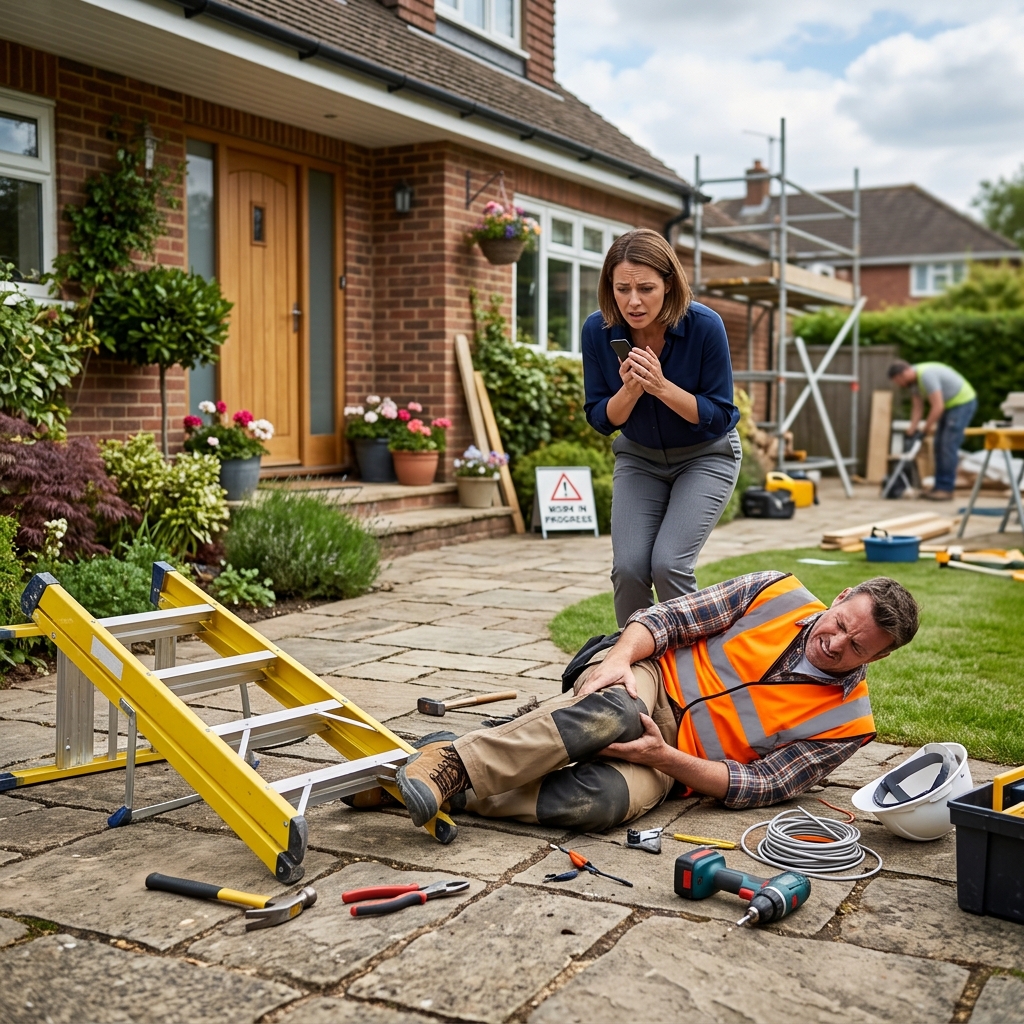
Hiring a contractor or handyman to work on your home often feels routine: you agree on a price, schedule the work, and expect the job to be done safely. But if that worker is injured on your property, the situation can quickly become complicated. Depending on the circumstances, you as the homeowner may bear legal responsibility for medical bills, lost wages, and other damages.
This guide explains when homeowners can be liable for contractor injuries, how premises liability and control over the work matter, how insurance may respond, and what practical steps you can take before and after an accident to protect both the worker and yourself.
Key Legal Concepts Every Homeowner Should Know
To understand your potential responsibility, it helps to start with three core legal ideas that often shape contractor injury cases:
- Premises liability – your duty as a property owner to keep the premises reasonably safe and to warn about known hazards.
- Independent contractor vs. employee – how the law classifies the worker, which can affect whether workers’ compensation applies and how liability is assessed.
- Control over the work – the degree to which you direct, supervise, or provide equipment for the job, which can increase your exposure.
Premises Liability in Plain Language
Premises liability is the legal doctrine that holds property owners responsible for injuries caused by unsafe conditions on their land or in their buildings. It commonly applies in situations such as slip-and-fall accidents, unsafe stairways, inadequate lighting, or hazardous debris.
When a contractor is injured, a premises liability claim typically requires the contractor to prove that:
- You knew or reasonably should have known about a dangerous condition.
- The hazard caused the injury (for example, a loose handrail leading to a fall).
- You failed to take reasonable steps to repair, remove, or warn about the danger.
As a homeowner, you owe a duty of care to lawful visitors, including contractors, to provide a reasonably safe place to work and to address or warn about known hazards.
Independent Contractor vs. Employee
Most home projects are performed by independent contractors: licensed professionals or companies you hire for a specific job and who control how that job is done. Employees, by contrast, are under your direct control and typically covered by workers’ compensation if you run a business.
Why this distinction matters:
- Independent contractors usually carry their own insurance and may have workers’ compensation through their company.
- If a contractor lacks workers’ compensation coverage and is injured, they are more likely to seek recovery from the homeowner or other parties.
- In some jurisdictions, an uninsured or unlicensed worker performing work that legally requires a license may be treated as your employee for purposes of injury liability.
The Role of Control Over the Work
Another recurring theme is how much control you exert over the contractor’s day-to-day work. Courts often look at whether you:
- Direct how tasks are done or the methods used.
- Provide tools, ladders, scaffolding, or other equipment.
- Dictate safety measures or ignore obvious risks you’ve created.
In many states, if you simply hire a contractor, sign a contract, and allow them to manage their own crew and methods, you may have less exposure for injuries tied to how they perform the work. However, you can still be liable for dangers tied to the general condition of your property.
When Can a Homeowner Be Liable for a Contractor’s Injury?
There is no single rule that applies everywhere, but several recurring scenarios increase the likelihood that a homeowner could be held legally responsible for a contractor’s injuries.
| Scenario | How Liability Might Arise |
|---|---|
| Known hazard on the property | You knew about an unsafe condition (e.g., broken steps, exposed wiring) and did not fix it or warn the contractor, and it caused the injury. |
| Active control over the work | You directed how the work was done or provided unsafe equipment that contributed to the accident. |
| Uninsured or unlicensed workers | The contractor has no workers’ compensation or proper licensing, increasing the chance of claims against the homeowner. |
| Failure to maintain basic safety | Clutter, poor lighting, unmarked hazards, or unsafe walkways lead to a fall or other injury that could have been reasonably prevented. |
Hazardous Conditions on the Property
One of the most common ways homeowners face liability is through pre-existing hazards. Examples include:
- Crumbling stairs or loose railings.
- Hidden holes in a yard or uneven flooring.
- Exposed electrical wiring or unstable structures.
- Stored chemicals or materials that pose fire or health risks.
If a contractor is injured because of such conditions, they may allege that you failed in your duty of care to provide a reasonably safe environment and to repair or warn about dangers you knew or should have known about.
Exercising Control Over Work Methods
Homeowners can sometimes face liability when they go beyond ordinary oversight and begin directing the technical aspects of the job. For example, telling workers exactly how to secure scaffolding, which ladders to use, or how to perform a hazardous task can blur the line between independent contractor and controlled worker.
Some state laws explicitly limit liability for owners of one- or two-family homes unless they direct or control the work being performed. However, if evidence shows you dictated critical methods or provided unsafe equipment, the protections may not apply.
Insurance Gaps and Uninsured Contractors
Even if a contractor is largely responsible for their own safety, a lack of appropriate insurance can draw the homeowner into legal disputes. Three key insurance types that contractors should carry are:
- Workers’ compensation insurance – covers job-related injuries for employees of the contractor.
- General liability insurance – covers property damage and certain bodily injuries the contractor may cause.
- Commercial auto coverage – covers vehicles used for work-related purposes.
When these coverages are missing, an injured worker may look to the homeowner or the homeowner’s insurer for compensation, particularly if the injury arises from unsafe conditions on the property or from the homeowner’s negligence.
How Homeowners Insurance Fits Into Contractor Injury Claims
Homeowners often assume that any injury on their property will be handled by their insurance. While many policies include liability coverage for injuries to third parties, the actual outcome depends on policy language and circumstances.
Typical Liability Coverage
Standard homeowners policies generally include personal liability coverage that can apply if you are legally responsible for someone’s injuries due to negligence, such as maintaining an unsafe condition. This coverage often helps pay for:
- Medical expenses of the injured person.
- Legal defense costs if you are sued.
- Settlements or judgments up to policy limits.
However, this coverage is not unlimited, and certain exclusions may apply—especially regarding work-related injuries of individuals considered your employees or injuries arising from business activities on the property.
Contractor’s Insurance vs. Homeowner’s Insurance
Who pays may depend on how responsibilities are allocated:
- If the contractor has valid workers’ compensation and is injured while performing their normal duties, that coverage often responds first.
- Contractor general liability may cover injuries to subcontractors or third parties caused by the contractor’s operations.
- Your homeowners liability may come into play if the injury stems from your own negligence (e.g., unsafe property conditions, failure to warn) or from actions where you exercised significant control.
Because coverage can overlap or conflict, it is critical to understand both your policy and the insurance carried by any contractor you hire.
Practical Steps to Reduce Your Liability Before Work Begins
While you cannot eliminate all risk, you can significantly lower the chance of being held liable by taking reasonable precautions before anyone starts work on your property.
Verify Licensing and Insurance
Before hiring a contractor, take the time to confirm their professional status and coverage:
- Ask for proof of a current contractor’s license when the job requires one.
- Request certificates of general liability and workers’ compensation insurance, including coverage for subcontractors.
- In states with licensing boards, use official online tools (for example, state contractor licensing websites) to verify license status and disciplinary history.
- Call the insurer listed on the certificate to confirm that coverage is active.
These steps help ensure that injured workers have access to appropriate insurance and reduce the likelihood that claims will be directed solely at you.
Inspect and Prepare Your Property
Before work begins, walk through the areas where the contractor will be working and look for obvious hazards:
- Repair damaged steps, handrails, or flooring.
- Improve lighting in dim stairways and workspaces.
- Remove clutter, sharp debris, or unstable objects from paths and work zones.
- Secure pets and restrict access to hazardous areas.
- Identify any hidden risks (like weak decking or old wiring) and clearly point them out to the contractor.
Document your efforts with photos or notes; this can be helpful later if a dispute arises about whether you took reasonable steps to make conditions safe.
Clarify Roles and Responsibilities in Writing
A written agreement—even for smaller projects—can clarify who is responsible for what. While it does not override all legal duties, it can set expectations and improve safety.
Consider including:
- Confirmation that the contractor will manage their own workers and safety practices.
- A statement that the contractor carries required insurance, with copies provided.
- Any known hazards on your property that have been disclosed to the contractor.
- Language encouraging immediate reporting of any unsafe conditions or incidents.
What to Do If a Contractor Is Injured on Your Property
If a worker is injured despite your precautions, your response in the minutes and days that follow can affect both the person’s health and the legal outcome.
Immediate Response
- Seek medical help: Call emergency services or assist the worker in getting prompt medical attention, even if the injury initially appears minor.
- Secure the area: Stop work in the immediate vicinity and prevent further accidents.
- Document the scene: Take clear photographs or videos of the location, any equipment involved, visible hazards, and weather or lighting conditions.
- Collect witness information: Record names and contact details of anyone who saw the incident or the conditions leading up to it.
Notify Insurers and Consider Legal Advice
After the initial emergency is addressed:
- Contact your homeowners insurance carrier to report the incident and follow their instructions.
- Ask the contractor which insurer will handle their claim, such as workers’ compensation or general liability.
- If questions about liability arise or the injury is serious, consult a lawyer experienced in construction or premises liability cases to understand your rights and obligations.
In many jurisdictions, premises liability laws focus on whether you acted reasonably in maintaining your property and responding to hazards that you knew or should have known about. A timely, documented response can be important evidence.
Frequently Asked Questions (FAQs)
Am I always liable if a contractor is injured at my home?
No. Liability depends on the facts. If the injury results solely from the contractor’s methods, equipment, or carelessness—and your property was otherwise reasonably safe—you may not be legally responsible in many jurisdictions.
What if the contractor trips over their own tools?
If the accident stems from tools or materials the contractor placed themselves and not from an unsafe condition you created or failed to address, the contractor’s own insurance or workers’ compensation may be more likely to apply than your homeowners coverage.
Does my homeowners insurance automatically cover injured contractors?
Not automatically. Homeowners policies can cover liability for injuries caused by your negligence, but they may exclude certain work-related injuries or injuries to people considered your employees. Policy language varies, so review your policy and speak with your agent.
Should I ask for proof of workers’ compensation?
Yes. Verifying that the contractor carries workers’ compensation for their employees is a key step in risk management. Without it, injured workers may look to you for recovery, especially if they can connect the injury to unsafe conditions on your property.
Can I be liable if I hire an unlicensed or uninsured contractor?
Using unlicensed or uninsured workers can significantly increase your exposure. In some states, law may treat certain unlicensed workers as your employees for injury purposes, shifting responsibility for workplace injuries onto you. Always favor properly licensed and insured professionals.
References
- What Happens If A Handyman Gets Hurt On Your Property? — Hughes & Coleman Injury Lawyers. 2023-05-01. https://www.hughesandcoleman.com/contractors-injuries-can-a-homeowner-be-liable/
- Are You Liable if a Contractor is Injured at Your House? — Maggiano, DiGirolamo & Lizzi. 2022-07-15. https://www.maggianolaw.com/blog/are-you-liable-if-a-contractor-is-injured-at-your-house/
- Homeowner Liability for Contractor Injuries in New York — Li Construction Law. 2021-09-10. https://www.liconstructionlaw.com/construction/homeownerliabilityinnewyork/
- Am I Liable for Contractor Injuries on My Property? — Neale & Fhima, LLP. 2023-03-20. https://nealefhima.com/am-i-liable-for-contractor-injuries-on-my-property/
- Who is Liable if a Contractor is Injured at Your House? — DAME Legal. 2022-11-04. https://damelegal.com/blog/liability-contractor-injured-your-home/
- Injured Construction Worker on My Property, What to Do? — Rah Law. 2022-06-30. https://www.rah.law/injured-construction-worker-on-my-property-what-to-do/
- The Risk of Hiring Uninsured Contractor — ForYourRights.com (Goldberg & Osborne). 2020-08-18. https://www.foryourrights.com/faqs/am-i-liable-if-an-uninsured-contractor-is-injured-on-my-property/
- California Labor Code Section 2750.5 — State of California. 2019-01-01. https://leginfo.legislature.ca.gov/faces/codes_displaySection.xhtml?sectionNum=2750.5&lawCode=LAB
Similar Articles








Read full bio of medha deb


