
Contraband Cell Phones In Prisons: Key Policy Questions, FAQs
Why illegal phones behind bars remain a security problem and how laws respond.
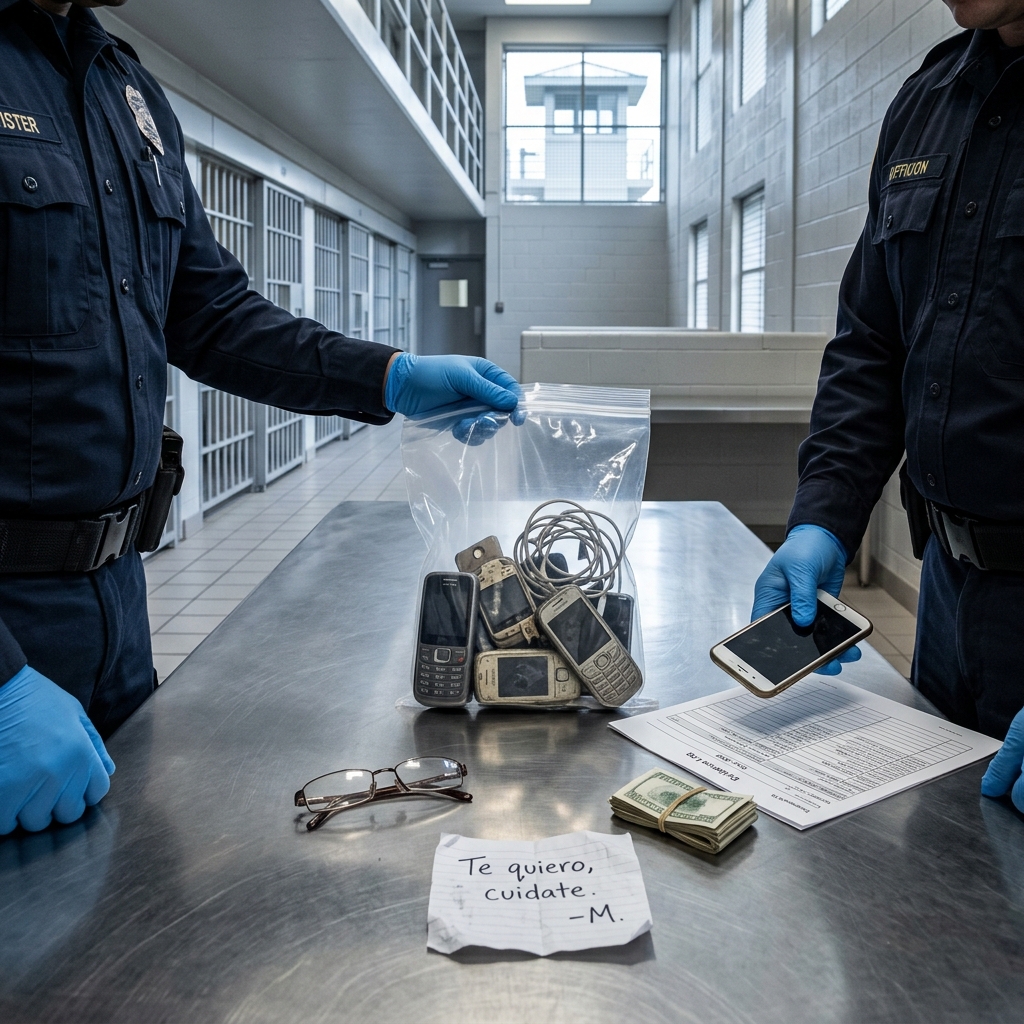
Cell phones are ordinary tools in daily life, but inside a jail or prison they become a very different kind of object. In correctional facilities, unauthorized phones are treated as contraband because they can allow people in custody to contact the outside world without supervision, oversight, or recording. That makes them a serious security and public safety concern, not just a rule violation.
Lawmakers and corrections officials have increasingly focused on this issue because illicit devices can be used to coordinate crimes, intimidate victims, manage contraband, or undermine the control of a facility. Federal legislation has been proposed to increase penalties for smuggling or possessing wireless devices in prison, and some policymakers argue that tougher punishment is necessary to deter the black market that supports the trade.
Why Prison Phones Are Treated as a Security Threat
Prisons restrict communication for a reason: officials need to know who is speaking, what is being said, and whether the interaction poses a threat. A contraband phone bypasses those controls. Instead of making calls through monitored prison systems, an incarcerated person can use an illegal phone to communicate privately with anyone outside the facility.
That privacy is what turns a phone into a security problem. According to corrections-focused reporting and advocacy materials, unauthorized phones have been linked to criminal coordination, threats against witnesses, organized drug activity, fraud, and escape planning. In that sense, the device itself is less important than the access it creates.
- It can hide conversations from staff monitoring.
- It can help organize criminal conduct from inside a facility.
- It can weaken institutional order by creating hidden power structures.
- It can expose victims, staff, and the public to danger.
How Illegal Phones Enter Correctional Facilities
Contraband phones do not appear inside prisons by accident. They typically arrive through smuggling, corruption, or deceptive transfer methods. A phone may be carried in by a visitor, brought in by a staff member, concealed in packages, or passed from one person to another once inside a facility. In some systems, even small items can move through multiple hands before reaching an inmate.
The persistence of this problem shows how difficult it is to police every entrance point. Facilities face a constant tension between security screening and the practical limits of searching people, deliveries, and living spaces. As a result, even strong rules can be undermined when there is an insider willing to help or a gap in enforcement.
What Inmates Can Use Instead of Personal Phones
Most correctional systems do not allow inmates to keep their own smartphones. Instead, they generally rely on monitored calling systems, and some institutions offer limited tablets or kiosk-style devices with restricted functions. These substitutes are designed to preserve contact with family, lawyers, and approved contacts while still allowing the facility to retain oversight.
Federal prisoners, for example, are described as having access to monitored phone lines rather than personal mobile devices, with calls limited in length and total monthly use. Some facilities also provide tablets, but these devices are generally not open internet tools; they are limited to entertainment and institutional services rather than free browsing or private social media use.
| Communication Type | Typical Access | Monitoring | Security Risk |
|---|---|---|---|
| Personal smartphone | Usually prohibited | None if hidden | High |
| Prison phone system | Generally allowed under rules | Recorded or supervised | Lower |
| Correctional tablet | Limited institutional use | Controlled by facility | Moderate |
Why Smuggled Devices Attract Attention from Lawmakers
Legislators have repeatedly tried to raise the stakes for both the people who smuggle phones into prisons and the incarcerated people who possess them. One proposed federal measure, the END CELLS Act, would make it unlawful to provide or attempt to provide a prisoner with a wireless communications device and would also make possession by a prisoner unlawful, with civil and criminal penalties attached.
Another bipartisan measure has sought to increase the penalty for smuggling or possessing a contraband cellphone in federal prison from a misdemeanor to a felony, with potential prison time increasing from a maximum of one year to as much as five years. The policy logic is straightforward: if the payoff from hidden communication is high, the consequences for participating in the smuggling market must also be meaningful.
The Public Safety Argument Behind Restrictive Laws
Supporters of tougher penalties argue that contraband phones do not merely create internal discipline issues; they can affect communities outside prison walls. A hidden device can help coordinate narcotics transactions, retaliatory violence, witness intimidation, or fraud schemes. That means the effects of a smuggled phone may extend well beyond the cell block.
This is one reason the issue attracts broad attention from corrections staff, prosecutors, and victim advocates. The public safety argument is not only about preventing rule-breaking inside prisons. It is also about preventing incarcerated people from using hidden communications to continue criminal conduct from behind bars.
Are Harsh Penalties Enough?
There is a live debate about whether stronger punishment alone can solve the problem. On one side are those who say the contraband market will continue unless the law significantly increases the risks for everyone involved. On the other are those who note that demand inside prisons is persistent, and that people are often willing to take substantial risks to obtain communication, status, or income.
That debate matters because prison contraband is rarely just a matter of one item. It is usually part of a larger network involving supply, concealment, leverage, and resale. A harsher sentence may deter some participants, but it may not fully address the institutional conditions that make smuggling profitable in the first place.
What Makes Cell Phones So Valuable Behind Bars?
Behind bars, communication is scarce, monitored, and often limited. An illegal smartphone can therefore carry enormous value. It can provide faster contact, broader access, and greater privacy than approved prison channels. That combination makes it useful not only for ordinary personal contact but also for illicit coordination and trade.
- It can be sold or rented at high prices inside prison.
- It can help maintain outside relationships without oversight.
- It can create leverage over other incarcerated people.
- It can support black-market economies within the facility.
How Facilities Try to Reduce the Risk
Correctional systems use a combination of physical searches, metal detection, contraband sweeps, staff training, and disciplinary sanctions to limit illegal devices. Some agencies also explore newer detection tools or signal-monitoring technologies to identify hidden phones near or inside facilities. The goal is not only to find devices already inside but also to make smuggling less attractive in the first place.
Even so, prevention is difficult because phones are small, easy to conceal, and highly desirable. A single successful smuggling attempt can create serious operational problems, especially if the phone is used to coordinate threats or monitor staff movement.
Policy Questions That Keep Coming Back
The contraband-phone issue raises several recurring policy questions. Should penalties focus more on smugglers, on the incarcerated person, or on both? Should prisons invest more in detection technology, or in staff oversight and vendor screening? How much communication access should people in custody have before the system creates incentives for black-market alternatives?
Those questions do not have simple answers. A balanced approach usually has to account for security, rehabilitation, family contact, and the realities of prison operations. If lawful communication is too limited, demand for illicit devices may remain high. If controls are too loose, the facility can lose oversight of communications that may affect victims, staff, and the public.
Frequently Asked Questions
Are cell phones completely banned in prison?
In most federal prisons and many state systems, personal cell phones are prohibited. Incarcerated people are generally limited to approved phone systems and other controlled communication tools.
Why do lawmakers focus so much on contraband phones?
Because hidden phones can be used to coordinate crimes, intimidate people outside prison, and undermine institutional security. Legislators have proposed tougher criminal and civil penalties to reduce smuggling and possession.
Do prisons provide any legal alternatives?
Yes. Many systems allow monitored calls, and some provide tablets or limited electronic services that do not function like unrestricted smartphones.
Is possession of a contraband phone always a felony?
Not always. Federal and state laws differ, and proposed reforms have sought to raise some offenses from misdemeanor status to felony status.
Why is the issue still unresolved?
Because the devices are small, valuable, and easy to hide, and because the incentives inside prison can be strong enough to sustain a black market even when penalties increase.
References
- Bilirakis Bill to Crack Down on Crime By Eliminating Inmate Cell Phone Use — U.S. House of Representatives. 2024-??-??. http://bilirakis.house.gov/media/press-releases/bilirakis-bill-crack-down-crime-eliminating-inmate-cell-phone-use-0
- Federal Prisoner’s Dilemma, Cell Phone Or Not — Forbes. 2024-06-07. https://www.forbes.com/sites/walterpavlo/2024/06/07/federal-prisoners-dilemma-cell-phone-or-not/
- Contraband Cell Phones in Prisons – Why You Should Be Paying Attention — SOC-USA. 2024-??-??. https://www.soc-usa.com/news/contraband-cell-phones-in-prisons-why-you-should-be-paying-attention
- HYDE-SMITH APPLAUDS SENATE PASSAGE OF BILL TO CRACK DOWN ON CONTRABAND CELLPHONES IN PRISONS — U.S. Senate. 2024-??-??. https://www.hydesmith.senate.gov/hyde-smith-applauds-senate-passage-bill-crack-down-contraband-cellphones-prisons
- Do prisons in US allow inmates to bring their phone with them? — Reddit. 2024-??-??. https://www.reddit.com/r/NoStupidQuestions/comments/1cfcj27/do_prisons_in_us_allow_inmates_to_bring_their/
- State lawmakers propose software program to find illegal prison phone use — YouTube. 2024-??-??. https://www.youtube.com/watch?v=wGmAIYVIddM
Similar Articles








Read full bio of Sneha Tete




