
Contesting Wills and Trusts in Los Angeles
A practical guide to challenging wills or trusts in Los Angeles, including legal grounds, procedure, deadlines, and common pitfalls.
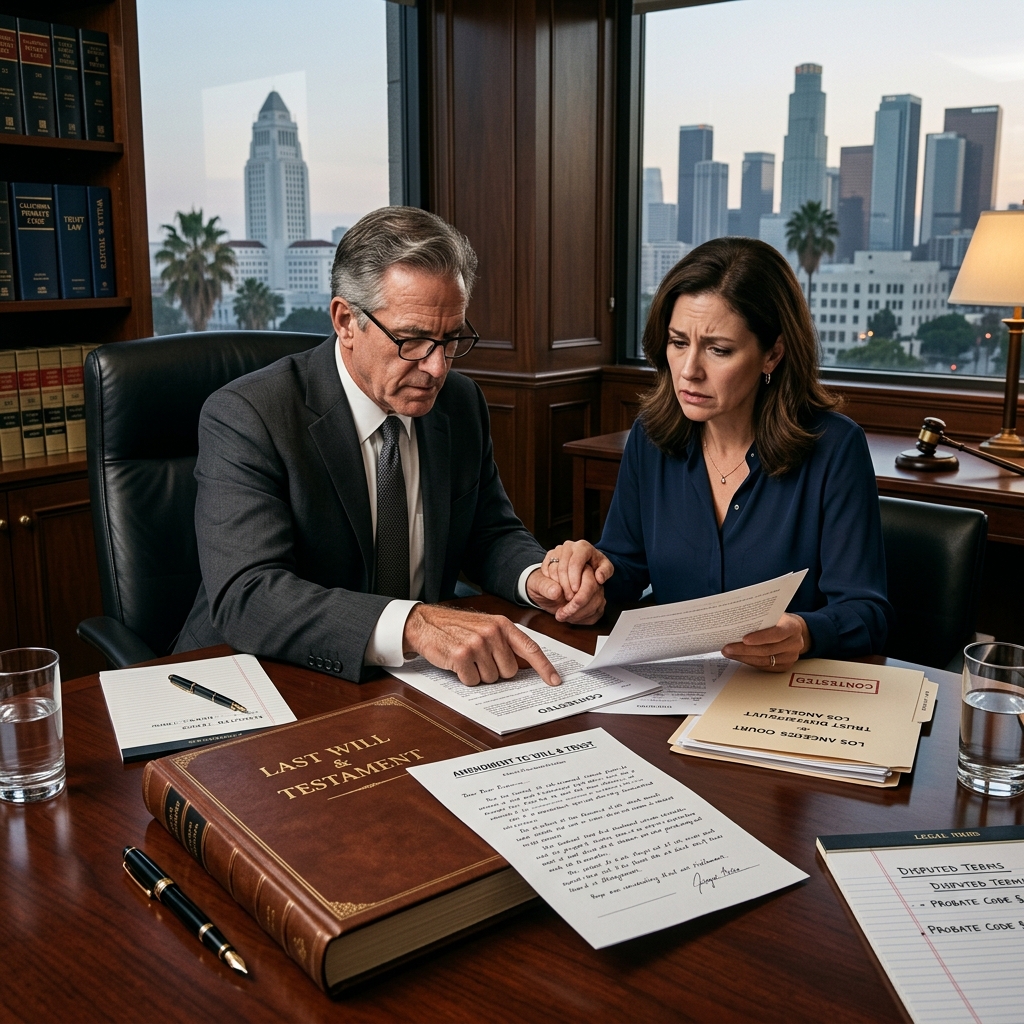
In California, including Los Angeles County, both wills and trusts can be challenged in court when their validity or administration is in doubt. When families face disagreements over an estate, understanding how contests work—and when they are legally justified—is essential before taking action.
This guide explains the core concepts behind will and trust contests in Los Angeles, who can file them, the recognized legal grounds, the typical litigation process, common mistakes, and practical tips for navigating California probate and trust courts.
Foundations: What It Means to Contest a Will or Trust
To contest a will or a trust is to formally challenge its legal validity or the way it is being administered, in a California court. The person bringing the contest asks a judge to determine whether the document complies with state law, and whether it should be enforced as written or replaced with a different result.
- Will contest: Usually heard in the probate division of the Superior Court; focuses on a document that directs the distribution of a person’s property after death.
- Trust contest: Typically involves a revocable or irrevocable trust; may focus on the creation of the trust, later amendments, or the trustee’s conduct.
In both situations, the party challenging the will or trust has the burden of proof, meaning they must present evidence showing that the document is invalid, unenforceable, or tainted by legal defects such as lack of capacity or undue influence.
Key Role of California Law and the Los Angeles Courts
Estate contests in Los Angeles are governed by the California Probate Code and related case law. The rules cover who can file the contest, the deadlines involved, and the legal theories that can be asserted.
| Type of Case | Primary Court Division | Typical Focus |
|---|---|---|
| Will contest | Probate division, Los Angeles County Superior Court | Validity of will, capacity, undue influence, compliance with formalities. |
| Trust contest | Probate / civil division (depending on claim) | Validity of trust, amendments, trustee conduct, breach of fiduciary duty. |
While the basic legal standards are statewide, local rules and courtroom practices can affect timing, required forms, and how hearings are scheduled. Consulting counsel familiar with Los Angeles probate practice helps avoid procedural errors.
Who Can Challenge an Estate Plan? Understanding Standing
Not everyone who dislikes the outcome of an estate plan can challenge it. California law requires that a contestant have legal standing—a direct and tangible interest in the outcome.
Parties Who Commonly Have Standing
- Heirs at law: Close relatives who would inherit if there were no valid will (such as spouses, children, or parents), under California’s intestate succession rules.
- Named beneficiaries: People or entities named in a prior will or trust, who would receive more if the contested document is invalidated.
- Current beneficiaries: Beneficiaries under the challenged document itself, especially when trustee conduct or interpretation of the document is at issue.
- Sometimes creditors: In limited situations, creditors may participate where their ability to recover debts depends on the estate’s administration, though these cases often follow separate procedures.
In practice, courts examine whether the contestant would gain or lose financially if the will or trust is set aside. If the answer is yes, standing is likely; if the answer is no, the contest may be dismissed early.
Recognized Legal Grounds for Contests
California courts do not allow challenges based only on moral disagreements or family disappointment. A will or trust must be challenged using one or more legally recognized grounds.
Lack of Mental Capacity
To create or amend a will or trust, the person (known as the testator for a will, or settlor/grantor for a trust) must have sufficient testamentary capacity under California law. This generally includes understanding:
- The nature of their property
- The natural objects of their bounty (close family members and others they might be expected to consider)
- The basic plan for how the document disposes of their assets
A contest based on lack of capacity often relies on medical records, witness testimony, and evidence of conditions such as dementia, traumatic brain injury, or significant impairment due to substances.
Undue Influence
Undue influence occurs when someone exerts excessive pressure on a vulnerable person so that the resulting will or trust reflects the influencer’s wishes rather than the creator’s true intent. Courts look for factors such as:
- A confidential or dependent relationship between the influencer and the creator
- Isolation of the creator from family or advisors
- Unusual or sudden changes in estate plans that favor the influencer
- Participation by the influencer in drafting or executing the documents
When these elements are present, a judge may infer undue influence and invalidate all or part of the document.
Fraud and Forgery
Fraud-based contests allege that the will or trust was created or amended due to deception, or that signatures and documents themselves are forged. Examples include:
- Misleading the creator about what the document says
- Substituting pages or entire documents without the creator’s knowledge
- Signing the creator’s name without authorization
These cases often involve handwriting experts, document examination, and testimony from witnesses present during signing.
Failure to Follow Required Formalities
California law sets specific formal requirements for wills (such as witness signatures) and procedural rules for trusts. A contest may argue that:
- The will was not properly witnessed or signed
- The trust amendment did not comply with the method of modification stated in the original trust
- The document was not executed in the manner required by the Probate Code
Where formalities are missing or incorrectly followed, the court may reject the document or enforce an earlier version that met legal standards.
Revocation, Mistake, and Other Grounds
Additional grounds can include:
- Revocation: Evidence that the creator intentionally revoked a will or trust by physical destruction or later documents.
- Mistake: Situations where the document does not reflect the creator’s intent due to misunderstanding or error.
- Duress: Threats or coercion leading to the signing of the document.
Each of these grounds requires careful factual development and supporting evidence to persuade the court.
Timeline: Acting Before Deadlines Expire
Timing is critical. California imposes strict deadlines for filing contests, and missing them can permanently bar a claim.
- For wills, contests are often filed when the will is submitted to probate; some statutes allow a limited window (for example, a number of days after admission) to seek revocation.
- For trusts, deadlines may depend on when beneficiaries receive notice of the trust or amendment, and on specific statutory provisions.
Because these time limits can be short and vary depending on the circumstances, prompt legal advice is usually necessary as soon as concerns arise.
Step-by-Step Overview of Contesting a Will or Trust
While each case is unique, many California will and trust contests follow a similar path in Los Angeles courts.
1. Initial Legal Consultation
The first step is typically to meet with an attorney who focuses on probate and trust litigation. The lawyer evaluates:
- Whether you have standing to file a contest
- Which legal grounds may apply
- Key evidence available or needed
- Procedural options and likely costs
Early consultation helps avoid filing weak or untimely claims.
2. Evidence Gathering
Before and after filing, parties collect and organize documents and information supporting their position.
- Prior wills or trust instruments
- Medical records showing capacity or impairment
- Emails, letters, or text messages describing the creator’s intentions
- Names of witnesses, caregivers, advisors, or others with relevant knowledge
This evidence forms the backbone of any successful contest or defense.
3. Filing the Petition
To start the case, the contestant files a petition with the appropriate Los Angeles court identifying the will or trust, the legal grounds for challenge, and the relief requested (for example, invalidating an amendment or removing a trustee).
At the same time, the filer must often serve notice on other interested parties—such as beneficiaries and heirs—so they have an opportunity to respond.
4. Discovery and Case Development
Once the case is underway, both sides typically engage in discovery, a formal process for exchanging evidence.
- Requests for documents
- Written questions (interrogatories)
- Depositions of doctors, attorneys, fiduciaries, and family members
- Retention of experts, such as geriatric psychiatrists or handwriting analysts
Discovery helps clarify the strengths and weaknesses of each party’s arguments and often shapes settlement discussions.
5. Mediation and Settlement Efforts
Many will and trust contests resolve through mediation, where a neutral professional assists the parties in exploring compromise solutions.
- Adjustments to distribution of assets
- Appointment of a different trustee or personal representative
- Agreements on accounting, reporting, or oversight
Settling disputes can reduce legal fees, shorten timelines, and lessen emotional strain compared to a full trial.
6. Trial and Court Decision
If settlement fails, the case may proceed to trial.
- Formal presentation of evidence
- Witness testimony and cross-examination
- Legal arguments on capacity, influence, fraud, and procedure
At the end of trial, the judge decides whether to uphold or invalidate the will or trust (or specific portions of it), and may issue orders affecting future administration of the estate or trust.
Trustee and Executor Conduct: Breach of Fiduciary Duty
Contests are not limited to the validity of documents. In California, trustees and executors owe a fiduciary duty to beneficiaries, meaning they must act prudently, loyally, and in accordance with the instrument and the law.
Beneficiaries may bring claims when fiduciaries:
- Mismanage assets or fail to diversify investments
- Ignore required distributions
- Fail to keep proper records or provide accountings
- Use trust or estate assets for personal benefit
Successful breach of fiduciary duty claims can result in removal of the fiduciary, financial surcharges, or other corrective measures.
Emotional and Practical Considerations in Los Angeles Estate Disputes
Estate litigation often arises at a difficult time, shortly after a death or during a period of family strain. In addition to legal factors, parties should weigh:
- Costs: Attorney fees, expert expenses, and court costs can be significant.
- Time: Complex contests may last months or years.
- Relationships: Litigation can deepen family divisions.
- Alternatives: Mediation or structured negotiations may preserve more value and reduce conflict.
Balanced decision-making, with input from legal and financial professionals, can help families choose strategies that align with long-term goals.
Frequently Asked Questions (FAQs)
Can any relative contest a will in Los Angeles?
No. Only individuals with legal standing—such as heirs at law or beneficiaries whose interests would change if the document is invalidated—can usually file a contest. Dissatisfaction alone is not enough.
Is it easier to challenge a trust than a will?
Neither is inherently easier. Both require recognized legal grounds and evidence, and both are guided by the California Probate Code and case law. Trust cases may focus more on trustee conduct, while will cases often emphasize execution formalities and capacity.
What kind of evidence is most important in a capacity or undue influence claim?
Courts often give significant weight to medical records, testimony from treating physicians, and observations from people who regularly interacted with the creator. Communications showing the person’s intentions and degree of independence also matter.
Do all contested estate cases go to trial?
No. A substantial number of will and trust contests settle through mediation or negotiated agreements before trial. Settlement can provide more predictable outcomes and reduce legal and emotional costs.
When should I contact a lawyer if I suspect problems with a will or trust?
Because California imposes tight deadlines on contests, you should seek legal advice as soon as you learn of a will or trust that appears problematic. Early action helps protect your rights and preserves evidence.
References
- California Probate Code — State of California. Various sections, current through latest legislative session. https://leginfo.legislature.ca.gov/faces/codes.xhtml
- Fighting the Validity of Wills or Trusts in Los Angeles — Super Lawyers. 2023-08-01 (approx.). https://www.superlawyers.com/resources/estate-and-trust-litigation/california/fighting-the-validity-of-wills-or-trusts-in-los-angeles/
- Can You Challenge a Will or Trust in California? — Geremia & Cullen, PC. 2024-02-15 (approx.). https://gctrustlaw.com/will-and-trust-disputes/contest-will-trust-california/
- Proving Lack of Testamentary Capacity When Challenging a Will or Trust — Aldav Law. 2022-09-10 (approx.). https://www.aldavlaw.com/blog/proving-lack-of-testamentary-capacity-when-challenging-a-will-or-trust/
- Trust & Will Contests — OC Trusts Lawyer. 2023-05-20 (approx.). https://www.octrustslawyer.com/trust-will-contests/
- How Can You Challenge a Will in Estate Litigation? — Bains Law. 2023-11-01 (approx.). https://www.btrustlaw.com/blog/how-can-you-challenge-a-will-in-estate-litigation/
Similar Articles








Read full bio of medha deb


