
Challenging A Will In New York: 4 Legal Grounds, What To Know
A practical overview of who may challenge a will, the legal grounds, and the court process in New York.
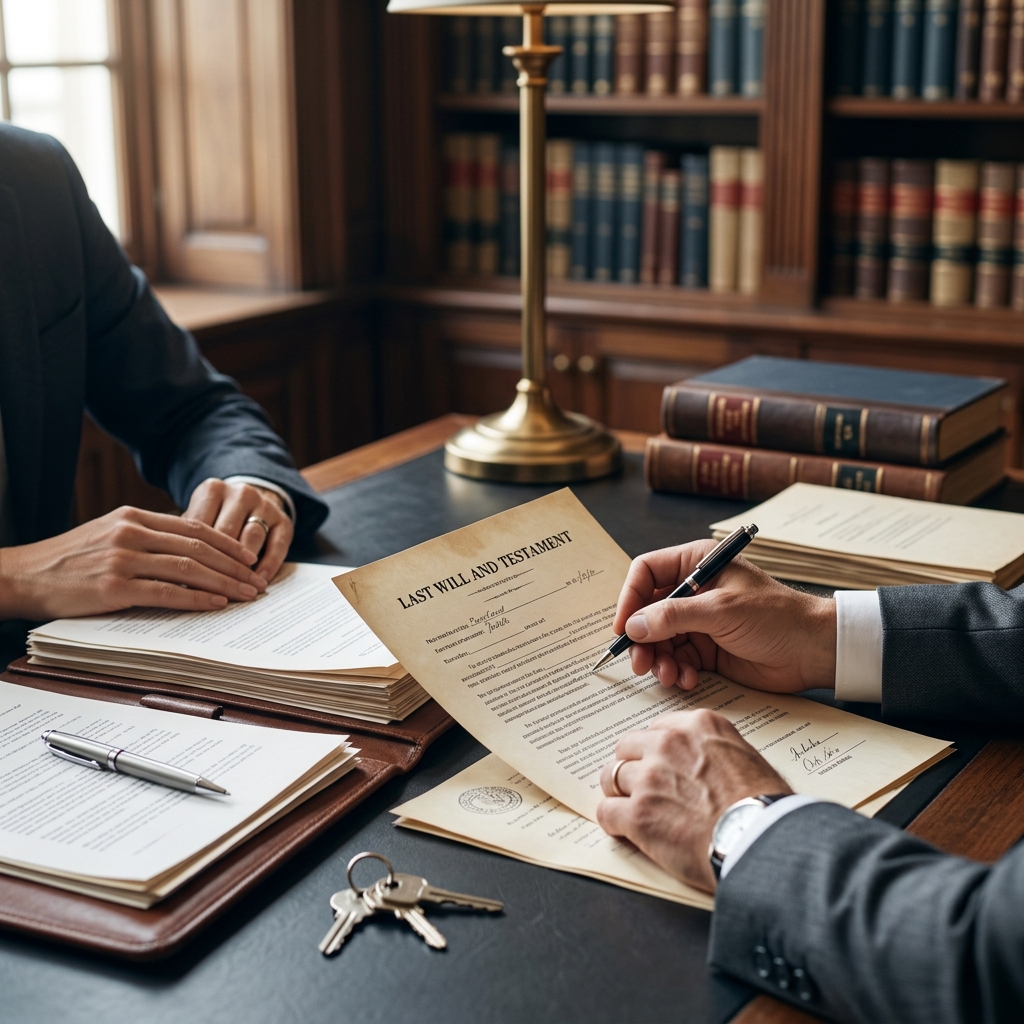
Understanding Will Contests in New York
Challenging a will in New York is possible, but the law limits both who may object and why a will can be attacked. In most cases, the dispute is heard in Surrogate’s Court, which handles probate and estate matters statewide. A person who wants to contest a will must show a legally recognized defect in the document or in the circumstances surrounding its creation.
New York does not treat every unhappy beneficiary or family member as a valid contestant. The court looks first at whether the challenger has a real financial stake in the estate, then at whether there are facts supporting a proper legal objection. That structure makes will litigation more focused than many people expect, but it also means that weak or emotional objections usually do not go far.
Who Has the Right to Challenge a Will
Standing is the first issue in any will dispute. In practical terms, the person bringing the challenge must be someone whose inheritance could be affected if the will is set aside or modified. Typical contestants include heirs who would inherit under intestacy law, beneficiaries named in a prior will, or others whose share of the estate would increase if the disputed will is not admitted to probate.
Someone with no economic interest in the estate generally cannot bring a will contest just because they disagree with the outcome. The court is looking for a direct, personal connection to the result. That requirement helps prevent unnecessary litigation and keeps the focus on people who actually stand to lose or gain from the probate decision.
- Heirs who would inherit if there were no valid will
- People named in an earlier will
- Beneficiaries whose share would be reduced by the disputed instrument
- Other distributees with a direct financial stake in the estate
The Most Common Legal Grounds for a Contest
New York law does not allow a will to be challenged for any reason a disappointed relative might raise. Instead, the contestant must identify recognized legal grounds. The most common are improper execution, lack of testamentary capacity, undue influence, and fraud. Each ground targets a different problem, and each requires proof tailored to that issue.
Improper execution
A valid will must be signed and witnessed according to New York formalities. If those formalities are not followed, the document may be invalid even if it reflects the decedent’s wishes. Problems can arise when witnesses are missing, signatures are incomplete, or the execution ceremony was handled incorrectly.
This type of challenge often depends on the details of the signing process. If the attorney or witnesses can show the testator followed the required steps, the objection becomes harder to sustain.
Lack of testamentary capacity
To make a valid will, the person signing it must understand the nature of the document, the general extent of their assets, and the natural objects of their bounty, meaning the people who would ordinarily be expected to inherit. A contest based on capacity argues that the testator lacked that understanding at the time the will was executed.
Medical records, witness testimony, and attorney notes are often important in these disputes. Evidence close in time to the signing date matters most because capacity is evaluated at the moment the will was made, not months or years later.
Undue influence
Undue influence occurs when another person overpowers the testator’s free will and causes the will to reflect someone else’s wishes. These cases often involve secrecy, dependence, isolation, or a vulnerable decedent who relied heavily on one individual. The claimant must usually prove more than ordinary persuasion or family pressure.
Courts look for conduct suggesting the influencer manipulated the planning process itself. Examples can include controlling access to the testator, directing the drafting attorney, excluding close relatives, or engineering a sudden and unexplained change in the estate plan.
Fraud
Fraud challenges allege that the will was signed or changed because of a false statement or deceptive act. In some cases, the signer may have been misled about the nature of the document. In others, someone may have falsely represented facts that caused the testator to disinherit a family member or alter a distribution pattern.
Fraud claims can be difficult because the contestant must connect the deception directly to the execution of the will. Courts generally require concrete proof, not speculation or suspicion.
How the Probate Process Shapes the Timeline
The timing of a will contest in New York is closely tied to probate. A dispute usually begins after the will is offered for probate in Surrogate’s Court and the interested parties receive notice. The exact deadline depends on the procedural posture of the case, but delay can be fatal to a challenge.
Because probate deadlines are strict, a person who suspects a will problem should act quickly. Waiting too long may result in lost rights even if there are real concerns about the document’s validity. This makes early review of the will, the execution circumstances, and the decedent’s condition especially important.
| Issue | Why it matters |
|---|---|
| Notice of probate | Often triggers the period for objections |
| Standing | Determines whether the challenger may appear in court |
| Grounds | Must be legally recognized and supported by facts |
| Evidence gathering | Essential for proving the objection and surviving motion practice |
What the Court Process Usually Looks Like
Will contests are not decided on instinct or family history alone. They move through a structured legal process that typically includes filings, disclosure, witness questioning, and sometimes a hearing or trial. Once objections are raised, the parties may exchange information to test the strengths and weaknesses of the case.
In many disputes, the first stage involves collecting documents and testimony that explain how the will was prepared and executed. That may include the drafting attorney’s file, witness statements, medical records, prior estate planning documents, and evidence of the decedent’s relationships with family members and caregivers.
As the case develops, the parties may also negotiate. Not every challenge ends in trial. Some disputes settle once both sides better understand the available proof and the risks of continuing.
- Filing a probate objection or petition
- Identifying the legal grounds for the challenge
- Exchanging documents and taking testimony
- Evaluating settlement opportunities
- Proceeding to hearing or trial if the dispute remains unresolved
Evidence That Can Strengthen a Challenge
Successful will contests depend on evidence, not suspicion. The strongest records are usually contemporaneous with the drafting or signing of the will. A medical chart describing confusion or cognitive decline, for example, may be more persuasive than a later family disagreement about the decedent’s memory. Likewise, emails, attorney notes, and witness accounts can help show whether the testator acted independently.
Evidence of a sudden change in an estate plan can also be important, especially when it comes with isolation from relatives, dependency on a caregiver, or unusual secrecy. Still, the court wants a coherent story that ties the facts to a recognized legal theory.
- Medical records and cognitive assessments
- Drafts of prior wills or estate documents
- Attorney notes and file materials
- Testimony from witnesses who saw the signing
- Records showing control, isolation, or suspicious transfers
Why Will Contests Are Often Hard to Win
New York law generally starts with the assumption that a properly executed will is valid. That means the person challenging the document carries the burden of proving the defect. In many cases, the proof must be strong enough to convince the court that the will should not be honored as written.
This burden matters because family conflict alone is not enough. A child who receives less than expected, or a relative who feels excluded, still must show a real legal flaw. Without that evidence, the court will usually respect the written estate plan.
For that reason, many will contests turn on the quality of the documentary record and the credibility of witnesses rather than on emotional arguments. The more ordinary and well-documented the execution process looks, the more difficult it becomes to overturn the will.
Practical Issues Families Should Consider Early
Anyone thinking about a contest should consider the broader estate picture before filing a challenge. A lawsuit can affect relationships, consume time, and create expense. It may also reveal that the contested will is not the only document in play. Trusts, beneficiary designations, and lifetime transfers can shape what a successful contest would actually change.
It is also important to understand that a contest may not result in an equal split among family members. If the will is invalidated, the court may look to a prior valid will or, if none exists, intestacy rules. That outcome can produce a very different result from what the challenger expects.
- Check whether a prior will exists
- Review nonprobate assets and beneficiary forms
- Assess likely litigation costs and timing
- Consider whether settlement is possible
- Evaluate what happens if the will is struck down
When a Will Challenge Makes Sense
A will contest is most appropriate when there is credible evidence that the document does not reflect the decedent’s true intent because of a legal defect. Examples include a signing process that did not comply with New York law, a testator who likely lacked capacity, or evidence that another person manipulated the estate plan through pressure or deceit.
By contrast, a contest is usually a poor fit when the complaint is simply that the distribution is unfair. The probate system is designed to enforce lawful intent, not to rewrite a will because relatives disagree with the result. That is why early legal review is so valuable: it helps separate genuine probate issues from disputes that are better handled outside of court.
FAQ
Who can contest a will in New York?
A person usually must have a direct financial interest in the estate, such as an heir, a distributee, or a beneficiary under a prior will. Without standing, the court will not hear the challenge.
What are the main reasons to challenge a will?
The most common reasons are improper execution, lack of testamentary capacity, undue influence, and fraud. Each ground requires its own evidence and legal proof.
Is it enough to believe the will is unfair?
No. A will contest requires a valid legal basis, not just disappointment with the outcome. The court focuses on validity, not fairness alone.
Can a will contest be settled?
Yes. Many disputes are resolved through negotiation before trial, especially when the parties want to avoid the cost and uncertainty of full litigation.
What should someone do first if they suspect a problem?
The first step is to review the probate posture, identify the deadline, and gather documents that may show how the will was signed and whether the testator had capacity or was influenced improperly.
References
- Surrogate’s Court Procedure Act § 1410 — New York State Senate. 2026-07-10. https://www.nysenate.gov/legislation/laws/SCP/1410
- Surrogate’s Court Procedure Act § 1404 — New York State Senate. 2026-07-10. https://www.nysenate.gov/legislation/laws/SCP/1404
- Estates, Powers and Trusts Law § 3-2.1 — New York State Senate. 2026-07-10. https://www.nysenate.gov/legislation/laws/EPT/3-2.1
- New York Courts: Surrogate’s Court — New York State Unified Court System. 2026-07-10. https://www.nycourts.gov/courts/surrogates/index.shtml
- Contest a Will — NYC Bar. 2026-07-10. https://www.nycbar.org/get-legal-help/article/wills-trusts-and-elder-law/wills/challenging-will/
Similar Articles








Read full bio of medha deb


