Understanding Will Contests in Colorado
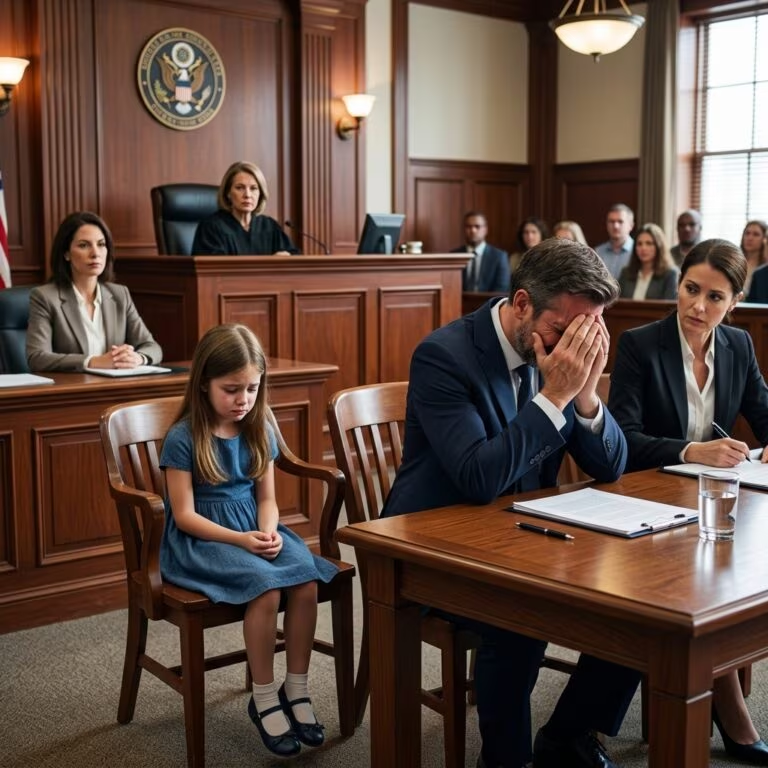
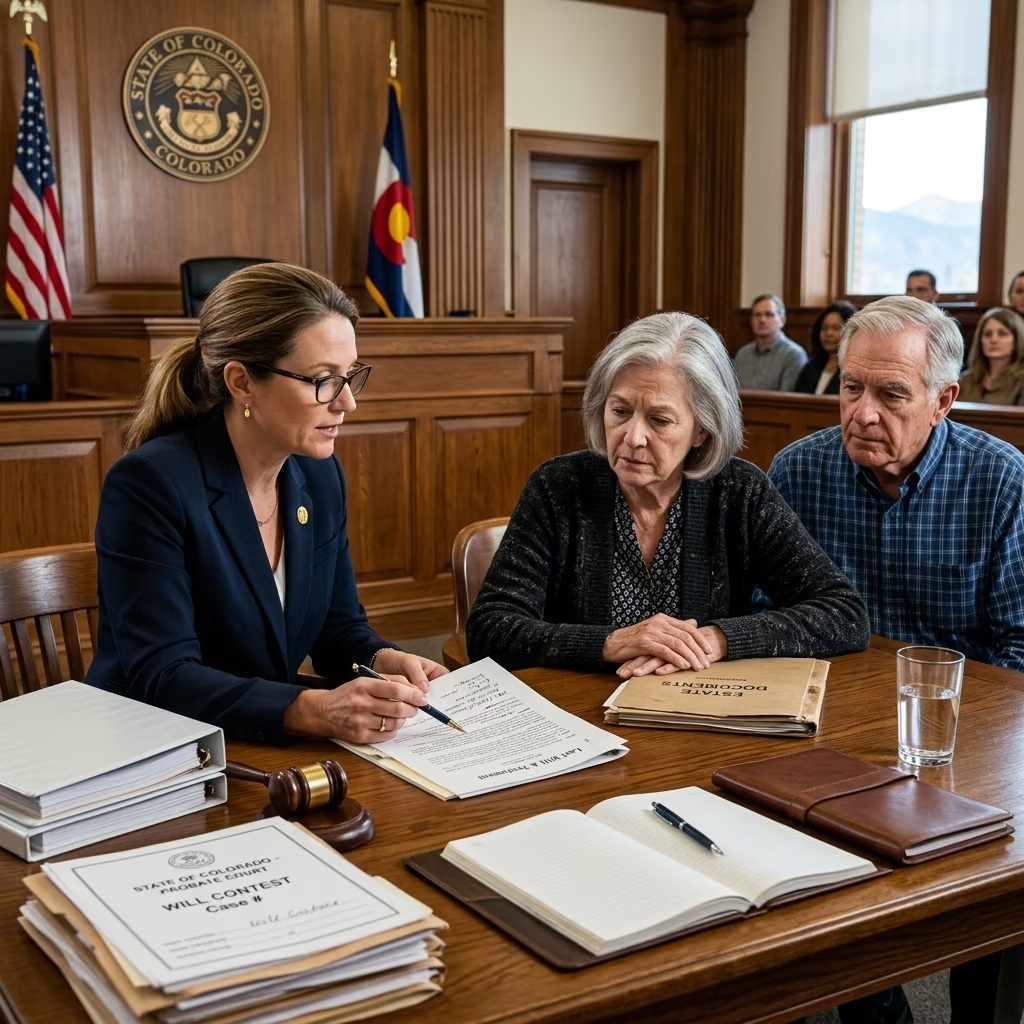
Challenging a will is not a way to reopen an inheritance simply because the result feels unfair. In Colorado, a will contest is a formal probate proceeding that asks a court to decide whether the document should be treated as a valid last will and testament. Because courts favor written estate plans that comply with legal formalities, a challenger must identify a recognized defect and support it with evidence.
The process matters because the outcome can affect who inherits, how assets are distributed, and whether an earlier estate plan or Colorado’s intestacy rules control the estate. That is why will contests tend to move quickly, involve strict deadlines, and turn on detailed facts about the decedent’s condition, conduct, and signing circumstances.
Who Is Allowed to Challenge a Will
Not everyone who disagrees with the document may file a contest. Colorado generally limits standing to people with a direct financial interest in the estate, often described as interested persons. These are individuals who would likely gain if the will were invalidated or lose if the will is enforced.
- Heirs who would inherit under intestacy if there were no valid will
- Beneficiaries named in an earlier will
- Other persons with a legally protected financial interest in the estate
This limitation keeps probate litigation focused on real disputes rather than family disappointment. A person who is merely upset by the distribution usually does not have standing unless they can show a legitimate legal interest affected by the will.
The Main Legal Reasons a Will May Be Invalid
Colorado courts do not set aside wills based on suspicion alone. The challenger must connect the problem to a legal ground recognized by probate law. The most common grounds involve the testator’s mental capacity, outside pressure, deception, or defects in the way the document was signed.
| Ground | What It Means | Typical Proof |
|---|---|---|
| Lack of testamentary capacity | The person did not understand that they were making a will, what property they owned, or who their natural beneficiaries were. | Medical records, testimony from witnesses, evidence of confusion or cognitive decline |
| Undue influence | Another person overpowered the testator’s free will and caused terms that would not otherwise have been chosen. | Suspicious isolation, dependence, abrupt changes in planning, witness accounts |
| Fraud | The testator was misled into signing or changing the will based on false information. | Emails, statements, document history, proof of deception |
| Forgery or improper execution | The signature or formal signing requirements were not authentic or were not properly followed. | Handwriting comparisons, witness testimony, execution records |
The key issue is not whether the will seems generous or harsh. The question is whether the document reflects a legally valid decision by a person who was capable of making it freely and knowingly.
What Capacity Means Under Colorado Law
Capacity is often the most misunderstood issue in a will contest. A diagnosis such as dementia, memory loss, or a serious illness does not automatically invalidate a will. Courts focus on the testator’s condition at the time the will was signed, not on a general label applied before or after that date.
To have capacity, the testator must usually understand the nature of the act, the extent of their property in a general sense, the natural objects of their bounty, and the distribution being made. A person may be elderly, frail, or ill and still have enough capacity to sign a valid will if they understood those basic facts when they executed it.
That is why timing is so important. Evidence from the signing date often carries more weight than broad statements about the person’s long-term health. Medical notes, caregiver observations, and witness recollections can all help show whether the testator was lucid when the document was signed.
How Courts Evaluate Undue Influence
Undue influence is more than persuasion or family conflict. Colorado courts look for pressure so strong that it replaces the testator’s independent judgment with someone else’s wishes. This often appears where a vulnerable person depends heavily on one beneficiary for care, transportation, finances, or emotional support.
Warning signs can include a sudden change in beneficiaries, a person controlling access to the testator, secrecy around the drafting process, or a new will that sharply departs from earlier plans without a clear explanation. The more suspicious the surrounding circumstances, the more likely the challenger can build a case.
Because influence usually happens behind closed doors, direct evidence is rare. Courts often rely on a pattern of facts rather than a single dramatic event. That makes documents, timelines, and testimony especially important.
Deadlines Are Short and May Bar a Claim
Timing can decide a case before the merits are ever reached. In Colorado, will contests often must be filed very soon after the will is admitted to probate and notice is sent to interested persons. Missing the deadline can permanently block the challenge, even if the underlying facts are strong.
There may be special timing rules in unusual situations, including claims involving fraud, but the safest approach is to act immediately once the will is discovered or formally admitted. Probate moves quickly, and delay can reduce the chance of obtaining records, locating witnesses, or preserving digital evidence.
If a person thinks a will is invalid, the first step is usually to review the probate filings and identify exactly when the notice period began. That date often controls whether a challenge is still available.
What Evidence Makes a Will Contest Stronger
Because the burden is usually on the person contesting the will, evidence matters from the start. Courts want facts, not assumptions. The most useful proof tends to show what happened before, during, and after the will was signed.
- Medical and mental-health records close to the signing date
- Witness testimony from people who saw the testator’s condition
- Emails, texts, letters, or drafts showing changes in intent
- Bank records and financial documents showing dependence or unusual transactions
- Handwriting analysis or execution records if forgery is suspected
- Testimony from attorneys, notaries, caregivers, or family members
A strong case usually combines several kinds of evidence. For example, medical records may show cognitive decline, while witness testimony may show isolation or heavy control by a beneficiary. Together, those facts may paint a more complete picture than any single piece of proof.
The Probate Process After a Contest Is Filed
Once a contest is filed, the case becomes a formal civil dispute within the probate court. The opposing parties can exchange documents, take depositions, interview witnesses, and present expert opinions. This is the stage where the facts become more concrete and where the strength of the case often becomes clear.
The court may hold hearings on preliminary issues or move toward a full trial if the dispute cannot be resolved. Some cases settle after discovery reveals the likely outcome. Others proceed to trial when the parties cannot agree on whether the will should stand.
Although every case is different, the process typically follows a pattern: filing, notice, evidence gathering, hearings, and judicial decision. The court’s ruling may invalidate the entire will or only certain provisions if the defect affects part of the document more than the whole.
Possible Outcomes if the Challenge Succeeds
If the challenger proves the will is invalid, the court does not simply leave the estate without direction. Instead, the estate may be governed by a prior valid will if one exists. If there is no earlier valid will, Colorado’s intestacy laws may control distribution.
That means the practical outcome can vary widely. A successful contest may restore a prior plan, increase or decrease a beneficiary’s share, or shift the estate to heirs determined by statute. In some cases, only a specific gift is removed, while the rest of the will remains intact.
Because the stakes are high, parties often evaluate not only whether they might win, but also what the estate would look like if they do. A technically successful challenge can still lead to an outcome that is different from what the challenger expected.
What to Consider Before Filing
Before bringing a challenge, it helps to ask a few practical questions. Was there a real legal defect, or only dissatisfaction with the distribution? Is there enough evidence to prove the claim? Has the filing deadline already passed? And if the will is invalidated, who benefits under the prior will or intestacy rules?
These questions matter because probate litigation can be expensive, emotional, and time-sensitive. A person who believes a will is invalid should gather documents early, preserve texts and emails, and consult counsel familiar with probate procedure. That is especially important when the estate includes family businesses, real estate, or blended-family issues that complicate distribution.
Frequently Asked Questions
Can a will be challenged just because it feels unfair? No. Colorado requires a legal reason, such as lack of capacity, undue influence, fraud, forgery, or improper execution.
Does a dementia diagnosis automatically invalidate a will? No. Courts look at whether the person had sufficient mental capacity at the exact time the will was signed.
Who usually has the burden of proof? In most contests, the person challenging the will must prove why the document is invalid.
What happens if the challenge is successful? The court may invalidate the will entirely, strike specific provisions, revive a prior valid will, or apply intestacy rules if no valid will remains.
Can a no-contest clause stop every challenge? Not necessarily. Whether such a clause matters depends on Colorado law and whether the challenger had a legally supported basis to proceed.
When a Probate Dispute Needs Immediate Attention
Will contests are highly procedural, which means a delay of even a few weeks can matter. The best cases are built early, while memories are fresh and records are still available. If a person believes a will was signed under pressure, in secrecy, or during a period of serious confusion, prompt action can preserve the evidence needed to test the document in court.
Colorado probate law is designed to balance respect for the written will with protection against abuse, deception, and incapacity. Understanding that balance is the first step in deciding whether a challenge is worth pursuing.
References
- Colorado Revised Statutes, Title 15, Article 11 — Colorado General Assembly. 2026-01-01. https://leg.colorado.gov/colorado-revised-statutes
- Colorado Probate Court Forms and Information — Colorado Judicial Branch. 2026-01-01. https://www.coloradojudicial.gov
- Estate Planning in Colorado — Colorado Bar Association. 2025-01-01. https://www.cobar.org
- Probate and Trust Administration — Colorado Judicial Branch. 2026-01-01. https://www.coloradojudicial.gov