
Contesting a Will and Challenging Its Validity
Understand when and how a will can be challenged, what legal grounds apply, and the practical steps involved in disputing a loved one’s estate.
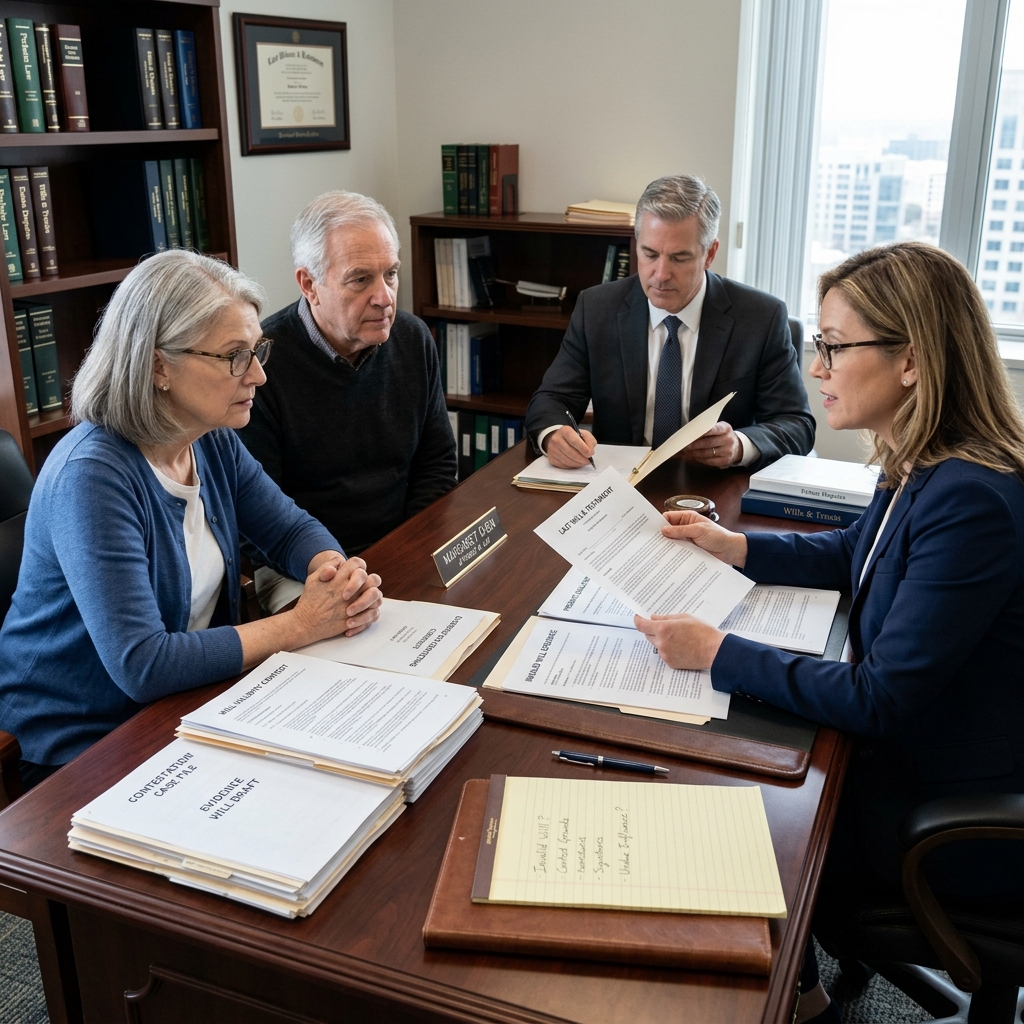
Disputes over a will often arise at a difficult emotional time, when family members and other beneficiaries are trying to understand how an estate will be distributed. Contesting a will is a formal legal process that asks a court to decide whether a will is valid and whether it accurately reflects the person’s final intentions. Although challenging a will is possible, success depends on specific legal grounds, strict deadlines, and clear evidence.
What It Means to Contest a Will
Contesting a will is a legal challenge to the validity of a deceased person’s last will and testament. When someone contests a will, they are asking the probate court to do one or more of the following:
- Review whether the will was properly signed and witnessed according to state law.
- Assess whether the person making the will (the testator) had mental capacity at the time.
- Determine whether the testator was pressured, deceived, or manipulated when the will was created.
- Consider whether a more recent will or revocation makes the existing document invalid.
If the court agrees that the will is invalid, it may refuse to admit the will to probate, enforce an earlier valid will, or distribute the estate under the default rules of intestacy (the statutory scheme that applies when there is no valid will).
Who Has the Right to Challenge a Will?
Not everyone can contest a will. Courts generally require a challenger to have legal standing, meaning a direct financial interest in the outcome of the estate.
Common examples of people with standing include:
- Heirs at law who would inherit if there were no will, such as a spouse, children, or other close relatives.
- Beneficiaries named in the contested will, especially if they believe the will does not reflect the testator’s true wishes.
- Beneficiaries under a prior will who lose or receive less under the newer document.
- In some situations, creditors of the estate if the validity of the will affects their ability to be paid.
Generally, if a person would financially benefit from having the current will set aside or changed, they may be considered an “interested party” with standing to contest.
Common Legal Grounds for Contesting a Will
A court will not invalidate a will simply because someone dislikes its terms. To contest a will, you must be able to point to recognized legal grounds and support your claim with evidence.
1. Lack of Testamentary Capacity
Testamentary capacity means the testator understood what they were doing when they signed the will. In many jurisdictions, this generally requires that they:
- Know that they are making a will and that it disposes of their property at death.
- Understand the nature and approximate value of their assets.
- Recognize the “natural objects of their bounty,” such as close family members or other likely beneficiaries.
If a person was suffering from advanced dementia, delusions, or severe cognitive impairment when the will was signed, a challenger may argue that the will is invalid due to lack of capacity.
2. Undue Influence
Undue influence occurs when someone uses pressure, manipulation, or control to override the testator’s free will and cause them to sign a document that does not truly reflect their wishes.
Courts may look at factors such as:
- The presence of a dominant or controlling person in the testator’s life.
- Isolation of the testator from family and advisors.
- A sudden or unexpected change in the will benefiting the influencer.
- Dependence of the testator on the person alleged to have exerted influence.
If evidence shows that the will was effectively the product of someone else’s wishes rather than the testator’s, the court may declare the will invalid.
3. Fraud or Misrepresentation
Fraud involves deceit that leads the testator to sign a will based on false information. For example, if a person is tricked into signing a document that they are told is something other than a will, or if they are given false statements about family members or assets to change their dispositions, the will may be set aside.
A will procured through fraud is generally invalid once the deception is proven.
4. Improper Execution
Every jurisdiction has specific formalities for signing a valid will, such as the number of witnesses required and how they must sign. A will may be invalid if:
- The testator did not sign the will, or the signature is forged.
- Required witnesses were not present together or did not sign correctly.
- Other statutory formalities were not followed.
Because execution rules differ between states and countries, it is important to review local law with an attorney when raising this type of challenge.
5. Revocation or a Later Will
A will can be revoked by the testator, either by creating a valid new will or by physically destroying the document with the intent to revoke it. If there is credible evidence that the testator revoked the will, or that a later valid will exists and was not admitted, a court may disregard the earlier will in favor of the later instrument.
Deadlines and Time Limits for Will Contests
Contesting a will is subject to strict time limits, often tied to when the will is admitted to probate. Missing a deadline can prevent a challenge entirely, with limited exceptions.
| Stage | Typical Time Limit (Varies by Jurisdiction) | Key Considerations |
|---|---|---|
| Before probate begins | Short window (sometimes weeks) to object to probate. | Challenger may file objections or a caveat to delay grant of probate. |
| After probate granted | Often up to 6 months–2 years to contest, depending on state law. | Longer limits may apply if fraud, forgery, or later wills are discovered. |
| Special circumstances | Extended periods may apply for newly discovered evidence. | Certain claims (for example, based on a fake will) may have separate time frames. |
Because statutes of limitations vary widely, challengers should consult an attorney as soon as concerns arise about a will’s validity.
Step-by-Step Overview of the Contest Process
While procedures differ among jurisdictions, most will contests follow a recognizable sequence within the probate court system.
1. Confirm Standing and Obtain Legal Advice
The first step is determining whether you are an interested person with standing and, if so, meeting with an experienced probate or estate litigation attorney. An attorney can help you:
- Review the will and any prior estate planning documents.
- Assess possible grounds for a challenge.
- Evaluate deadlines, potential costs, and likelihood of success.
2. Get a Copy of the Will
To evaluate a claim, you need to see the will itself. This may involve:
- Requesting a copy from the probate court once it is filed.
- Writing to the executor if you are a residuary or other beneficiary.
- In some regions, entering a formal notice (such as a caveat) to pause probate while you investigate.
3. Identify and Document Grounds
Working with your attorney, you should gather preliminary information to support your claim of invalidity:
- Medical records and assessments related to capacity.
- Emails, letters, or witness accounts suggesting undue influence or fraud.
- Earlier versions of the will or other estate planning documents.
- Information about how the will was signed and who was present.
4. File a Petition or Objection in Probate Court
To formally begin the contest, you or your attorney will file a petition, caveat, or objection with the appropriate probate court. This filing typically includes:
- Your relationship to the deceased.
- Your financial interest in the estate.
- The specific legal grounds for the challenge.
- A request for relief, such as refusing probate of the will or validating an earlier will.
5. Notice to Interested Parties
The court usually requires that all people with a potential interest in the estate be notified of the contest. This group often includes:
- Beneficiaries named in the contested will.
- Beneficiaries under prior wills.
- Heirs at law who would inherit if no valid will exists.
6. Discovery and Evidence Gathering
During the discovery phase, each side gathers evidence to support their position. This may involve:
- Questioning the attorney who drafted the will and the witnesses under oath.
- Obtaining medical records and expert opinions on capacity.
- Collecting financial records, communications, and other documents.
- Interviewing family members, caregivers, and other relevant witnesses.
7. Settlement Discussions
Many will contests resolve through negotiation rather than a full trial. Parties might:
- Agree on a revised distribution of assets.
- Reach a compromise about specific contested provisions.
- Avoid further litigation costs and emotional strain.
8. Hearing or Trial
If no settlement is reached, the case proceeds to a hearing or trial where a judge, and sometimes a jury, examines the evidence. The court will:
- Hear testimony from witnesses and experts.
- Review documents and other exhibits.
- Apply relevant law to decide whether the will is valid.
9. Judgment and Possible Appeal
After considering the evidence, the court issues a judgment upholding, invalidating, or modifying the effect of the will. A party dissatisfied with the outcome may have the right to appeal to a higher court, subject to strict appeal deadlines and standards.
Risks, Costs, and Practical Considerations
Challenging a will is a serious step. Even when legal grounds exist, the process can be demanding and expensive.
Financial Costs
- Legal fees: Engaging counsel for investigation, filings, negotiations, and trial can be significant.
- Expert witnesses: Medical and financial experts may be needed to support claims of incapacity or undue influence.
- Potential liability for costs: In some jurisdictions, an unsuccessful challenger can be ordered to pay part of the costs.
Emotional and Family Impact
- The contest may intensify family conflicts and prolong grief.
- Litigation can polarize relatives who support different outcomes.
- Even if the legal result is favorable, relationships may be damaged.
Strategic Questions to Ask Before Contesting
- Do I clearly have standing and a direct financial interest in the estate?
- Are there strong facts suggesting capacity issues, undue influence, or fraud?
- What is the statute of limitations in the relevant jurisdiction, and has it started?
- Is there a realistic alternative, such as negotiating with other beneficiaries?
- Am I prepared for the time, expense, and emotional impact of litigation?
Alternatives to a Full Will Contest
In some situations, concerns about a will can be addressed without a full contest in court. Options may include:
- Informal negotiation between family members and beneficiaries to adjust distributions.
- Mediation with a neutral third party to reach a voluntary settlement.
- Targeted legal claims related to estate administration, such as challenging specific transactions or seeking removal of an executor, rather than invalidating the entire will.
Frequently Asked Questions (FAQs)
Can I contest a will just because I feel the distribution is unfair?
No. Courts generally require legally recognized grounds such as lack of capacity, undue influence, fraud, or improper execution. Personal dissatisfaction with the terms of the will is not enough to invalidate it.
Is it easier to contest a will before or after probate starts?
In many jurisdictions, it is strategically easier to raise objections before the will is admitted to probate, because the burden of proof may initially rest on those seeking to validate the will. After probate begins, challengers often have to prove invalidity themselves and must work within specific time limits.
What happens if my challenge is successful?
If the court declares the will invalid, it may enforce an earlier valid will or, if no prior will exists, distribute the estate under intestacy laws. The exact outcome depends on the evidence, any previous estate planning documents, and the rules in the relevant jurisdiction.
Do I need a lawyer to contest a will?
While some jurisdictions allow individuals to represent themselves, will contests are complex and highly technical. Most credible guidance recommends working with an attorney experienced in probate and estate litigation to assess your case and navigate procedures.
Can a will contest be settled out of court?
Yes. Many disputes are resolved through negotiation or mediated settlement, which can reduce costs and uncertainty. A settlement may involve redistributing certain assets or agreeing not to pursue further litigation, subject to court approval in some cases.
References
- Contesting a Will: What to Consider — MetLife. 2023-06-01. https://www.metlife.com/stories/legal/contesting-a-will/
- Contesting a Will — Legal & General. 2022-04-15. https://www.legalandgeneral.com/insurance/over-50-life-insurance/wills/contesting-a-will/
- Will Contests – Probate Law — Texas State Law Library. 2021-09-10. https://guides.sll.texas.gov/probate/will-contests
- Contesting a Will: Successful Challenge Essentials — Western & Southern Financial Group. 2023-05-12. https://www.westernsouthern.com/retirement/contesting-a-will
- How to Contest a Will and When You Should — The Hatchett Law Firm. 2022-03-20. https://hatchettlegalteam.com/what-is-the-process-to-contest-a-will/
- Contesting a Will: Grounds for Challenging a Will and How to Navigate the Legal Process — Goldstein Manna PLLC. 2023-02-08. https://www.privateclientlawoffice.com/blog/contesting-a-will-grounds-for-challenging-a-will-and-how-to-navigate-the-legal-process/
- What Happens if You Dispute a Will? — Hardie Alcozer. 2022-07-19. https://hardiealcozer.com/article/what-happens-if-you-dispute-a-will/
Similar Articles








Read full bio of Sneha Tete


