
Contesting a Parking Ticket: A Practical Legal Guide
Learn how to challenge a parking ticket effectively, gather strong evidence, meet deadlines, and present your case with confidence in any city.
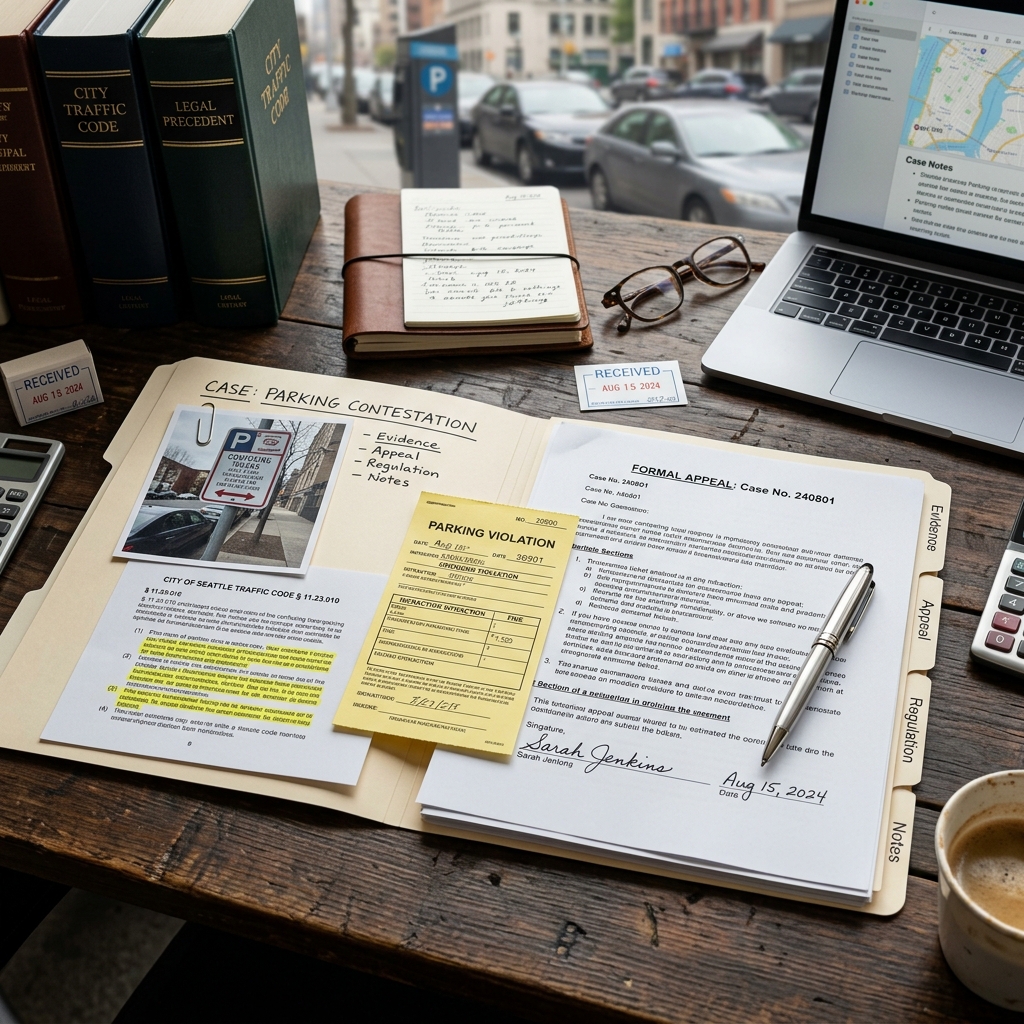
Receiving a parking ticket can be frustrating, especially if you believe it was issued in error or under unclear circumstances. Challenging a ticket is not only possible but often straightforward when you understand the process, deadlines, and the kind of evidence decision-makers expect to see. This guide explains how to contest a parking ticket effectively, from the first review to hearings and appeals, in language that non-lawyers can easily follow.
Understanding Your Parking Ticket and Your Rights
Before you decide whether to pay or fight a parking ticket, it is essential to understand what the ticket says and what rights you have to contest it. Most jurisdictions treat parking tickets as civil or administrative matters rather than criminal cases, but you still have procedural protections.
- Right to contest: In many places, you have an explicit right to challenge a parking citation through administrative review and, in some cases, through the courts.
- Strict deadlines: Cities and counties typically impose short contest periods, often between 14 and 28 days from the date of issue or notice.
- Notice of violation: The ticket should state the alleged violation, location, date, time, fine amount, and instructions for payment or contesting.
- No additional penalties during review: Many authorities suspend late fees or other penalties while an appeal is pending, so you are not punished for exercising your rights.
Read the ticket carefully as soon as you receive it. Note any instructions about how to request a review, hearing, or court date, and write down the contest deadline on your calendar.
Common Ways to Contest a Parking Ticket
Although procedures vary by location, most cities offer multiple pathways to dispute a citation. It is increasingly common for local governments to provide online portals, but traditional options like mail and in-person hearings remain important.
| Method | Typical Use | Advantages | Limitations |
|---|---|---|---|
| Online appeal | Initial review or full administrative contest of the ticket. | Convenient, can upload photos and documents, available 24/7. | May allow only one submission; no chance to clarify in real time. |
| Mail-in contest | Written explanation and evidence sent to the parking or finance department. | Useful if you prefer written arguments and cannot attend in person. | Slower, risk of mail delays; you must keep copies of everything. |
| Administrative hearing | Formal, but non-court, hearing with a hearing officer. | Opportunity to explain your case verbally and respond to questions. | Requires scheduling, travel, and time off work in some cases. |
| Court appeal | Appeal of an administrative decision to a court with limited jurisdiction. | More formal review and potential judicial oversight of the decision. | Often only available after you complete administrative steps; strict rules. |
Local law often requires that you follow the process in sequence—for example, initial review, then administrative hearing, then court appeal—rather than skipping straight to court.
Step-by-Step: Contesting Your Parking Ticket
1. Check Deadlines and Eligibility
Deadlines to contest are critical. Jurisdictions commonly specify that you must start the contest within a certain number of days from the ticket date or from the date of a notice mailed to you.
- Some communities require contesting within 21 days of the ticket.
- Others allow up to 28 days from issuance or 14 days from a second notice.
- If you miss the deadline, you may lose your right to challenge the ticket and face increased fines.
Look at the ticket and any follow-up notice you receive. If you cannot find a deadline, check your city or county website or contact the phone number listed for parking enforcement or administrative hearings.
2. Gather Evidence Immediately
The strength of your case depends heavily on the quality of your evidence. Decision-makers frequently emphasize that you, as the person contesting, are responsible for providing sufficient documentation to support your appeal.
Helpful evidence can include:
- Photographs of the area where you parked, including signage, curb markings, and meter.
- Receipts or digital records showing that you paid for parking at the relevant time (e.g., meter receipts, app screenshots).
- Permits or passes that authorize you to park or show that you were exempt from certain restrictions.
- Vehicle documents such as a bill of sale or registration if the ticket was issued after you sold the vehicle or before you owned it.
- Witness statements from passengers, property owners, or others who saw relevant facts.
Take photos as soon as possible, preferably on the same day, to capture the conditions as they existed when the ticket was issued. If a sign is missing, obscured, or inconsistent, clear images can be powerful evidence.
3. Decide How to File Your Initial Contest
Your first step will usually be an initial review or informal contest. Options commonly include:
- Online portal: Many cities provide an online system where you can enter your ticket number, explain why you believe it is incorrect, and upload supporting documents.
- Mail: Some places accept written letters explaining your objections along with copies of evidence. It is prudent to send your letter by a trackable method and keep copies.
- In-person submission: In a few jurisdictions, you may request an administrative review at a cashier window or parking office.
Follow the instructions on the ticket or government website exactly. Many authorities will not allow you to submit multiple online appeals for the same ticket, so make the first one complete.
4. Preparing Your Written Argument
Whether you contest online or by mail, your written explanation should be clear, factual, and respectful. Avoid emotional language and stick to verifiable details.
Useful points to cover:
- Identify the ticket clearly: ticket number, license plate, date, and location.
- State your reason for challenging the ticket in one concise sentence (for example, “I paid for parking and attach the receipt” or “The posted sign did not match the alleged restriction”).
- Explain the facts in chronological order.
- Refer directly to your evidence (e.g., “Photo 1 shows the missing sign; Receipt 1 shows payment at 10:02 a.m.”).
- Address any potential confusion, such as similar street names or nearby restricted zones.
Attach copies, not originals, of important documents when contesting by mail. Most cities warn that they cannot return original items.
5. Administrative Hearings: What to Expect
If the initial review does not resolve the matter, you may be able to request an administrative hearing. This is a formal but non-court proceeding where a hearing officer reviews your case.
Key features of administrative hearings include:
- Appointment required: Hearings are often by appointment only and must be requested within a set time after the initial decision.
- Multiple ways to attend: Some locations allow hearings in person, by phone, or by video, or permit written submissions instead of attendance.
- Opportunity to reschedule: In certain jurisdictions, you may request one reschedule before your hearing date, typically in writing.
- Independent review: A hearing officer or similar official will consider your explanation, the issuing officer’s notes, and any evidence before issuing a decision.
Arrive early, dress neatly, and bring printed copies of all evidence. Be ready to explain your case briefly and to answer questions about the circumstances. Stay calm and respectful; hearing officers are more likely to be receptive to organized and courteous presentations.
6. Court Appeals After Administrative Decisions
In some states, you can appeal an adverse administrative decision to a court of limited jurisdiction, such as a specialized parking citation appeals court.
Important points about court appeals:
- You usually must complete the administrative process first; courts generally will not hear appeals if you bypass earlier stages.
- There is often a narrow time window—such as 30 days from the date of the hearing officer’s decision—to file your appeal.
- Rules of procedure and forms differ by jurisdiction; consult the court’s website or clerk to learn how to file correctly.
- In some communities, you must formally sign up for court through the police department or court clerk before appearing.
A court appeal is more formal than an administrative hearing and may involve filing specific documents, paying a filing fee, and presenting your case in front of a judge.
Building Strong Defenses Against Parking Tickets
Not every dispute is successful, but certain situations commonly justify cancellation of a ticket when backed by evidence. Here are typical defense themes to consider:
- Proof of payment: You can show that you paid for parking through receipts or app records, but the enforcement officer did not see or correctly verify it.
- Incorrect signage or markings: Signs may be missing, obscured, contradictory, or not present at the location where you parked. Clear photos are crucial.
- Valid permit or exemption: You held a valid permit, disabled parking placard, or other authorization that was not recognized at the time the ticket was issued.
- Vehicle ownership issues: The ticket was issued when you no longer owned the vehicle, or before your registration was updated, and you can document the timing of the sale.
- Clerical errors: The ticket contains serious errors, such as the wrong plate number or impossible time/length of stay.
Keep in mind that some arguments are rarely accepted, such as simply not noticing a sign or misunderstanding clear posted limits. Focus on objective facts and documentation rather than subjective inconvenience.
Practical Tips to Improve Your Chances of Success
Beyond evidence and procedure, there are practical strategies that can make your contest more effective:
- File early: Do not wait until the last day; filing early avoids deadline issues and shows diligence.
- Stay organized: Create a folder (physical or digital) for all tickets, notices, photos, receipts, and correspondence.
- Respect frequency limits: Some cities allow only one appeal through a given channel (such as online); make that appeal complete.
- Monitor status: Check your email and mail for decisions. If you do not receive a response by the expected time, follow up using the official contact numbers.
- Be honest: Do not alter evidence or misrepresent facts. Falsifying information can lead to more serious consequences.
Frequently Asked Questions (FAQs)
Can I ignore a parking ticket if I disagree with it?
No. Ignoring a ticket usually leads to added penalties, collection actions, or potential impacts on your vehicle registration. Most jurisdictions provide a clear contest process with deadlines, and you must use that process rather than simply refusing to respond.
Will my fines increase while I am appealing?
Many authorities suspend additional fees while an appeal or review is pending, freezing the fee schedule during the contest period. However, this is not guaranteed everywhere, so you should confirm the rules in your area by checking official instructions or contacting the relevant office.
How long does it take to receive a decision?
Timeframes vary, but some online contest systems promise decisions within a few weeks, such as within 15 days for certain counties. Administrative hearings may result in decisions on the day of the hearing or shortly afterward, while court appeals can take longer depending on court schedules.
Do I need a lawyer to contest a parking ticket?
In most routine parking ticket disputes, representation by a lawyer is not required. The processes are designed for the general public, and many people successfully contest tickets on their own. That said, if your situation involves unusually high fines or complex legal issues, you may wish to seek legal advice.
What if I cannot attend my scheduled hearing date?
Some jurisdictions allow one reschedule of an administrative hearing or provide alternative options such as submitting a written plea, attending remotely, or emailing the court. Any request to change your hearing date should be made in advance and in the format required by the local rules, often in writing.
Can I contest a ticket I already appealed online?
Many systems treat an online appeal as your one formal contest opportunity. Once you submit a ticket for online review, you might not be allowed to resubmit the same citation through another channel, such as a second online appeal. Check your jurisdiction’s policies carefully to avoid losing opportunities.
Will contesting a ticket affect my vehicle registration?
In some areas, local authorities explicitly state that vehicle registration will not be suspended while a parking citation is under review or being appealed. However, if fines ultimately remain unpaid, registration or renewal issues can arise, so resolve your case promptly.
Key Takeaways for Contesting a Parking Ticket
Successfully disputing a parking ticket requires attention to deadlines, careful evidence gathering, and understanding of your local procedures. While each city or county has its own detailed rules, several principles are widely applicable:
- Act quickly to meet contest deadlines.
- Document thoroughly with photos, receipts, permits, and other proof.
- Follow official instructions for online filing, mail submissions, hearings, and appeals.
- Present your case clearly and respectfully, focusing on objective facts.
By approaching the process methodically and using the tools offered by your local authorities, you can challenge tickets that are incorrect or unfair and help ensure that parking enforcement remains accurate and accountable.
References
- How to Contest a Ticket — Village of Skokie, IL. 2023-04-01. https://www.skokie.org/581/How-to-Contest-a-Ticket
- Appeal Your Parking Ticket Online — Cook County Department of Administrative Hearings. 2022-09-15. https://www.cookcountyil.gov/content/appeal-your-parking-ticket-online
- Contest a Citation — City of Wauwatosa. 2022-06-10. https://overnightparking.wauwatosa.net/about/contest-a-citation/
- Contest a Parking Citation — Los Angeles Department of Transportation (LADOT). 2023-05-20. https://ladotparking.org/adjudication-division/contest-a-parking-citation/
- Contesting Parking Tickets — Village of Shorewood, WI. 2022-08-05. https://www.villageofshorewood.org/231/Contesting-Parking-Tickets
- Contest Tickets (Parking, Red Light and Automated Speed) — City of Chicago, Department of Finance. 2023-01-12. https://www.chicago.gov/city/en/depts/fin/supp_info/revenue/challenging_tickets.html
Similar Articles








Read full bio of medha deb


