
Construction Safety Resources for Workers
Practical safety tools and trusted guidance that help construction workers spot hazards and respond early.
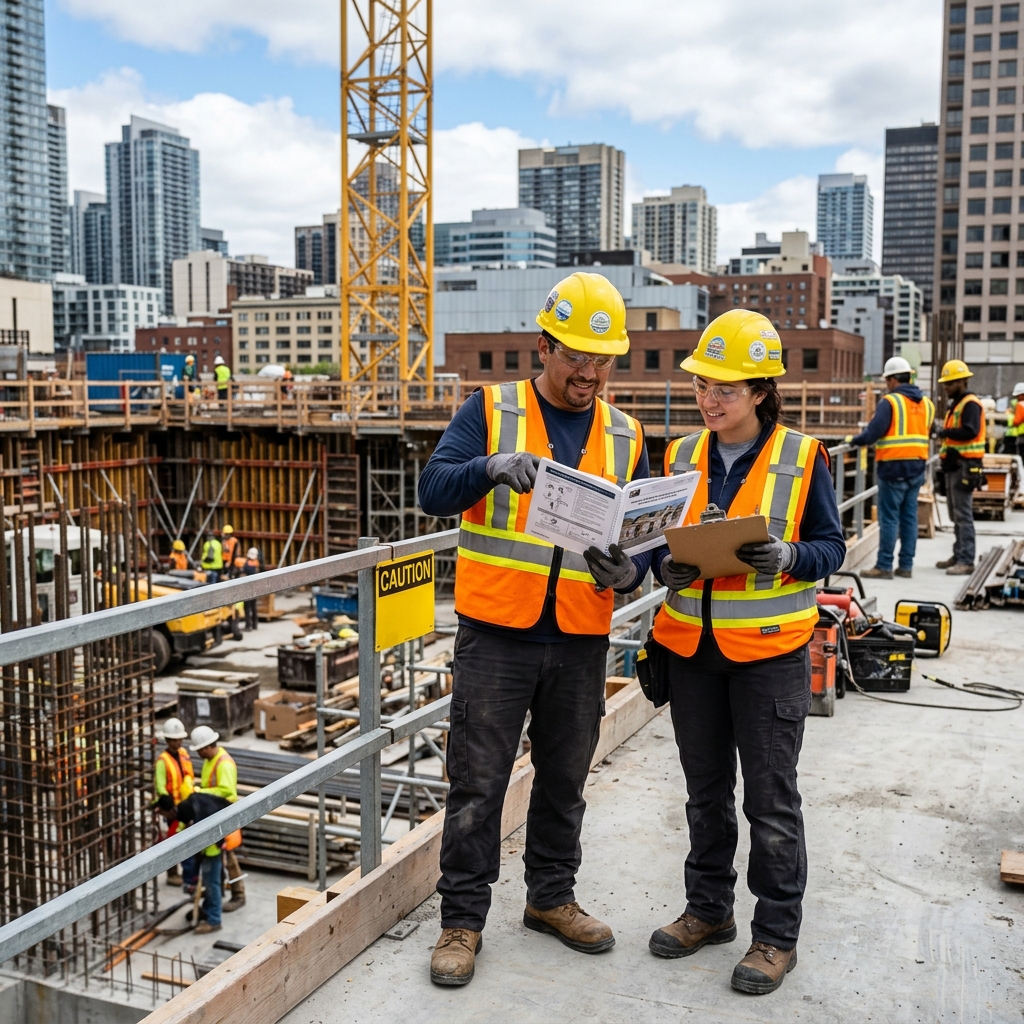
Construction work is physically demanding, fast-moving, and often hazardous. Because so many tasks involve heavy equipment, elevated work areas, electrical systems, and changing site conditions, workers need practical tools that help them recognize danger early and react before an injury happens. The best safety resources do more than explain rules; they give workers and employers a way to prevent harm, document unsafe conditions, and improve day-to-day decision-making on the job.
This guide brings together the main categories of construction safety resources workers commonly rely on, including federal guidance, training materials, hazard-specific information, and workplace reporting options. It also explains how these resources fit into a broader injury-prevention plan and why they matter for workers’ compensation concerns, especially when a jobsite has recurring hazards or a serious incident occurs.
Why construction safety resources matter
Construction sites change constantly. A safe work area in the morning may become hazardous by afternoon if materials shift, weather changes, or different subcontractors begin work in the same space. That is why written policies alone are not enough. Workers need direct access to training, checklists, hazard alerts, and reporting channels that help them respond to real conditions.
Safety resources are valuable because they help workers:
- Identify jobsite hazards before they cause injury
- Learn the correct way to use protective equipment
- Understand when work must stop and a supervisor must be notified
- Find official guidance on common injuries such as falls, struck-by incidents, and electrocution
- Document unsafe conditions that may affect a workers’ compensation claim
Good safety information also benefits employers. Fewer injuries usually mean fewer disruptions, lower costs, and a stronger safety culture across the project.
Federal guidance that every worker should know
The Occupational Safety and Health Administration is one of the most important sources of construction safety information in the United States. OSHA publishes standards, topic pages, and interactive tools designed for workers, supervisors, and safety professionals. Its construction resources are especially useful because they are written for the realities of the jobsite rather than for classroom theory.
Workers can use OSHA materials to review construction standards, learn about hazard recognition, and find guidance on high-risk tasks. OSHA also maintains tools that help users identify the most common dangers in the industry and understand how to control them. For many workers, these pages are a practical starting point when they need quick answers about safe work practices.
OSHA also provides a way to report unsafe conditions. A worker can file a complaint if the workplace presents a hazard that has not been corrected. In an emergency, including a fatality or life-threatening situation, OSHA provides a direct phone line for immediate reporting. That reporting function matters because it can bring attention to a serious danger before someone else is injured.
Common types of hazards on construction sites
Most construction safety resources are organized around the most frequent and severe jobsite risks. Understanding these categories makes it easier to choose the right guidance for the situation at hand.
| Hazard type | Examples | Typical safety focus |
|---|---|---|
| Falls | Roof work, scaffolds, ladders, open edges | Guardrails, harnesses, anchor points, inspection of walking surfaces |
| Struck-by injuries | Falling tools, moving vehicles, flying debris | Hard hats, exclusion zones, equipment awareness, secure storage |
| Caught-in or caught-between incidents | Trench collapse, moving machinery, pinch points | Machine guarding, trench protection, lockout procedures |
| Electrocution | Overhead lines, temporary wiring, damaged cords | Distance controls, inspection, de-energizing where possible |
These categories appear repeatedly in safety training because they account for many of the most serious injuries in the industry. They also overlap, which means a single task may involve more than one risk at the same time.
Training tools that turn rules into habits
Written standards are only effective when workers can apply them on the ground. That is why training resources are central to construction safety. Online courses, toolbox talks, videos, and hazard-specific handouts can reinforce daily habits without requiring a lengthy classroom setting every time a new issue appears.
Several organizations offer training materials tailored to construction workers. OSHA provides instruction on construction hazards and topic-specific safety issues. The Center for Construction Research and Training, often known as CPWR, publishes research-based materials, handouts, and guidance that cover many safety and health topics. The National Safety Council and the American Society of Safety Professionals also provide construction-oriented education resources.
These tools are especially useful when a crew needs a short refresher before starting a high-risk task. For example, a supervisor may use a one-page handout on fall protection before roof work begins or review safe lifting practices before a materials move. Frequent, focused instruction is often more effective than relying on workers to remember a long policy manual.
How workers can use safety resources on the job
Safety information is most valuable when it is easy to apply during a shift. Workers do not need to memorize every regulation, but they should know where to look for guidance and what steps to take if conditions seem unsafe. The most useful resources are the ones that help workers make decisions in real time.
- Review the day’s tasks before work begins and match them with the relevant hazard guidance
- Use checklists to confirm that tools, ladders, equipment, and protective gear are in usable condition
- Ask for clarification when instructions are unclear or conflict with visible site conditions
- Report damaged equipment, missing protections, or unsafe shortcuts immediately
- Keep training records and incident notes for future reference
Workers who rely on these habits are more likely to avoid preventable injuries. They are also better positioned to explain what happened if an accident leads to a compensation claim or workplace investigation.
Finding information beyond federal agencies
Federal materials are essential, but they are not the only source of useful safety information. Several nonprofit and industry organizations publish construction-specific tools that can supplement official guidance. These resources often translate broad safety principles into practical checklists, training slides, and topic-based handouts.
CPWR focuses heavily on research and education for the construction industry. Its materials are designed to help workers and employers understand current hazards and emerging issues. The National Safety Council provides construction safety content organized by topic, including elevated loads, fire prevention, and backing incidents. ASSP offers professional resources aimed at identifying, controlling, and preventing workplace risks. Trade and insurance organizations also maintain their own training libraries and safety advisories.
These materials are especially helpful for smaller employers or crews that may not have an in-house safety department. They can support a more organized approach to site training and help workers learn from broader industry experience.
Reporting unsafe conditions and preserving evidence
When a hazard is ignored, reporting becomes part of safety planning. A worker should know who to tell, what to document, and when to escalate the issue beyond the site if necessary. If the problem is serious and not corrected, a complaint to OSHA may be appropriate.
Documentation can make a major difference. Written notes, photographs taken under company policy, witness names, and copies of safety complaints may help show what the site looked like before an injury occurred. That record can also support a workers’ compensation claim if the injury turns into a dispute over how and where it happened.
Preserving evidence is important in cases involving defective equipment, missing fall protection, collapsed trenches, or repeated exposure to an obvious hazard. The goal is not to build a legal case in the middle of a shift; the goal is to create a clear record so that unsafe conditions can be addressed promptly and accurately.
The role of workers’ compensation in construction injuries
Construction workers who are hurt on the job often rely on workers’ compensation benefits for medical care and wage replacement. Safety resources and compensation systems are connected because the same hazards that lead to injuries can also determine how a claim is investigated. A worker who reports a hazard early may prevent an injury, while a worker who is already injured may need documentation showing the condition that caused it.
Although workers’ compensation rules vary by state, the basic idea is consistent: job-related injuries and illnesses should be reported quickly, treated properly, and documented carefully. Safety resources can support that process by helping workers describe the incident, identify the task being performed, and explain whether site protections were present.
Workers should understand that reporting an injury is not the same as assigning blame. Instead, it begins the process of medical treatment, claim handling, and review of what went wrong. Reliable safety guidance can make that process clearer for everyone involved.
Practical safety habits that reduce risk every day
While formal training is important, much of construction safety depends on consistent habits. The following practices appear again and again in reliable safety materials because they address the conditions that most often lead to injury.
- Wear the right personal protective equipment for the task, including hard hats, gloves, eye protection, and high-visibility gear
- Inspect ladders, scaffolds, cords, and power tools before use
- Keep walkways clear of debris, loose materials, and trailing cables
- Maintain safe distances from moving equipment and active lifting zones
- Use fall protection whenever the work area requires it
- Stop work if weather, visibility, or site conditions create a new hazard
These actions may sound basic, but they are often the difference between a normal workday and a serious injury. Consistency matters because construction accidents frequently happen during routine tasks when workers become accustomed to the environment and underestimate changing risks.
Frequently asked questions
What is the best first place to look for construction safety guidance? OSHA is usually the best starting point because it offers standards, topic pages, and hazard tools tailored to construction work.
Can a worker report unsafe conditions without waiting for an accident? Yes. Workers can report hazards before someone gets hurt, and serious issues can be brought to OSHA if they are not fixed.
Which hazards cause the most concern on construction sites? Falls, struck-by incidents, caught-in or caught-between injuries, and electrocution are among the most important categories because of their frequency and severity.
Do nonprofit organizations offer useful safety materials? Yes. Groups such as CPWR, the National Safety Council, and ASSP publish training, checklists, and research that can supplement official guidance.
How do safety resources help with workers’ compensation claims? They help workers document unsafe conditions, explain what task was being performed, and preserve evidence about how the injury occurred.
Building a stronger safety culture
The most effective construction sites do not treat safety as a separate subject. Instead, they build it into scheduling, supervision, equipment checks, and daily communication. Workers are more likely to follow safe practices when the site culture rewards caution, allows questions, and treats hazard reporting as a normal part of the job.
That culture grows through repetition. A crew that regularly reviews safety topics, uses trusted materials, and responds quickly to problems is better prepared to avoid both minor incidents and major accidents. For workers, the value of these resources is simple: they turn broad safety rules into clear actions that protect health, income, and the ability to keep working.
References
- Construction Industry — Occupational Safety and Health Administration. 2026-07-10. https://www.osha.gov/construction
- Construction Safety Resources — National Safety Council. 2026-07-10. https://www.nsc.org/workplace/get-involved/divisions/construction-safety-resources
- Construction Safety — American Society of Safety Professionals. 2026-07-10. https://www.assp.org/resources/construction-safety
- CPWR — Center for Construction Research and Training. 2026-07-10. https://www.cpwr.com/
- Safety Resources — New York State Insurance Fund. 2026-07-10. https://www.nysif.com/Home/Employer/WCpolicyholder/ConstructionPolicies/SafetyResources
Similar Articles








Read full bio of Sneha Tete




