
Consequences of Running Red Lights and Stop Signs
Understand how red light and stop sign violations affect safety, your driving record, insurance costs, and legal options.
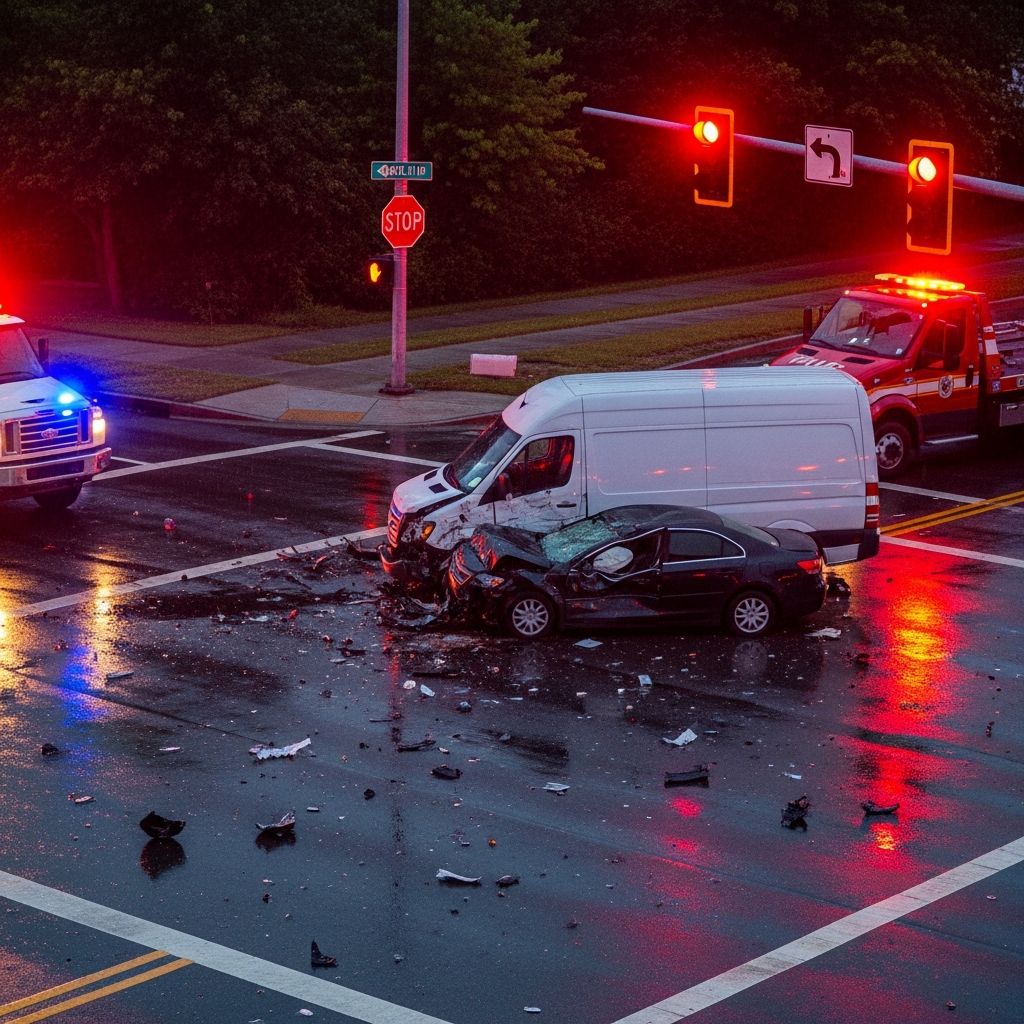
Ignoring a red light or stop sign may feel like a harmless shortcut, but in traffic law it is treated as a serious moving violation. These infractions are closely tied to crash risk, pedestrian injuries, and costly consequences for your license, insurance, and wallet. This guide explains what the law typically requires at red lights and stop signs, what penalties you can expect, and how to respond if you receive a ticket.
Why These Violations Matter
Red lights and stop signs are installed at locations where uncontrolled traffic would create a high risk of severe collisions. Transportation safety research has shown that:
- Intersection crashes account for a substantial portion of serious road injuries and fatalities.
- Failing to yield or disregarding traffic control devices is a major contributing factor in intersection collisions, particularly side-impact (T-bone) crashes, which tend to cause severe injuries.
- Pedestrians and cyclists are especially vulnerable at intersections controlled by lights and stop signs.
Because of these risks, state traffic codes generally treat running a red light or stop sign as a noncriminal but significant violation, usually carrying fines, points, and possible license consequences.
What the Law Typically Requires at Red Lights
Although every state writes its own traffic code, the core rules for steady red signals are similar across the United States and reflected in model and state statutes.
Basic stopping rule at a steady red
When you face a steady red signal, you must:
- Come to a complete stop before the crosswalk on the near side of the intersection.
- If there is no crosswalk, stop before entering the intersection itself.
- Remain stopped until you receive a legal signal to proceed (usually a green light or permitted arrow).
Stopping means the vehicle’s wheels fully cease movement; rolling slowly through the line is often treated the same as not stopping at all.
Right turn on red
Most states allow a driver, after stopping at a red light, to make a right turn if it can be done safely and is not prohibited by a posted sign.
- You must stop first, then yield to pedestrians in the crosswalk and to traffic with the right of way.
- If a sign says “No Turn on Red”, you must wait for a green indication.
- Even when a right on red is legal, you are never required to turn; if visibility or traffic makes you uncertain, remaining stopped is lawful.
Left turn on red (special cases)
Some states allow a left turn on red, but usually only in narrow circumstances, such as:
- Turning left from a one-way street onto another one-way street, after stopping and yielding to other road users.
- Local rules or posted signs may further restrict or forbid such turns.
Because left-on-red rules are less uniform, motorists should always confirm the law for their specific state before assuming this maneuver is allowed.
Flashing red and red arrows
Two common variations of red signals also carry specific duties:
- Flashing red light: Treated like a stop sign. You must stop, then proceed only when the way is clear, following normal right-of-way rules.
- Red arrow: You may not make the turn indicated by the arrow until the signal changes to green or a permitted arrow. Some jurisdictions allow a turn on red after stopping if local law explicitly permits it and no sign forbids it.
What the Law Requires at Stop Signs
Stop signs serve a similar function as red lights but are used where a full traffic signal is not necessary. Typical statutes require drivers to:
- Stop at the marked stop line, if one is present.
- If there is no line, stop before the crosswalk.
- If no line or crosswalk exists, stop at the point nearest the intersecting roadway where the driver has a clear view of approaching traffic.
Once you have stopped, you must yield the right of way to any vehicle or pedestrian that poses an immediate hazard in or near the intersection.
Rolling stops versus complete stops
Many drivers treat stop signs as a suggestion to slow down rather than to fully stop, but traffic codes rarely distinguish between “rolling through” and flatly ignoring the sign.
- A complete stop means the vehicle’s forward motion ends, even if only for a brief moment.
- Officers often issue tickets for rolling stops when they observe the vehicle never truly coming to rest.
Typical Penalties for Red Light and Stop Sign Violations
Although exact penalties vary by state and sometimes by city, most jurisdictions treat these as noncriminal infractions. Common consequences include financial costs, points on your record, and indirect effects such as insurance increases.
Common financial penalties
| Type of Cost | How It Applies |
|---|---|
| Base fine | Fixed amount set by law or local schedule for the specific violation. |
| Court costs & fees | Administrative fees, surcharges, and sometimes local assessments added to the base fine. |
| Additional assessments | Some states add fees earmarked for trauma centers, road safety programs, or similar funds. |
In many states, a single red light or stop sign ticket can easily total well over one hundred dollars once all surcharges are included. Camera-issued tickets may have a different schedule than officer-issued citations.
Points on your driving record
Most states use a demerit point system to track driving behavior. Running a red light or stop sign usually results in:
- Several points being added to your driving record for each conviction.
- Points remaining on your record for a fixed number of years, depending on state law.
- Potential license suspension if you accumulate too many points within a certain time period.
Some jurisdictions allow eligible drivers to complete a driver improvement or traffic school course to avoid or reduce points for a single violation.
Impact on insurance premiums
Auto insurers routinely factor moving violations into risk calculations. A red light or stop sign conviction may:
- Cause your premiums to rise at the next renewal cycle.
- Contribute to a pattern of violations that may trigger non-renewal or stricter underwriting.
- Have a greater impact if combined with at-fault crashes or prior tickets.
Insurers rely heavily on state motor vehicle record data and may rate a violation for several years, though exact practices vary by company and state.
Crashes and Enhanced Penalties
If running a red light or stop sign results in a collision, the legal consequences can escalate significantly.
- Civil liability: If you are found at fault, you (and your insurer) may have to pay for injuries, property damage, and other losses to other parties. Intersection collisions often involve high medical costs, especially when pedestrians or cyclists are struck.
- Serious injury or fatality: Many states allow enhanced penalties, including higher fines, license suspension, or possible criminal charges when violations cause serious bodily injury or death.
- Negligence evidence: Disobeying a traffic control device can be strong evidence of negligence in civil lawsuits, sometimes constituting “negligence per se” depending on the jurisdiction.
Automated Red Light Cameras
In some areas, red light cameras automatically photograph vehicles that enter an intersection after the signal turns red. These programs are often controversial but remain in use in many cities.
How camera enforcement usually works
- Sensors detect vehicles that cross the stop line after the signal has changed to red.
- The system captures images or video of the vehicle, its license plate, and the signal state.
- A designated authority reviews the evidence and, if appropriate, issues a citation by mail to the vehicle’s registered owner.
Differences from officer-issued tickets
Depending on state law, camera-based tickets may differ from standard tickets in key ways:
- They may be treated as civil penalties against the vehicle’s owner, rather than a moving violation against the driver.
- Some jurisdictions do not assign points to the driver’s record for camera tickets, although the fine must still be paid.
- Procedures to contest the ticket may involve an administrative hearing rather than a traditional traffic court appearance.
Typical Defenses and Ways to Respond to a Ticket
If you receive a citation for running a red light or stop sign, you generally have several options. The best choice depends on the strength of your case, the cost of the ticket, and how a conviction would affect your record.
Common ways to resolve a citation
- Pay the ticket: Fastest option, but usually counts as a conviction and may add points.
- Traffic or driver improvement school: In some states, eligible drivers who complete an approved course can reduce or avoid points for a single violation.
- Contest the ticket in court: You can plead not guilty and ask for a hearing, present evidence, and cross-examine the officer or camera program representative.
- Seek a plea or reduction: In some courts, it is possible to negotiate for a lesser offense or reduced penalty, especially if your record is otherwise clean.
Potential defenses
Available defenses depend heavily on the specific facts and state law. Some arguments that drivers sometimes raise include:
- Incomplete stop location ambiguity: Dispute over whether the vehicle fully stopped before the crosswalk or at the appropriate line.
- Signal timing or malfunction: Evidence that the light was malfunctioning or that the yellow interval did not meet legal timing standards. Signal timing guidelines are often based on engineering standards and may be documented by the highway authority.
- Obstructed or missing sign: At a stop sign, proof that foliage, construction, or missing signage prevented a reasonable driver from seeing the sign.
- Mistaken identity (camera tickets): Arguing that you were not the driver or that your vehicle was misidentified, if allowed by local procedure.
Because traffic laws and court practices vary, consulting a traffic attorney or local legal aid organization can clarify what defenses are realistic in your jurisdiction.
Staying Compliant and Avoiding Tickets
The simplest way to avoid the costs and hassles of red light and stop sign tickets is to adopt safe, predictable intersection habits. Safety agencies consistently recommend conservative behavior at intersections.
- Slow earlier: Begin easing off the accelerator as you approach a stale green (a light that has been green for a while). This gives you time to stop safely if it turns yellow.
- Commit to stopping on yellow when in doubt: If you are not safely within the intersection when the light changes to yellow, plan to stop rather than accelerating to “beat the red.”
- Count to one at stop signs: After your wheels stop, silently count “one” before moving. This small pause reduces rolling stops.
- Scan for vulnerable road users: Always check crosswalks and curb areas for pedestrians, cyclists, and people using mobility devices.
- Respect flashing red and school zones: Treat flashing red as a stop sign and pay extra attention around schools, where children may unexpectedly enter the roadway.
Frequently Asked Questions
Q: Is entering an intersection on yellow a violation?
A: In many states, a steady yellow light is a warning that the signal is about to turn red, and you are allowed to enter the intersection while the light is still yellow but not after it turns red. However, a few jurisdictions have different rules, so it is important to check your state’s code.
Q: Do red light camera tickets put points on my license?
A: Some states treat automated camera citations as civil penalties against the vehicle rather than moving violations against the driver, and do not add demerit points for those tickets. Others treat them more like regular citations. You must review your state’s laws and the wording of the notice to know how it will affect your record.
Q: Can I go to jail for running a red light or stop sign?
A: The basic offense is typically a noncriminal traffic infraction, punishable by fines and related penalties rather than jail. However, if the violation is part of reckless behavior or leads to serious injury or death, prosecutors may pursue criminal charges under separate statutes, such as vehicular homicide or reckless driving.
Q: What if I could not stop safely when the light changed?
A: Traffic officers and courts sometimes consider whether you were already so close to the intersection when the signal changed that stopping abruptly would have been unsafe. That said, this is a fact-specific argument, and there is no guarantee it will succeed. Defensive driving that anticipates signal changes reduces the need to rely on this kind of explanation.
Q: Should I hire a lawyer for a single red light ticket?
A: For a first, minor violation, many drivers choose to handle the matter themselves, especially if the only consequence is a moderate fine. However, if you hold a commercial license, already have points on your record, or face potential license suspension, consulting an attorney familiar with local traffic courts can help you understand your options and the long-term impact.
References
- Traffic Safety Facts: 2021 Data – Intersection-Related Crashes — National Highway Traffic Safety Administration (NHTSA). 2023-06-01. https://crashstats.nhtsa.dot.gov/
- National Walking and Bicycling Study: Case Study No. 21 – Red Light Running — Federal Highway Administration (FHWA). 1995-02-01. https://highways.dot.gov/safety/safety-management/national-walking-and-bicycling-study-case-study-no-21-red-light-running
- Uniform Vehicle Code – Turn on Red Provisions — National Committee on Uniform Traffic Laws and Ordinances. 2000-01-01. https://mutcd.fhwa.dot.gov/
- Florida Statutes §316.075 – Traffic Control Signal Devices — Florida Legislature (Online Sunshine). 2024-01-01. https://www.leg.state.fl.us/Statutes/index.cfm?App_mode=Display_Statute&URL=0300-0399/0316/Sections/0316.075.html
- Florida Statutes §316.076 – Flashing Signals — Florida Legislature (Online Sunshine). 2024-01-01. https://www.flstate.fl.us/statutes/index.cfm?App_mode=Display_Statute&URL=0300-0399/0316/Sections/0316.076.html
- Traffic Control Signals — Florida Department of Transportation (FDOT). 2022-09-01. https://www.stateofflorida.com/traffic-signals/
- Traffic Signals Rules — DriversEd.com. 2023-01-01. https://driversed.com/driving-information/signs-signals-and-markings/traffic-signals/
Similar Articles








Read full bio of medha deb


