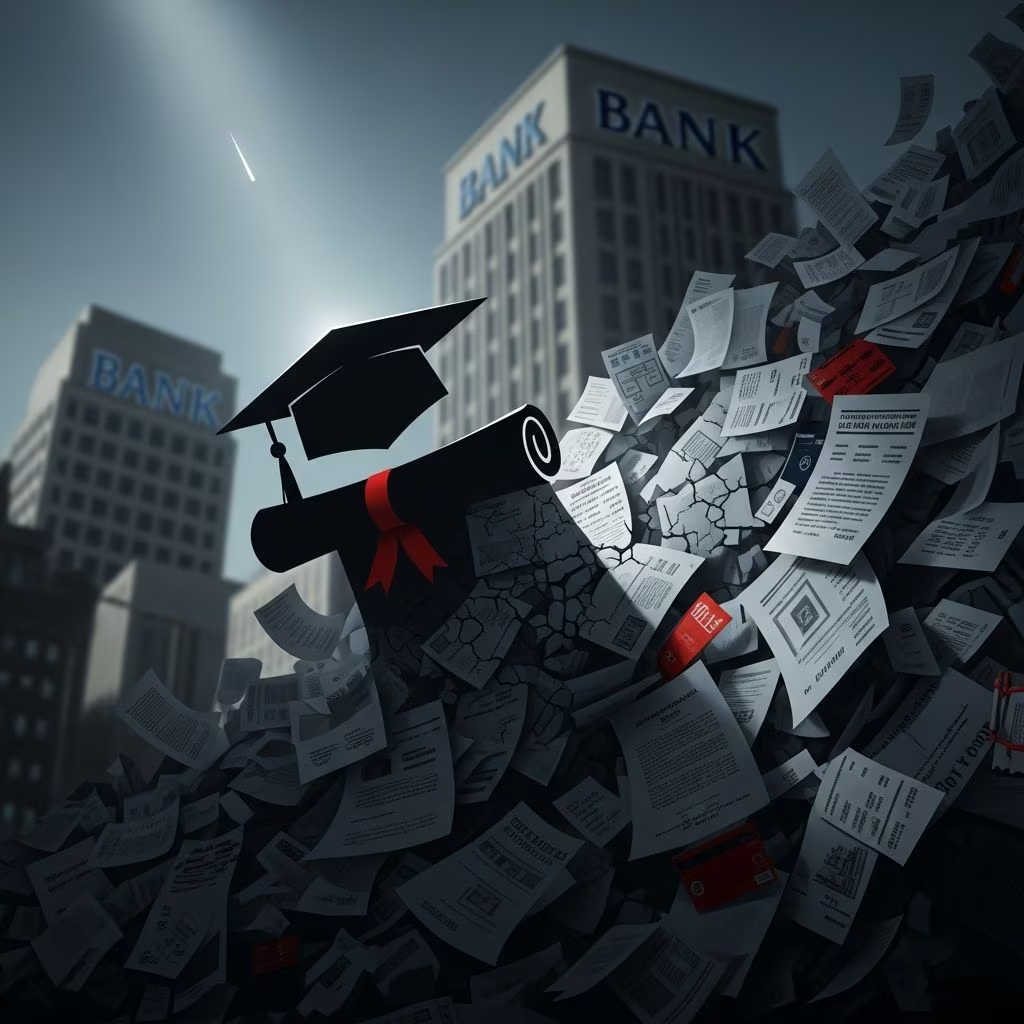
Falling behind on federal student loan payments can feel overwhelming, but understanding what default means – and what comes after – is critical for protecting your income, benefits, and credit. This guide explains what happens when a federal student loan goes into default, the major consequences you may face, and the main ways to get back into good standing with the federal government.
When Is a Federal Student Loan Considered in Default?
For most federal student loans, default is not triggered by a single late payment. Instead, it usually occurs after a borrower has gone a significant period of time without paying and has not arranged for a postponement such as deferment or forbearance.
| Loan Status | Typical Timeframe | What It Means |
|---|---|---|
| Current | Payments made on schedule | Loan is in good standing; full access to federal student aid benefits. |
| Delinquent | 1–270 days late (for most federal loans) | Payments are overdue, but loan has not yet entered default. |
| Default | Typically over 270 days without payment | Loan is legally in default; powerful federal collection tools may be used. |
Key points about entering default:
- For most federal direct loans, default occurs after about 270 days (roughly nine months) of non-payment.
- For certain loan types, such as some older Perkins Loans or loans with different terms, the timeframe can vary.
- Before default, your servicer must attempt to contact you, send notices, and offer repayment help, but you can still lose touch if you’ve moved or changed contact information.
Immediate Financial Effects of Federal Student Loan Default
Once your loan is in default, the federal government and its collection contractors gain access to collection tools that are much stronger than those used for most other types of consumer debt.
1. Loss of Access to Federal Student Aid
Defaulted borrowers lose many of the protections and benefits that make federal student loans more flexible than private loans.
- You become ineligible for new federal student aid (grants, work-study, and new federal loans) until your default is resolved.
- You generally lose eligibility for deferment, forbearance, and most repayment plans on the defaulted loan.
- Any interest subsidies that previously covered part of your interest may end.
2. Acceleration of the Loan
When a federal student loan defaults, the entire unpaid balance – including principal, interest, and certain fees – can become immediately due. This is known as acceleration.
- You may receive notice that the full balance is now owed at once, even if you previously had a long-term payment schedule.
- Collection costs can be added to what you owe, increasing the total amount due.
3. Collection Costs and Fees
When loans are transferred to collections, additional fees are often added to cover collection activities such as letters, phone calls, and legal work.
- Collection charges on federal loans can be a significant percentage of the outstanding principal and interest.
- These fees are added to your balance and must be repaid in addition to the original loan.
Government Collection Tools Used After Default
Unlike most private creditors, the federal government does not need to go to court to use certain powerful tools to collect a defaulted federal student loan.
4. Administrative Wage Garnishment
One of the most visible consequences of default is wage garnishment without a court judgment. Through a process called administrative wage garnishment, the government can take a portion of your paycheck directly.
- A set percentage of your disposable pay can be withheld by your employer and sent to the government.
- This can occur even if you have other debts or financial obligations.
- You have certain rights to notice and to request a hearing, but you must act promptly when contacted.
5. Treasury Offset: Taking Tax Refunds and Federal Benefits
Defaulted federal student loans can also trigger a process known as Treasury offset, where certain federal payments owed to you are intercepted to repay your debt.
- Your federal income tax refund can be seized and applied to your defaulted student loan balance.
- In some cases, state tax refunds can also be taken.
- Certain federal benefit payments, including portions of Social Security retirement or disability benefits, may be offset and redirected to repay the loan.
- Refundable tax credits that are critical to low-income families, such as the Earned Income Tax Credit (EITC) or Child Tax Credit (CTC), can also be affected when they increase a federal tax refund.
Credit and Long-Term Financial Consequences
Beyond immediate collections, default can create long-lasting damage to your financial profile and access to opportunities.
6. Damage to Your Credit History
Default is reported to nationwide credit reporting companies and can have a major negative impact on your credit score.
- Delinquencies and default can remain on your credit report for years, even after the loan is resolved.
- A damaged credit history can make it harder or more expensive to:
- Qualify for a mortgage or auto loan.
- Obtain credit cards or personal loans.
- Rent an apartment, since many landlords check credit reports.
- Secure utilities, cell phone plans, or insurance at favorable rates.
7. Possible Impact on Professional and Personal Opportunities
In some cases, default can affect more than your borrowing options.
- Certain employers, especially in financial or security-sensitive fields, may review your credit history during background checks.
- Some professions require state licenses (for example, teachers, engineers, or healthcare professionals); in some states, defaulted student loans can put those licenses at risk.
Legal and Collection Agency Involvement
Once a loan is in default, it may be assigned to a collection agency or to a federal guaranty agency that manages collections on behalf of the government.
8. Collection Agencies and Lawsuits
- Collection agencies can contact you by phone and mail to arrange repayment and may add collection costs to your balance.
- In some cases, the government or a guaranty agency can file a lawsuit to recover the debt, including court costs and attorney fees.
9. Limited Options in Bankruptcy
Unlike many other forms of consumer debt, federal student loans generally cannot be automatically discharged in bankruptcy. A borrower would typically have to initiate a separate proceeding and demonstrate undue hardship, which has historically been difficult to prove.
Ways to Get Out of Federal Student Loan Default
Default is serious, but it is not permanent. Federal law provides several structured options for resolving default and regaining access to benefits. The right choice depends on your income, career plans, and how quickly you need relief.
Option A: Loan Rehabilitation
Loan rehabilitation is a one-time program that allows you to bring a defaulted federal loan back into good standing by making a series of agreed payments.
- You and the loan holder agree on an affordable monthly payment amount, often calculated based on your income.
- You must make a specified number of on-time, voluntary payments (often nine monthly payments within a ten-month period).
- After successful rehabilitation:
- The loan is no longer in default.
- Default-related negative marks are removed from your credit report, although the prior missed payments may remain.
- Eligibility for federal student aid, deferment, and forbearance is restored.
- Wage garnishment and Treasury offsets linked to that loan usually end once rehabilitation is complete.
Rehabilitation is available only once per loan, so it is important to stay current afterward.
Option B: Loan Consolidation
Direct Consolidation allows you to pay off one or more existing federal loans by replacing them with a new consolidated loan.
- You can consolidate a defaulted loan if you either:
- Make a series of voluntary payments on the defaulted loan, or
- Agree to repay the new Direct Consolidation Loan under an income-driven repayment plan.
- Consolidation moves the loan out of default and restores eligibility for federal student aid, but unlike rehabilitation, it may not remove the record of default from your credit history.
Option C: Repayment in Full
Paying the entire balance of the defaulted loan at once will immediately resolve the default status, but this is not realistic for many borrowers.
- Some collection agencies or guaranty agencies may offer settlement arrangements that accept less than the full amount owed, but these do not always erase the default from your record and may have tax implications.
Preventing Default and Protecting Yourself
Keeping your loan out of default is generally easier than resolving a default after it happens. Federal loans come with several tools designed to help borrowers stay current, even through periods of financial difficulty.
Use Income-Driven Repayment (IDR) Plans
- IDR plans base your monthly payment on your income and family size, sometimes lowering your payment to a small fraction of your discretionary income.
- Payments can be as low as $0 per month if your income is very low, and those $0 payments still count as on-time payments under the plan.
Request Deferment or Forbearance When Needed
- If you are facing unemployment, economic hardship, medical issues, or other challenges, you may qualify for a temporary deferment or forbearance that pauses payments.
- Interest may continue to accrue during some types of postponement, so it is important to understand the long-term cost.
Stay in Contact With Your Servicer
- Update your mailing address, email, and phone number any time they change.
- Respond promptly to letters or emails about missed payments or changing repayment options.
- If you think you might be close to default, contact your servicer or the federal loan holder immediately to discuss options and avoid harsher collection actions.
Frequently Asked Questions
Q: How do I know if my federal student loan is already in default?
A: You can log in to your official federal student aid account to view your loan status, or contact your loan servicer or the Default Resolution Group if your loan has been transferred to collections. Defaulted loans are usually clearly labeled as such in your account records.
Q: Can my tax refund be taken without warning for a defaulted loan?
A: Before a federal tax refund is offset, you should receive written notice explaining that the government intends to use your refund to pay a defaulted federal student loan and providing information on your rights to contest the action. If you ignore the notice, the Treasury Offset Program may move forward and apply your refund to the defaulted loan.
Q: Will default on my student loan affect my ability to go back to school?
A: While you may still be able to enroll in classes, you will generally not be able to receive new federal grants or loans while your existing federal loan is in default. To regain eligibility for new aid, you typically must rehabilitate the loan, consolidate it out of default, or make satisfactory repayment arrangements.
Q: If my wages are being garnished, can rehabilitation or consolidation help?
A: Yes. Entering a rehabilitation agreement or consolidating into a new Direct Consolidation Loan can eventually stop wage garnishment and Treasury offsets associated with the defaulted loan. You must complete the required payments or consolidation process before these collection actions are lifted.
Q: Is it ever too late to fix a defaulted federal student loan?
A: In most cases, it is not too late. Even if a loan has been in default for many years, you can usually still pursue rehabilitation, consolidation, or repayment in full to resolve the default and regain access to many federal benefits. However, long-term defaults may have already caused substantial credit damage and collections, so acting sooner is better.
References
- What are the consequences of default? — Federal Student Aid, U.S. Department of Education. 2024-03-11. https://studentaid.gov/help-center/answers/article/what-are-consequences-of-default
- Getting Out of Default — Federal Student Aid, U.S. Department of Education. 2024-01-08. https://studentaid.gov/manage-loans/default/get-out
- What happens if I default on a federal student loan? — Consumer Financial Protection Bureau. 2023-06-26. https://www.consumerfinance.gov/ask-cfpb/what-happens-if-i-default-on-a-federal-student-loan-en-663/
- Default on Student Loans — FinAid.org. 2022-09-15. https://finaid.org/loans/default/
- Consequences of Default and Actions to Take — University of Colorado Colorado Springs Financial Aid. 2022-08-01. https://finaid.uccs.edu/types-of-aid/educational-loans/default15
- The Federal Student Loan Default System Keeps Families in Poverty. Here’s How to Stop It. — The Institute for College Access & Success. 2022-04-13. https://ticas.org/affordability-2/the-federal-student-loan-default-system-keeps-families-in-poverty-heres-how-to-stop-it/
- U.S. Department of Education to Begin Federal Student Loan Collections and Other Actions to Help Borrowers Get Back into Repayment — U.S. Department of Education. 2025-04-25. https://www.ed.gov/about/news/press-release/us-department-of-education-begin-federal-student-loan-collections-other-actions-help-borrowers-get-back-repayment