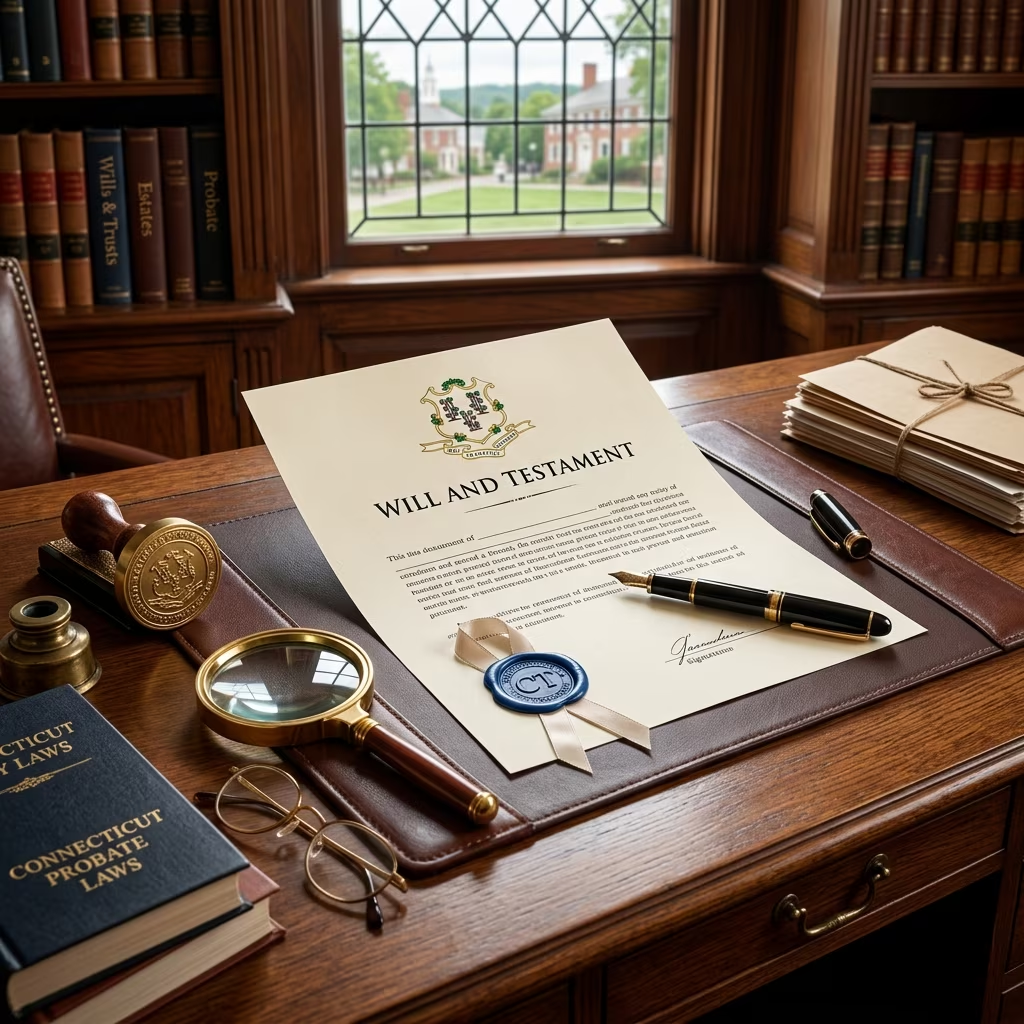
Creating a will is one of the most direct ways to control what happens to property after death. In Connecticut, the rules are straightforward in some respects and more nuanced in others, especially when family relationships, witness requirements, or probate procedures are involved. A valid will can reduce confusion, while an invalid one can leave an estate subject to default state rules.
This guide explains the main Connecticut will requirements in plain language. It covers who can make a will, what form the document must take, how it must be signed, what happens if someone dies without a will, and how probate courts typically handle these matters.
What a Will Does in Connecticut
A will is a legal document that directs how a person’s probate property should be distributed after death. It can name beneficiaries, choose an executor, appoint guardians for minor children, and include other instructions that help a family settle an estate more efficiently.
In Connecticut, a will is especially important because property not covered by a valid will passes under intestacy law. That default system may not match the wishes of the person who died, even when family members assume the outcome will be obvious.
- It identifies who should receive estate property.
- It can nominate a personal representative to manage the estate.
- It can name guardians for minor children.
- It may reduce disputes by making intentions clear.
Who Can Make a Valid Will
Connecticut law requires a testator, the person making the will, to be at least 18 years old and mentally capable of understanding the nature of the document. This capacity requirement matters because a will is only effective if the person signing it understands what property they own, who the likely beneficiaries are, and how the document changes the distribution of assets.
Age and mental capacity are separate questions. A person can be an adult but still lack testamentary capacity at the time the will is executed. If a will is challenged later, capacity often becomes one of the central issues.
- Age: the testator must generally be at least 18.
- Capacity: the testator must be of sound mind when the will is signed.
- Voluntariness: the document must reflect the testator’s own choices, not coercion.
Formal Requirements for a Connecticut Will
Connecticut law places weight on formality. A will must be in writing and signed by the testator. It must also be attested by two witnesses, each of whom signs in the testator’s presence. These steps are designed to make it easier for a probate court to verify authenticity after death.
Unlike in some other jurisdictions, Connecticut does not require notarization for a will to be valid. Notarization can still be useful, however, because it may support a self-proving will and reduce the need to locate witnesses later.
| Requirement | Connecticut Rule |
|---|---|
| Written form | The will must be in writing. |
| Signature | The testator must sign the will. |
| Witnesses | Two witnesses must sign in the testator’s presence. |
| Notarization | Not required, but often helpful. |
Witness Rules and Why They Matter
Witnesses serve an evidentiary function. Their signatures help confirm that the person signing the document was the testator, that the signing occurred properly, and that the process was not hidden or suspicious. If a will is later contested, witness testimony may become important evidence.
For that reason, Connecticut law requires two witnesses and expects them to sign while the testator is present. Families sometimes treat this as a minor formality, but failure to follow the witness rule can create serious probate problems.
- Two witnesses are required.
- Witnesses should sign in the testator’s presence.
- Careful execution helps prevent later challenges.
Self-Proving Wills and Probate Convenience
A self-proving will is a will accompanied by affidavits that make it easier for probate courts to accept the document without requiring witness testimony. Although Connecticut does not require a self-proving affidavit, many people choose one because it simplifies administration after death.
This can be especially helpful if witnesses move away, become unavailable, or cannot be reached when the estate is opened. A self-proving format does not change the basic validity rules; it simply makes proof of execution easier.
- It can streamline probate administration.
- It may reduce delays caused by unavailable witnesses.
- It does not replace the need for proper execution.
Handwritten and Other Nontraditional Wills
Some people ask whether a handwritten will is acceptable. The key issue in Connecticut is not whether a will is typed or handwritten, but whether it satisfies the statutory execution requirements. The document still needs to be in writing, signed by the testator, and witnessed by two people.
Informal writings, voice recordings, or video statements generally do not function as wills under Connecticut’s standard formalities. A person who wants a simple home-prepared will should still be careful to meet the same legal rules that apply to a lawyer-drafted document.
What a Will Can Cover
A Connecticut will can direct the distribution of many types of property owned in an individual name. It can also be used to express preferences for who should handle the estate, who should care for minor children, and how special gifts should be distributed.
- Bank accounts titled only in the deceased person’s name.
- Real estate owned individually.
- Personal property such as jewelry, furniture, and vehicles.
- Business interests held in the person’s own name.
- Specific gifts to family members, friends, or charities.
Some assets pass outside a will, such as property held in joint ownership or assets with beneficiary designations. For that reason, a will should be reviewed together with beneficiary forms, account titles, and trust documents so the overall estate plan works consistently.
Protecting Family Members and Other Limits on Freedom of Disposition
Although a will gives broad control, Connecticut law does not permit every distribution in every circumstance. Surviving spouses, in particular, may have statutory rights that override or limit the effect of a will. This means a person cannot always disinherit a spouse simply by leaving them out of the document.
The law also recognizes that family members may have rights outside the will depending on the type of property and the overall probate context. These protections are part of the reason estate planning should be coordinated carefully rather than treated as a one-page exercise.
Changing or Revoking a Will
Life changes, and a will should usually change with them. Connecticut allows a will to be revised through a later valid instrument or codicil, which is a separate document that amends the original will. Any amendment should be executed with the same level of care as the original will.
People may need to update a will after marriage, divorce, the birth of a child, the death of a beneficiary, a move, or a major change in assets. Old language can become a problem if it no longer reflects current family relationships or financial priorities.
- A codicil changes an existing will.
- A new will can replace an old one.
- Changes should be executed with the same formalities as the original document.
What Happens If There Is No Will
If someone dies without a valid will, the estate passes under Connecticut’s intestacy rules. Those rules assign property to relatives in a fixed order. The statute is meant to approximate what many families would want, but it does not account for every personal situation.
For example, a close friend, unmarried partner, or favorite charity generally receives nothing under intestacy unless another legal arrangement exists. That is why a will is so valuable even for people who think their family situation is simple.
| Family Situation | General Intestacy Outcome |
|---|---|
| Spouse and children | Property is divided between the spouse and children according to statutory shares. |
| Spouse only | The spouse may inherit the entire estate in many cases. |
| Children only | The children inherit the estate. |
| No spouse, no children | Parents, siblings, or other relatives may inherit next. |
Probate in Connecticut
Probate is the court-supervised process for settling a decedent’s estate. The probate court identifies assets, confirms the validity of the will when necessary, pays debts and taxes, and approves distribution of what remains. Even with a valid will, probate is often part of the process unless assets pass by another mechanism.
Small estates may qualify for simplified procedures, but many estates still move through standard probate administration. The presence of a clear, properly signed will often helps the process proceed more smoothly.
Common Planning Choices to Consider
People writing a Connecticut will often make a handful of recurring choices. These are not required in every case, but they are common because they help a plan work in practical terms.
- Name an executor who is organized and trustworthy.
- Choose alternate beneficiaries in case a primary beneficiary dies first.
- Appoint guardians if minor children may need care.
- Review nonprobate assets so beneficiary forms match the will.
- Keep the signed original in a safe location that family can access when needed.
Questions People Often Ask
Can I write my own will in Connecticut? Yes. A person may prepare a will without using a lawyer, but the document must still meet the state’s legal requirements.
Does a will have to be notarized? No. Connecticut does not require notarization for validity, though notarization can support a self-proving process.
What if a witness is unavailable later? A self-proving will can reduce that problem by making the document easier to admit in probate.
Can I leave property to anyone I want? A will gives broad freedom, but surviving spouse rights and asset-titling rules may limit the practical effect of some gifts.
Do I need a new will after major life changes? Often, yes. Marriage, divorce, children, and major asset changes are common reasons to review an estate plan.
Frequently Asked Questions
What makes a will valid in Connecticut?
A valid Connecticut will must be in writing, signed by an adult with testamentary capacity, and witnessed by two people who sign in the testator’s presence.
Is a handwritten will legal?
A handwritten will can be legal if it satisfies the same statutory requirements that apply to any other will, including writing, signature, and witness rules.
Can I change my will later?
Yes. A Connecticut will can be changed through a valid codicil or replaced entirely with a new will that meets the legal formalities.
What happens if I die without a will?
Your property will pass under Connecticut intestacy law, which distributes assets to relatives in a statutory order rather than according to your personal preferences.
Why is probate important?
Probate is the process the court uses to validate the will when needed, pay debts and taxes, and oversee transfer of the remaining estate property.
References
- Wills in Connecticut — Cummings & Lockwood. 2024-01-01. https://www.cl-law.com/news-events/wills-connecticut
- Connecticut General Statutes § 45a-251 — Connecticut General Assembly. 2024-01-01. https://law.justia.com/codes/connecticut/title-45a/chapter-802a/section-45a-251-formerly-sec-45-161/
- Trusts & Estates — Connecticut Probate Courts. 2026-01-01. https://www.ctprobate.gov/trusts-estates
- Dying Without a Will — United Way of Connecticut / 211 and eLibrary. 2024-01-01. https://uwc.211ct.org/dying-without-a-will-connecticut/
- What is Required for a Valid Will in Connecticut? — Attorney Karpe. 2024-01-01. https://www.attorneykarpe.com/what-is-required-for-a-valid-will-in-connecticut/