
Connecticut Employee Rights During the COVID‑19 Era
A practical guide to pay, leave, safety, and job protections for Connecticut workers navigating COVID‑19 workplace challenges.
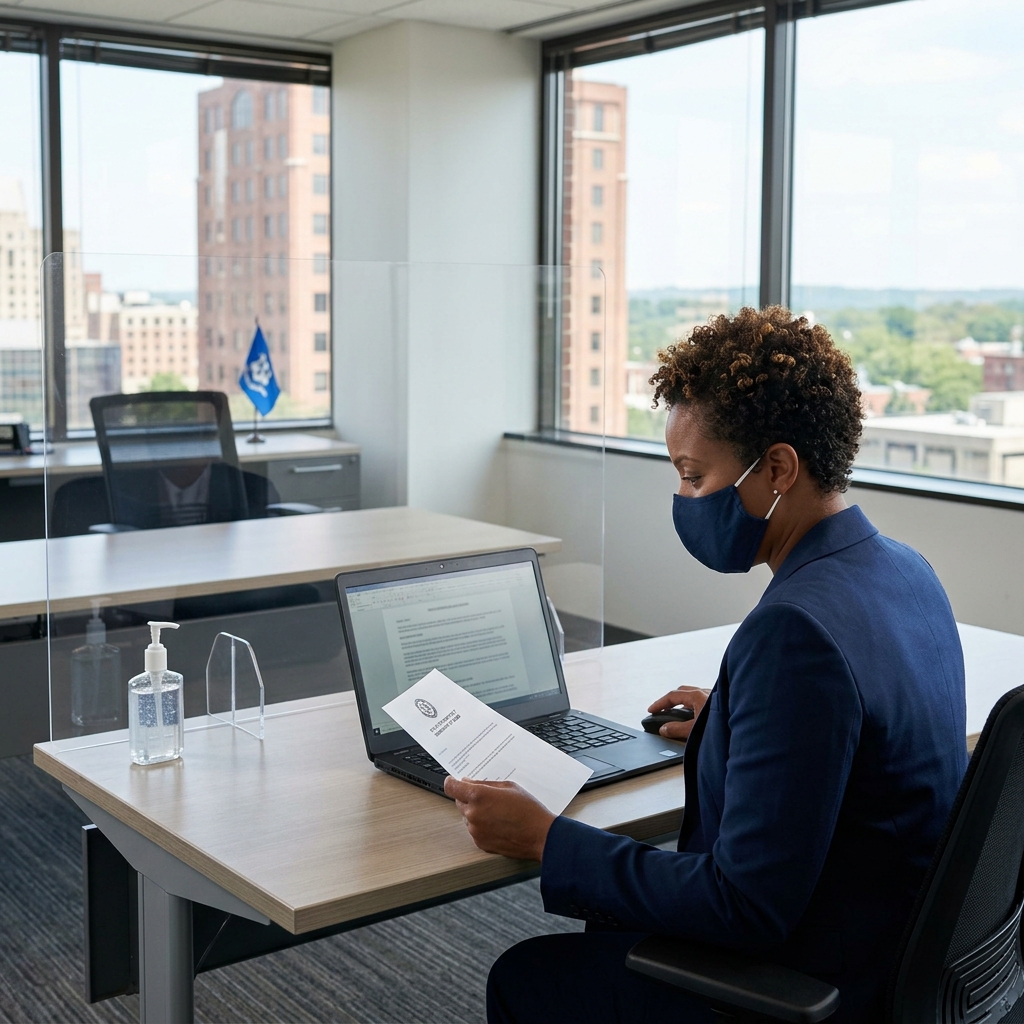
The COVID‑19 pandemic radically reshaped workplaces in Connecticut, raising urgent questions about pay, leave, job security, and health protections. As emergency orders and federal programs have expired, many of the core rules now come from long‑standing state laws and updated guidance from agencies such as the Connecticut Department of Labor and the U.S. Department of Labor. This article explains the major rights and responsibilities Connecticut employees should understand when dealing with COVID‑related issues at work.
1. How COVID‑19 Changed the Legal Landscape for Connecticut Workers
Before COVID‑19, Connecticut workers already had protections under wage and hour laws, paid sick leave rules, unemployment insurance, workplace safety laws, and the federal Family and Medical Leave Act (FMLA). The pandemic did not erase these protections; instead, it tested how they apply to contagious disease, widespread quarantines, and sudden business closures.
During the public health emergency, additional federal measures—such as the Families First Coronavirus Response Act (FFCRA)—temporarily expanded paid leave options for certain COVID‑related reasons, but those mandates ended on December 31, 2020. Today, Connecticut employees mainly rely on:
- Connecticut wage and hour laws governing minimum wage and salary obligations.
- Connecticut Paid Sick Leave requirements for covered service workers.
- State unemployment insurance for job loss or significant reduction in hours.
- Federal FMLA and state family and medical leave rules for serious health conditions.
- Workers’ compensation for workplace‑related COVID infections that qualify as occupational diseases.
2. Pay Rights When You Cannot Work Because of COVID‑19
Connecticut law distinguishes between non‑exempt (typically hourly) and exempt (typically salaried) employees when determining pay obligations during closures or quarantines. Understanding that distinction is critical if your workplace shuts down or you are told to stay home.
2.1 Non‑Exempt (Hourly) Employees
Under wage and hour rules, employers are generally required to pay non‑exempt employees only for the hours they actually work. If you do not perform work in a given day due to a closure or quarantine, the employer usually has no obligation to pay wages for that time.
- If the employer closes for a day and directs hourly staff not to report, no pay is required for that day because no work was performed.
- If the employer remains open but you choose not to come in (and cannot work remotely), your employer is not required to pay you for the missed time.
- Overtime remains owed if you work more than 40 hours in a week, even during periods of heightened COVID risk, consistent with federal and state overtime rules.
2.2 Exempt (Salaried) Employees
Exempt employees must be paid differently. If an exempt employee performs any work during a workweek, the employer generally must pay their full weekly salary, unless the employee takes unpaid time off for personal reasons.
| Situation | Exempt Employee Pay Expectation |
|---|---|
| Employer closes midweek after some work already performed | Full weekly salary still typically owed. |
| Employer closes for at least a full, uninterrupted workweek | No salary required for that full week if no work is performed. |
| Employee chooses to stay home for personal reasons while business remains open | Employer may treat absences as unpaid personal time, consistent with policy. |
Employers must apply these rules consistently and in compliance with both Connecticut regulations and federal Fair Labor Standards Act (FLSA) guidance.
3. Sick Leave and Time Off for COVID‑Related Reasons
COVID‑19 often forces employees to miss work due to illness, quarantine, or caregiving responsibilities. Connecticut workers may be able to rely on a combination of state paid sick leave, employer‑provided PTO, and family and medical leave laws to cover their time off.
3.1 Connecticut Paid Sick Leave for Service Workers
Connecticut’s Paid Sick Leave law applies to certain service workers employed by larger employers and allows them to accrue paid time off that can be used for illness or preventive care. COVID‑related absences frequently fall within permitted uses, such as:
- Time off to seek diagnosis or treatment for COVID‑19 symptoms.
- Quarantine or isolation under advice of a health care provider or public health authority.
- Caring for a family member affected by COVID‑19, when covered by sick leave policy.
Because state paid sick leave typically covers a limited amount of time—roughly equivalent to several days of work—employees with lengthy illness or extended quarantine often must rely on other benefits, such as PTO or unpaid leave.
3.2 FMLA and Extended COVID‑19 Absence
The federal Family and Medical Leave Act and parallel state rules provide unpaid, job‑protected leave for specified family and medical reasons, including serious health conditions. COVID‑19 may qualify as a serious health condition when it causes significant complications or requires ongoing medical treatment.
To be covered by FMLA:
- You must work for a covered employer (generally a public employer or a private employer with at least 50 workers nationwide).
- You must have worked for the employer for at least 12 months.
- You must have logged at least 1,250 hours of service in the preceding 12 months under federal FMLA; Connecticut law uses similar hour thresholds for certain state leave protections.
When those criteria are met and your COVID‑related condition meets the legal definition of a serious health condition, your job is generally protected during the leave period, and your employer must maintain your group health benefits during the FMLA leave.
3.3 Expired Federal Emergency Leave Programs
During the early stages of the pandemic, the FFCRA required many employers to provide paid sick leave and expanded paid family leave for specified COVID‑related reasons. That mandate applied only from April 1, 2020, through December 31, 2020. Today, any COVID‑related paid leave is typically governed by ordinary sick leave laws, employer policies, or collective bargaining agreements.
4. Unemployment Benefits for COVID‑Related Job Loss or Reduced Hours
Connecticut’s unemployment compensation system provides partial wage replacement for workers who lose their jobs or see a substantial reduction in hours through no fault of their own. During COVID‑19, the Department of Labor issued guidance explaining how unemployment could apply to quarantines, temporary closures, and reduced schedules.
4.1 Eligibility Basics
To receive unemployment benefits, a worker must be able to work, available for work, and actively seeking employment, while having sufficient past wages in covered employment. In many COVID‑related scenarios, eligibility is assessed case by case.
- If an employer closes for a temporary period without pay and employees cannot telecommute, those employees may be eligible to file for unemployment.
- If an employer instructs an employee to self‑quarantine without pay for a set period, the employee may also apply for unemployment benefits.
- Workers with reduced hours can sometimes qualify for partial unemployment, depending on their earnings and weekly benefit calculation.
4.2 Protection Against Retaliation
Connecticut law generally prohibits employers from retaliating against workers who exercise rights under the unemployment compensation system. Workers who believe they have been punished for filing or attempting to file a claim can request a hearing under state statutes, such as Conn. Gen. Stat. §31‑226a.
4.3 Alternatives to Layoffs
To reduce large‑scale job loss during COVID‑19, Connecticut promoted programs like SharedWork, which allow employers to cut hours rather than jobs while workers receive partial unemployment benefits to offset lost income. This structure helps preserve employment relationships and benefits while adjusting staffing levels in response to changing conditions.
5. Workplace Safety, Masking, and Vaccination Issues
Employers in Connecticut must provide a reasonably safe workplace, a duty grounded in both federal occupational safety rules and state regulations. During COVID‑19, this obligation included reasonable measures to reduce the spread of infection.
5.1 Sending Symptomatic Employees Home
Public health guidance indicated that employers could require workers with virus‑like symptoms or known exposure to go home and remain off‑site until they were cleared to return. Employers may also request return‑to‑work certifications from health care providers to confirm that the employee is fever‑free and safe to return.
- Directing a visibly ill employee to leave the workplace is consistent with the duty to maintain a safe environment.
- Employers should protect the sick worker’s confidentiality while notifying close contacts that they may have been exposed.
- Policies on telecommuting can be expanded to allow remote work when compatible with job duties.
5.2 Preventive Measures
Throughout the pandemic, employers were encouraged to strongly promote or require preventive steps such as masking, hand hygiene, and physical distancing, especially in higher‑risk settings. These measures help satisfy the obligation to provide a safe workplace when reasonably supported by public health guidance.
6. COVID‑19 and Workers’ Compensation in Connecticut
In some circumstances, a COVID‑19 infection may be treated as an occupational disease under the Connecticut Workers’ Compensation Act. When the infection is directly related to workplace exposure, employees may qualify for benefits similar to other work‑related injuries.
6.1 When COVID‑19 Is Work‑Related
To receive workers’ compensation benefits for COVID‑19, an employee must demonstrate that the infection arose out of and in the course of employment. Connecticut law places the burden of proof on the employee to show that workplace exposure was a substantial factor in causing the illness.
Examples of situations where work‑related infection may be considered include:
- Frontline health care workers exposed to patients with confirmed COVID‑19.
- Employees in congregate settings, such as long‑term care facilities, with documented workplace outbreaks.
- Workers whose duties require frequent close contact with the public in high‑transmission periods.
6.2 Available Benefits
When compensability is established, workers’ compensation may provide:
- Medical treatment for COVID‑19 and its complications.
- Wage replacement benefits when the employee cannot work during illness or quarantine.
- Permanent partial disability benefits if COVID‑19 causes lasting impairment, such as chronic lung or heart damage.
- Death benefits to qualifying dependents when a work‑related COVID‑19 infection is fatal.
Each claim is decided on a case‑by‑case basis, considering medical evidence and the nature of job duties.
7. Rights of Employees with Disabilities During COVID‑19
Employees with disabilities may face unique barriers in accessing treatment or navigating workplace protocols during COVID‑19. Disability rights advocates in Connecticut have emphasized that people with disabilities must not be denied medical care or workplace accommodations based on discriminatory assumptions.
Key principles include:
- Hospitals and health care providers must avoid discriminatory allocation of scarce resources and may need to accommodate disability‑related needs, such as allowing a support person when necessary for communication or decision‑making.
- Workers who experience disability‑related barriers to care can file complaints with the U.S. Department of Health and Human Services Office for Civil Rights.
- Employers covered by disability laws may need to provide reasonable accommodations, such as modified schedules or remote work, when appropriate and not unduly burdensome.
8. Practical Steps for Connecticut Employees Facing COVID‑Related Workplace Issues
When COVID‑19 affects your ability to work, understanding your rights is only the first step. It is equally important to act promptly and document communications with your employer and any state agencies.
8.1 Immediate Actions to Consider
- Review your employer’s policies on sick leave, telework, and COVID‑19 safety protocols.
- Track your symptoms and treatment and keep copies of medical documentation, particularly if you may need FMLA leave or workers’ compensation.
- Document changes in hours or pay and keep pay stubs that show reduced work or unpaid quarantine periods.
- Apply for unemployment promptly if you are laid off, furloughed, or experience a substantial loss of hours due to COVID‑related business decisions.
8.2 When to Seek Legal or Agency Help
Consider speaking with an employment or workers’ compensation attorney, or contacting the Connecticut Department of Labor, if:
- You believe your employer is failing to pay required wages or misclassifying your exempt/non‑exempt status.
- Your request for FMLA or state medical leave has been improperly denied.
- Unemployment benefits have been denied and you disagree with the eligibility determination.
- You suspect that your COVID‑19 infection is work‑related and your employer’s insurer disputes compensability.
- You experience retaliation after asserting rights to leave, unemployment, or safety protections.
9. Frequently Asked Questions (FAQs)
Q1: If my employer closes for two weeks because of COVID‑19, must they keep paying me?
Answer: In general, if you perform no work during a full, uninterrupted workweek, the employer is not required to pay either non‑exempt or exempt employees for that week, unless contract or policy says otherwise. You may be able to apply for unemployment benefits for the period of closure if you meet eligibility requirements.
Q2: Can I be forced to stay home if I feel sick, and will I be paid?
Answer: Employers can direct employees with virus‑like symptoms or known exposure to go home to protect workplace safety. Whether you are paid depends on your classification (exempt vs. non‑exempt), available sick leave, and employer policies. You may use accrued paid sick leave or PTO if available, and you may be eligible for unemployment if the absence is unpaid and meets state criteria.
Q3: Does ordinary COVID‑19 illness qualify me for FMLA?
Answer: Mild cases that resolve quickly may not meet the definition of a serious health condition. However, more severe cases requiring extended treatment, hospitalization, or follow‑up care can qualify, making you eligible for unpaid, job‑protected leave if you and your employer meet FMLA coverage requirements.
Q4: Can I get workers’ compensation if I catch COVID‑19 at work?
Answer: It is possible, but not automatic. You must show that your infection likely arose from workplace exposure and qualifies as an occupational disease under Connecticut law. If compensability is found, you may receive medical, wage replacement, and possibly permanent disability benefits.
Q5: What if my employer retaliates because I filed for unemployment or asked about my rights?
Answer: Retaliation against workers for exercising rights under the unemployment compensation system is generally prohibited in Connecticut. You can request a hearing and may wish to consult an attorney if you experience adverse actions—such as termination or demotion—after asserting your rights.
References
- Connecticut Department of Labor Issues Guidance to Employers Facing COVID-19 Issues — Epstein Becker & Green, P.C. 2020-03-23. https://www.workforcebulletin.com/connecticut-department-of-labor-issues-guidance-to-employers-facing-covid-19-issues
- COVID-19 Updates for Connecticut Workers and Employers — Connecticut House Democrats. 2020-03-27. https://www.housedems.ct.gov/stafstrom/article/covid-19-updates-connecticut-workers-and-employers
- Coronavirus Workers’ Compensation | Connecticut Work Comp — Gillis Law Firm. 2020-04-10. https://www.gillislawfirm.com/workers-compensation/workers-compensation-and-covid-19/
- With Coronavirus in Connecticut, Some Preliminary FAQs for Employers — Connecticut Employment Law Blog. 2020-03-10. https://www.employmentlawletter.com/2020/03/with-coronavirus-in-connecticut-some-preliminary-faqs-for-employers/
- COVID-19 Family Medical Leave Act FAQ — Connecticut Security Guard Union. 2021-01-15. https://www.connecticutsecurityguardunion.com/covid-19-family-medical-leave-act-fmla-faq
- COVID-19 Information and Advocacy — Disability Rights Connecticut, Inc. 2023-03-15. https://www.disrightsct.org/covid19
Similar Articles








Read full bio of Sneha Tete




