
Living Trust: 5 Steps To Create One And Key Benefits
Master the process of establishing a living trust to protect your assets, avoid probate, and ensure your legacy endures seamlessly for loved ones.
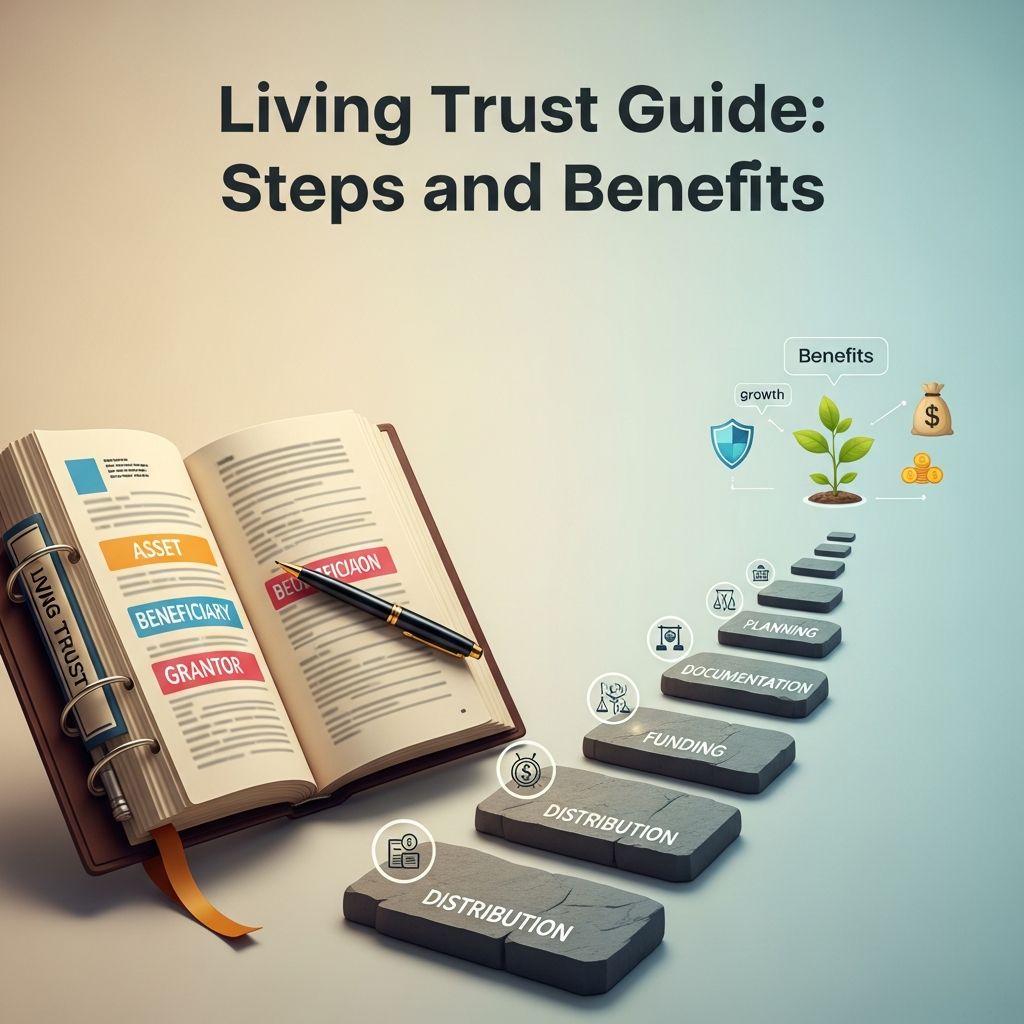
A revocable living trust serves as a powerful estate planning tool, allowing you to manage and distribute your assets during your lifetime and after your passing without the delays of probate court. By transferring ownership of your property into the trust, you maintain full control while designating how assets reach beneficiaries seamlessly.
Understanding the Fundamentals of a Revocable Living Trust
A revocable living trust, often simply called a living trust, is a legal entity you create while alive to hold your assets. As the grantor, you fund the trust by retitling property like homes, bank accounts, and investments in the trust’s name. You typically serve as the initial trustee, retaining authority to use, sell, or alter assets freely.
Upon incapacity, a successor trustee steps in to manage affairs without court intervention. After death, assets pass directly to beneficiaries, bypassing probate’s public scrutiny and costs. This structure ensures continuity and privacy, distinguishing it from wills that require judicial oversight.
Key Advantages That Make Living Trusts Essential
Living trusts offer multifaceted benefits, addressing common estate planning pain points effectively.
- Probate Avoidance: Assets transfer immediately to heirs, sidestepping months or years of court proceedings that can cost 3-7% of estate value.
- Privacy Safeguard: Unlike wills, trusts remain confidential, shielding financial details from public records.
- Incapacity Protection: Seamless management during illness or disability without conservatorship.
- Flexibility and Control: Amend or revoke anytime, specifying conditions like age-based distributions for minors.
- Multi-State Efficiency: Handles out-of-state property under one document, avoiding ancillary probates.
These features preserve wealth, reduce family stress, and align distributions with personal values, such as supporting charities or special needs dependents.
Ideal Candidates for Establishing a Living Trust
Contrary to myths, living trusts suit most adults, not just the ultra-wealthy. Consider one if you own real estate, have dependents, or value privacy.
| Situation | Why a Living Trust Helps |
|---|---|
| Property Owners | Transfers homes seamlessly across states without multiple probates. |
| Parents of Minors | Controls inheritance timing, preventing lump-sum payouts to young heirs. |
| Business Owners | Protects company interests with structured succession. |
| Elderly or Singles | Manages assets during incapacity without court-appointed guardians. |
| Blended Families | Specifies distributions to avoid disputes. |
Even modest estates benefit, as probate burdens scale poorly with smaller values.
Step-by-Step Process to Create Your Living Trust
Building a living trust involves deliberate preparation and execution. Follow these phases meticulously.
1. Define Your Estate Inventory
Compile a detailed list of assets: real estate deeds, vehicle titles, financial accounts, investments, personal items, and digital assets. Appraise values accurately to inform tax strategies. Note liabilities like mortgages for comprehensive planning.
2. Select Key Roles
Appoint yourself as initial trustee and co-trustee if married. Name successors—trusted family or professionals—who understand your wishes. Designate beneficiaries clearly, including contingencies for predeceased heirs.
3. Draft the Trust Document
Outline distribution instructions: immediate transfers, staggered payouts (e.g., 25% at age 25, 50% at 30), or held in trust for special needs. Include incapacity provisions and no-contest clauses. Consult attorneys for state-specific compliance.
4. Execute and Fund the Trust
Sign before a notary and witnesses. Retitle assets: update deeds, account titles, insurance beneficiaries to ‘Your Name, Trustee of the [Trust Name] Dated [Date]’. This critical “funding” activates protections.
5. Maintain and Update Regularly
Review annually or after life events like births, deaths, or asset changes. Amend via codicil or restatement to reflect evolving goals.
Professional guidance ensures validity; DIY tools work for simple cases but risks errors.
Overcoming Common Misconceptions About Living Trusts
Myths deter many: “Trusts are only for millionaires” ignores probate costs hitting all sizes. “Trusts avoid all taxes” clarifies they don’t shield estates over federal exemptions, though they enable strategies. “Expensive to set up”—initial fees ($1,000-$3,000) pale against probate savings. A pour-over will complements by capturing unfunded assets.
Potential Costs and Tax Implications
Upfront: Attorney fees, notarization, filing. Ongoing: Minimal, as revocable trusts don’t file separate returns; income passes to you. No estate tax reduction inherently, but pairs with other tools. State laws vary—check local rules.
Comparing Living Trusts to Other Estate Tools
| Feature | Living Trust | Will | Joint Ownership |
|---|---|---|---|
| Probate | Avoids | Requires | May Trigger |
| Privacy | Yes | No | Partial |
| Incapacity | Covered | Not | Not |
| Flexibility | High | Low | Low |
| Cost | Upfront | Probate | Tax Risks |
Trusts excel in control and efficiency.
Frequently Asked Questions
Can I change my living trust after creation?
Yes, revocable trusts allow amendments or revocation anytime while competent, offering adaptability.
Do living trusts protect against creditors?
Revocable ones do not, as you retain control; irrevocable versions may, per state law.
Is a lawyer necessary for a living trust?
Not always for basics, but recommended for complexity to avoid invalidation.
What happens to trust assets if I divorce?
Review and amend; ex-spouses aren’t auto-removed unless specified.
Can a living trust hold my life insurance policy?
Yes, by naming the trust as beneficiary, controlling proceeds.
Final Thoughts on Securing Your Legacy
Implementing a living trust empowers proactive legacy building, minimizing burdens on loved ones. Start inventorying assets today for enduring peace of mind.
References
- Reasons You Should Have a Living Trust — Cali Law. 2020-11. https://www.mycalilaw.com/articles/2020/november/reasons-you-should-have-a-living-trust/
- Six signs you need a trust — TIAA. N/A. https://www.tiaa.org/public/invest/services/wealth-management/perspectives/living-trust-estate-planning
- 4 benefits of a living trust — FreeWill. N/A. https://www.freewill.com/learn/benefits-of-a-living-trust
- 7 Things You Should Know About Living Trusts — Giving To Drexel. 2024-03. https://giving.drexel.edu/ways-to-give/gift-planning-blog/2024/march/7thing
- Understanding Living Trusts — Estate Planning. N/A. https://www.estateplanning.com/understanding-living-trusts
- What is a revocable living trust? — Consumer Financial Protection Bureau. N/A. https://www.consumerfinance.gov/ask-cfpb/what-is-a-revocable-living-trust-en-1775/
- Living Trusts — Minnesota Attorney General. N/A. https://www.ag.state.mn.us/consumer/handbooks/probate/CH3.asp
Similar Articles








Read full bio of Sneha Tete




