
Compensation in Bad Faith Insurance Lawsuits
Learn the full range of damages available when an insurance company unreasonably denies, delays, or underpays a valid claim.
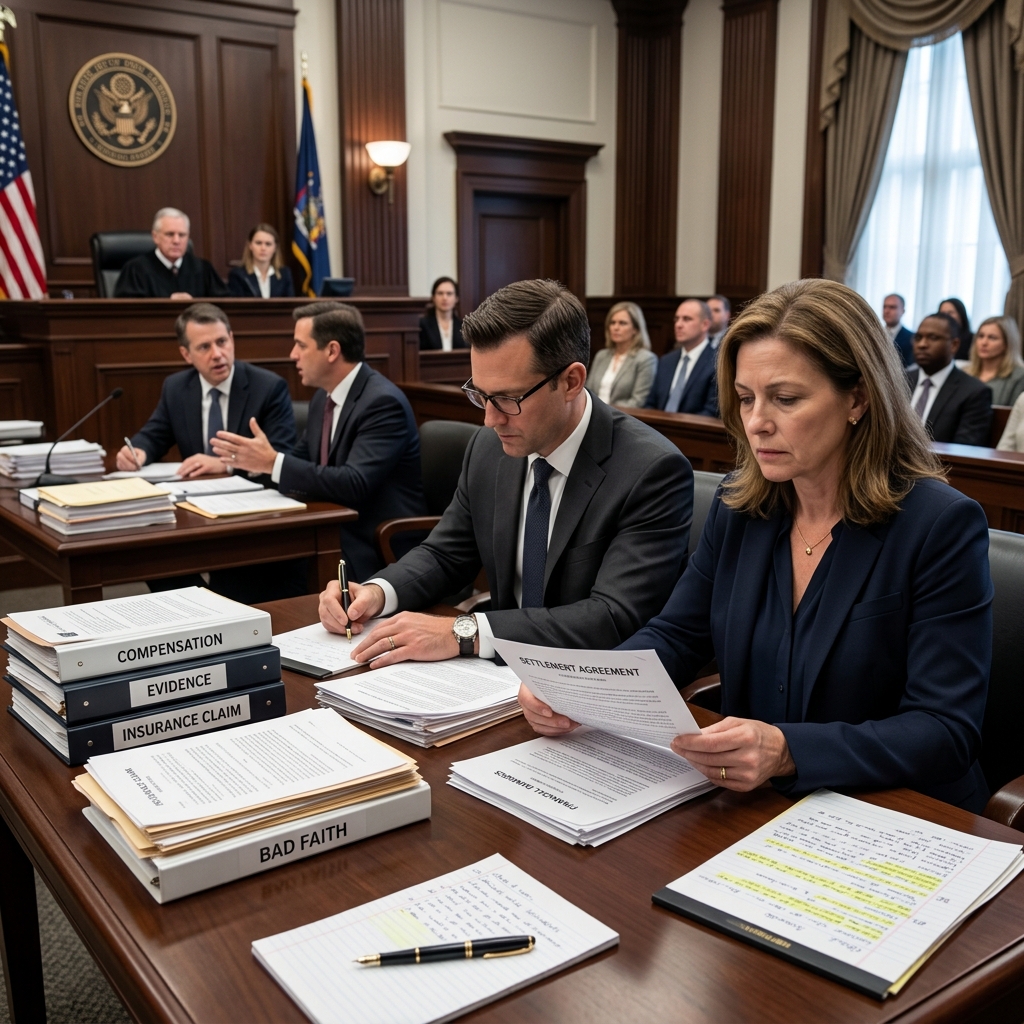
When an insurance company mishandles a valid claim, the harm to a policyholder often extends far beyond the amount stated on the policy. In a bad faith insurance lawsuit, the law allows injured policyholders to seek a broad range of compensation designed both to restore their losses and to hold the insurer accountable for unreasonable or dishonest conduct.
This guide explains the major categories of damages available in bad faith cases, how they work in practice, and what claimants should know before pursuing legal action. It is general information, not legal advice; specific rights and remedies vary by state and by the type of policy involved.
What Is a Bad Faith Insurance Lawsuit?
Insurance policies are contracts. In addition to honoring the written terms, insurers owe a legal duty to treat their policyholders fairly and to handle claims in good faith. If an insurer violates that duty, the policyholder may pursue a lawsuit for bad faith in addition to any claim for breach of contract.
Courts and statutes generally recognize bad faith when an insurer:
- Unreasonably denies a claim that is covered under the policy
- Delays payment or investigation without a valid reason
- Fails to properly investigate or evaluate the claim
- Misrepresents policy terms or relevant facts
- Refuses to defend or settle lawsuits against the insured in liability policies
To win a bad faith case, a policyholder typically must show:
- Benefits owed under the policy were withheld or underpaid, and
- The insurer’s conduct was unreasonable, arbitrary, or without proper cause.
When those elements are proven, damages can go much further than simply paying the original claim.
Major Types of Compensation in Bad Faith Cases
Courts often classify bad faith damages into several broad categories. While terminology varies by jurisdiction, the underlying ideas are similar across many states.
| Type of Damages | Main Purpose | Typical Examples |
|---|---|---|
| Contractual / Policy Benefits | Pay what the policy should have paid | Unpaid medical bills, property repairs, liability limits |
| Consequential / Economic Losses | Cover extra financial harm caused by bad faith | Lost income, additional living expenses, business losses |
| Emotional Distress | Compensate mental and emotional suffering | Anxiety, depression, sleeplessness, loss of peace of mind |
| Attorney’s Fees & Costs | Reimburse legal expenses caused by bad faith | Fees paid to lawyers, court filing costs, expert fees |
| Punitive Damages | Punish and deter egregious misconduct | Additional sums above compensation, sometimes far beyond policy limits |
Contractual Damages: Recovering Unpaid Policy Benefits
The starting point in most bad faith cases is the amount the insurer should have paid under the policy. These contractual damages represent the benefits that were wrongfully denied, delayed, or underpaid.
Common examples include:
- Property insurance benefits for home or vehicle damage
- Health or disability benefits for medical care and wage replacement
- Life insurance proceeds owed to beneficiaries
- Liability policy limits that should have been offered to settle a claim
In a first-party claim (where you seek benefits under your own policy), courts generally award all unpaid benefits plus interest from the date payment should have been made.
In a third-party bad faith claim involving liability insurance, the damages can include the amount of a judgment entered against the insured, especially when the insurer unreasonably refused to defend or settle the case. In some jurisdictions, the insurer can be ordered to pay the full judgment, even if it exceeds policy limits.
Consequential Damages: Losses Caused by Bad Faith Conduct
Bad faith rarely affects only the amount on the claim form. When benefits are withheld, policyholders may incur additional financial losses that would not have occurred if the insurer had acted promptly and fairly. These are often called consequential damages or extracontractual damages because they go beyond the literal policy benefits.
Consequential damages can include:
- Lost income: Wages or business revenue lost because the claimant could not work, continue operations, or take advantage of opportunities while waiting for payment.
- Additional living expenses: Costs of temporary housing, transportation, or childcare incurred because repairs or medical treatment were delayed.
- Damage to credit or financial standing: Late fees, higher interest rates, or loss of access to financing when unpaid bills harm the policyholder’s credit profile.
- Business interruption and reputational harm: Lost customers, disrupted contracts, or reputational damage to a company when claims related to business property or liability are mishandled.
Courts generally require a clear causal connection: the policyholder must prove these losses were reasonably foreseeable consequences of the insurer’s bad faith, not just unrelated financial problems.
Emotional Distress Damages
Insurance exists in part to provide security and peace of mind. When claimants are left without coverage at critical moments—after accidents, illnesses, or disasters—the emotional impact can be severe. Many states allow successful bad faith plaintiffs to recover damages for emotional distress in addition to economic losses.
Emotional distress damages may cover:
- Prolonged anxiety and stress over finances and health
- Depression or feelings of hopelessness tied to the claim dispute
- Sleep disturbances and physical symptoms caused by stress
- Impact on family relationships and overall quality of life
Courts often consider factors such as how long the bad faith conduct persisted, the severity of the underlying incident (e.g., serious injury or home destruction), and whether the insurer’s actions were particularly callous or deceptive.
Attorney’s Fees and Litigation Costs
When an insurer acts in bad faith, policyholders may need to hire lawyers and experts simply to obtain the benefits they were promised. To avoid rewarding wrongful conduct, many legal systems permit recovery of attorney’s fees and related costs in bad faith actions.
Depending on the jurisdiction and the type of claim, compensation may include:
- Fees paid to attorneys for work necessary to obtain withheld benefits
- Court costs such as filing fees and transcript charges
- Reasonable expert witness fees for professionals who testify about coverage, damages, or industry standards
Some states provide fee awards through statutes that specifically address bad faith conduct by insurers, while others allow recovery under court decisions that treat such fees as part of the damages caused by wrongful denial or delay.
Punitive Damages: When Misconduct Is Egregious
In particularly serious cases, courts may award punitive damages. Unlike the other categories, punitive damages are not intended to compensate the policyholder for losses. Their purpose is to punish the insurer for especially wrongful conduct and to deter similar behavior in the future.
Punitive damages are generally reserved for situations involving:
- Fraudulent misrepresentations about coverage or claim facts
- Systematic practices that deny valid claims to save money
- Deliberate efforts to avoid paying known obligations
- Malicious or oppressive treatment of policyholders
Many states impose limits or guidelines on punitive awards based on constitutional due process principles. Courts often compare punitive damages to compensatory damages (the total of economic, emotional, and fee-related losses) and look for reasonable ratios, although some jurisdictions allow substantial awards when compensatory damages are large or misconduct is extreme.
First-Party vs. Third-Party Bad Faith Damages
The nature of compensation can differ depending on whether the bad faith claim is first-party (against your own insurer for your own losses) or third-party (often involving liability coverage where the insurer failed to defend or settle a claim against you).
First-Party Bad Faith Claims
In first-party cases, such as property damage or health and disability claims, damages often include:
- Unpaid or underpaid policy benefits
- Consequential economic losses caused by delayed or denied payment
- Emotional distress damages
- Attorney’s fees and litigation costs, where permitted
- Punitive damages in egregious cases
Third-Party Bad Faith Claims
In third-party bad faith, the insurer’s wrongful conduct typically relates to defense and settlement obligations under liability policies, such as auto or commercial general liability coverage. Available damages may include:
- Excess judgment: The portion of a court judgment against the insured that exceeds policy limits when the insurer unreasonably refused a reasonable settlement within those limits.
- Full judgment amounts: In some failure-to-defend cases, courts may require the insurer to pay the entire judgment because it breached the duty to provide a defense.
- Additional economic losses resulting from the judgment or its enforcement.
- Emotional distress experienced by the policyholder due to the litigation and financial exposure.
- Punitive damages in appropriate jurisdictions when conduct is egregious.
Factors That Influence the Amount of Compensation
No two bad faith cases are identical. The value of a claim depends on both the underlying incident and the insurer’s conduct. Courts and juries typically consider factors such as:
- Severity of underlying loss: Major injuries, total home destruction, or large liability judgments tend to increase both compensatory and punitive exposure.
- Duration of bad faith conduct: Long-term delays, repeated denials, or extended periods of misinformation can exacerbate damages.
- Impact on the policyholder’s life: Significant financial and emotional disruption often supports larger awards.
- Evidence of corporate practices: Internal documents or testimony revealing widespread claim handling problems can influence punitive damages.
- State law caps and statutes: Some jurisdictions limit punitive damages or define specific remedies for bad faith, while others permit more expansive recovery.
Practical Steps for Policyholders Considering a Bad Faith Lawsuit
Policyholders who suspect bad faith should take proactive steps to protect their rights and strengthen potential claims. Authoritative guidance from courts and regulatory agencies emphasizes documentation and timely action.
Key actions include:
- Reviewing the policy: Understand coverage, exclusions, limits, and the insurer’s obligations before concluding that a denial or delay is wrongful.
- Requesting written explanations: Ask the insurer to provide clear, written reasons for any denial, reduction, or delay in payment, and keep copies of all correspondence.
- Documenting communications: Maintain records of phone calls, emails, letters, and claim notes, including dates, names of representatives, and summaries of discussions.
- Preserving evidence of losses: Keep receipts, bills, pay stubs, medical records, repair estimates, and any other documentation showing economic and emotional impact.
- Filing complaints with regulators: Many states allow policyholders to report suspected bad faith to insurance departments, which can investigate and impose administrative sanctions.
- Consulting an experienced attorney: Bad faith law is complex and state-specific; speaking with a lawyer familiar with insurance litigation can help evaluate the strength of a potential claim and the types of damages that may be available.
Frequently Asked Questions About Bad Faith Compensation
Can I recover more than my policy limits in a bad faith case?
Yes. While contractual damages are usually limited to policy benefits, bad faith claims can support recovery of consequential losses, emotional distress, attorney’s fees, and punitive damages that exceed policy limits when legally permitted.
Are punitive damages available in every bad faith lawsuit?
No. Punitive damages are reserved for particularly egregious misconduct, such as fraud, malice, or systematic practices that harm policyholders. Even where allowed by law, courts examine the insurer’s conduct carefully before awarding punitive damages.
Do I automatically get attorney’s fees if I win?
Not automatically. Whether attorney’s fees are recoverable depends on state statutes and case law. Some jurisdictions allow fee awards specifically in bad faith cases, while others limit recovery to certain types of work or require special showings.
How is emotional distress proven in court?
Proof can include testimony from the policyholder and family members, medical or psychological records, and evidence of lifestyle changes or physical symptoms consistent with stress and anxiety. Courts look for credible, specific evidence linking the distress to the insurer’s conduct.
Do I need to win the underlying claim to bring a bad faith lawsuit?
In most cases, yes. Bad faith typically arises from the mishandling of a valid claim, so courts usually require a showing that benefits were owed under the policy and were wrongfully withheld before awarding bad faith damages.
References
- Insurance Bad Faith Law — Justia Injury Law Center. 2023-05-01. https://www.justia.com/injury/insurance-bad-faith/
- Types of Bad Faith Damages Explained — Lenahan & Dempsey, P.C. 2022-11-10. https://www.lenahandempsey.com/what-types-of-damages-are-applicable-to-bad-faith-damages/
- Compensation for Insurance Bad Faith Claims — Law Offices of Matthew L. Sharp. 2023-03-14. https://mattsharplaw.com/reno-insurance-bad-faith-lawyer/compensation-bad-faith-claims/
- Bad Faith Insurance Lawsuit Grounds — G&M Lawyers. 2022-09-30. https://www.gmlawyers.com/bad-faith-insurance-lawsuit-grounds/
- How Much Can You Sue an Insurance Company for Bad Faith in California? — The Victim’s Lawyer. 2024-01-05. https://www.victimslawyer.com/blog/how-much-can-you-sue-an-insurance-company-for-bad-faith-in-california/
- Understanding the Concept of Bad Faith Insurance Practices — The Voss Law Firm, P.C. 2023-07-18. https://www.vosslawfirm.com/blog/understanding-the-concept-of-bad-faith-insurance-practices-by-insurance-companies.cfm
Similar Articles








Read full bio of medha deb




