Community Service: Guide To Restorative Sentencing
Explore how court-ordered community service works as an alternative to jail, its benefits, requirements, and real-world applications in the justice system.
Community Service in Criminal Justice: A Path to Restorative Sentencing
Court-ordered community service represents a cornerstone of modern restorative justice practices, enabling offenders to repay society through unpaid labor rather than confinement. This approach balances punishment with rehabilitation, fostering personal growth while addressing community needs.
Defining Court-Ordered Community Service
At its core, community service mandates individuals convicted of offenses to perform unpaid tasks that directly benefit the public. Unlike voluntary volunteering, these assignments stem from judicial orders, typically as alternatives to imprisonment or supplements to probation. The U.S. legal framework emphasizes that such service must be purposeful, realistic, and tailored to local priorities, ensuring it provides tangible value without compensating the participant.
This form of sanction emerged as part of broader efforts to humanize sentencing, particularly for non-violent crimes. It shifts focus from mere retribution to constructive amends, allowing offenders to witness the impact of their actions firsthand. Federal guidelines, for instance, integrate it as a condition of probation or supervised release rather than a standalone penalty.
When Courts Impose Community Service
Judges reserve community service for cases where incarceration seems disproportionate, often targeting misdemeanors, petty offenses, or first-time violations. Common triggers include vandalism, shoplifting, minor theft, DUI offenses, and low-level drug possession. For juveniles or diversion program participants, it’s a frequent choice to steer individuals away from deeper justice system involvement.
Eligibility hinges on factors like offense severity, criminal history, and defendant circumstances. Non-violent, low-risk profiles—such as first-time offenders or those with family obligations—fare best. In felony contexts, it’s rarer but possible for property or drug-related cases, with about one-third of surveyed courts reporting its use even in select violent felonies.
- Misdemeanor offenses: 77% of courts apply it here, ideal for quick societal repayment.
- Violation-level infractions: 64% usage, like traffic or minor public disturbances.
- Drug and property crimes: Eligible in 76% and 61% of jurisdictions, respectively.
- Juvenile cases: Often linked to diversion, promoting early intervention.
Types of Community Service Assignments
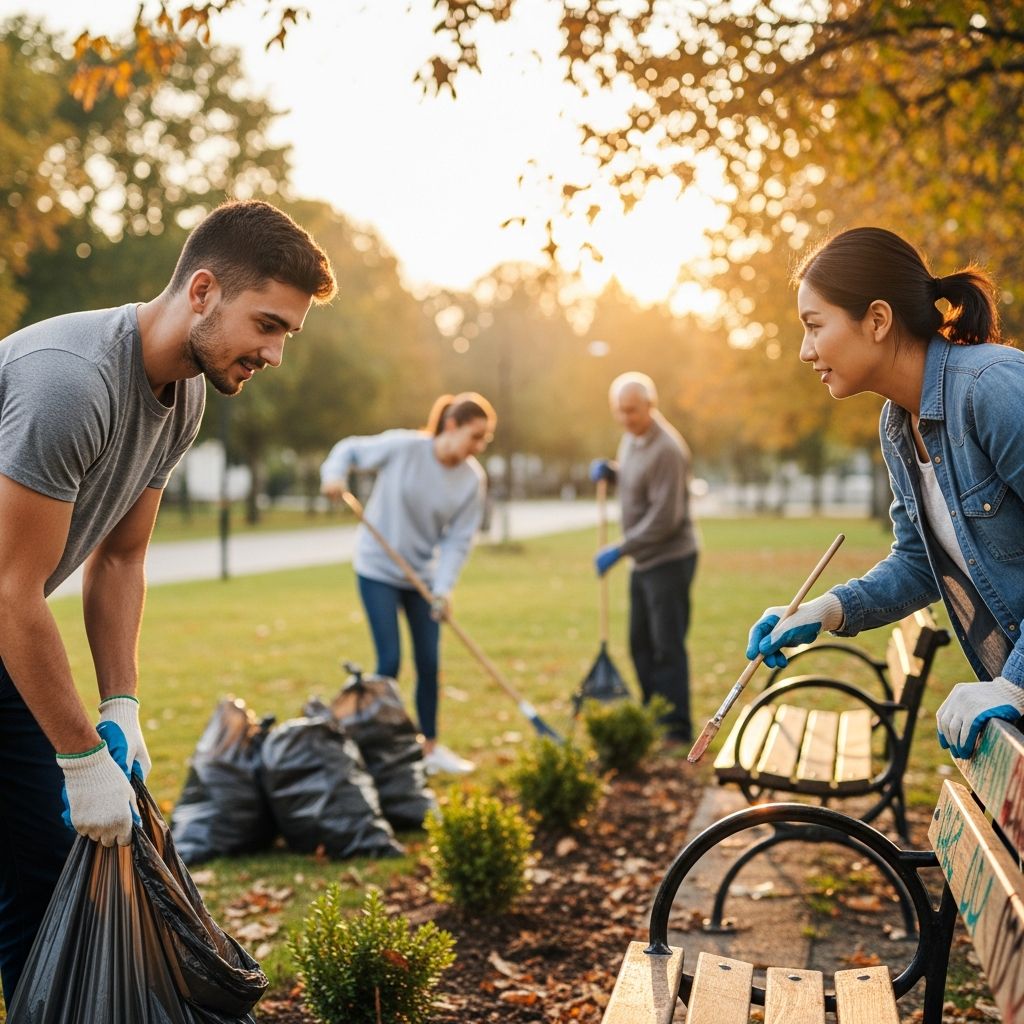
Assignments vary by jurisdiction, crime nature, and available opportunities, but they universally prioritize public good. Participants might clean parks, assist food banks, support literacy initiatives, maintain recycling centers, or aid senior programs. The key is relevance: a vandalism convict could restore graffiti-marred public spaces, directly countering their offense’s harm.
Corporate offenders or specific-task orders add flexibility; businesses might fund community projects, while individuals tackle designated duties. Hours range widely—typically 100 to 500 within a year—set by judicial discretion (68% of courts) or formulas converting fines to service time.
| Crime Type | Example Assignment | Typical Hours |
|---|---|---|
| Vandalism/Petty Theft | Public space cleanup, park maintenance | 50-200 |
| DUI/Reckless Driving | Roadside cleanup, victim impact panels | 90-300 |
| Shoplifting | Food bank sorting, charity store work | 40-150 |
| Drug Possession (Minor) | Mentoring programs, awareness campaigns | 100-400 |
This table illustrates common pairings, drawn from national court surveys, highlighting restorative intent.
How Community Service Integrates with Broader Sentencing
Beyond isolation, service often pairs with probation, parole, or fine alternatives. In diversion programs, completing hours can lead to charges dismissal, preserving records. Probation conditions might require 50 hours alongside monitoring, as in reckless driving cases with property damage.
Federal courts treat it as a probation adjunct, with probation officers matching offenders to agencies based on sentencing goals. This oversight ensures suitability, like assigning skilled individuals to meaningful roles. Some jurisdictions convert unpaid fines to hours, easing burdens on low-income defendants per DOJ recommendations.
Operational Framework: Oversight and Providers
Courts delegate provider identification variably: 41% via probation agencies, 32% defendant-sourced, 16% community organizations, and 13% court-direct. Compliance reporting favors defendant submissions (61%) or program logs, culminating in hearings.
Probation officers play pivotal roles, orienting agencies and verifying fit. Time frames accommodate employment and family needs, promoting completion rates. Nonprofits like soup kitchens or conservation groups host most work, valuing the labor while advancing missions.
Benefits and Effectiveness for Offenders and Society
For communities, service yields free labor—equivalent to millions in value annually—enhancing public spaces and services. Offenders gain skills, empathy, and networks, reducing recidivism through accountability and purpose. Studies affirm its deterrent effect, as visible amends underscore consequences.
Restorative justice principles shine: offenders confront harm, fostering rehabilitation over warehouse-style punishment. It’s cost-effective, sidestepping incarceration expenses, and equitable when substituting fines.
Challenges in Implementing Community Service
Variability breeds inconsistencies; mandate lengths differ sans national standards, risking inequity. Transportation, health issues, or provider shortages hinder access, especially rurally. Non-compliance—failure to complete hours—triggers penalties like jail conversion or extended probation.
Critics note potential exploitation, though regulations prevent it. Ensuring safety and appropriateness remains paramount, with officers vetting placements.
Legal Requirements and Defendant Responsibilities
Participants log hours meticulously, often via forms or apps, submitting proofs promptly. No pay is allowed, preserving punitive nature. Courts specify deadlines, violations of which invite sanctions. Legal counsel can negotiate terms, advocating for feasible schedules.
Verification processes include agency sign-offs and officer audits, ensuring authenticity.
Frequently Asked Questions About Community Service
Can community service replace jail time entirely?
Yes, for eligible non-violent offenses, it’s a common alternative, especially in diversion or plea deals, avoiding incarceration while fulfilling justice.
How many hours is typical for a first offense?
Ranges from 40-200 hours, depending on crime severity and jurisdiction, completable within 6-12 months to balance punishment and life stability.
What if I can’t complete the hours due to work?
Courts often adjust for employment/family via extensions; notify your officer early to avoid violations.
Is community service available for felonies?
In limited cases, about 33% of courts use it for non-violent felonies, per surveys, as probation conditions.
Do I get paid for community service?
No, it’s unpaid by definition, distinguishing it from employment; compensation voids the sanction.
Future Directions in Community Service Sentencing
Reforms emphasize equity, like standardized conversions and expanded virtual options. Integration with tech for tracking promises efficiency. As justice evolves toward restoration, community service’s role likely grows, blending punishment with societal reintegration.
References
- Community Service: Understanding Its Legal Definition — USLegalForms. Accessed 2026. https://legal-resources.uslegalforms.com/c/community-service
- Community Service Definition, Types & Examples — Study.com. Accessed 2026. https://study.com/learn/lesson/community-service-types-examples.html
- What is community service? Simple Definition & Meaning — LSD.Law. Accessed 2026. https://lsd.law/define/community-service
- Court-Ordered Community Service — Center for Justice Innovation. 2019-11-05. https://www.innovatingjustice.org/wp-content/uploads/2019/11/community_service_report_11052019_0.pdf
- Community Service — United States Courts (NH Probation). Accessed 2026. https://www.nhp.uscourts.gov/sites/nhp/files/ccservice.pdf
- Community Service — LA Criminal Defense Attorney. Accessed 2026. https://www.lacriminaldefenseattorney.com/legal-dictionary/c/community-service/
- Community Service by Offenders — Office of Justice Programs (OJP). Accessed 2026. https://www.ojp.gov/ncjrs/virtual-library/abstracts/community-service-offenders-0
Similar Articles








Read full bio of medha deb