
Common Elder Scams and How to Avoid Them
A practical guide to spotting fraud, slowing down pressure tactics, and protecting older adults.
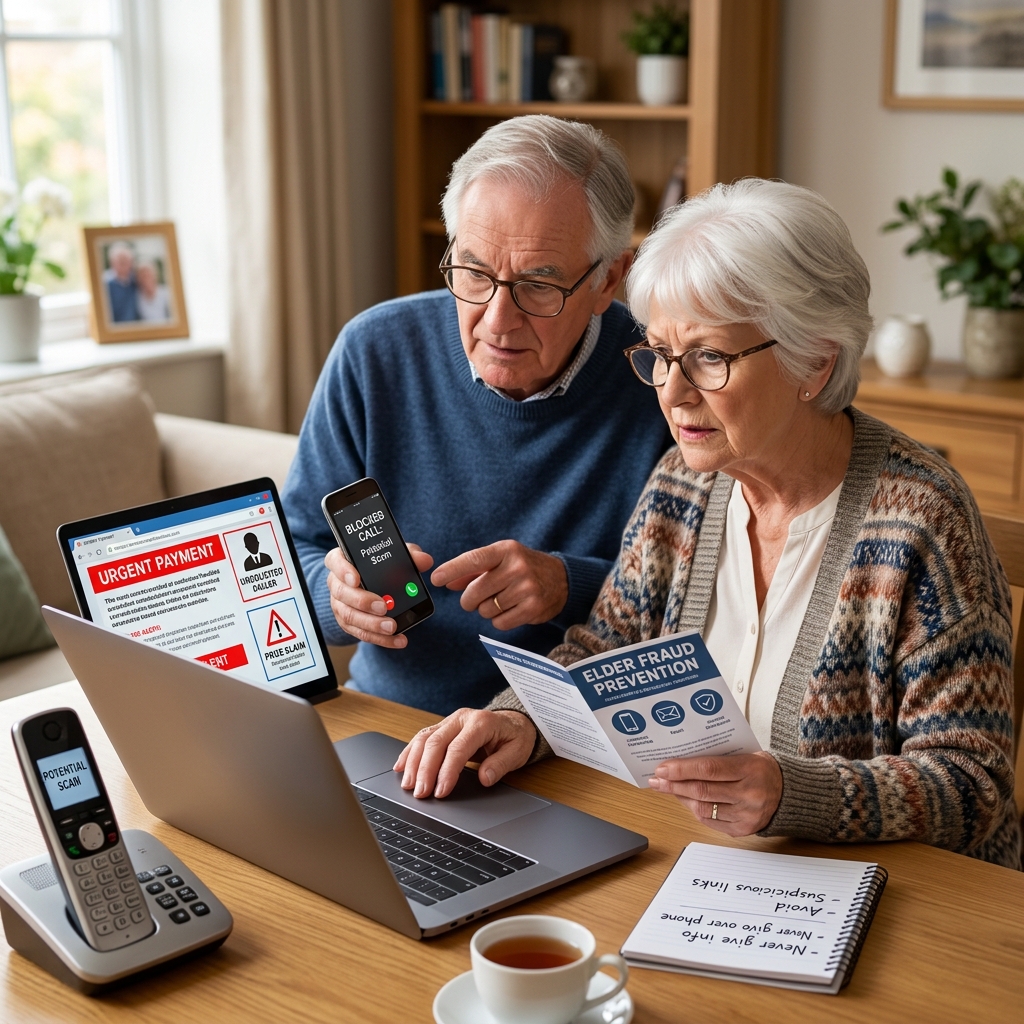
Scammers often target older adults because they may have savings, own property, or be more likely to answer unfamiliar calls and messages. Fraud schemes change constantly, but many rely on the same tactics: urgency, fear, secrecy, and pressure to send money quickly. Consumer protection and financial institutions regularly warn that older adults are frequent targets of impersonation scams, grandparent scams, tech-support fraud, investment fraud, and other schemes that exploit trust or confusion.
The good news is that many of these scams become easier to spot once you know their patterns. A clear understanding of the warning signs, combined with a few simple habits, can reduce the chance of loss and make it easier to respond before damage spreads.
Why older adults are often targeted
Fraudsters do not usually choose victims at random. They often look for people who may be reachable by phone, responsive to polite conversation, willing to help a family member in crisis, or less comfortable verifying online messages and financial requests.
Older adults may also be targeted because a scammer believes they are more likely to have retirement savings, home equity, or medical and government benefits that can be manipulated. In addition, some scams rely on social isolation: if a person does not have a nearby support network, the criminal may seem like the only source of help in an urgent situation.
The most common scam patterns
Many scams aimed at seniors fall into a handful of recurring categories. The names vary, but the underlying method is usually the same: create a believable story, make the victim act fast, and demand a payment method that is difficult to reverse.
1. Impersonation and government-ruse scams
One of the most common strategies is pretending to be from a trusted institution. Scammers may claim to represent a bank, Medicare, the Social Security Administration, the IRS, a utility company, or even a local police department. The message may say that an account is frozen, a tax issue must be resolved, a medical benefit needs verification, or a suspicious charge must be stopped immediately.
The purpose is to push the victim into sharing a Social Security number, account login, one-time passcode, or payment. Official agencies and legitimate businesses generally do not demand secrecy, threaten arrest over the phone, or insist that a caller must stay on the line while money is moved.
2. Grandparent and emergency scams
In a grandparent scam, a caller pretends to be a grandchild or another loved one who is in trouble. The story may involve car repairs, an arrest, an emergency trip, overdue rent, or a medical bill. The scam often begins with a question such as “Do you know who this is?” so the criminal can borrow the victim’s voice memory or family assumptions.
What makes this scam effective is emotional pressure. The victim is encouraged to act before confirming the story with other relatives. The caller may also beg for secrecy and request payment through wire transfer, gift cards, or another method that is hard to trace.
3. Tech-support and device-fix scams
Another common fraud involves pop-up warnings, fake antivirus alerts, or unsolicited phone calls claiming that a computer has been hacked. The scammer may ask the victim to grant remote access, download software, or pay for a repair that is unnecessary or malicious.
In some versions, the criminal says the victim’s bank or online accounts are at risk and instructs them to transfer money to a supposedly secure account. The FTC has warned that these “protect your money” stories are fake; a legitimate institution will not ask a customer to move funds to keep them safe from fraud.
4. Investment and cryptocurrency scams
Investment fraud can be especially costly because the money may be difficult or impossible to recover. Scammers often promise unusually high returns, no-risk opportunities, exclusive access, or a special market insight that others do not have.
These offers may come by phone, email, social media, or messaging apps. Some fraudsters build trust over time before introducing a fake investment, while others use polished websites, fabricated statements, or pressure to “get in now” before the opportunity disappears. Cryptocurrency, fraudulent companies, and fake account transfers are among the tools cited by financial institutions warning older adults about elder fraud.
5. Prize, sweepstakes, and lottery scams
Few things are more tempting than news of an unexpected win. Scammers exploit that excitement by telling victims they have won a prize, inherited money, or qualified for a special drawing. The catch is always the same: the person must pay a fee, tax, or processing charge first.
These schemes frequently use official-looking documents, fake check deposits, or promises of a larger payout after a small payment is made. If someone has to send money to receive money, the claim should be treated as suspicious.
6. Charity, romance, and relationship-based fraud
Some scams are built around trust, sympathy, or companionship rather than a fake prize or a phony bill. A scammer may pose as a charity fundraiser, a romantic interest, a caregiver, or a new friend who gradually asks for help with emergencies or travel costs.
These scams can be difficult to detect because they often develop slowly. The criminal may spend time building emotional connection, then introduce a crisis and request money through a method that cannot easily be reversed. Any request to keep the relationship secret or to pay quickly should be treated as a warning sign.
Red flags that should raise suspicion
Although the stories differ, many scams share the same warning signs. Recognizing these signs early is one of the best ways to avoid loss.
- Unexpected contact from a person or organization you did not reach out to first.
- Pressure to act immediately without time to think or verify.
- Requests for secrecy or instructions not to tell family members, bankers, or police.
- Unusual payment methods such as gift cards, cryptocurrency, wire transfers, or payment apps.
- Requests for sensitive information like passwords, Social Security numbers, Medicare numbers, or one-time codes.
- Claims that money must be moved to protect it from theft or a security problem.
How to respond before money is lost
Fraud prevention works best when a person slows the interaction down. If a request feels off, the safest move is to pause and verify it through a separate channel. That usually means hanging up, closing the message, or ignoring the pop-up and contacting the company or family member through a known number or trusted method.
It also helps to build habits that reduce risk before a scam appears. Financial institutions and consumer agencies recommend designated trusted contacts, careful password practices, and a simple rule: never send money just because a stranger says the matter is urgent.
| Situation | Safer response |
|---|---|
| Caller claims to be a relative in trouble | Hang up and contact the relative directly using a number you already know. |
| Message says your account is at risk | Log in through the institution’s official app or website, not the link in the message. |
| Someone asks you to move money to “protect” it | Do not transfer funds; call the bank or agency using a verified number. |
| Prize offer requires a fee first | Treat it as suspicious and do not pay to collect winnings. |
Practical habits that reduce fraud risk
Simple routines can make a big difference. Families and older adults can lower risk by reviewing account statements regularly, using strong passwords, enabling multi-factor authentication, and storing important contact numbers separately from incoming messages.
Financial institutions also recommend adding a trusted contact or trusted family member who can help spot unusual activity. In some cases, a financial power of attorney or successor trustee can create a clearer plan for future decisions if health or memory issues make independent management harder.
- Keep personal and financial information private unless you initiated the contact.
- Verify phone numbers, websites, and email addresses before responding.
- Discuss suspicious requests with a family member, banker, attorney, or advisor before acting.
- Use account alerts so unusual withdrawals or transfers are noticed quickly.
- Destroy sensitive papers before discarding them to reduce identity theft risk.
What to do after a scam is suspected
If money has already been sent, speed matters. Contact the bank, card issuer, payment service, or wire-transfer provider immediately and explain that the payment may involve fraud. Reporting to local law enforcement and relevant consumer protection resources can also help limit additional harm.
If account credentials or personal identifiers were shared, the victim should change passwords, place fraud alerts or freezes where appropriate, and monitor statements closely for new activity. When Medicare, tax, or Social Security information is involved, the affected person should also check for follow-up notices or unfamiliar claims activity.
FAQs
What is the biggest warning sign of an elder scam?
The strongest warning sign is urgent pressure to send money or reveal personal information before you can verify the request.
Why do scammers ask for gift cards or cryptocurrency?
These payment methods are hard to reverse, which makes them useful for criminals who want fast, difficult-to-trace payments.
Should I call the number in the message to confirm it?
No. Use a number or website you already know is real, because fraudsters often control the contact information they provide.
Can older adults protect themselves without becoming overly cautious?
Yes. The goal is not to avoid every contact, but to verify unfamiliar requests, slow down financial decisions, and involve trusted help when something seems unusual.
Closing thought
Most elder scams succeed by making a false story feel immediate and personal. Once the pattern is recognized, the answer is often straightforward: stop, verify, and involve a trusted second set of eyes before any money changes hands.
References
- Elder fraud: Avoiding common scams and preventive steps to take — U.S. Bank. 2025. https://www.usbank.com/retirement-planning/financial-perspectives/elder-fraud.html
- Top 10 Scams Targeting Seniors and How to Avoid Them — Regions Bank. 2025. https://www.regions.com/insights/wealth/article/scams-targeting-seniors
- Common Scams Against the Elderly — Florida Sheriffs Association. 2025. https://flsheriffs.org/blog/entry/public-safety-tip-common-scams-against-the-elderly/
- Top 10 Scams Targeting Seniors — Georgia Department of Law, Consumer Protection Division. 2025. https://consumer.georgia.gov/top-10-scams-targeting-seniors
- 10 Tips to Protect Seniors from Being Scammed — Hebrew SeniorLife. 2025. https://www.hebrewseniorlife.org/blog/10-tips-to-protect-seniors-from-being-scammed
- False alarm, real scam: how scammers are stealing older adults’ life savings — Federal Trade Commission. 2025-08. https://www.ftc.gov/news-events/data-visualizations/data-spotlight/2025/08/false-alarm-real-scam-how-scammers-are-stealing-older-adults-life-savings
- Top 5 Financial Scams Targeting Older Adults and How to Avoid Them — National Council on Aging. 2025. https://www.ncoa.org/article/top-5-financial-scams-targeting-older-adults/
- Protecting Older Adults from Fraud and Financial Exploitation — Consumer Financial Protection Bureau. 2025. https://www.consumerfinance.gov/consumer-tools/educator-tools/resources-for-older-adults/protecting-against-fraud/
Similar Articles








Read full bio of medha deb




