
Commercial Eviction: Practical Guide For Landlords And Tenants
Understand the steps, deadlines, and court process behind commercial evictions.
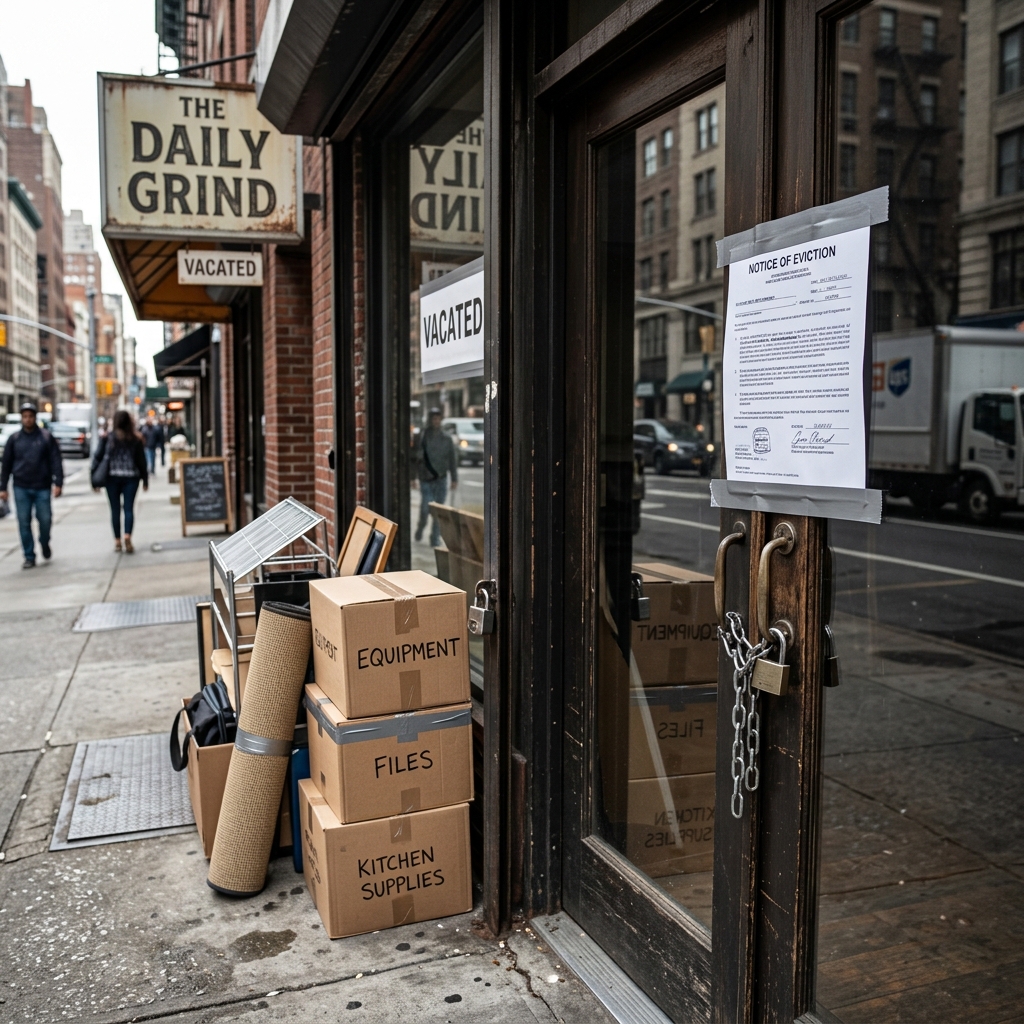
Commercial eviction is the legal process a landlord uses to recover business property when a tenant breaks the lease or stays after the lease ends. The process is more formal than a simple demand to leave, and it usually requires written notice, a court case, and an order before anyone is removed from the space.
For landlords, the central goal is to regain possession while following the lease and state law. For tenants, the priority is to understand deadlines, preserve evidence, and respond quickly before the dispute turns into a judgment. Because commercial leases are often negotiated in detail, the lease itself can shape what happens next.
What makes a commercial eviction different
A commercial eviction involves property used for business purposes, such as retail stores, offices, restaurants, warehouses, and service locations. Unlike many residential cases, commercial disputes often assume the parties are more sophisticated, so the lease language may control many of the rights and remedies.
- Commercial tenants may have fewer statutory protections than residential tenants.
- The lease may shorten notice periods or define special default procedures.
- Rent, late fees, repair obligations, and use restrictions are often negotiated in advance.
- Some leases allow the landlord to pursue money damages in addition to possession.
Even so, landlords still need to follow the law that applies in the property’s state and county. A mistake in notice, filing, or service can delay the case or undermine the eviction entirely.
Common reasons a landlord starts the process
Most commercial eviction cases begin after a lease default. The exact definition of default depends on the lease, but a few issues appear frequently.
- Nonpayment of rent: The tenant fails to pay base rent, common area charges, taxes, insurance, or other amounts due under the lease.
- Breach of use rules: The tenant uses the space for an unauthorized purpose or violates occupancy limits.
- Failure to maintain the property: The tenant does not keep the premises in the condition required by the lease.
- Unauthorized alterations: The tenant makes changes without approval.
- Holdover after expiration: The tenant remains in the space after the lease term ends.
Some leases also treat bankruptcy filings, repeated late payments, or failure to provide insurance as default events. In those situations, the lease language and local law both matter.
The notice stage: giving the tenant a chance to fix the problem
Before filing in court, a landlord typically must send a formal notice describing the problem and giving the tenant a chance to cure it, move out, or both. The notice requirement is important because courts often expect proof that the tenant had clear written warning before the lawsuit began.
The notice should usually identify the tenant, the property, the lease violation, and the deadline for compliance. In some cases, the landlord can demand immediate possession if the lease and state law allow it; in other cases, the tenant gets a short period to cure the default.
| Type of issue | Typical notice purpose | Possible tenant response |
|---|---|---|
| Unpaid rent | Demand payment or surrender possession | Pay the amount due if a cure right exists |
| Lease violation | Describe the breach and require correction | Correct the violation or negotiate a resolution |
| Holdover tenancy | Demand that the tenant vacate | Move out or challenge the termination |
Delivery matters as much as content. Landlords often send notices in the method required by the lease, such as certified mail, personal delivery, or posting and mailing. Keeping proof of delivery helps if the case later reaches court.
When a court case becomes necessary
If the tenant does not comply with the notice, the landlord may file an eviction action, often called an unlawful detainer or summary possession case depending on the state. This lawsuit asks the court to decide whether the landlord has the right to possession.
The complaint normally includes the lease, the default, the notice, and the relief requested. Some landlords also ask for past-due rent, late charges, attorney’s fees, and court costs if the lease permits those remedies. The filing does not itself remove the tenant; it only starts the court process.
After filing, the tenant must be served with the lawsuit in the manner required by court rules. Service is a critical step because a tenant cannot fairly defend a case that was never properly delivered.
What happens after the case is filed
Once the tenant is served, the court sets deadlines for an answer, motion practice, or a hearing. The exact timeline depends on local rules and the type of commercial case, but the process is usually designed to move faster than ordinary civil litigation.
At this stage, several paths are common:
- The tenant pays what is owed, and the parties dismiss the case.
- The parties negotiate a written settlement that gives the tenant time to leave.
- The tenant contests the claim and presents defenses in court.
- The landlord seeks default judgment if the tenant does not respond on time.
A commercial tenant should act quickly after receiving court papers. Waiting too long can lead to a default judgment, which is often much harder to undo than a dispute handled early.
Evidence that often matters in court
Commercial eviction cases are document-heavy. Judges typically want to see the lease, the notice, payment records, and any communications that show how the dispute developed.
- The signed lease and any amendments
- Rent ledger or account statement
- Copies of notices and proof of delivery
- Email chains or letters about the default
- Photos, inspection reports, or repair records
- Evidence of insurance, permits, or use restrictions if those issues are disputed
For landlords, organized records can show that the tenant defaulted and that the landlord followed the required procedure. For tenants, records can show payment, excuse the alleged breach, or prove that the landlord waived strict enforcement by accepting repeated late payments or failing to object promptly.
Possible defenses a tenant may raise
A tenant is not powerless once an eviction begins. Depending on the facts and the law, the tenant may have defenses to the claim for possession or to the money demanded.
- Improper notice: The landlord gave the wrong deadline, used the wrong method, or failed to describe the default clearly.
- No actual default: The tenant paid on time or complied with the lease.
- Landlord breach: The landlord failed to meet a major obligation that affected the tenant’s use of the space.
- Waiver or acceptance: The landlord accepted conduct inconsistent with immediate eviction, such as repeated late payments without objection.
- Retaliatory or discriminatory conduct: The landlord acted for an unlawful reason rather than a lease violation.
Some defenses are stronger against possession than against money claims. A tenant may still owe rent even if the eviction itself is delayed or dismissed. The legal posture depends on the state statute and the specific lease language.
How settlement often works
Many commercial cases resolve before trial. Settlement can save time, reduce legal fees, and avoid disruption to the business. A negotiated agreement may allow the tenant to remain temporarily, catch up on arrears, or move out by a fixed date.
Useful settlement terms often include a clear move-out deadline, a payment schedule, a release of claims, and a statement about the condition in which the property must be returned. If the tenant is leaving, the parties should also address security deposits, equipment removal, signage, and restoration obligations.
Any settlement should be written and signed. Verbal promises are difficult to enforce once the court file closes or a default judgment is entered.
Judgment and enforcement
If the landlord wins, the court may issue a judgment for possession and, in some cases, a money judgment for unpaid amounts. The landlord still cannot simply change the locks or remove the tenant without following the enforcement steps required by law.
Enforcement commonly involves the sheriff, marshal, or other authorized officer. The officer may post a final notice, supervise removal, or authorize the landlord to regain possession. Self-help eviction is risky and often unlawful if it bypasses the court process.
Once possession is restored, the landlord should document the condition of the property, secure the premises, and follow lease and state-law rules about abandoned property. If equipment, inventory, or records remain inside, the landlord may need to store or handle them in a legally required manner.
Practical steps for landlords and tenants
Both sides benefit from acting early. The faster the issue is addressed, the more options remain.
- Review the lease carefully before taking action.
- Preserve every notice, invoice, and payment record.
- Use written communication instead of relying only on phone calls.
- Check local eviction rules before assuming the timeline.
- Consider negotiation before the case becomes expensive.
Landlords should make sure the notice matches the lease and local law. Tenants should avoid ignoring papers, because missed deadlines can lead to a fast judgment. In commercial matters, delay often weakens leverage on both sides.
Frequently asked questions
Can a landlord lock out a commercial tenant without going to court?
Usually no. In most situations, the landlord must use the court process and obtain lawful possession before removing the tenant or excluding access.
Does a commercial tenant always get a chance to cure a default?
No. Whether a cure period exists depends on the lease and the governing state law. Some defaults can be cured quickly, while others may lead directly to termination.
Can the landlord collect unpaid rent and still evict the tenant?
Yes, if the lease and law allow it. Many landlords seek both possession and money damages in the same case or through related claims.
What should a tenant do after receiving an eviction notice?
The tenant should read the notice carefully, review the lease, gather payment records, and respond before the deadline. Early legal advice can be important in a commercial dispute.
Why does the lease matter so much in a commercial case?
Because commercial leases often define default, notice, remedies, cure rights, attorney’s fees, and holdover rules in detail. The court usually starts by reading the contract the parties signed.
References
- Unlawful Detainer — Legal Information Institute, Cornell Law School. 2026-01-01. https://www.law.cornell.edu/wex/unlawful_detainer
- Residential Landlord-Tenant Law — Legal Information Institute, Cornell Law School. 2026-01-01. https://www.law.cornell.edu/wex/residential_landlord-tenant_law
- Property Law: Landlord and Tenant — Legal Information Institute, Cornell Law School. 2026-01-01. https://www.law.cornell.edu/wex/landlord_and_tenant
- Uniform Commercial Code Article 2A — Uniform Law Commission. 2025-10-01. https://www.uniformlaws.org/committees/community-home?CommunityKey=9b7d4a75-ff02-4b4d-bf2a-2d65b0fce1f7
- State Court Eviction Procedures — National Center for State Courts. 2025-06-15. https://www.ncsc.org/topics/access-and-fairness/eviction-procedures
Similar Articles








Read full bio of Sneha Tete


