
Colorado Wills: Key Rules for Valid Estate Planning
Understand how wills work in Colorado, from legal requirements to intestate succession, to protect your family and your assets.
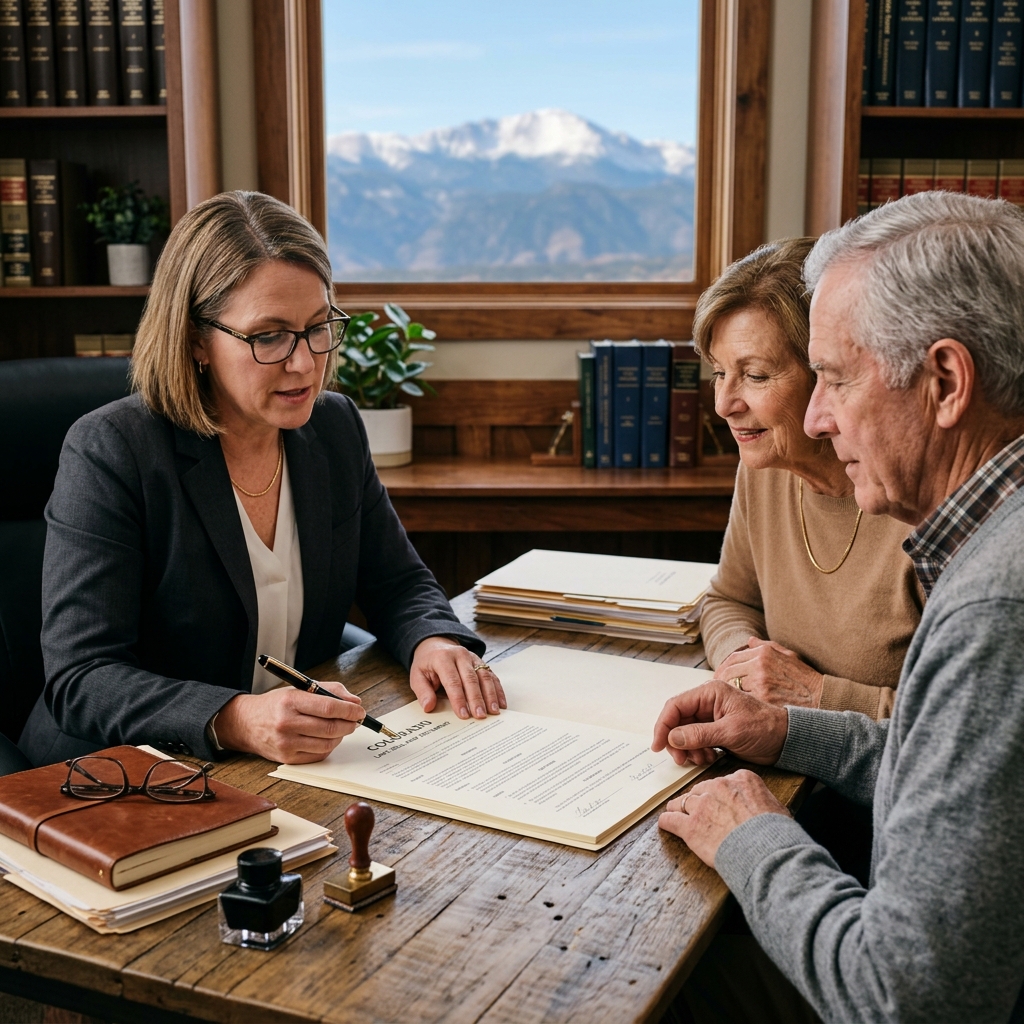
Creating a valid will in Colorado is one of the most important steps you can take to control what happens to your property and to care for the people who depend on you after you die. Colorado follows the Colorado Probate Code, which sets out specific rules for how wills must be drafted, signed, and interpreted. If those rules are not followed, your document may be treated as invalid, and your estate will instead be divided under Colorado’s intestate succession laws.
This guide explains the main legal requirements for wills in Colorado, the role of witnesses and notarization, how handwritten (holographic) wills are treated, and what happens if someone dies without any will at all. It is for general information only and is not a substitute for legal advice.
1. Why Having a Colorado Will Matters
Without a legally enforceable will, Colorado law decides who receives your property. These default rules may not match your preferences, especially in blended families or where you want to benefit people or charities outside your closest relatives.
1.1 What a Will Can Do for You
A properly drafted will can address several key issues:
- Direct property distribution to specific people, charities, or institutions.
- Choose your personal representative (sometimes called an executor) to manage your estate in probate.
- Address minor children by coordinating with guardianship and trust planning.
- Coordinate with other arrangements, such as beneficiary designations, joint ownership, and trusts.
In Colorado, the will also guides the court and your personal representative during the probate process, which begins when someone files the necessary documents with the district court in the county where the person lived.
1.2 Risks of Dying Without a Will (Intestacy)
When a person dies without a valid will, they are said to have died intestate. Colorado statutes then control who inherits, with priority for spouses, children, and other close relatives.
Consequences of intestacy include:
- You lose the ability to tailor inheritances to individual needs or circumstances.
- Non-relatives, such as unmarried partners or close friends, generally receive nothing.
- Blended families may see complex and unexpected distributions between a surviving spouse and children from different relationships.
In rare cases where there are no living relatives at all, the estate can pass to the State of Colorado under intestacy rules.
2. Legal Requirements for a Valid Will in Colorado
Colorado law sets out specific formalities that must be followed for a will to be considered valid. These are found in the Colorado Revised Statutes, including Section 15-11-502 of the Colorado Probate Code.
| Requirement | General Rule in Colorado |
|---|---|
| Minimum age | Testator must be at least 18 and of sound mind. |
| Form of the will | Must be in writing; oral wills are not recognized. |
| Signature | Signed by the testator or by someone else at the testator’s direction and in their conscious presence. |
| Witnesses / Notarization | Either signature by at least two witnesses or acknowledgment before a notary or similar official. |
| Holographic wills | Handwritten wills may be valid if the signature and material portions are in the testator’s handwriting. |
2.1 Writing Requirement
Colorado law requires that a will be in writing. Audio recordings, purely digital documents that do not meet statutory standards, or purely oral statements do not qualify as valid wills. The writing can be typed or handwritten, but the form you choose affects which additional rules apply.
2.2 Signature Rules
The testator, the person making the will, must sign the document. If the testator is unable to sign personally, another person may sign in the testator’s name, but only:
- In the testator’s conscious presence, and
- At the testator’s express direction.
Colorado courts look for evidence that the testator understood they were approving the document as their will at the time it was signed.
2.3 Witnesses and Notarization
Colorado provides two main ways to satisfy execution formalities for a typical (non-holographic) will:
- Witnessed will: At least two individuals sign the will within a reasonable time after witnessing the testator sign or acknowledge the will.
- Notarized will: The testator acknowledges the will before a notary public or other authorized official.
Best practice is to use two adult, disinterested witnesses (people who are not receiving anything under the will) to reduce later challenges and to keep the probate process smoother.
2.4 Testamentary Capacity and Voluntariness
Even if a will meets all formalities, it can be challenged if the testator lacked the required mental capacity or if they were unduly influenced. Colorado requires that the testator:
- Understand the nature and extent of their property.
- Recognize the natural objects of their bounty (such as close family members).
- Appreciate that they are making a will and how it disposes of their property.
Wills signed under duress, fraud, or coercion can be contested and potentially invalidated during probate.
3. Holographic (Handwritten) Wills in Colorado
Colorado is one of the states that recognizes holographic wills, which are wills that are handwritten by the testator and do not necessarily have witnesses. However, these documents must meet specific conditions.
3.1 Legal Standards for Holographic Wills
Under Colorado Revised Statutes, a will that does not comply with the usual witness or notarization rules may still be valid as a holographic will if:
- The signature is in the testator’s handwriting.
- The material portions of the document—such as who receives what—are in the testator’s handwriting.
- There is evidence of the testator’s intent that the document function as a will, which can be shown by extrinsic evidence if needed.
These requirements help courts verify that the document was genuinely created and intended by the person whose estate is being distributed.
3.2 Practical Limits of Handwritten Wills
While holographic wills can be valid, they often pose practical challenges:
- Language may be unclear, leading to disputes over interpretation.
- Important issues, such as naming a personal representative or coordinating with non-probate transfers, may be overlooked.
- Courts may need additional evidence to prove intent, which can delay probate.
As a result, handwritten wills are most safely used for very simple estates or as temporary solutions, not as long-term estate plans.
4. What Happens If There Is No Will: Colorado Intestate Succession
Colorado’s intestate succession rules are designed to approximate what many people might do by will, but they cannot reflect individual wishes in detail. These rules vary depending on which relatives survive the deceased.
4.1 Typical Intestate Distribution Patterns
Although the exact statutory language is technical, common scenarios include:
- Spouse only, no children or parents: The surviving spouse generally inherits the entire estate.
- Spouse and children of that marriage, no other children: The spouse often receives the entire estate.
- Spouse and children from a previous relationship: The spouse receives a defined initial amount plus a share of what remains; the rest goes to the children.
- Children only, no spouse: Children typically share the estate equally.
- No spouse or children: Parents, then siblings, then more distant relatives may inherit, depending on who survives.
These rules demonstrate that failing to make a will leaves your family relying entirely on statutory formulas, which may not match your expectations, especially in second marriages or complex family situations.
4.2 When the State Receives the Estate
If there are no surviving spouses, descendants, parents, siblings, or more distant blood relatives, Colorado law allows the estate to pass to the state. This is rare, but it underscores the importance of at least basic estate planning.
5. Probate and Lodging the Will in Colorado
Even a well-drafted will must go through certain procedures before assets can be distributed. In Colorado, probate begins only when someone opens a case with the district court; it does not start automatically at death.
5.1 Lodging the Will
Colorado law requires that a decedent’s will be lodged with the district court in the county where the person lived within a defined period after death, commonly cited as ten days. Lodging the will allows the court and interested parties to verify the document and start appropriate proceedings.
5.2 Opening a Probate Case
Typically, a family member or another interested person:
- Files a petition in the district court where the decedent lived.
- Asks to be appointed as the personal representative.
- Provides the will and supporting documentation.
Once appointed, the personal representative gathers assets, pays debts and taxes, and distributes remaining property according to the will or, if there is no will, according to intestate succession rules.
5.3 Alternatives for Small Estates
Colorado offers simplified procedures for certain smaller estates. When the value of the personal property outside joint tenancy or designated beneficiaries is below a statutory threshold and there is no real estate, a qualified person may collect property with a sworn affidavit instead of full probate. This option can reduce cost and delay, but it still requires careful attention to legal requirements.
6. Common Reasons a Colorado Will May Be Challenged or Void
Even if a will appears valid, it may be attacked in court. Recognizing common pitfalls can help reduce the risk of a will being set aside.
6.1 Typical Grounds for Disputes
Among the more frequent issues are:
- Lack of testamentary capacity, such as cognitive impairment at the time of signing.
- Undue influence, where someone exerts improper pressure on the testator.
- Improper execution, such as missing signatures or failure to comply with witness or notarization rules for non-holographic wills.
- Fraud or forgery, including altered documents or fake signatures.
Careful adherence to formalities and transparent planning can reduce the likelihood of such challenges.
6.2 Best Practices to Protect Your Will
While each situation is unique, some broadly useful practices include:
- Use two disinterested adult witnesses and consider notarization, even if not strictly required.
- Maintain a clear written list of assets and intended beneficiaries to support your plan.
- Communicate your general intentions to family members to avoid surprise and suspicion.
- Review and, if necessary, update your will after major life events such as marriage, divorce, birth of children, or substantial changes in property.
7. Practical Steps for Creating a Colorado Will
Colorado law does not require you to hire a lawyer, but professional guidance is often helpful, particularly for complex estates. Whatever method you choose, consider these steps:
7.1 Preparing to Draft Your Will
- Inventory your assets: Real estate, financial accounts, business interests, personal property, and digital assets.
- Identify your beneficiaries: Family members, friends, charities, or other organizations.
- Choose a personal representative: Someone you trust to carry out the will and manage probate.
- Coordinate with other legal tools: Beneficiary designations, joint ownership, powers of attorney, and possible trusts.
7.2 Executing the Will Under Colorado Law
When you are ready to sign:
- Ensure the document is clearly written and reflects your current wishes.
- Sign in the presence of two qualified witnesses or before a notary as allowed by statute.
- Have witnesses sign promptly, after observing you sign or acknowledge the will.
- Store the original in a safe but accessible location and let trusted individuals know where it is.
8. Frequently Asked Questions About Colorado Wills
8.1 Do I need to notarize my will in Colorado?
Colorado law allows wills to be validated either by having two witnesses or by acknowledgment before a notary or similar official. Notarization is not always mandatory, but it can simplify proof of validity during probate and is widely considered best practice.
8.2 Can I make a valid will in Colorado without any witnesses?
Most typed wills should use either witnesses or notarization to meet statutory requirements. However, handwritten holographic wills may be valid without witnesses if the signature and material portions are in your handwriting and other legal conditions are met.
8.3 What if I move to Colorado with a will from another state?
Colorado may recognize wills that were validly executed under the law of another jurisdiction, but questions can arise about interpretation and administration under Colorado’s Probate Code. It is wise to have an existing will reviewed by a Colorado attorney after moving.
8.4 How often should I update my will?
There is no formal schedule, but many practitioners recommend reviewing your will after major life events, such as marriage, divorce, birth or adoption of children, significant changes in assets, or relocation to a new state. Regular updates help ensure your plan still fits your circumstances.
8.5 Is a will enough for my entire estate plan?
A will is a central tool, but it is only one part of a comprehensive estate plan. Other documents, such as financial and medical powers of attorney, living wills, and possibly revocable trusts, can address incapacity, avoid probate for certain assets, and provide ongoing management beyond what a simple will can do.
References
- Colorado Revised Statutes § 15-11-502 (Execution of Wills) — Colorado General Assembly. 2024-01-01. https://law.justia.com/codes/colorado/title-15/colorado-probate-code/article-11/part-5/section-15-11-502/
- Drafting Simple Wills and Probating Small Estates — Denver Bar Association. 2022-08-09. https://www.denbar.org/PORTALS/DBA/repository/mvlupdated/Wills%20Materials.pdf
- ALL ABOUT WILLS — United States Air Force Judge Advocate. 2015-10-30. https://www.usafa.af.mil/Portals/21/documents/Leadership/JudgeAdvocate/All%20About%20Wills.pdf
- What Voids a Will in Colorado? Check These 6 Flaws — Colorado Estate Planning Law Firm. 2023-06-01. https://coloradoestateplan.com/what-voids-a-will/
- Colorado Estate Planning: A 101 Guide — Colorado Capital Management. 2023-04-15. https://coloradocap.com/blog/colorado-estate-planning-a-101-guide/
- 7 Things You Should Know Before Writing a Will in Colorado — Evans Case, LLP. 2022-09-01. https://www.evanscase.com/7-things-you-should-know-before-writing-a-will-in-colorado/
- How to Make a Will in Colorado: A Complete Guide — FreeWill. 2023-02-10. https://www.freewill.com/learn/how-to-make-a-will-in-colorado
Similar Articles








Read full bio of Sneha Tete


