
College Tuition Refunds After Disasters and Pandemics
Understand when colleges must refund tuition and fees after campus closures, online shifts, pandemics, or natural disasters, and how students can protect themselves.
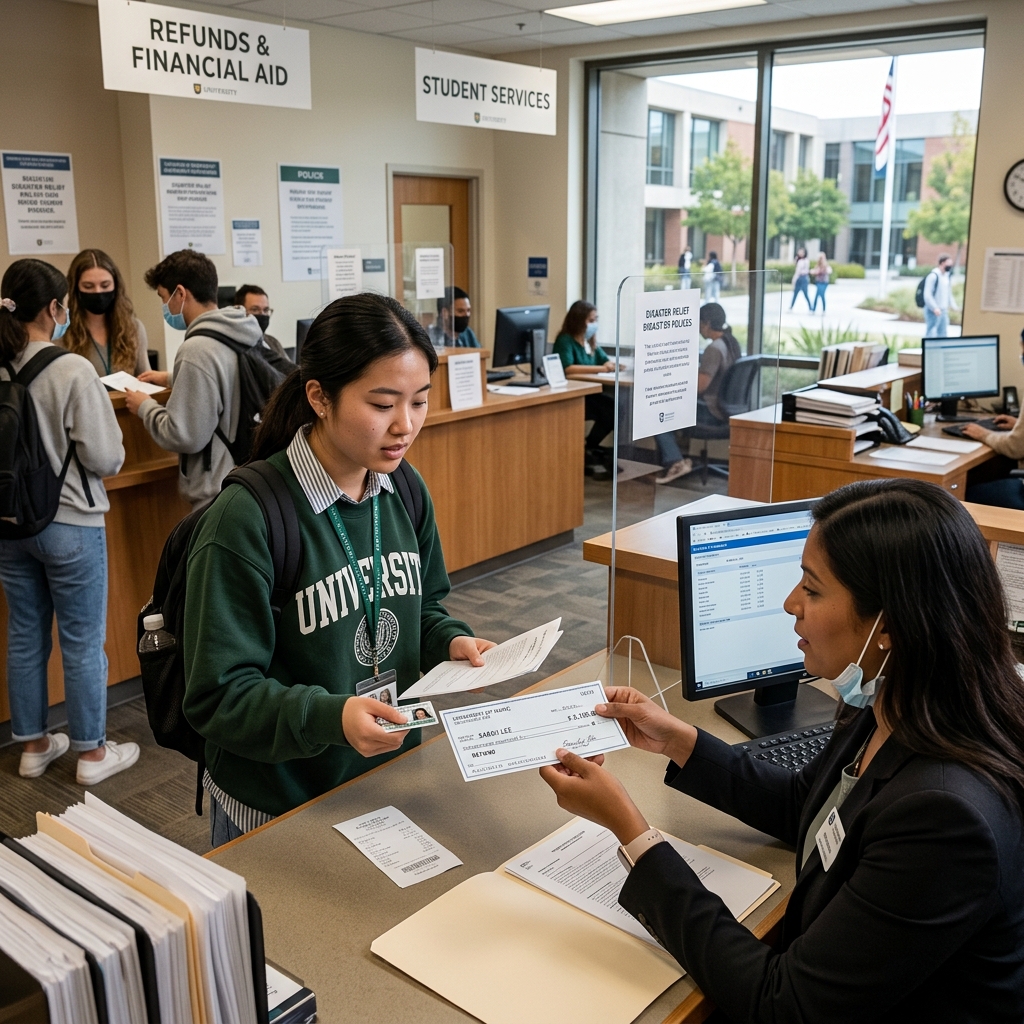
Campus closures and sudden shifts to online learning during events like the COVID-19 pandemic and major natural disasters have forced students and families to ask a difficult question: when do colleges have to refund tuition and fees? This article explains the legal and practical framework behind tuition refunds, how policies typically work, and what steps students can take when their education is disrupted.
Why Tuition Refund Questions Arise During Crises
Colleges operate on the assumption that they will deliver in-person instruction, campus services, and access to facilities for an entire term in exchange for tuition and mandatory fees. When an emergency makes that impossible, students may feel they are paying full price for an experience they no longer receive. Pandemic lockdowns and hurricanes, for example, have led to widespread questions about whether schools must return part of the money students have already paid.
- Pandemics can force all classes to move online for months or longer.
- Natural disasters (such as hurricanes, wildfires, or earthquakes) may damage buildings or make campuses inaccessible.
- Government orders can require closure even when the school itself wants to stay open.
These events raise complex issues of contract law, consumer protection, and educational policy. In many situations, the law does not clearly require a refund, even when students believe the value of their education has been reduced.
Tuition Refund Policies: What Colleges Usually Promise
Most colleges publish a formal tuition refund schedule that applies when a student withdraws from classes or leaves school partway through a term. These policies generally do not guarantee refunds when classes change format or temporarily pause; instead, they address voluntary withdrawal and certain medical or personal emergencies.
Common Refund Schedule Features
Schools typically use a sliding scale for refunds based on how far into the term the student withdraws.[10]
- Full (100%) refund if the student withdraws before classes begin.
- Significant partial refund during the first one to two weeks.
- Rapidly declining refund amounts in weeks three and four.
- No refund at all after approximately the fourth or fifth week of the term.
Specific percentages differ by institution, but the pattern is similar: once a substantial portion of the term has passed, tuition is considered fully earned and is not refunded.[10]
Where Refund Rules Are Published
- Bursar or student accounts web pages.
- Financial services or student financial aid sites.
- Official university catalogs and handbooks.
Students should carefully review these documents because they often govern what the school is legally obligated to offer when circumstances change.
Contract Law and the Student–College Relationship
In most states, courts treat the relationship between a college and its students as a type of contract based on enrollment documents, catalogs, policy statements, and payment of tuition. When students sue for refunds, they usually argue that the institution promised a particular kind of educational experience—such as in-person instruction, access to labs, and campus resources—and did not deliver it.
| Concept | Relevance |
|---|---|
| Offer and Acceptance | Enrollment and payment of tuition may be viewed as accepting the college’s offer. |
| Consideration | The student provides money; the college provides educational services and access. |
| Material Breach | Students argue that losing in-person instruction or facilities is a breach of promised services. |
| Force Majeure / Impossibility | Colleges argue that pandemics and disasters excuse performance or justify modifications. |
Outcomes depend heavily on the specific language of catalogs and policy documents. Some schools explicitly reserve the right to change the method of instruction, close facilities during emergencies, or modify services without providing refunds. Those clauses can significantly weaken students’ legal claims.
Pandemic-Related Lawsuits and Legislative Responses
During the COVID-19 pandemic, thousands of students across the United States filed lawsuits seeking refunds of tuition, fees, and room and board after campuses closed and learning moved online. Many cases argued that students paid for an immersive on-campus experience, including face-to-face teaching, social activities, and facility access, but received only remote instruction from home.
Core Arguments in Tuition Refund Litigation
- Students paid for in-person education and campus life rather than remote coursework.
- Mandatory fees for services such as recreational centers, transit passes, or student organizations were charged even when facilities were closed.
- Room and board charges were retained despite students being required to leave campus housing.
Law firms pursuing these cases have argued that schools should provide prorated refunds to reflect the period when campus services were unavailable.
Example: Limited Liability Statutes
In response to widespread litigation, some states enacted laws specifically limiting colleges’ exposure to refund claims. Massachusetts, for instance, adopted the Higher Education COVID-19 Limited Liability statute, which grants immunity for certain tuition and fee refund claims arising from the spring 2020 term.
Under this law, colleges and universities are shielded from refund claims when:
- The claim concerns tuition or fees for the spring 2020 academic term.
- The alleged harm stems from actions taken in response to the state-declared COVID-19 emergency.
- The school’s actions were reasonably related to protecting public health and complied with federal, state, or local guidance.
- The institution offered remote options that allowed students to complete their coursework in that term.
The law does not protect colleges in cases involving malicious conduct or bad faith, nor does it apply to later semesters beyond spring 2020. This sort of statute shows how rapidly the legal landscape can change when large numbers of refund claims emerge after a disaster or pandemic.
Natural Disasters and Federal Financial Aid Rules
When hurricanes, floods, or other natural disasters disrupt college operations, students may face not only academic uncertainty but also questions about their financial aid and loan obligations. The U.S. Department of Education maintains guidance for students and schools dealing with natural disasters, including special rules for federal student aid.
Adjustments to Federal Aid During Disasters
- Students affected by disasters may receive flexibility in meeting aid eligibility requirements or documenting circumstances.
- Colleges can seek guidance from regional School Participation Teams on how to treat affected students and programs.
- Borrowers can contact loan servicers or the Federal Student Aid Ombudsman for help with repayment issues related to disaster hardship.
These federal policies focus more on aid administration than on tuition refunds, but they can significantly alter the financial burden on students whose campuses have been damaged or closed.
Tuition Refund Insurance: What It Covers—and What It Does Not
Some families try to protect themselves by purchasing tuition refund insurance. This product is designed to reimburse part of the tuition when a student has to withdraw due to serious illness, injury, or certain other covered events. However, its protection is narrower than many people assume.
Typical Scope of Tuition Insurance
- Refunds when a student completes a qualifying withdrawal from school because of medical issues.
- Sometimes coverage for mental health conditions or death of the student, depending on policy terms.
- No coverage for routine academic failure or voluntary transfer to another institution.
Importantly, tuition insurance providers generally do not cover situations where a college changes the method of instruction from in-person to online but continues to operate and grant credit for completed courses.
Room, Board, and Fee Refunds During Closures
Even when colleges refuse to refund tuition, many do provide partial refunds or credits for room, board, and some mandatory fees when campuses close abruptly. When students were sent home during the early months of the COVID-19 pandemic, numerous institutions returned part of housing and meal plan payments because those services became unavailable.
- Housing: Prorated refunds or future credits for unused weeks in dorms.
- Meal Plans: Proportional refunds for dining services students could not use.
- Activity or facility fees: Vary widely; some schools issued refunds, others did not.
Colleges justify keeping some fees on the ground that long-term operating costs continue even when facilities are closed temporarily, but these decisions can become the subject of negotiation or litigation.
Practical Steps for Students Seeking Refunds
Students and families who believe they deserve a refund after a pandemic or natural disaster should approach the issue systematically, starting with the school’s own policies and then considering legal options if necessary.
1. Review Institutional Documents
- Read the official refund policy in the bursar or student accounts section.
- Check enrollment contracts, catalogs, and housing agreements for clauses about emergencies or changes in instruction.
- Identify any language promising a specific type of educational experience (e.g., in-person, residential).
2. Communicate Directly With the School
- Contact the financial services or bursar office to ask about available refunds or credits.
- Document all communications in writing.
- In disaster situations, ask whether the school is applying any special federal or state guidance to affected students.
3. Explore Financial Aid and Loan Options
- Students with federal aid can contact 1-800-4-FEDAID for information about disaster-related assistance.
- Borrowers struggling to repay loans after a crisis may request forbearance or alternative repayment plans from their servicer.
4. Consider Legal Advice
- If informal requests fail, consult an attorney experienced in education or consumer law.
- Ask whether any class actions or group lawsuits are underway involving your institution.
- Discuss the cost–benefit tradeoffs of individual litigation versus joining broader efforts.
Frequently Asked Questions
Do colleges have to refund tuition when classes go online during a pandemic?
There is no automatic nationwide rule requiring tuition refunds when instruction moves online. Many colleges argue they are still providing academic credit and meeting course objectives, just in a different format. Students may pursue legal claims, but outcomes depend on the specific contracts and state law, and some states have adopted laws limiting such claims.
Are schools more likely to refund room and board than tuition?
Yes. Housing and dining services are clearly tied to on-campus presence, so when students are sent home and cannot use these services, many colleges provide prorated refunds or credits. Tuition, by contrast, is often retained when classes continue online, even if students believe the experience is diminished.
What happens if a natural disaster closes my campus?
Colleges usually rely on emergency plans and federal guidance. You may see changes to academic calendars, temporary online instruction, or relocation to alternative facilities. Tuition refunds are not guaranteed, but federal student aid rules may provide flexibility or relief, and schools sometimes adjust housing and meal charges when facilities are unusable.
Does tuition refund insurance protect me if my college goes online only?
Generally, no. Tuition refund insurance is designed to cover withdrawals due to serious medical or personal events. If your college continues to offer courses online and you remain enrolled, the change in instructional method is not usually a covered event under these policies.
How can I find my college’s official refund policy?
Look on the bursar, student accounts, or financial services pages of your institution’s website, and check the online catalog or handbook. If you cannot locate a clear policy, contact the school directly and request written information about its refund rules.
References
- Do Colleges Need to Refund Classes Canceled Because of the Pandemic or a Natural Disaster? — FindLaw. 2020-04-03. https://www.findlaw.com/education/higher-education/do-colleges-refund-classes-canceled-pandemic-natural-disaster.html
- Tuition Refunds and Insurance — What You Need to Know — CollegiateParent. 2019-08-12. https://collegiateparent.com/finances/tuition-refunds-and-insurance/
- New Law Immunizes Massachusetts Colleges, Universities from Spring 2020 Tuition Refund Claims — Holland & Knight. 2023-08-17. https://www.hklaw.com/en/insights/publications/2023/08/new-law-immunizes-massachusetts-colleges-universities-from-spring-2020
- Fall Uncertainty Prompts Students to Consider Tuition Insurance — Inside Higher Ed. 2020-07-01. https://www.insidehighered.com/news/2020/07/01/pandemic-related-uncertainty-leads-some-students-consider-tuition-insurance
- Natural Disaster Information — U.S. Department of Education, Federal Student Aid Knowledge Center. 2017-08-31 (and subsequent updates). https://fsapartners.ed.gov/knowledge-center/topics/natural-disaster-information
- College Tuition Refund (COVID-19) FAQ — Hagens Berman. 2020-05-05. https://www.hbsslaw.com/consumer-rights/college-tuition-refund-covid-19-faq
Similar Articles








Read full bio of medha deb


