
College, Conduct Codes, and DUI: What Students Need to Know
Understand how a DUI can affect college admission, discipline, housing, scholarships and your long‑term academic future.
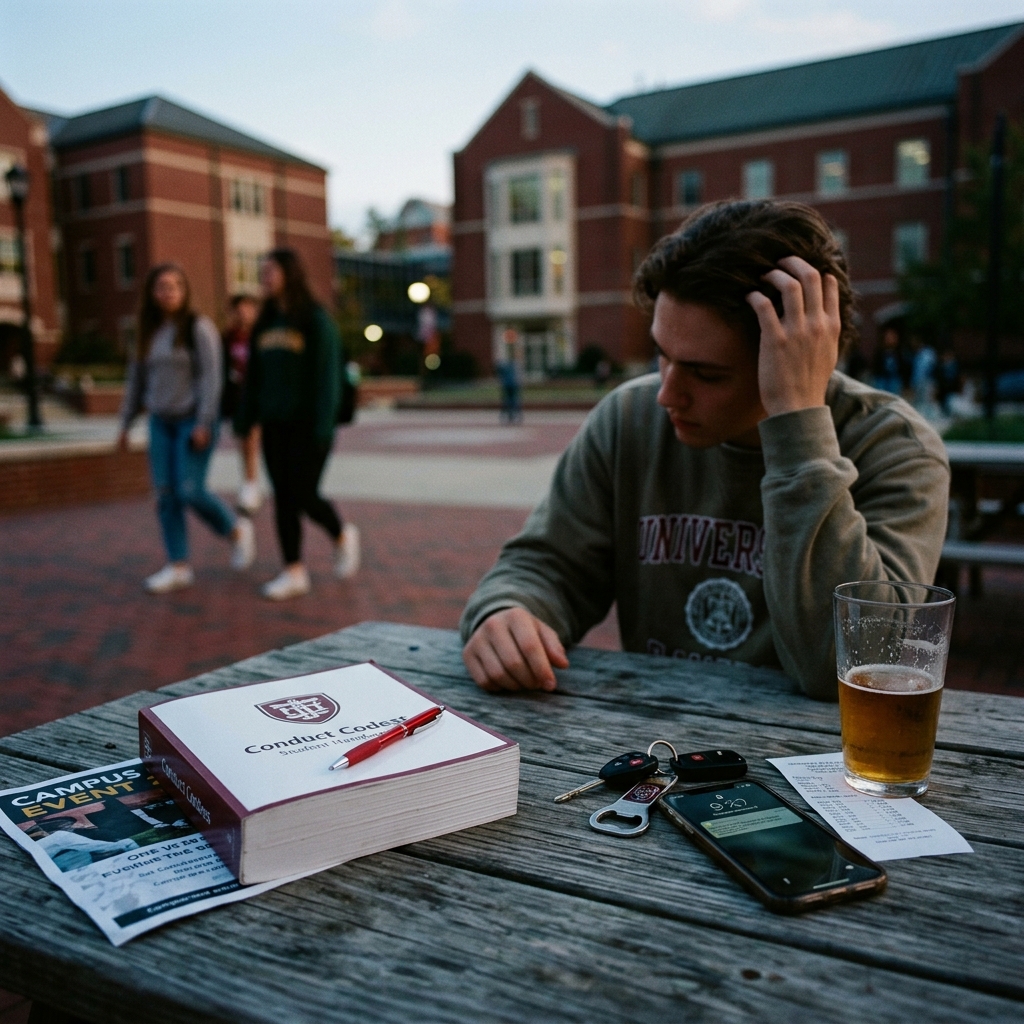
A charge or conviction for driving under the influence (DUI) can follow a student far beyond the courtroom. Colleges and universities increasingly treat alcohol and impaired driving offenses as serious conduct violations, whether the incident happened on or off campus. Understanding how a DUI intersects with school discipline, financial aid, housing, athletics and future opportunities is critical for any student or parent facing this situation.
Why Colleges Care About Off‑Campus DUI Incidents
Many students assume that what happens off school property is strictly a matter for the criminal justice system. In reality, most colleges have broad conduct codes that apply to student behavior on and off campus and explicitly reference criminal activity, including DUI.
Institutions view impaired driving as a threat to community safety and an indicator of risky substance use. As a result, a DUI arrest or conviction can trigger school discipline even if:
- The incident occurred miles away from campus.
- It happened during a break or summer vacation.
- The criminal case has not yet gone to trial.
Student handbooks typically reserve the right to act when conduct may harm the institution’s reputation or compromise the safety and well‑being of students, staff and the surrounding community.
Criminal Consequences vs. College Discipline
It helps to distinguish the legal penalties for DUI from the disciplinary measures a school may impose. These processes are separate and can happen at the same time.
| Criminal System | College / University System |
|---|---|
| Handled in state or local court under DUI statutes (e.g., jail, fines, license suspension, probation). | Handled through student conduct or disciplinary office under campus policies. |
| Requires proof beyond a reasonable doubt for conviction. | Usually applies a lower evidentiary standard (such as preponderance of the evidence) in hearings. |
| Results in criminal record and possible collateral consequences (insurance, employment). | May lead to probation, suspension, expulsion, or loss of privileges on campus. |
| Presided over by a judge; lawyers are common. | Presided over by conduct officers or panels; lawyers might have limited roles depending on the institution. |
Because the systems are independent, a favorable court outcome does not automatically resolve school discipline, and vice versa. A student might see charges reduced or dismissed in court yet still face campus sanctions based on the underlying behavior.
Can You Be Expelled from College for a DUI?
Most colleges have the authority to expel students for serious misconduct, including DUI, although expulsion is typically reserved for more extreme situations.
Factors that make expulsion more likely include:
- Repeat offenses or a documented pattern of impaired driving.
- Underage drinking combined with driving, which may violate multiple policies.
- Incidents involving injury or property damage, particularly on or near campus.
- Other serious violations occurring at the same time (e.g., resisting arrest, drug possession).
For a first offense that does not cause injuries, schools often opt for intermediate sanctions rather than permanent dismissal. Still, expulsion remains a real risk, especially at institutions with strict codes of conduct or professional programs such as nursing, education or law.
Common Academic and Disciplinary Sanctions
Instead of immediate expulsion, colleges frequently impose combinations of disciplinary responses designed to address safety, accountability and rehabilitation.
Academic Probation and Suspension
An impaired driving case can affect a student’s academic standing even if grades were strong before the incident.
- Academic probation: The student is allowed to remain enrolled but must meet specific conditions, such as maintaining a minimum grade point average or avoiding further conduct violations.
- Academic suspension: Temporary separation from the college, often for one or more terms, after which the student may apply for reinstatement.
Legal obligations like court dates, treatment sessions and community service can also interfere with class schedules, potentially leading to missed coursework and academic setbacks.
Loss of Campus Housing or Privileges
Many universities incorporate conduct standards into housing agreements. A DUI conviction or even an arrest can be treated as a breach of those agreements.
- Termination of residence hall contracts and eviction from campus housing.
- Restrictions on hosting events or possessing alcohol in campus accommodations.
- Loss of access to certain facilities or social events, including student organizations and Greek life.
Off‑campus housing can be affected as well, since landlords frequently use background checks and may refuse to rent to applicants who have recent criminal convictions.
Counseling, Education, and Community Service
To address the underlying causes of impaired driving, schools often combine punitive and educational measures.
- Mandatory alcohol education courses or substance use assessment.
- Participation in counseling or treatment programs recommended by health services or court orders.
- Assigned community service hours, sometimes focused on traffic safety or public health initiatives.
These requirements can be conditions for continued enrollment or return from suspension.
Impact on Leadership Roles and Athletics
Many colleges hold student leaders and athletes to higher standards than the general student population.
- Loss of eligibility for student government or residence hall leadership positions.
- Suspension or removal from athletic teams under departmental conduct rules.
- Ineligibility for certain honors programs, ambassador roles, or scholarships that require a clean disciplinary record.
Student‑athlete and extracurricular codes often treat DUI as a serious violation, leading to sanctions independent of the main conduct process.
DUI and College Admissions: Can You Still Get In?
A DUI on your record does not automatically bar you from attending college, but it can complicate the admissions process.
Most institutions ask applicants to disclose criminal convictions and, in some cases, arrests. Background checks are increasingly common, especially for campus housing or certain programs.
Admissions offices typically consider:
- The nature and timing of the offense (single incident vs. pattern; how recent it is).
- Your academic performance before and after the incident.
- Evidence of rehabilitation, such as counseling, treatment, or community involvement.
- Honesty and thoughtfulness in your explanation of the circumstances.
Professional and licensure‑oriented programs—like law, medicine, nursing, education, and fields requiring clinical or practicum placements—may apply stricter standards and sometimes deny admission to applicants with DUI convictions.
How a DUI Can Affect Financial Aid and Scholarships
Financial support is often tied to both academic performance and conduct. A DUI can jeopardize merit‑based scholarships, athletic awards and some forms of institutional aid.
Merit and Behavior‑Based Scholarships
- Many private and institutional scholarships include clauses requiring recipients to maintain a certain GPA and avoid serious disciplinary actions.
- Academic probation or suspension after a DUI may lower grades below the required threshold or trigger automatic loss of funding.
- Conduct records showing a DUI could disqualify students from future awards or honors programs.
Federal Financial Aid
In the United States, federal student aid can be affected by certain types of convictions, particularly drug‑related offenses, although policies have evolved over time. A DUI alone does not always result in a loss of federal aid, but:
- Court orders or incarceration may disrupt enrollment and thus eligibility for aid.
- Additional charges tied to the incident—such as drug possession—can impact federal aid eligibility depending on current law.
Because rules and interpretations change, students should consult official guidance from the U.S. Department of Education or their institution’s financial aid office for up‑to‑date information.
Long‑Term Academic and Career Consequences
A DUI rarely ends when the criminal case is closed or a campus sanction is completed. The record can influence future schooling and employment prospects.
Graduate and Professional School Applications
Many graduate programs require detailed disclosures of past convictions. Competitive professional programs—especially law, medicine, pharmacy, nursing and education—carefully review an applicant’s conduct history.
- A DUI may lead some programs to deny admission outright, especially if the incident suggests ongoing substance misuse or risk to vulnerable populations.
- Even when admission is possible, candidates might need to provide extensive explanations and documentation of rehabilitation.
Employment, Internships, and Licensing
Employers and licensing boards increasingly rely on background checks. A DUI can be particularly problematic in fields involving driving, safety‑sensitive duties, or professional ethics.
- Internship and job opportunities may shrink, especially in roles requiring clean driving records, such as delivery, transportation or field work.
- Some states impose licensing restrictions in professions like teaching, healthcare or law based on criminal histories, including DUI.
- Students might have to pursue alternative career paths if a conviction prevents licensure in their chosen field.
Social and Emotional Impact on Campus Life
Beyond formal sanctions, a DUI can strain personal relationships and change the way peers and faculty view a student.
- Stigma and reputation: Students may face judgment or gossip, especially in small campuses or tight‑knit programs.
- Isolation: Loss of housing, athletics or club participation can reduce social support during an already stressful time.
- Mental health: Anxiety, depression and shame are common reactions and may require professional support from counseling services.
Seeking help early—through campus counseling centers or external providers—can make it easier to cope with these challenges and demonstrate constructive responses to the incident.
Practical Steps if You Are a Student Facing DUI Charges
Acting promptly and strategically can reduce both legal and academic fallout. Students should approach the situation as both a criminal and educational crisis.
1. Consult a Qualified DUI Attorney
DUI laws vary significantly by state. Penalties can include jail time, fines, license suspension, probation, mandatory education programs and more. A lawyer with experience in impaired driving cases can:
- Explain the charges and potential sentencing ranges.
- Assess options for reducing or dismissing charges, or negotiating plea agreements.
- Coordinate with school officials when appropriate, while protecting your legal rights.
2. Review Your College’s Conduct Code
Students should carefully read the institution’s student handbook, housing contract and athletics or organization policies to understand possible consequences and procedures.
- Identify whether off‑campus conduct and arrests fall under disciplinary jurisdiction.
- Note hearing timelines, appeal options and required notifications.
- Determine whether legal outcomes (like guilty pleas) automatically trigger certain sanctions.
3. Communicate Proactively and Honestly
While advice from an attorney is essential, honesty is generally valued in both admissions and conduct processes.
- Acknowledge responsibility where appropriate and express understanding of the risks posed by impaired driving.
- Highlight concrete steps you have taken, such as counseling, education courses or lifestyle changes.
- Prepare a thoughtful written explanation for admissions or disciplinary meetings.
4. Address Underlying Issues
If alcohol misuse or other behavioral concerns contributed to the incident, seeking assessment and treatment can improve health and reduce future risk.
- Participate fully in recommended education or therapy programs.
- Use campus health services or community providers for ongoing support.
- Consider adjusting social habits, transportation choices and peer networks that encourage risky behaviors.
Frequently Asked Questions
Does a single DUI automatically mean I will be expelled?
No. Expulsion is possible but usually reserved for severe or repeated misconduct. Many colleges respond to a first DUI with probation, suspension, counseling or loss of privileges instead of permanent dismissal.
Can I still apply to college if I already have a DUI on my record?
Yes. You can still apply, and many students are admitted despite a prior DUI. Admissions committees typically review the overall record, including academics, the circumstances of the incident and evidence of rehabilitation.
Will my scholarships be taken away?
Some scholarships and institutional awards may be revoked if a DUI leads to academic probation, suspension or conduct findings. Others may remain intact if you meet GPA and behavior requirements. Always review the terms of each award and speak with financial aid officers.
How long will a DUI affect my education and career?
The impact can last for years. A conviction may appear on background checks for internships, jobs and graduate school applications, and certain professional programs or licenses may be harder to obtain.
Is it better to disclose a DUI or hope the college never finds out?
If an application or policy requires disclosure, failing to report a DUI can lead to rejection, rescinded offers, or later discipline for dishonesty. Transparency, combined with a strong explanation and evidence of change, is usually more constructive.
References
- DUI Penalties for College Students in Tennessee — East Coast Trial Lawyers. 2023-05-10. https://ecattorneys.law/dui-penalties-for-college-students/
- Are There Additional Consequences for College Students Facing DUI Charges? — Andrew Flusche, Attorney at Law. 2022-11-03. https://www.andrewflusche.com/blog/are-there-additional-consequences-for-college-students-facing-dui-charges/
- Repercussions of Getting a DUI in College — McMillin Law. 2021-08-12. https://www.mcmillinlaw.net/blog/repercussions-of-getting-a-dui-in-college/
- How Will a DUI in College Affect Me? — Goldman Wetzel. 2020-06-30. https://www.goldmanwetzel.com/blog/how-will-a-dui-in-college-affect-me/
- How Can a Drunk Driving Conviction Impact College Students? — Drennan Law Firm. 2023-05-23. https://www.drennanlawfirm1.com/blog/2023/05/how-can-a-drunk-driving-conviction-impact-college-students/
- How a DUI Conviction Can Impact Your College Career — BLL Legal. 2022-09-21. https://www.bll.legal/how-a-dui-conviction-can-impact-your-college-career
Similar Articles








Read full bio of Sneha Tete




