
College Campus DUI Rules and Student Consequences
Understand how DUI arrests can affect students, campus housing, aid, and academic standing.
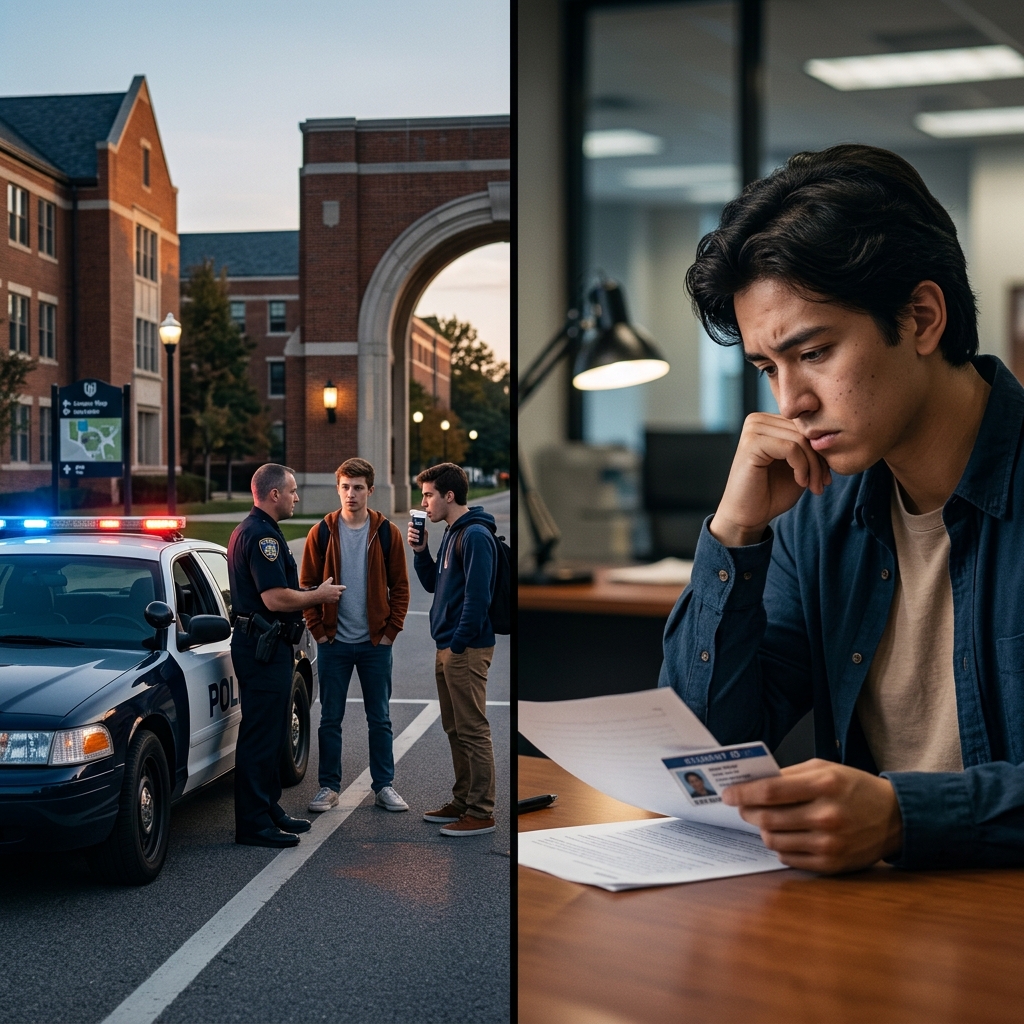
A DUI charge can create problems far beyond the criminal case itself. For college students, the impact often reaches into housing, scholarships, financial aid, athletics, and even future career plans. Schools usually have their own conduct rules, and many of them treat alcohol-related arrests seriously even before a criminal case is resolved.
The exact outcome depends on the state’s DUI laws, the school’s student code of conduct, and whether the student is under 21, lives on campus, or has prior incidents. In some cases, a first arrest leads to warning or probation. In others, it can trigger suspension, loss of privileges, or dismissal.
Why a DUI can matter so much on campus
Colleges do not just look at whether a student was convicted in court. Many institutions can respond to an arrest, a citation, or conduct that violates campus alcohol policies. That means a student may face two separate processes at the same time: one in criminal court and another under school discipline rules.
This matters because campus rules are often broader than criminal law. A university may discipline conduct that takes place off campus if it affects student safety, school reputation, or the learning environment. As a result, even a case that does not result in jail time can still cause academic or housing problems.
Common school consequences
The most common school responses are not always the most dramatic. Many students first encounter probation, required counseling, alcohol education, or a conduct hearing. More serious outcomes usually happen when the facts involve repeat conduct, danger to others, or a violation of a scholarship or housing rule.
- Disciplinary probation that limits a student’s privileges
- Mandatory alcohol education or counseling
- Loss of campus housing
- Loss of scholarships or institutional aid
- Suspension from classes or activities
- Expulsion in serious or repeat cases
Expulsion is not the usual result for every first offense, but it remains possible. Schools often consider the student’s history, whether the incident involved injury or property damage, and whether there was any refusal to cooperate with law enforcement or school investigators.
How underage drinking laws change the picture
Students under 21 face an added risk because many states enforce zero-tolerance or lower-threshold rules for drivers who are not yet of legal drinking age. In Colorado, for example, a person under 21 can face consequences for driving with a blood or breath alcohol content of 0.020% or more, and higher levels can trigger more serious treatment under the law.
This means a college student does not need to be visibly intoxicated to run into trouble. Depending on the state, a minor amount of alcohol may be enough to create a driving offense, and that offense can then lead to school discipline, insurance problems, and license penalties.
Campus housing, scholarships, and aid
One of the biggest immediate concerns for students is whether a DUI will affect where they live and how they pay for school. Some universities reserve the right to remove students from dorms or other campus housing after alcohol-related misconduct, especially when the incident occurred on school property or involved a safety issue.
Scholarships can also be at risk. Athletic awards, merit scholarships, and private grants may include conduct clauses or eligibility standards that allow the sponsor or school to withdraw funding after an arrest or conviction. Even when the award does not automatically disappear, a university discipline finding may be enough to end eligibility.
Financial aid is more complicated, because federal aid rules differ from school discipline rules. A DUI does not automatically erase all aid, but students should review the terms of each award and any enrollment requirements tied to good standing. If a student is suspended or expelled, the aid issue may follow from the enrollment status rather than the arrest itself.
License consequences and everyday logistics
A DUI also creates practical problems that can affect school life immediately. License suspension can make it hard to commute to class, get to work, or travel between home and campus. In some states, penalties may include ignition interlock requirements, reinstatement fees, and alcohol education programs.
For students who rely on driving to attend classes or internships, the loss of a license can be just as disruptive as a school suspension. Transportation problems can also affect grades, job performance, and participation in extracurricular activities.
| Potential issue | How it may affect a student |
|---|---|
| Driver’s license suspension | Harder to get to class, work, or clinical placements |
| Campus discipline | Probation, loss of privileges, or removal from housing |
| Scholarship review | Award may be reduced or canceled under conduct rules |
| Criminal record | Can complicate internships, graduate admissions, and hiring |
How universities decide what happens
Every campus has its own code of conduct, and that document often controls the response to alcohol-related incidents. Some schools reserve broad discretion to act whenever a student’s conduct threatens safety or disrupts the community. Others spell out specific sanctions for DUI-related behavior.
Schools usually consider several factors when deciding discipline:
- Whether this is the student’s first incident
- Whether the student is under 21
- Whether the event happened on campus or near campus
- Whether anyone was injured or property was damaged
- Whether the student cooperated with law enforcement or school officials
- Whether the student is an athlete, scholarship recipient, or resident in campus housing
Because these policies vary so widely, two students with similar arrests may face very different results at different schools.
Criminal court and campus discipline are separate
Many students assume that if criminal charges are reduced or dismissed, the school must also drop its case. That is not usually how it works. A university can often continue its own investigation even if the criminal matter moves slowly or ends in a less serious result.
That separation means students need to pay attention to both processes. A plea deal in court may help with one system but still leave the student exposed to consequences under the university code. Likewise, a school hearing can proceed based on conduct standards even if the criminal case is unresolved.
Career and graduate school concerns
For many students, the biggest worry is not only the immediate punishment but also the long-term record. A DUI can make it harder to enter competitive graduate programs, professional schools, or fields that require background screening. Even when the offense is a misdemeanor, the existence of a criminal record can raise questions during admissions or hiring.
This does not mean a single DUI ends every career path. But students in fields such as education, healthcare, law enforcement, or commercial driving may face stricter screening or professional licensing concerns later on. A strong academic record can help, but it does not erase the need to treat the charge seriously.
What students should do right away
Students facing a DUI should move quickly and carefully. The first priority is to understand the criminal charge and any deadlines related to license suspension or court appearance. The second is to review the school’s conduct code and housing or scholarship agreements.
- Read the campus conduct policy and any housing rules
- Check whether the scholarship or financial aid terms mention criminal conduct
- Keep records of court dates, school notices, and emails
- Avoid ignoring university meeting requests or deadlines
- Consider speaking with a lawyer who handles DUI and student conduct matters
Students should also be careful about what they say in writing. Text messages, social media posts, and casual emails can become evidence in either the criminal case or the school process. Clear, factual communication is usually safer than emotional or defensive messaging.
Frequently asked questions
Can a college expel a student for a first DUI?
Yes, but it depends on the school and the facts. Many colleges do not expel students for a first offense, yet expulsion remains possible in serious cases or where the code of conduct allows it.
Will a DUI automatically end a scholarship?
Not automatically in every case. Some scholarships have conduct clauses that allow termination after an arrest or conviction, while others give the school more discretion. Students should read the award terms carefully.
Can a school punish a student if the DUI happened off campus?
Yes. Many universities can still act if the behavior violates student rules or affects campus safety, even when the incident took place away from school property.
What if the student is under 21?
Underage students often face extra risk because many states have stricter alcohol-and-driving rules for minors. A lower BAC can still create a legal problem and may also trigger school discipline.
Does a DUI affect housing?
It can. Some schools may remove a student from dorms or other housing after an alcohol-related violation, especially if the incident involved school property or safety concerns.
Final practical takeaway
A DUI for a college student is rarely just a traffic issue. It can affect academic standing, campus privileges, housing, funding, and future opportunities all at once. Because the criminal system and the university system operate separately, students should treat both seriously from the start.
Understanding the school’s rules, the state’s DUI laws, and the deadlines in both systems can make a meaningful difference in the outcome. A quick response and careful planning are often the best ways to limit the damage.
References
- How a DUI affects college students — Terry Hess Law. 2019-07. https://www.terryhesslaw.com/blog/2019/07/how-a-dui-affects-college-students/
- Getting a DUI As A College Student — The Toney Law Firm, LLC. 2021-09. https://www.chicagodefensefirm.com/blog/2021/september/getting-a-dui-as-a-college-student/
- College students, DUI charges and university conduct codes — Begley Carlin & Mandio LLP. 2023-??. https://www.begleycarlin.com/college-students-dui-charges-and-university-conduct-codes/
- Colorado DUI Law — Colorado State University Police Department. 2020-03. https://police.colostate.edu/wp-content/uploads/sites/85/2020/03/503-Impaired-Driving.pdf
- Colorado DUI Law — University of Colorado Boulder Police Department. 2024-??. https://www.colorado.edu/police/crime-prevention/safety-tips/colorado-laws/colorado-dui-law
- Colorado DUI Laws — NCDD. 2024-??. https://www.ncdd.com/colorado-dui-laws
Similar Articles








Read full bio of medha deb




