Ending a marriage does not always have to mean battling in court. In California, collaborative divorce offers couples a structured, out-of-court process focused on problem-solving rather than winning and losing. It blends legal representation with negotiation, financial planning, and emotional support to help spouses reach comprehensive agreements on property, support, and parenting while minimizing conflict.
What Is Collaborative Divorce?
Collaborative divorce is an alternative dispute resolution method in which both spouses agree in advance not to litigate their case and instead work with a team of professionals to negotiate all issues arising from the separation. Rather than asking a judge to decide disputes, the couple voluntarily exchanges information and engages in a series of meetings aimed at reaching a mutually acceptable settlement.
Key features of collaborative divorce include:
- Each spouse is represented by a collaboratively trained California family law attorney.
- Everyone signs a written participation or “no-court” agreement promising good-faith negotiation and full disclosure.
- Joint meetings replace court hearings, depositions, and adversarial motions.
- A multidisciplinary team may assist, such as financial specialists, child specialists, and communication coaches.
- If either party chooses litigation, the collaborative attorneys must withdraw and new counsel takes over.
In California, collaborative divorce is used to resolve dissolution cases—legal proceedings that end a marriage or domestic partnership—without a judge deciding contested issues.
How Collaborative Divorce Differs from Traditional Litigation
| Aspect | Collaborative Divorce | Traditional Litigated Divorce |
|---|---|---|
| Decision-maker | Spouses craft their own agreement with professional guidance. | Judge issues binding orders after hearings or trial. |
| Approach | Cooperative, problem-solving, interest-based negotiation. | Adversarial, rights-based, focused on legal arguments and evidence. |
| Court involvement | Minimal; usually limited to filing final paperwork for judgment. | Frequent; motions, hearings, and possibly trial to resolve disputes. |
| Information exchange | Voluntary, full disclosure under the participation agreement. | Formal discovery tools (subpoenas, interrogatories, depositions). |
| Experts | Neutral professionals jointly retained by both spouses. | Each side may hire its own experts, leading to competing opinions. |
| Outcome | Negotiated settlement tailored to family needs. | Court orders that may satisfy law but not fully reflect preferences. |
Core Principles of Collaborative Divorce
Collaborative divorce is built on several guiding principles that distinguish it from other forms of dispute resolution.
- Commitment to settlement: All participants agree at the outset that the case will be resolved without judicial decisions, shifting focus from winning to reaching durable solutions.
- Respectful communication: Meetings emphasize constructive dialogue, listening, and understanding underlying interests rather than attacking positions.
- Transparency: Both parties pledge complete disclosure of financial and other relevant information, avoiding surprises and strategic withholding.
- Child-centered decision-making: When children are involved, the team prioritizes minimizing conflict and protecting children from loyalty pressures and litigation stress.
- Use of neutral experts: Financial, mental health, and child specialists are typically neutral, serving the family as a whole instead of one side.
The Collaborative Divorce Process in California: Step-by-Step
While each case is unique, collaborative divorces in California generally follow a predictable sequence.
1. Deciding to Use the Collaborative Approach
The process begins with both spouses agreeing to attempt a collaborative resolution. Because the method relies on voluntary participation and good faith, it cannot proceed if one spouse insists on litigating from the outset.
At this stage, couples typically:
- Learn about options such as litigation, mediation, and collaborative practice.
- Assess their capacity for cooperation and respectful communication.
- Consider the impact of a prolonged court fight on children, finances, and emotional well-being.
2. Hiring Collaboratively Trained Attorneys
Each spouse retains a lawyer with experience in collaborative law and California family law. These attorneys remain advocates for their clients but are also problem-solvers committed to settlement, not courtroom victories.
Collaborative attorneys:
- Explain rights and obligations under California divorce and property laws.
- Help clients articulate interests and priorities (e.g., stability for children, financial security, preserving assets).
- Work with the other lawyer to structure negotiations in a constructive, non-adversarial way.
3. Signing the Participation (No-Court) Agreement
Early in the process, the spouses and their lawyers sign a written participation agreement. This document usually includes commitments to:
- Negotiate in good faith and avoid threats of litigation.
- Provide full and honest disclosure of financial and other relevant information.
- Retain neutral experts jointly rather than unilaterally.
- Allow collaborative counsel to withdraw if either spouse chooses to go to court.
This agreement sets the tone for cooperation and reduces the temptation to use court as leverage during negotiations.
4. Assembling the Professional Team
Depending on the complexity of the case, the couple may build a team beyond their attorneys.
Common team members include:
- Financial specialist – a neutral professional who helps gather and analyze financial data, model settlement scenarios, and address tax considerations.
- Child specialist – a mental health professional who focuses on children’s needs, helps develop parenting plans, and gives children a voice in an age-appropriate way.
- Communication or divorce coach – typically a therapist experienced in family dynamics who supports the spouses in managing emotions and improving communication.
Because these specialists are neutral, they can reduce duplication of work and limit the “battle of experts” often seen in litigated cases.
5. Information Gathering and Disclosure
Before substantive negotiations begin, the parties collect information about their finances, property, and children’s circumstances.
This usually includes:
- Income documentation (pay stubs, business records).
- Tax returns and bank statements.
- Retirement accounts, investment portfolios, and real estate details.
- Debts, including mortgages, credit cards, and loans.
- Information about children’s schooling, health, and special needs.
In collaborative practice, disclosure obligations mirror those required in California divorces generally, where spouses must exchange financial information as part of dissolution proceedings. However, collaborative divorce often relies more on voluntary, cooperative disclosure than on formal discovery tools.
6. Joint Meetings to Negotiate Issues
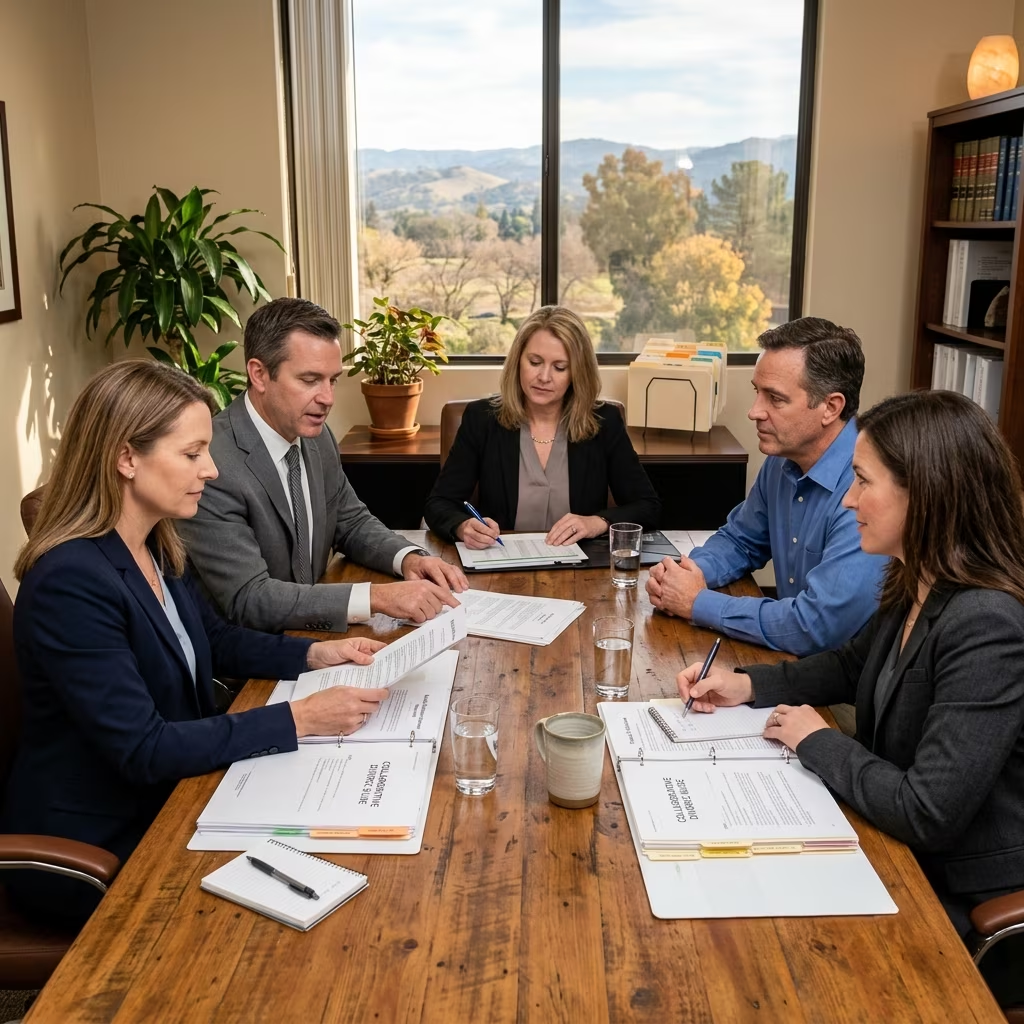
The heart of the collaborative process is a series of structured joint meetings. These sessions bring together the spouses, their attorneys, and relevant team members to identify issues, share information, and explore options for settlement.
Typical agenda items include:
- Clarifying shared goals (e.g., maintaining stability for children, preserving assets, minimizing conflict).
- Discussing temporary arrangements for finances and parenting while negotiations continue.
- Addressing specific issues such as property division, spousal support, and child-related matters.
Unlike court hearings, these meetings emphasize brainstorming, reality-testing proposals, and building solutions that work for both parties. The lawyers guide the discussions and ensure legal rights are considered, but decisions ultimately rest with the spouses.
7. Reaching and Drafting the Settlement Agreement
Once the couple has resolved all key issues, the attorneys prepare a written settlement agreement reflecting the negotiated terms.
The agreement typically covers:
- Division of community and separate property and debts, consistent with California’s community property framework.
- Spousal support (alimony) terms, if applicable.
- Child custody, visitation schedules, and decision-making responsibilities.
- Child support, in accordance with California guidelines.
Because both attorneys have participated throughout the process, the written agreement usually reflects what the spouses already understand and accept, reducing the likelihood of last-minute surprises.
8. Filing with the Court and Finalizing the Divorce
Although collaborative divorce aims to minimize court involvement, the final agreement must still be submitted to the appropriate California family court to obtain a judgment of dissolution.
In many collaborative cases:
- Spouses do not need to appear in court; the judge reviews the paperwork.
- If the agreement meets legal requirements, the court issues a final judgment ending the marriage.
- The settlement terms become enforceable court orders governing property, support, and parenting arrangements.
Advantages of Collaborative Divorce in California
Collaborative divorce is not ideal for every couple, but it offers several potential benefits compared with traditional litigation.
- Reduced conflict: Because the process is designed around cooperation, it can lower hostility and long-term resentment.
- Greater control: Spouses maintain decision-making power instead of ceding outcomes to a judge.
- Child-focused solutions: With child specialists and coaches, parenting plans can be more responsive to children’s needs than generic court orders.
- Privacy: Negotiations occur in private meetings rather than public courtrooms.
- Flexible scheduling: Meetings can be scheduled at times convenient for the parties, rather than dictated by court calendars.
- Potential cost savings: Although collaborative cases still involve professional fees, they may avoid expensive motion practice and trial preparation.
Limitations and When Collaborative Divorce May Not Fit
Despite its strengths, collaborative divorce is not appropriate for all situations.
- Domestic violence or coercive control: Where there is significant intimidation, abuse, or power imbalance, one party may be unable to negotiate freely; court protections may be necessary.
- Refusal to disclose information: If a spouse is likely to hide assets or resist transparency, the collaborative model’s reliance on voluntary disclosure can break down.
- Unwillingness to compromise: When either party is committed to “winning” at all costs, collaborative negotiations may stall.
- Extremely complex legal issues: Some cases may involve novel legal questions or disputes requiring judicial clarification.
In many instances, couples can still begin with collaborative efforts and, if the process fails, transition to litigation with new attorneys as required by the participation agreement.
Frequently Asked Questions About Collaborative Divorce in California
Is collaborative divorce recognized under California law?
Collaborative divorce operates within the existing framework of California dissolution law. While the term describes a specific out-of-court process, the resulting settlement must comply with California statutes governing property division, child support, and custody. Courts routinely accept collaboratively negotiated agreements as long as they satisfy legal standards.
Do I still need to file for divorce with the court?
Yes. In California, a divorce (dissolution) becomes legally effective only when a court issues a final judgment. Collaborative divorce changes how you reach your agreement, not the requirement to file forms, share financial information, and obtain judicial approval of the settlement.
Can we switch from collaborative divorce to litigation?
Most participation agreements allow either spouse to end the collaborative process and pursue litigation instead. However, once that happens, the collaborative attorneys withdraw, and both spouses must hire new counsel to represent them in court, which is intended to encourage participants to remain committed to settlement.
How is property divided in a collaborative divorce?
Collaborative divorce does not change California’s underlying rules on property. California is generally a community property state, meaning assets and debts acquired during marriage are typically divided equally unless spouses agree otherwise or specific exceptions apply. In collaborative practice, the couple can design creative divisions within the constraints of the law, often with the help of a financial specialist.
Are collaborative divorce agreements enforceable?
Once the spouses sign their settlement agreement and the court issues a judgment of dissolution incorporating those terms, the provisions become enforceable like any other family court orders. If a party later fails to comply, the other spouse may seek enforcement through the court.
How long does a collaborative divorce take?
Timelines vary. Some collaborative cases resolve in a few months, while more complex matters take longer. Factors include the number of issues, the level of conflict, the availability of professionals, and how quickly information is gathered. Because the process avoids court calendars, it can sometimes move more efficiently than litigation.
Preparing for a Collaborative Divorce
If you are considering collaborative divorce in California, preparation can significantly improve the process.
- Educate yourself: Understand the basics of California divorce law, including dissolution requirements, property presumptions, and child support guidelines.
- Organize finances: Start gathering documents such as tax returns, bank statements, retirement account statements, and loan documents.
- Clarify your priorities: Identify what matters most—children’s stability, staying in the family home, retirement security, or debt relief.
- Consider emotional support: A therapist or divorce coach can help you manage stress and communicate more effectively during negotiations.
- Consult a collaborative attorney: An initial consultation with a collaboratively trained lawyer can help you assess whether the process fits your circumstances.
For many California couples, collaborative divorce offers a constructive way to navigate a difficult transition while preserving relationships and focusing on long-term stability. By combining legal guidance, professional support, and a commitment to cooperation, it provides a viable alternative to the adversarial courtroom model.
References
- Collaborative Divorce in California — Divorce.com. 2023-06-01. https://divorce.com/blog/collaborative-divorce-california/
- What Does the Collaborative Divorce Process Look Like in California and Is It Right for You? — California Family Law Group. 2022-09-15. https://californiafamilylawgroup.com/blog/what-does-the-collaborative-divorce-process-look-like-in-california-and-is-it-right-for-you/
- How Collaborative Divorce Works: FAQ — FindLaw. 2021-04-20. https://www.findlaw.com/family/divorce/how-a-collaborative-law-divorce-works-faq-s.html
- What Is Collaborative Divorce? — Collaborative Divorce California. 2020-03-10. https://collaborativedivorcecalifornia.com/what-is-collaborative-divorce/
- Divorce in California: Self-Help Guide — Judicial Council of California. 2023-01-05. https://selfhelp.courts.ca.gov/divorce-california