
Clearing a Criminal Record in New York: Sealing, Relief and Clean Slate
Understand New York’s sealing rules, Clean Slate Act, and relief options to improve employment and housing opportunities.
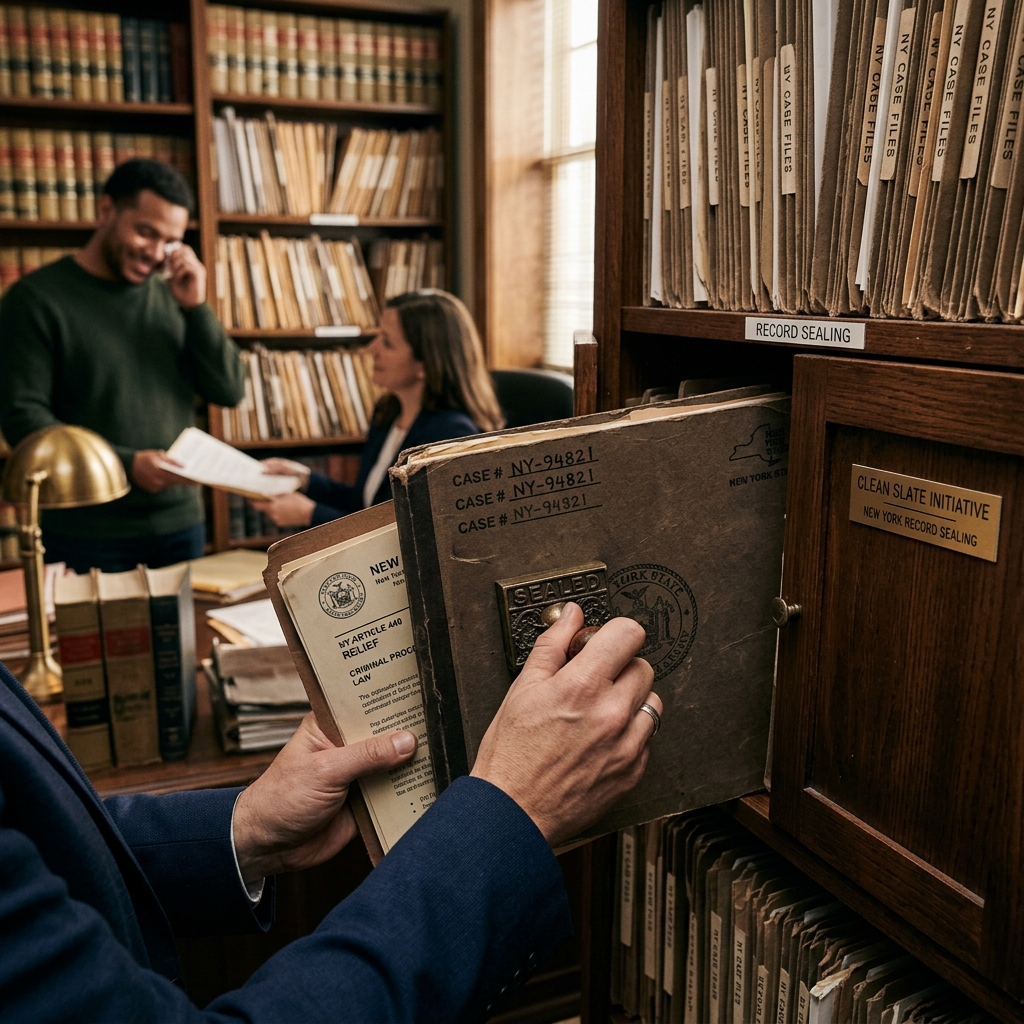
Many people assume that they can simply “expunge” their criminal record in New York, but the law in this state works very differently from many others. Rather than true expungement, New York relies on a combination of record sealing, conditional sealing, the Clean Slate Act, and special certifications that reduce the impact of convictions on employment, housing, and licensing decisions.
This guide explains how records can be limited from public view, who qualifies, and what practical steps you can take to improve your future while still complying with New York law.
Expungement vs. Sealing: How New York Is Different
In many states, expungement means the criminal record is destroyed or treated as if it never existed. New York law generally does not erase convictions; instead, it controls who can see them and how they may be used.
- Expungement (typical definition): The record is removed from public databases and often from law enforcement records.
- Sealing in New York: The record is hidden from most public background checks but remains available to certain government agencies, courts, law enforcement, and firearm licensing authorities.
Because of this distinction, most people in New York should focus on whether their convictions can be sealed or whether they can benefit from the Clean Slate Act, certificates of relief, or other specialized remedies, instead of expecting the record to be completely erased.
Overview of the Main Paths to Relief
New York offers several tools that can minimize the impact of a criminal record. Each has its own eligibility rules and procedures.
- Civil record sealing for most old convictions under Criminal Procedure Law (CPL) § 160.59.
- Conditional sealing for certain drug-related offenses under CPL § 160.58.
- Clean Slate Act automatic sealing of many convictions after waiting periods.
- Vacating convictions in specific circumstances, such as crimes committed as a result of human trafficking.
- Certificates of Relief from Disabilities and Certificates of Good Conduct, which address collateral consequences of convictions.
These remedies can work together. For example, someone may qualify for a certificate of relief long before they are eligible for sealing under CPL § 160.59 or automatic sealing under the Clean Slate Act.
Who Can Seek Sealing Under CPL § 160.59?
CPL § 160.59 is the main provision allowing adults with past convictions to ask a court to seal their record. It is designed for people who have limited prior convictions and have stayed crime-free for a substantial period.
| Requirement | Summary |
|---|---|
| Number of convictions | No more than two criminal convictions in a lifetime; at most one felony. |
| Waiting period | At least 10 years since sentencing for the last conviction, or since release from incarceration, whichever is later. |
| Case status | No open criminal cases at the time of the application. |
| Type of offense | Some serious offenses are not eligible, including sex offenses, violent felonies, homicide, and certain related attempts and conspiracies. |
People with more than two convictions may still qualify if multiple convictions arose from the same incident or closely related incidents, but they must review the detailed rules or speak with an attorney to see how the law treats their record.
Ineligible Offenses Under CPL § 160.59
New York law protects public safety by excluding certain serious crimes from civil sealing. Examples include:
- Sex offenses under Penal Law Article 130.
- Sexual performance by a child under Penal Law Article 263.
- Violent felony offenses listed in Penal Law § 70.02.
- Homicide offenses under Penal Law Article 125.
- Certain felony conspiracies and attempted felonies where the underlying offense is ineligible.
If your conviction falls in one of these categories, you will not be able to seal it under CPL § 160.59, though you may still explore other avenues, such as certificates of relief or, in limited cases, vacating the conviction.
Practical Steps to Apply for Record Sealing
Applying for sealing under CPL § 160.59 is a formal legal process. While many people choose to work with a lawyer, it is possible to proceed without one. The basic steps are similar across New York courts.
1. Confirm Eligibility
- Count all prior criminal convictions and note which are felonies.
- Calculate the time since the last sentencing or, if incarcerated, since release from jail or prison.
- Check whether any convictions fall into categories barred from sealing (such as violent felonies or sex offenses).
- Verify that you have no open or pending criminal cases.
2. Obtain Court Records
You will need official documentation showing what happened in your case. Typical documents include:
- Criminal Certificate of Disposition for each conviction you seek to seal, which is the court’s final record of the case outcome.
- Any prior orders related to your sentence or supervision, if available.
Courts often have forms or instructions describing how to request a certificate of disposition. This may be done in person, by mail, or online, depending on the court.
3. Prepare a Written Application (Motion)
To request sealing, you generally file a written motion in the criminal court where the conviction occurred.
- State clearly that you are asking the court to seal your record under CPL § 160.59.
- Attach the relevant certificates of disposition and other supporting documents.
- Include a sworn statement (affidavit) explaining why sealing should be granted, addressing:
- Your conduct since the conviction (employment, education, community involvement).
- Any rehabilitation efforts, such as treatment or counseling.
- Current and future goals that would be helped by sealing (job opportunities, housing, licensing).
4. Notify the Prosecutor and Await a Response
The prosecutor’s office (district attorney) must be notified and may object to your request.
- The district attorney typically has a set period, often 45 days, to respond or file objections.
- If the prosecutor does not object, the court may grant sealing without a hearing, though a hearing is still possible.
- If there is an objection, the judge may schedule a hearing and weigh factors such as public safety, the seriousness of the offense, and your rehabilitation.
5. Court Decision and Effect of Sealing
The judge makes the final decision. If your motion is granted:
- The conviction becomes civilly sealed, meaning it is no longer visible to the general public, most employers, and many landlords on standard background checks.
- Certain agencies still have access, including law enforcement, courts, and sometimes firearm licensing authorities.
- You may be able to answer many job or housing application questions more favorably, depending on how they are worded and what the law requires.
Conditional Sealing for Drug-Related Offenses (CPL § 160.58)
New York law recognizes that substance use can play a major role in criminal behavior. CPL § 160.58 allows conditional sealing of certain drug and marijuana offenses when the person successfully completes court-recognized treatment programs.
Eligibility Criteria for Drug-Related Conditional Sealing
To seek conditional sealing of drug-related convictions, all of the following must be true:
- You completed a court-recognized substance abuse treatment program, such as a Judicial Diversion Program or Drug Treatment Alternative to Prison (DTAP).
- You finished any remaining portion of your sentence.
- You have no pending criminal charges.
Eligible offenses include a range of controlled substance and marijuana felonies and misdemeanors, with specific limitations detailed in the statute.
Unlike CPL § 160.59, there is no standard application form for CPL § 160.58. You must file a motion in the sentencing court, explaining how you meet the criteria and why conditional sealing is appropriate.
The Clean Slate Act: Automatic Sealing After Time
New York’s Clean Slate Act adds a new layer of relief by automatically sealing many convictions after a set waiting period—without requiring an individual court motion in every case.
Basic Rules of the Clean Slate Act
- Automatic sealing for misdemeanors after 3 years from sentencing, not counting time spent incarcerated.
- Automatic sealing for felonies after 8 years from sentencing, again excluding incarceration time.
- Individuals must have completed probation, parole, or post-release supervision.
- No new convictions during the applicable waiting period.
The Clean Slate Act does not seal every type of conviction. Serious offenses comparable to those excluded from CPL § 160.59 may remain visible, and some professional licensing bodies or law enforcement agencies may still access sealed records in specific contexts.
Because the Clean Slate Act operates automatically once its conditions are met, it can provide significant relief to people who may not have the resources or knowledge to file individual motions in court.
Other Important Remedies: Certificates and Vacating Convictions
Even when sealing is not available, two types of certifications and certain vacatur provisions can reduce the impact of a criminal record.
Certificates of Relief from Disabilities
A Certificate of Relief from Disabilities can lift some legal barriers that arise from convictions, such as restrictions on professional licenses or specific jobs.
- Available for many individuals with felony or misdemeanor convictions.
- May be requested from the sentencing court or, in some cases, from the Department of Corrections and Community Supervision.
- Does not erase the conviction but demonstrates rehabilitation and removes certain automatic disqualifications.
Certificates of Good Conduct
A Certificate of Good Conduct is generally aimed at people with more extensive criminal histories and can restore some rights and opportunities.
- Often used when someone has multiple convictions or a more serious record.
- Demonstrates sustained law-abiding behavior over time.
- Can help with licensing boards and employers who consider character and rehabilitation.
Vacating Convictions for Trafficking Victims
New York law allows certain people to vacate (remove) convictions if the crimes were committed as a direct result of being a victim of human trafficking.
- Available under CPL § 440.10(1)(i) in specific circumstances.
- Vacating a conviction is different from sealing—if granted, the conviction can be set aside, potentially eliminating many collateral consequences.
How Sealing and Clean Slate Affect Daily Life
When a record is sealed or automatically limited under the Clean Slate Act, its impact on everyday life can change in meaningful ways.
Employment
- Most private employers using standard background checks will not see sealed convictions.
- Some positions, particularly in law enforcement, government, or sensitive industries, may still access sealed records and consider them.
- Certificates of relief and good conduct can reassure employers and licensing boards about your rehabilitation.
Housing and Loans
- Landlords and lenders relying on typical consumer background reports often cannot see sealed records.
- Clean Slate automatic sealing may help people who never pursued formal motions by reducing visible negative information over time.
Professional and Firearm Licensing
- Some licensing agencies retain access to sealed records and may still consider convictions.
- Certificates of relief or good conduct can be crucial in convincing a licensing body that you should not be disqualified.
Frequently Asked Questions (FAQs)
Does New York allow true expungement of adult convictions?
In most adult cases, New York does not permanently erase convictions. Instead, it offers sealing, conditional sealing for certain offenses, auto-sealing under the Clean Slate Act, and relief certificates.
Can I seal more than two convictions?
Under CPL § 160.59, you generally cannot seal more than two convictions, and only one may be a felony. However, multiple convictions from the same incident may be treated differently, so it is important to review your specific record.
What happens if the prosecutor objects to my sealing motion?
If the prosecutor objects, the judge may hold a hearing. Both sides can present information, and the judge will decide whether sealing is appropriate based on public safety, the seriousness of the offense, and your rehabilitation.
Do sealed convictions disappear from law enforcement databases?
No. Sealed convictions remain accessible to law enforcement, courts, and certain agencies, even though they are hidden from most public background checks.
How does the Clean Slate Act interact with court-ordered sealing?
The Clean Slate Act operates automatically after the waiting period and conditions are met. Court-ordered sealing under CPL § 160.59 or § 160.58 can still be pursued and may cover situations that the Clean Slate Act does not. Both tools can work together to reduce the visibility of past convictions.
References
- Sealing your criminal record — New York Attorney General. 2023-05-01. https://ag.ny.gov/resources/individuals/civil-rights/sealing-your-criminal-record
- New York State’s Clean Slate Act — New York State Unified Court System. 2024-01-02. https://www.nycourts.gov/criminal-history-record-search/new-york-states-clean-slate-act
- Clean Slate NY: How It Works — Clean Slate NY Coalition. 2023-10-30. https://www.cleanslateny.org
- Sealing a Criminal Conviction — Manhattan District Attorney’s Office. 2017-10-01. https://manhattanda.org/sealing/
- New York Sealing v. Expungement: FAQ — 1-800-NY-NY-LAW Criminal Defense. 2022-06-15. https://criminaldefense.1800nynylaw.com/faqs/new-york-sealing-v-expungement-frequently-asked-questions/
- New York City Expungement Lawyer — Law Offices of Jeffrey Lichtman. 2021-09-20. https://jeffreylichtman.com/new-york-city-expungement-lawyer/
- Legal FAQs: Expungement and Sealing — Legal Action Center. 2020-03-10. https://www.lac.org/faqs
Similar Articles








Read full bio of medha deb




