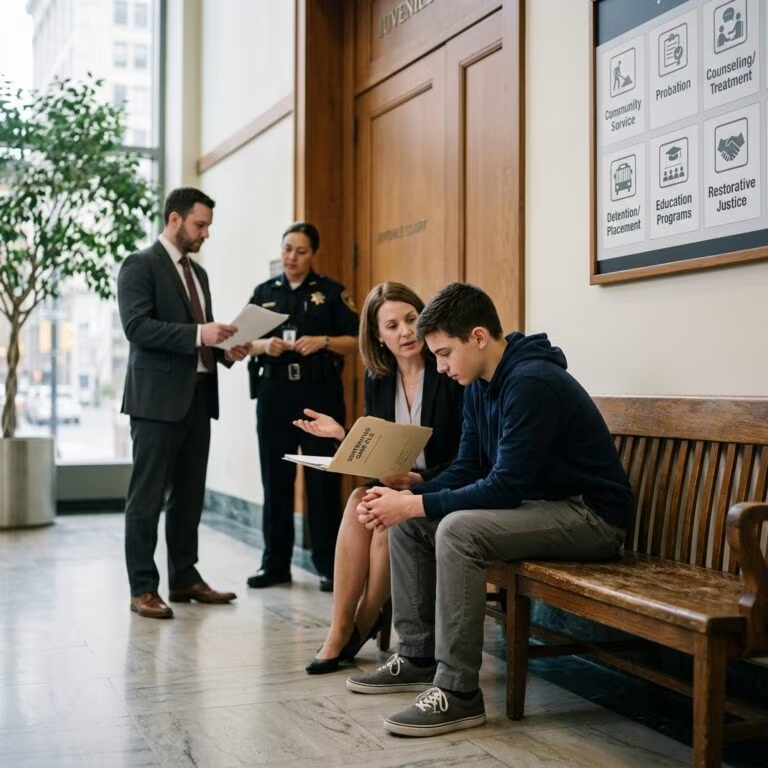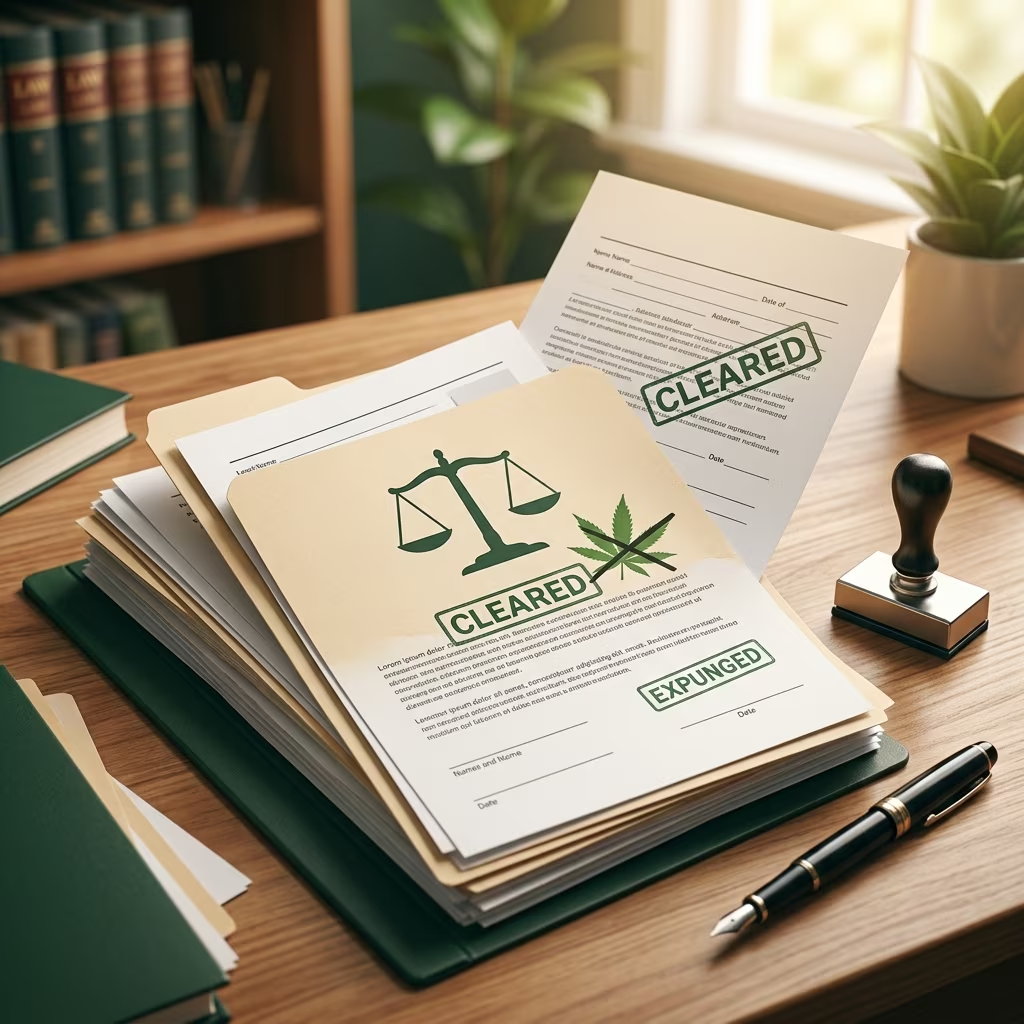
Illinois’ decision to legalize adult-use cannabis did more than allow licensed sales and personal possession. It also created a framework to clear many past cannabis-related records, recognizing how those records have harmed people’s access to jobs, housing, education, and professional licenses. This guide explains how that system works, who qualifies, and what steps you can take if you or someone you know has a cannabis record in Illinois.
1. How Illinois Legalization Changed the Law
On June 25, 2019, Illinois enacted Public Act 101-27, often referred to as the Cannabis Regulation and Tax Act, which legalized recreational cannabis for adults 21 and older and created new expungement mechanisms for certain cannabis records. Retail sales and legal possession began on January 1, 2020. The law acknowledges that earlier enforcement disproportionately affected marginalized communities and attempts to address those harms through record clearing.
Key goals of the law include:
- Legalizing possession and use of limited amounts of cannabis for adults 21+ under state law.
- Reducing the long-term impact of low-level cannabis enforcement by expunging or sealing records where possible.
- Standardizing procedures for automatic expungement of some records and court-based relief for others.
However, legalization did not automatically erase every cannabis-related record. The type of record, the date, and the specific conduct involved all affect whether and how a record can be cleared.
2. Understanding Expungement vs. Sealing in Illinois
Before looking at cannabis-specific rules, it helps to understand two core concepts in Illinois record relief: expungement and sealing.
| Concept | What It Means | Typical Effect |
|---|---|---|
| Expungement | Destruction or return of the record so it is not available to the public and, in most cases, government agencies. | Record is treated as though it did not occur, with narrow exceptions for law enforcement uses defined by law. |
| Sealing | Record is hidden from most public background checks but is retained and accessible to law enforcement and certain employers. | Most private employers and landlords cannot see the record, although it still exists in state databases. |
For cannabis, the state has placed a heavy emphasis on expungement, especially for lower-level offenses, but in some cases sealing remains an available or supplemental option.
3. What Is a “Minor Cannabis Offense”?
Many of the automatic expungement provisions apply to what Illinois law defines as a minor cannabis offense. Under Public Act 101-27, a minor cannabis offense generally involves:
- Possession, manufacture, delivery, or possession with intent to deliver 30 grams or less of cannabis; and
- No associated violent crime in the same case; and
- Conduct that occurred before June 25, 2019 (the date the law took effect).
The law distinguishes between:
- Arrests without conviction for minor cannabis offenses; and
- Convictions for minor cannabis offenses (often handled separately, sometimes through a pardon or motion process).
This definition matters because it determines whether records qualify for automatic expungement or whether you need to affirmatively go to court and request relief.
4. Automatic Expungement of Certain Arrest Records
The law requires law enforcement agencies to automatically expunge police arrest records for qualifying minor cannabis offenses that did not lead to a conviction, under specific timeframes. These are typically non-conviction events where charges were never filed, were dismissed, or the person was acquitted.
4.1 Who qualifies for automatic arrest expungement?
Your arrest record may qualify for automatic expungement if:
- The arrest involved a minor cannabis offense (as defined above);
- You were an adult at the time of the arrest;
- At least one year has passed since the arrest;
- No charges were filed, or charges were dismissed, vacated, or ended in acquittal;
- The case did not include giving cannabis to a minor who was at least three years younger, and did not include a violent offense in the same incident.
If these conditions are satisfied, law enforcement agencies must clear the arrest record according to a schedule set out in statute.
4.2 Statutory timelines for automatic expungement
The Illinois State Police and other agencies were given staggered deadlines to automatically expunge eligible non-conviction minor cannabis offense records.
| Arrest Date Range (Non-Conviction Minor Cannabis Offense) | Deadline for Automatic Expungement |
|---|---|
| January 1, 2013 – June 25, 2019 | Must be expunged by January 1, 2021 |
| January 1, 2000 – December 31, 2012 | Must be expunged by January 1, 2023 |
| Before January 1, 2000 | Must be expunged by January 1, 2025 |
Importantly, this automatic process applies to law enforcement records of arrest, not to court case files. Court records require additional action.
5. Clearing Cannabis Convictions: When You Must Go to Court
Cannabis convictions are handled differently than non-conviction arrests. While some convictions for minor cannabis offenses may be vacated and expunged through initiative by prosecutors or via mass relief, many people still need to pursue relief directly through the courts.
5.1 Types of cannabis convictions that may be eligible
Illinois created pathways for certain possession and low-level delivery convictions to be vacated and expunged if they fall within specific weight limits and date ranges. Examples include:
- Possession of up to 500 grams of cannabis (with date limitations);
- Delivery or possession with intent to deliver less than 30 grams;
- Certain attempt offenses tied to these quantities.
Eligibility depends on:
- The amount of cannabis involved;
- The offense date and applicable statute at the time;
- Whether the incident involved violence or more serious related conduct (which may disqualify a case).
People with eligible convictions often must file a Motion to Vacate and Expunge in the circuit court where they were convicted, unless the local State’s Attorney initiates relief on their behalf.
5.2 Motion to Vacate and Expunge Eligible Cannabis Convictions
The Illinois courts provide standardized forms and detailed instructions for filing a Motion to Vacate & Expunge Eligible Cannabis Convictions. This process typically involves:
- Obtaining your criminal history so you can identify all eligible cannabis cases;
- Completing the mandatory court forms, listing every qualifying case and case number;
- Explaining how long it has been since your last conviction and why relief is important;
- Filing the motion with the circuit clerk in the county where the conviction occurred;
- Providing copies to the State’s Attorney and other required agencies, and appearing for any scheduled hearings.
Standardized form suites for expungement and sealing, including cannabis-specific forms, are available through the Office of the Illinois Courts.
6. Verifying That Your Cannabis Record Has Been Cleared
Even when the law requires automatic expungement or a court grants an expungement order, it can take time for all agencies to update their databases. Illinois law gives law enforcement agencies a deadline (commonly 60 days) to carry out court-issued expungement and sealing orders, but delays can still occur.
People sometimes discover that an old case still appears on background checks even after a court grants relief, because the central state database has not yet been updated. The Illinois State Police recommends that individuals use the Access and Review process to confirm that eligible minor cannabis offense records have been removed from their criminal history file.
Practical steps to confirm your status include:
- Requesting an official copy of your Illinois criminal history record through the Access and Review system;
- Comparing that record to your court orders to ensure the changes have been applied;
- Following up with the Illinois State Police or the relevant law enforcement agency if records still appear after the statutory compliance period.
7. Common Challenges and Delays
Although Illinois’ cannabis expungement framework is extensive, implementation has not always been smooth. Legal aid organizations and reporters have documented significant delays in clearing records even after court orders are issued.
Some reported challenges include:
- Lengthy processing times: It can take many months, sometimes up to a year, from filing a petition to seeing the record cleared in practice, depending on the county and case complexity.
- Agency coordination issues: Courts, state police, local police departments, and third-party background check companies must all update their records, and they do not always move at the same pace.
- Confusion about eligibility: People may assume that legalization erased all cannabis records automatically, when in fact many convictions still require individual action.
Recent reforms such as Illinois’ Clean Slate Act, which aims to expand and automate record relief more broadly, may help reduce some of these gaps over time, but cannabis expungement still often requires persistence and careful follow-through.
8. Practical Tips Before You File
Anyone considering cannabis-related expungement in Illinois should approach the process methodically. The following steps can help you prepare:
- Gather your records
Obtain your complete criminal history, including all case numbers and arrest dates. This may involve pulling court dockets from the circuit clerk and requesting your state criminal history record via Access and Review. - Identify which cases are cannabis-related
Look for charges that reference cannabis (marijuana) statutes, indicate possession, delivery, or related attempt offenses, and then confirm the quantity and dates. - Check whether automatic expungement should have applied
If your record consists only of non-conviction minor cannabis offense arrests within the timeframes outlined above, confirm whether they have already been removed. - Review cannabis eligibility resources
Use official instructions and guides from the Illinois courts and related programs to determine if your convictions fall within the authorized weight limits and time periods for relief. - Consider legal assistance
Illinois funds statewide services such as New Leaf Illinois, which connects people with legal aid providers who can evaluate cannabis records and assist with petitions at no cost or low cost.
9. FAQs About Illinois Cannabis Expungement
Q1. Does legalization mean all cannabis records are erased?
No. Legalization created automatic expungement for some non-conviction minor cannabis offense arrests and pathways for relief for certain convictions, but many people still need to file motions in court or verify that automatic expungement has occurred.
Q2. Are court records expunged automatically too?
Generally, no. Automatic expungement for minor cannabis offenses primarily targets law enforcement arrest records. Court case files usually require a separate expungement proceeding, even if the underlying arrest was automatically cleared.
Q3. What if my cannabis case involved a violent offense?
Cases that include a violent offense in the same incident are usually excluded from the definition of a minor cannabis offense and are less likely to qualify for automatic or simplified expungement. Those situations require individualized legal analysis.
Q4. Can I be asked about expunged cannabis cases by most employers?
Illinois law limits when employers can inquire about or rely on expunged or sealed records, and in many situations they are prohibited from asking whether you have had records expunged or sealed. Certain sensitive positions and agencies may have different rules.
Q5. How do I know which forms to use?
The Office of the Illinois Courts provides standardized expungement and sealing forms, including specific forms and instructions for vacating and expunging eligible cannabis convictions. These resources explain which forms apply to your situation and how to complete and file them.
Q6. What if my record still appears on background checks after an expungement order?
If your record still appears after a judge has granted expungement or sealing and sufficient time has passed for agencies to comply, you may need to contact the Illinois State Police, the relevant local agencies, or seek help from a legal aid program to ensure compliance and update third-party background check databases.
References
- Cannabis Expungement Information and Forms — Office of the State Appellate Defender (Illinois). 2023-01-01. https://osad.illinois.gov/expungement/cannabis-expungement.html
- Bureau of Identification – Cannabis Expungements — Illinois State Police. 2022-06-01. https://isp.illinois.gov/BureauOfIdentification/CannabisExpungements
- Even though marijuana is legal in Illinois, clearing old criminal records still a challenge — Capitol News Illinois. 2024-01-19. https://capitolnewsillinois.com/news/even-though-marijuana-is-legal-in-illinois-clearing-old-criminal-records-still-a-challenge/
- Cannabis is legal now. Can I clear my record? — Illinois Legal Aid Online. 2023-07-01. https://www.illinoislegalaid.org/new-leaf/weed-legal-now-can-i-clear-my-record
- Expungement and Sealing – Circuit Court Standardized Forms Suites — Office of the Illinois Courts. 2022-05-01. https://www.illinoiscourts.gov/documents-and-forms/approved-forms/circuit-court-standardized-forms-suites/expungement-sealing/
- How to Vacate & Expunge Eligible Cannabis Convictions (CXP Instructions) — Office of the Illinois Courts. 2021-01-01. https://ilcourtsaudio.blob.core.windows.net/antilles-resources/resources/c1b07890-c843-44d9-ac3c-2107c9253e11/CXP%20Instructions.pdf
- FAQs — New Leaf Illinois. 2023-04-01. https://newleafillinois.org/s/faqs