
Clear Property Titles: When You Need a Real Estate Lawyer
Understand clear titles, common defects, title searches, and when hiring a real estate attorney can safeguard your home purchase.
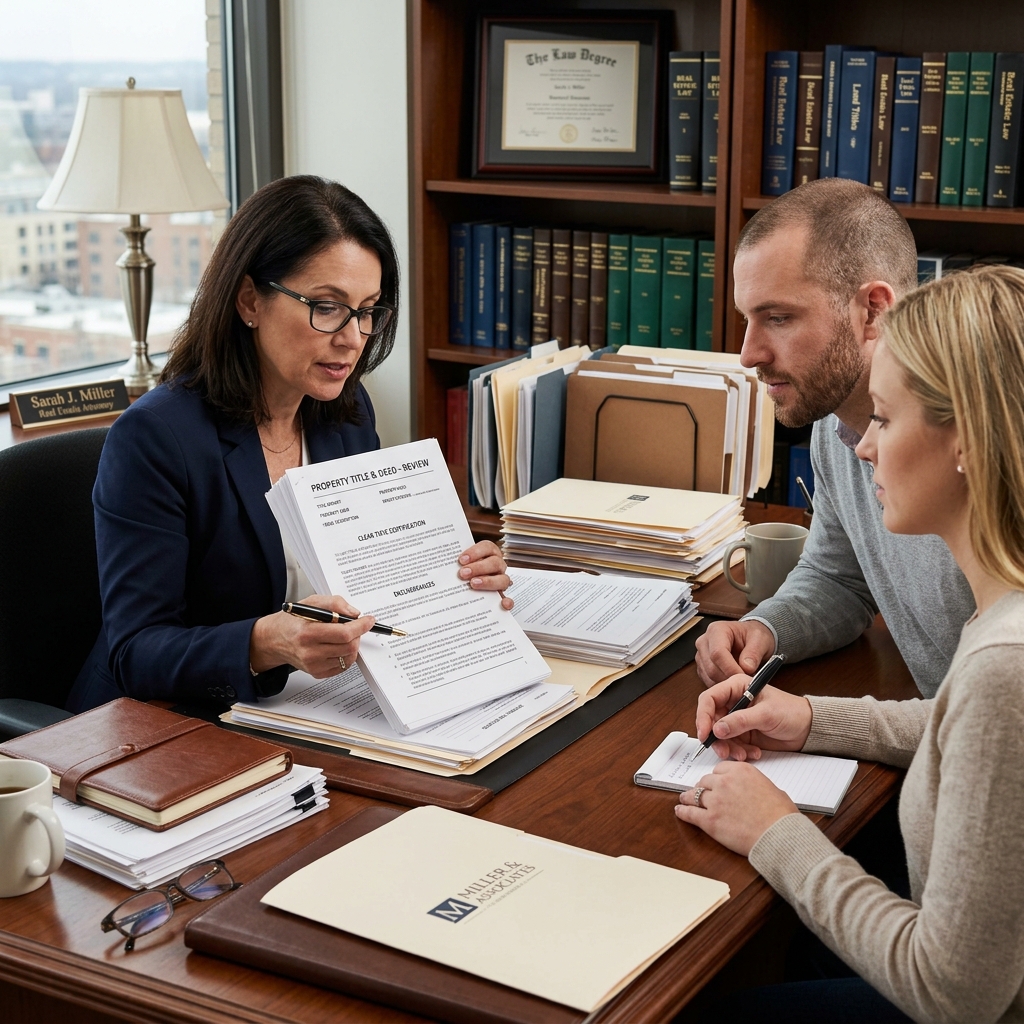
Buying a home is often the largest financial decision most people make, and the quality of the title you receive is just as critical as the price you pay. A clear title means you truly own what you think you are buying: the property is free of undisclosed claims, liens, or legal disputes that could threaten your ownership later. Ensuring that the title is clear usually involves a combination of title searches, title insurance, and, in many situations, the guidance of a real estate attorney.
What “Clear Title” Really Means
In real estate law, a clear title (often called a marketable title) is one that is free from reasonable doubt about ownership and free from significant defects that would make a buyer or lender hesitate to accept it.
A title is generally considered clear when:
- The current owner has full legal ownership rights that can be transferred.
- There are no undisclosed liens, such as unpaid mortgages, tax liens, or judgment liens, that encumber the property.
- There are no unresolved ownership claims or disputes, such as competing heirs or former spouses claiming an interest.
- The legal description in prior deeds matches the property being sold and there are no obvious errors in the chain of title.
When a title is not clear, it is often described as having a “cloud.” A cloud can be as minor as a recording error or as serious as a pending lawsuit that challenges the owner’s rights.
Common Defects That Can Cloud a Title
Many buyers assume that if the seller appears trustworthy and the property looks good, the title must be clean. In reality, problems often arise from issues buried in decades of public records. Typical title defects include:
- Liens and unpaid debts
Unpaid mortgages, tax liens, mechanic’s liens for construction work, or judgment liens from lawsuits can attach to the property. These debts must usually be paid or otherwise resolved before you can obtain a clear title. - Recording errors
Clerical mistakes in deeds, misspelled names, or incorrect legal descriptions can create uncertainty about who owns the property or what land is included. - Unknown heirs or inheritance disputes
If a previous owner died and the property was not correctly transferred through probate, heirs may later come forward claiming an interest in the property. - Boundary and survey disputes
Overlapping lot lines, encroachments (such as fences or driveways crossing property boundaries), and conflicting surveys can lead to disagreements with neighbors. - Easements and use restrictions
Utility easements, rights-of-way, or private restrictions recorded by prior owners may limit how you can use the property. Some are acceptable; others may be unexpected and problematic. - Fraud or forged documents
Forged deeds or fraudulent transfers, although less common, can invalidate part of the chain of title.
How a Title Search Works
A title search is the investigation conducted to determine who owns a property and whether any claims or defects affect that ownership. In the United States, property records are typically maintained at the county level, often by a recorder or clerk’s office. A title search examines these records and related documents to follow the property’s history.
Key steps in a typical title search include:
- Reviewing the chain of title, which is the sequence of deeds showing each transfer of ownership over time.
- Checking recorded mortgages, satisfactions of mortgage, and other security instruments to confirm which loans have been paid off.
- Examining tax records and court judgments for liens that may attach to the property.
- Looking for easements, restrictions, or covenants that affect use of the land.
- Confirming whether any prior legal actions, such as foreclosures or quiet title suits, were properly completed.
Some counties provide online access to land records, making it possible for buyers to view the chain of title themselves. However, public records may not capture every interest. Unrecorded leases, informal agreements between family members, or possession by someone living on the property can still create an interest outside the public record.
Title Companies vs. Real Estate Attorneys
Most residential transactions involve a title company or escrow agency. These companies typically perform the title search, manage escrow funds, and issue title insurance policies. A real estate attorney can also perform or review a title search, but their role is broader and oriented toward legal strategy.
| Aspect | Title Company | Real Estate Attorney |
|---|---|---|
| Primary goal | Determine if title is insurable and issue title insurance. | Protect your legal interests, ensure title is legally sound, and advise on risks. |
| Services | Title search, escrow handling, closing coordination. | Legal analysis of documents, contract review, negotiation, and resolving disputes. |
| Representation | Neutral party; typically does not represent buyer or seller as attorney. | Represents you as a client, providing advice tailored to your situation. |
| Handling complex defects | May identify issues but may not litigate or formally resolve disputes. | Can file lawsuits such as quiet title actions and negotiate settlements. |
According to several law firms, a real estate lawyer often goes beyond the standard title search by closely analyzing the chain of title, spotting legal red flags, and taking steps to resolve them before closing. This deeper analysis is especially important when defects are more than routine recording issues.
Title Insurance: What It Does and Doesn’t Cover
Most mortgage lenders require buyers to purchase lender’s title insurance, which protects the lender’s interest if a covered title defect later threatens the validity of their mortgage. Buyers may also opt for an owner’s title insurance policy to protect their own equity in the property.
Title insurance typically:
- Covers certain undiscovered defects that existed before you bought the property, such as previously unknown liens or errors in public records.
- Pays legal costs to defend against covered claims that challenge your title.
- Reimburses you for covered losses up to the policy amount if a defect cannot be resolved.
However, title insurance has limitations. It usually does not cover problems that arise after the policy date, such as new liens you incur, zoning changes, or issues you were aware of but did not disclose. It also may not cover certain unrecorded interests or defects excluded in the policy.
This is one reason many attorneys emphasize that title insurance is not a substitute for legal advice. An insurance policy responds to covered problems after they occur, while legal counsel aims to prevent problems from occurring in the first place.
Quiet Title Actions: Clearing Serious Clouds
When title defects cannot be resolved through routine paperwork—such as obtaining a release of lien or a corrective deed—a more formal process may be necessary. A quiet title action is a lawsuit brought to establish clear ownership and remove adverse claims or clouds on the title.
Real estate lawyers handling quiet title actions typically:
- Investigate the property’s history and identify specific defects or conflicting claims.
- Draft a complaint or petition naming all parties who might claim an interest.
- File the lawsuit in the appropriate court and ensure each party is properly served.
- Participate in hearings or trials, presenting evidence that supports their client’s ownership.
- Request a final judgment that confirms the client’s title and orders correction of public records.
If no one contests the action, a quiet title case can be relatively straightforward and result in a default judgment. When there is a genuine dispute—for example, two heirs claiming the same property—the litigation can be more complex and may involve extensive evidence and testimony.
Do You Always Need a Lawyer to Get a Clear Title?
In many states, residential closings may proceed without a lawyer. Indiana, for example, does not require an attorney to be present at closing; title companies and real estate agents often handle the transaction. Other states, such as Maine and Maryland, have laws or practices that require attorney involvement in certain real estate transactions. Even where not legally required, legal representation can substantially reduce risk.
Situations where hiring a real estate attorney is strongly recommended include:
- When the title search reveals significant defects, such as disputed ownership, large liens, or unclear deeds.
- When the property was inherited, foreclosed, or subject to complex transfers such as divorces or business dissolutions.
- When you are purchasing without a real estate agent or using nonstandard contract forms.
- When you plan major changes to the property, such as development or subdivision, and need to understand restrictions and zoning rules.
- When you are uncomfortable interpreting legal documents on your own and want someone who represents only your interests.
Several law firms emphasize that while you can conduct some title research yourself, a lawyer’s training and experience allow them to spot legal problems that are not obvious in public records and to advise you on the best way to address them.
Practical Steps Buyers Can Take
Whether or not you hire an attorney, you can take practical steps to protect yourself when buying real estate:
- Ask detailed questions about the title search.
Request a summary of any issues discovered, including liens, easements, or prior disputes. - Review the title commitment and policy carefully.
Pay close attention to schedules of exceptions—items not covered by the policy. - Confirm how defects will be resolved before closing.
For example, ensure liens will be paid and releases recorded as part of the closing process. - Consider owner’s title insurance.
Even if not required by your lender, an owner’s policy adds an extra layer of protection for your investment. - Consult a real estate attorney for complex cases.
If anything in the title report is unclear or troubling, legal advice can help you understand the risk and options.
Frequently Asked Questions (FAQ)
Is a clear title the same as owning the property outright?
A clear title means there are no significant legal defects or claims against your ownership. You may still have a mortgage or voluntarily granted easements, but there are no unknown liens or disputes that threaten your ownership.
Can I perform a title search myself?
Many counties provide public access to land records, and you can look up deeds, mortgages, and other documents on your own. However, interpreting these records correctly can be challenging. Title companies and attorneys are trained to identify issues that a layperson might miss.
Do I need a lawyer if my state does not require one at closing?
Legal requirements and best practices are different questions. Even in states that do not require attorneys, many buyers choose to hire a lawyer to review contracts, explain their rights, and handle complex title issues. Whether you need one depends on your comfort level and the complexity of the transaction.
What happens if a title defect is discovered after closing?
If you have title insurance and the problem is covered under your policy, the insurer may pay to defend your title or compensate you for losses. If the issue is not covered, you may need to work with a real estate attorney to negotiate with claimants or file a quiet title action.
Are quiet title actions only for serious disputes?
Quiet title actions are used for a range of problems, from correcting technical defects to resolving contested ownership. Even relatively minor issues may require a quiet title suit when they cannot be fixed with routine paperwork.
References
- Do You Need a Lawyer To Get a Clear Title? — Super Lawyers. 2023-02-15. https://www.superlawyers.com/resources/real-estate/residential-real-estate-transactions/do-you-need-a-lawyer-to-get-a-clear-title/
- The Importance Of Clear Titles In Real Estate — Csépes Law Offices. 2022-08-10. https://csepeslaw.com/the-importance-of-clear-titles-in-real-estate/
- How a Real Estate Lawyer Protects You From Title Disputes — Lulich & Attorneys. 2023-05-01. https://www.lulich.com/how-a-real-estate-lawyer-protects-you-from-title-disputes/
- How Indiana Real Estate Lawyers Handle Quiet Title Actions — Hocker Law, LLC. 2021-11-12. https://www.hockerlawfirm.com/posts/how-indiana-real-estate-lawyers-handle-title-defects-quiet-title-actions
- Residential Real Estate Closing Attorney Indianapolis — GX Law Group. 2022-04-05. https://gxlawgroup.com/real-estate-law/residential-closings/
- Does Indiana Require a Real Estate Attorney at Closing? — Paul Rossi Law. 2022-09-20. https://www.paulrossilaw.com/does-indiana-require-a-real-estate-attorney-at-closing/
- Do You Need a Lawyer to Buy or Sell a Home in Michigan? — The Rubinstein Law Firm. 2023-01-10. https://www.therubinsteinfirm.com/about/blog/do-you-need-a-lawyer-to-buy-or-sell-a-home-in-michigan_ae196.html
Similar Articles








Read full bio of medha deb


