
When Classroom Activism Meets School Policy
Exploring how a Michigan teacher’s Trayvon Martin fundraiser sparked debate over student speech, discipline and educators’ rights.
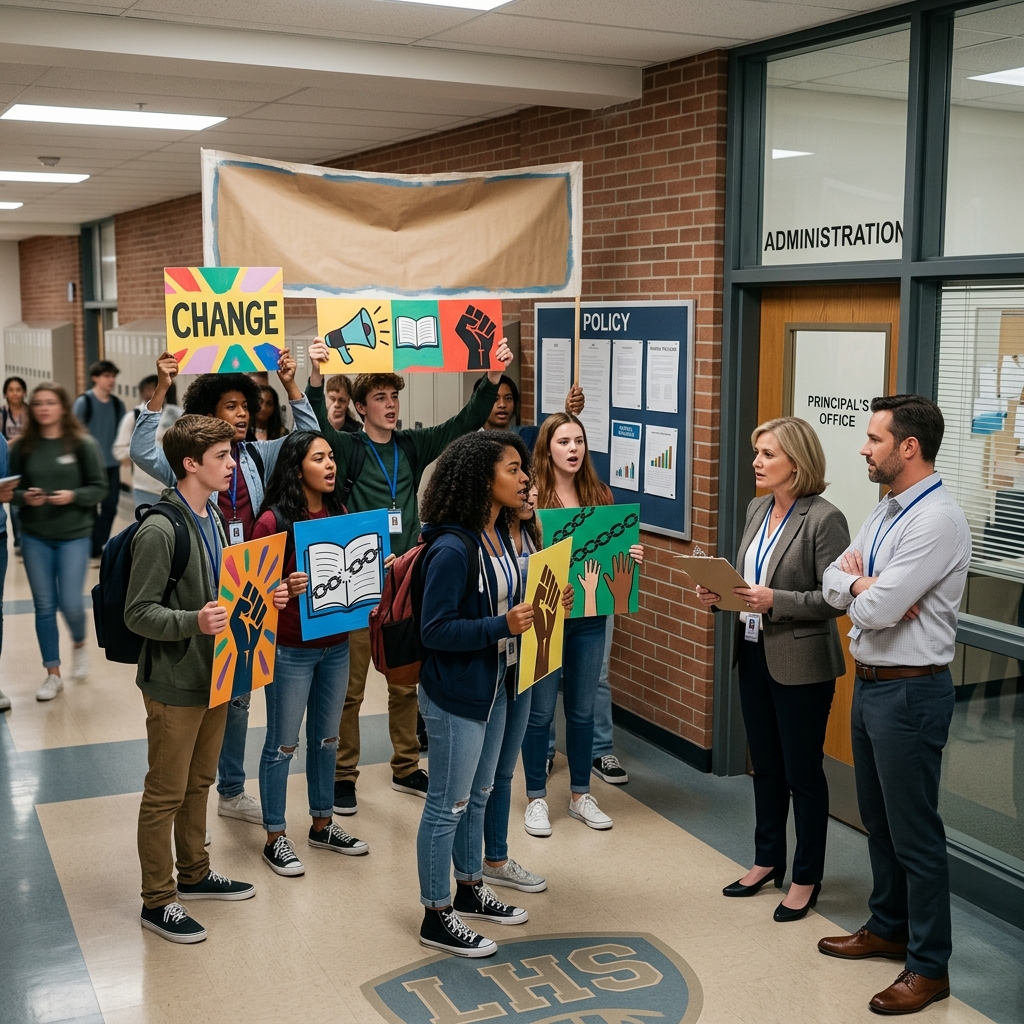
In 2012, a Michigan middle school teacher was dismissed after helping her students plan a fundraiser tied to the death of Trayvon Martin, an unarmed Black teenager shot by neighborhood watch volunteer George Zimmerman in Florida. The incident quickly moved beyond a single school and became a flashpoint for national debates about student activism, teacher authority, and the limits of political expression in public education.
This article uses that controversy as a lens to examine how schools respond when students engage with contentious social issues, what legal frameworks govern student and teacher speech, and why clear policies and communication are essential when classroom learning intersects with public protest.
The Case at the Center: A Fundraiser and a Firing
The Michigan case involved Brooke Harris, an eighth-grade English teacher at a charter school near Detroit, who supported her students’ idea to organize a “wear-a-hoodie” day and collect donations in response to national discussions about Trayvon Martin’s killing. Hoodies had become a symbol of solidarity in demonstrations across the United States, where protesters highlighted racial profiling and perceived injustice in the handling of the case.
According to news reports, students proposed wearing hooded sweatshirts for one day if they contributed a small amount of money, with proceeds intended to support Martin’s family or related causes. Harris reportedly sought administrative approval, met with leadership, and attempted to follow school procedures before promoting the event to students. Despite this, she was ultimately fired, with school officials citing insubordination and policy violations rather than explicitly framing the dismissal as punishment for political speech.
Key Events and Points of Dispute
- Student initiative: The idea originated from students who were following national news about Trayvon Martin and wanted to respond in a tangible way.
- Teacher involvement: Harris helped structure the fundraiser, communicate the plan, and align the proposal with school expectations, at least from her perspective.
- Administrative response: School leadership rejected the fundraiser, reportedly expressing concern about controversy and focus on academics.
- Termination: Harris was dismissed, with the school asserting she defied directives, while supporters argued she was punished for supporting student activism.
- Public backlash: Civil rights advocates and education commentators criticized the firing, viewing it as a chilling signal to teachers who encourage civic engagement.
Trayvon Martin, Public Protest, and the Classroom
Trayvon Martin’s death on February 26, 2012, and the initial decision not to immediately arrest George Zimmerman sparked national and international protests raising concerns about race, self-defense laws, and policing. Students around the country, from middle schools to universities, responded with demonstrations, social media campaigns, and symbolic acts, including wearing hoodies in solidarity.
When such a high-profile case enters the classroom, teachers face a complex task: honoring students’ responses to injustice while maintaining a learning environment and complying with institutional rules. The Michigan controversy illustrates how a lack of shared expectations between teachers and administrators can turn an educational opportunity into a disciplinary crisis.
Legal Framework: Student Speech and School Authority
To understand what schools can and cannot restrict, it helps to look at major U.S. Supreme Court decisions governing student speech in public schools. While the Michigan charter school operates under its own policies, public school standards and constitutional principles offer useful reference points.
| Case | Year | Core Holding |
|---|---|---|
| Tinker v. Des Moines | 1969 | Students retain First Amendment rights at school; political expression can be restricted only if it materially and substantially disrupts school operations. |
| Bethel School Dist. v. Fraser | 1986 | Schools may discipline students for lewd or vulgar speech incompatible with basic educational mission. |
| Morse v. Frederick | 2007 | Schools may restrict student speech reasonably viewed as promoting illegal drug use at a school event. |
Under Tinker v. Des Moines, students wearing symbolic clothing, such as armbands—or hoodies—as political expression are generally protected unless their actions cause substantial disruption or infringe on the rights of others. From that perspective, a hoodie fundraiser related to Trayvon Martin could fall within protected speech if handled responsibly and peacefully.
However, charter schools often have more specific codes of conduct and may assert greater latitude to control events, dress codes, and fundraising activities than traditional public schools. The Michigan case underscores how institutional culture and contractual rules can limit expression even when constitutional principles would otherwise support student speech.
Teachers’ Speech, Employment, and Discretion
The legal terrain for teacher speech is more constrained than for students. In Garcetti v. Ceballos, the Supreme Court held that public employees’ speech made pursuant to their official duties is generally not protected by the First Amendment against employer discipline. That means when teachers speak or act in their capacity as educators—planning lessons, designing activities, or organizing events—school authorities have broad discretion, even if the underlying expression is political.
For charter school teachers like Harris, employment contracts, staff handbooks, and internal governance documents define expectations. If administrators characterize an activity as insubordination, the question becomes whether the teacher followed directives, complied with procedural steps, and respected limits set by leadership, rather than whether the content of the activity was political.
In practice, however, motives and messages are difficult to disentangle. A teacher may believe they are facilitating critical thinking and civic engagement, while administrators may worry that the school appears to endorse a particular side of a controversial case, potentially alienating families or donors.
Common Tensions Between Teachers and Administrators
- Curricular authority: Who decides which social issues are appropriate for class discussion and projects?
- Perception of bias: How can teachers encourage student activism without being seen as pushing a specific political agenda?
- Community relations: How do schools navigate community divisions when national controversies reach the classroom?
- Risk management: Are administrators primarily concerned about disruption, media attention, or legal liability?
Charter Schools: Flexibility and Accountability
Charter schools are public schools that operate under a charter with a sponsor, often enjoying flexibility in curriculum, staffing, and disciplinary policies while remaining accountable for academic outcomes. In some cases, this flexibility can mean stricter behavioral expectations or narrower tolerances for activities perceived as distracting from core instruction.
In the Michigan case, the school’s stated focus on academics was described by leaders as a justification for rejecting the fundraiser and subsequently firing the teacher for noncompliance. Supporters of the school might argue that time and attention should remain on classroom content, standardized assessments, and measurable performance. Critics argued that civic engagement, especially around issues of justice and race, is integral to education and that punishing a teacher for facilitating such engagement undermines that broader mission.
Educational Value of Student Activism
Research in civic education suggests that when students participate in structured discussions of current events and engage in real-world projects, they develop stronger democratic skills, including critical thinking, communication, and social awareness. Carefully guided activism can deepen understanding of law, history, and ethics, particularly when connected to high-profile cases such as Trayvon Martin’s.
- Civic literacy: Students learn how criminal justice systems, media, and public opinion interact, as in the debates around Martin’s killing and Zimmerman’s prosecution.
- Empathy and perspective: Projects like fundraisers can help students consider the impact of tragedy on families and communities.
- Agency: Taking action, even symbolically, can show young people that they have a voice in public conversations.
- Critical reflection: Teachers can guide students to question narratives, examine evidence, and consider different viewpoints.
The challenge lies in designing activities that respect diverse political and cultural perspectives. Encouraging students to explore multiple sides of an issue, rather than treating any fundraiser as endorsement of one viewpoint, can help align activism with educational goals.
Policy Lessons from the Michigan Fundraiser
Although the Michigan case revolved around a single fundraiser, it highlights broader policy lessons for schools and districts seeking to handle student activism constructively.
1. Clarify Rules for Fundraising and Symbolic Expression
Schools benefit from written, accessible policies that address:
- What kinds of fundraising activities are allowed on campus.
- Procedures for seeking approval from administrators.
- Expectations for faculty involvement and supervision.
- Dress code exceptions for symbolic events (e.g., hoodies, armbands).
Clear protocols help prevent disagreements over whether a teacher exceeded their authority or misunderstood instructions.
2. Provide Training on Handling Controversial Topics
Professional development can equip teachers with strategies to discuss sensitive issues like race, policing, and violence without polarizing classrooms or communities. Training can include:
- Facilitation techniques for diverse viewpoints.
- Guidance on separating personal opinions from curricular goals.
- Legal basics on student and teacher speech rights.
- Protocols for involving counselors or support staff when topics are emotionally charged.
3. Encourage Dialogue Between Staff and Administration
Proactive communication can reduce conflict. Before launching potentially sensitive projects, teachers and administrators can collaborate to set boundaries, define educational objectives, and identify risks. In the Michigan case, advocates for Harris argued that she sought approval but faced abrupt discipline rather than constructive dialogue.
4. Center Student Learning, Not Institutional Fear
Ultimately, decisions about classroom activism should be guided by learning outcomes: whether students are gaining understanding, skills, and ethical awareness. When schools respond primarily out of fear of controversy, they may unintentionally send the message that serious social issues are off-limits, discouraging young people from engaging with democratic processes.
Practical Guidance for Educators
Teachers who want to incorporate activism or real-world controversies into their classrooms can use several practical strategies to reduce risk and increase educational value.
- Align activities with standards: Connect projects to explicit learning objectives in civics, language arts, social studies, or ethics.
- Offer multiple options: Allow students to choose among topics and activities so participation is not tied to a single viewpoint.
- Document approvals: Keep written records of requests and administrative decisions regarding events and fundraisers.
- Engage families: Communicate with parents or guardians about the educational purpose of activities and invite questions.
- Create reflection spaces: Ask students to write or talk about what they learned and how their views evolved during the project.
Frequently Asked Questions (FAQs)
Can students in public schools organize fundraisers related to political or social issues?
Many schools allow student-led fundraisers, but they are typically governed by district policies and require administrative approval. As long as events do not materially disrupt school operations and comply with rules, they may be permissible. However, schools retain broad discretion to approve or deny specific proposals, including those tied to controversial issues.
Are teachers legally protected when they support student activism?
Teachers have some free speech protections, especially as private citizens, but speech made as part of their official duties can be regulated by their employer. Support for student activism that involves organizing events, raising funds, or promoting symbolic actions may be treated as work-related conduct. Employment contracts and local policies typically determine how much discretion teachers have.
Does wearing symbolic clothing, like hoodies, count as protected speech?
Under Tinker v. Des Moines, symbolic clothing used to communicate a political message is generally considered speech protected by the First Amendment in public schools, unless it causes substantial disruption or violates neutral dress code rules. Specific applications depend on local policies and how school officials assess potential disruption.
Why are charter schools often involved in high-profile discipline disputes?
Charter schools can adopt distinctive missions, structures, and disciplinary frameworks, emphasizing order, academic focus, or particular pedagogical models. This flexibility can lead to controversies when expectations differ from those of traditional public schools or when the charter’s rules clash with community expectations around student expression.
What can schools do to handle future controversies more constructively?
Schools can establish clear policies, train staff on civic and controversial-issues education, involve students and families in policy conversations, and prioritize dialogue over punishment. When conflicts arise, focusing on learning goals, rather than image management, can help maintain trust and support democratic engagement.
References
- Student Expression — U.S. Department of Education, Office for Civil Rights. 2020-09-01. https://www2.ed.gov/about/offices/list/ocr/docs/hs-ed-guidance-student-expression-2020.pdf
- Michigan Teacher Says She Was Fired Over Trayvon Martin Fundraiser — NBC News. 2012-05-01. https://www.nbcnews.com/news/world/michigan-teacher-says-she-was-fired-over-trayvon-martin-fundraiser-flna698559
- Mich. Teacher: I Was Fired Over Trayvon Fundraiser — CBS News. 2012-05-02. https://www.cbsnews.com/miami/news/mich-teacher-i-was-fired-over-trayvon-fundraiser/
- Michigan Teacher Fired for Organizing Trayvon Martin Fundraiser — The Atlantic. 2012-05-03. https://www.theatlantic.com/national/archive/2012/05/michigan-teacher-fired-for-organizing-trayvon-martin-fundraiser/256815/
- Trayvon Martin Shooting Fast Facts — CNN. 2022-02-25. https://edition.cnn.com/2013/06/05/us/trayvon-martin-shooting-fast-facts
- Garcetti v. Ceballos, 547 U.S. 410 — Supreme Court of the United States. 2006-05-30. https://supreme.justia.com/cases/federal/us/547/410/
Similar Articles








Read full bio of Sneha Tete




