
Class-Action Lawsuits and the Drive for Foster Care Reform
How impact litigation and systemic legal challenges are reshaping America’s child welfare and foster care systems.
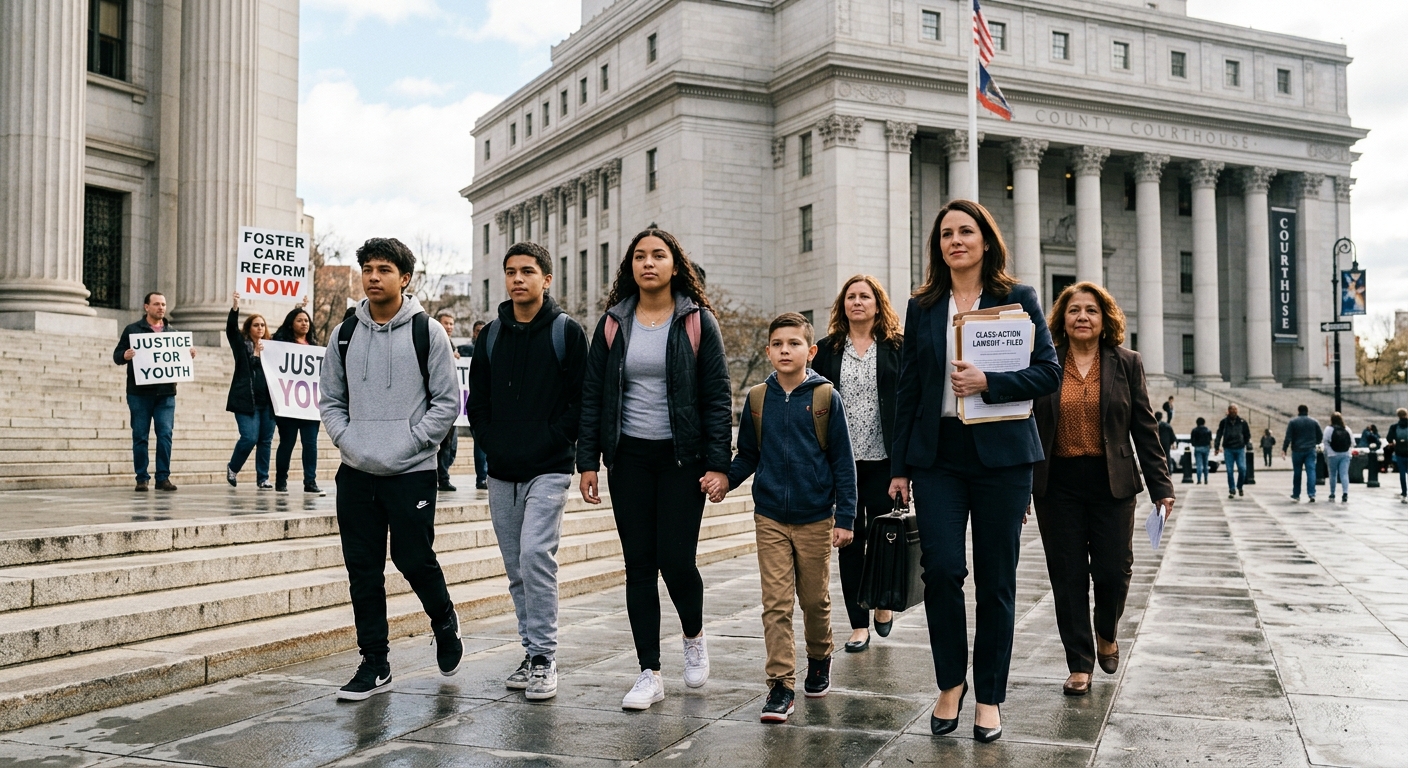
The Complex Landscape of Child Welfare Systems
Child protection agencies across the United States operate under a critical mandate to safeguard the most vulnerable members of society. In theory, foster care is designed to provide a temporary, safe haven for children who have experienced severe abuse or neglect, offering them stability until they can be safely reunited with their biological families or placed into permanent adoptive homes. However, the grim reality is that many child welfare systems frequently fall short of this foundational goal. Plagued by chronic underfunding, severe administrative mismanagement, high caseworker turnover, and systemic neglect, these safety nets sometimes inadvertently subject children to further trauma. When children are continuously shuffled between multiple placements, denied necessary medical or psychiatric care, or housed in inappropriate congregate shelters, the system meant to protect them becomes a source of ongoing harm.
For decades, legislative bodies and internal agency task forces have attempted to address these deeply entrenched issues. Yet, bureaucratic inertia and competing budgetary priorities often stall meaningful progress. When traditional avenues of public policy fail to protect the rights of children in state custody, advocates increasingly turn to the judicial system. Impact litigation—specifically in the form of federal class-action lawsuits—has emerged as one of the most powerful catalysts for sweeping, systemic reform in child welfare. By holding state governments legally accountable for constitutional violations, these legal battles force comprehensive overhauls of broken foster care systems.
The Constitutional Foundation for Accountability
The legal strategy behind child welfare class-action lawsuits is firmly rooted in the United States Constitution. When a state removes children from their biological parents and places them into foster care, the state assumes a profound legal and moral responsibility for their well-being. By taking children into its legal custody, the government acts in loco parentis (in the place of a parent), and subsequently triggers specific constitutional protections.
Under the Substantive Due Process Clause of the Fourteenth Amendment, individuals held in state custody—including foster children—have a recognized constitutional right to be free from unreasonable risk of harm. The courts have interpreted this to mean that the state must provide adequate food, shelter, clothing, medical care, and reasonable safety. When a state’s foster care system systematically fails to provide these basic necessities—for example, by ignoring reports of maltreatment within foster homes or failing to assign case workers to monitor vulnerable youths—it is not merely an administrative failure; it is a direct violation of the children’s civil rights. Advocates and civil rights attorneys leverage this constitutional catch-22 to file class-action lawsuits on behalf of thousands of foster children simultaneously, transforming individual grievances into a massive indictment of the entire agency’s operational framework.
A Watershed Moment: The Oklahoma Paradigm
To fully grasp how systemic legal challenges catalyze change, one must examine historically significant impact litigation. A defining example of this process occurred in Oklahoma, originating from a monumental 2008 federal class-action lawsuit filed by child advocates and local attorneys on behalf of thousands of abused and neglected children. The lawsuit alleged that the state’s foster care system was perilously flawed, subjecting children to an unacceptable risk of harm and violating their foundational constitutional rights.
After years of contentious litigation, a pivotal turning point arrived in late 2011. A federal judge ruled that the class-action suit could proceed on its substantial constitutional claims. Shortly thereafter, acknowledging the profound systemic problems, the state’s human services commissioners voted in favor of settling the lawsuit. This was a monumental concession; it signaled that the agency leadership was finally coming to grips with the severity of the crisis and was willing to embrace legally binding, wide-scale reform rather than continuing a protracted legal defense.
This settlement gave birth to the Pinnacle Plan—a comprehensive, multi-year roadmap aimed at radically overhauling Oklahoma’s child welfare operations. The plan mandated strict performance improvements, ranging from aggressive recruitment of new foster families to drastically reducing the reliance on emergency shelters for young children. The state was forced to invest over $150 million annually to hire hundreds of new caseworkers, effectively reducing individual caseloads to manageable levels. After more than a decade of intensive, court-monitored oversight, Oklahoma achieved a remarkable transformation. By early 2025, the state successfully fulfilled its obligations under the settlement, reducing the number of children in state custody from over 11,000 to roughly 5,800, transforming a system once in crisis into a national model for sustainable reform.
The Architecture of a Child Welfare Consent Decree
Class-action lawsuits in the child welfare arena rarely end in dramatic jury verdicts. Instead, they are typically resolved through comprehensive settlement agreements and court-enforceable consent decrees. These agreements are meticulously crafted documents that outline specific, measurable, and legally binding targets that the state agency must achieve over a designated period.
To ensure compliance, these settlements invariably require the appointment of independent monitors or “co-neutrals.” These are external child welfare experts approved by the federal court who are tasked with evaluating the agency’s performance, analyzing internal data, and publishing regular public reports on the state’s progress. If a state fails to meet its targets in good faith, plaintiffs’ attorneys can file motions to enforce the decree, and a federal judge can hold the agency in contempt or impose further sanctions.
Common Performance Metrics Tracked in Consent Decrees
| Performance Metric | Objective in Settlement Agreements |
|---|---|
| Caseworker Workloads | Mandating strict limits on the number of cases a single worker can handle (often capping at 12-15 families) to ensure adequate attention and support. |
| Placement Stability | Reducing the frequency with which foster children are moved between different homes, thereby minimizing psychological trauma and educational disruption. |
| Maltreatment in Care | Implementing stringent safety protocols and monitoring to drive the rate of abuse or neglect occurring *within* state-licensed foster homes down to zero. |
| Shelter Reduction | Phasing out the use of institutional, congregate-care shelters for young children in favor of family-based, therapeutic foster home settings. |
| Timeliness of Permanency | Ensuring children are either safely reunited with biological parents or successfully adopted within legally mandated timeframes, preventing children from “languishing” in the system. |
Expanding the Lens: A National Strategy for Reform
The paradigm established in Oklahoma is not an isolated phenomenon. Across the nation, class-action litigation has become a primary tool for holding child welfare agencies accountable. Advocacy groups have successfully brought over forty similar lawsuits against jurisdictions from coast to coast, targeting deep-seated failures in states like Michigan, Texas, Oregon, and South Carolina. In each case, the core legal arguments remain consistent: systemic mismanagement and chronic resource deprivation result in ongoing constitutional violations against youth in care.
These lawsuits fundamentally alter the political calculus for state legislators. While funding child welfare programs might not always be politically advantageous in standard budget negotiations, a federal court order changes the dynamic entirely. Consent decrees force state legislatures to appropriate the necessary funds to overhaul their systems, effectively bypassing political gridlock. By mandating higher salaries to retain experienced caseworkers, funding predictive analytics to better track child safety, and subsidizing therapeutic services, impact litigation directly translates constitutional theory into tangible resources for vulnerable youth.
The Complexities of Implementation and Lasting Change
While a settlement agreement provides a clear roadmap for reform, executing that plan is an intensely complex endeavor. True systemic change often takes a decade or more to take root. One of the most persistent hurdles is workforce stabilization. Even with increased funding, child welfare work is emotionally taxing, leading to high burnout rates. Maintaining manageable caseloads is impossible if the agency cannot retain experienced staff. Furthermore, states often struggle to recruit foster parents in rural areas, leading to geographical disparities in the quality of care provided.
Moreover, true reform must address the systemic socioeconomic drivers of child welfare involvement. Research continually demonstrates that poverty and lack of community resources are inextricably linked to foster care entry rates. According to studies analyzing socioeconomic policies, initiatives like refundable Earned Income Tax Credits (EITC) can significantly reduce child maltreatment and foster care entries by alleviating familial financial stress. Therefore, while class-action lawsuits are crucial for fixing the immediate crisis of care *within* the system, holistic reform requires states to simultaneously invest in community-based prevention services that keep families safely intact from the outset.
Conclusion: The Imperative of Ongoing Accountability
Impact litigation remains one of the most effective levers for driving systemic change in America’s foster care systems. By forcing government agencies to confront their systemic failures under the watchful eye of a federal court, class-action lawsuits bridge the gap between bureaucratic complacency and constitutional accountability. While the journey from a broken system to a functioning one is fraught with logistical and political challenges, history proves that rigorous oversight yields life-altering results. The successful conclusion of decades-long legal battles demonstrates that when state governments are compelled to prioritize the safety, stability, and dignity of foster youth, monumental transformations are not just possible—they are achievable.
Frequently Asked Questions (FAQs)
- What is impact litigation?
Impact litigation refers to the practice of filing lawsuits that are intended to effect broader societal or systemic changes, beyond the specific individuals involved in the case. In child welfare, this typically involves class-action suits targeting systemic agency failures. - How does the Fourteenth Amendment protect foster children?
The Substantive Due Process Clause of the Fourteenth Amendment requires states to ensure the safety and well-being of individuals in their custody. Because foster children are involuntarily in state care, the state has a constitutional duty to protect them from harm and provide essential services. - What is a consent decree in a legal context?
A consent decree is a legally binding settlement agreement approved by a judge. It resolves a dispute between parties without an admission of guilt or liability but requires the defending party (often a state agency) to implement specific reforms under court supervision. - Why does it take so long to exit a child welfare settlement agreement?
Systemic overhauls involve hiring and training thousands of staff, rewriting policies, recruiting foster families, and upgrading technological infrastructure. Sustaining these improvements and proving long-term compliance to independent court monitors frequently takes 10 to 15 years.
References
- House Members Comment on Release from Pinnacle Plan — Oklahoma House of Representatives. 2025-03-13. https://okhouse.gov/news/press-releases/house-members-comment-on-release-from-pinnacle-plan
- CONSTITUTIONAL CATCH-22: THE UNVINDICATED RIGHTS OF FOSTER CHILDREN — Stanford Law School. 2025-05-03. https://law.stanford.edu/publications/constitutional-catch-22-the-unvindicated-rights-of-foster-children
- Reducing the Number of Children Entering Foster Care: Effects of State Earned Income Tax Credits — Centers for Disease Control and Prevention (CDC Stacks). 2020-01-23. https://stacks.cdc.gov/view/cdc/91166
- Summary of Child Welfare Class Action Litigation — New Mexico Legislature / Casey Family Programs. 2025-02-18. https://www.nmlegis.gov/handouts/LHHS%20092324%20Item%202%20Summary%20of%20child%20welfare%20class%20action%20litigation.pdf
Similar Articles








Read full bio of Sneha Tete


