
Navigating Civil Liberties at the U.S. Border
How national security and the Constitution impact your border rights.
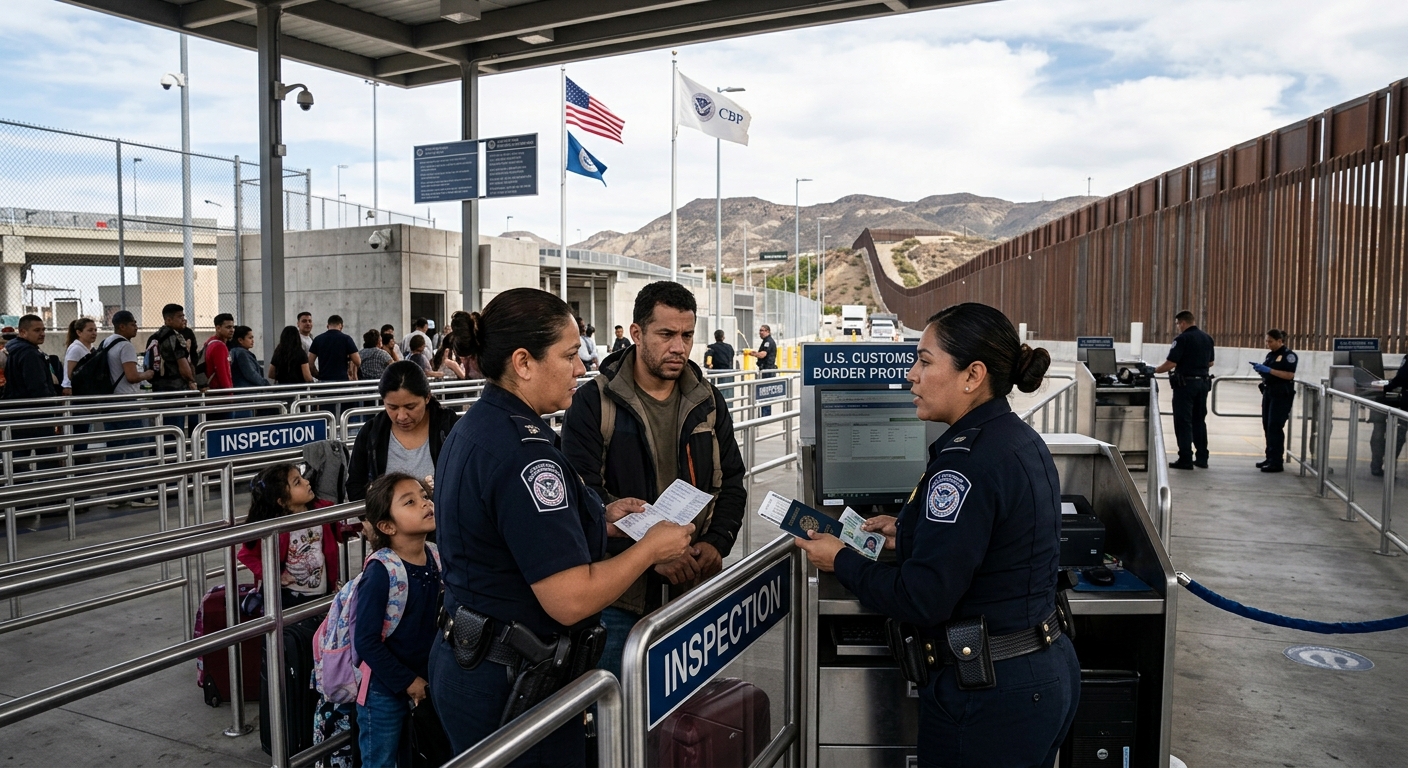
The Complex Balance of Border Security and Civil Liberties
The United States is a nation defined not only by its expansive geography but also by its foundational commitment to constitutional rights. However, the geographic perimeters of the country often serve as unique legal environments where standard constitutional protections are intensely scrutinized, heavily modified, and sometimes significantly diminished. The mandate to secure the nation against transnational threats—ranging from terrorism and drug trafficking to unauthorized immigration—frequently collides with the civil liberties of citizens and non-citizens alike. U.S. Customs and Border Protection (CBP), the federal agency tasked with regulating cross-border movement, operates with broad statutory authority that creates a complex legal landscape. For anyone living, working, or traveling within the United States, understanding the intersection of border security protocols and civil liberties is not merely a legal exercise; it is a vital component of civic awareness. The tension between maintaining robust national security and preserving the core tenets of personal freedom remains one of the most critical legal debates of our time.
The Fourth Amendment and the “Border Search Exception”
At the heart of the tension between border enforcement and personal privacy is the Fourth Amendment to the U.S. Constitution, which protects individuals from “unreasonable searches and seizures.” In a typical domestic scenario, law enforcement officers must obtain a warrant supported by probable cause to search a person, their vehicle, or their home . However, jurisprudence has long recognized an exemption to this rule when applied to the nation’s borders.
Known as the “border search exception,” this legal doctrine permits federal agents to conduct routine, warrantless searches of individuals and their belongings as they enter or exit the United States . The rationale behind this exception is rooted in the sovereign right of a nation to protect its territorial integrity. The courts have historically held that the government’s interest in preventing the entry of unwanted persons and contraband renders routine border searches reasonable simply by virtue of where they occur.
This exception, however, is not absolute. Legal frameworks distinguish between routine and non-routine searches. A routine search, which might involve inspecting a traveler’s luggage or questioning their itinerary, requires no individualized suspicion. Conversely, a non-routine search—such as a prolonged detention, a forensic analysis of personal property, or an invasive physical examination—typically demands at least “reasonable suspicion” of unlawful activity. Despite this distinction, the precise boundary between a routine and non-routine search remains heavily contested, often leaving travelers uncertain about their rights during an encounter with border officials.
Decoding the “100-Mile Border Zone”
Perhaps no concept in border enforcement is as widely misunderstood—or as consequential—as the so-called “100-mile border zone.” Under the Immigration and Nationality Act, federal regulations define a reasonable distance from the border as 100 air miles from any external boundary of the United States. This includes not only land borders with Mexico and Canada but also coastal boundaries along the Atlantic, Pacific, and Gulf of Mexico.
The implications of this geographical definition are staggering. The 100-mile zone encompasses roughly two-thirds of the total United States population. Major metropolitan centers, including New York City, Los Angeles, Chicago, Philadelphia, and Boston, fall entirely within this jurisdiction. For the millions of individuals residing within this zone, CBP operates with enhanced enforcement authorities that extend far beyond physical ports of entry.
Within this region, CBP agents are authorized to board vessels, trains, and buses, and they frequently establish inland immigration checkpoints. At these checkpoints, agents can briefly stop vehicles to inquire about the citizenship and immigration status of the occupants. While the courts have upheld the constitutionality of these specific, brief stops at fixed checkpoints, they explicitly ruled that agents cannot conduct warrantless searches of the vehicle or extended detentions without probable cause or consent. The pervasive presence of border enforcement mechanisms deep within the interior of the country raises significant concerns about the militarization of civilian spaces and the dilution of Fourth Amendment rights for individuals who may simply be commuting to work or traveling within their own state.
The Digital Frontier: Electronic Device Searches
In the modern era, physical luggage often reveals far less about an individual than their electronic devices. Laptops, smartphones, and tablets serve as comprehensive archives of our personal, professional, and intimate lives. Consequently, the search of electronic devices at the border has emerged as a major constitutional battlefield.
According to official guidelines updated in recent years, including CBP Directive No. 3340-049B, border agents retain the authority to conduct basic, manual searches of electronic devices without a warrant or specific individualized suspicion . A manual search involves an agent physically scrolling through the device, examining visible photos, messages, and applications. However, the directive stipulates that a forensic search—which involves connecting the device to external equipment to copy, decrypt, or extract hidden data—requires reasonable suspicion of activity that violates customs laws or poses a national security threat .
Civil liberties advocates argue that given the immense volume of sensitive information contained on modern devices, treating a smartphone like a conventional piece of luggage is a profound misapplication of the border search exception. Lawsuits have continuously challenged the government’s right to perform even manual searches without a warrant. Transparency reports reveal that CBP conducts tens of thousands of electronic device searches annually . While this represents a small fraction of overall travelers, the impact on those selected can be intensely intrusive. Travelers are often confronted with a difficult choice: provide their device passwords and submit to a privacy invasion, or refuse and face the potential seizure of their expensive equipment and significant travel delays.
Enforcement Strategies: Checkpoints, Roving Patrols, and Profiling
Beyond statutory ports of entry, CBP utilizes a multi-layered enforcement strategy that deeply impacts communities living within the 100-mile zone. Two of the primary mechanisms used in this interior enforcement are fixed immigration checkpoints and roving patrols.
- Immigration Checkpoints: Positioned on major highways leading away from the borders, these checkpoints subject all passing vehicles to brief questioning. Agents may use canines to detect contraband, but the primary legal justification for the stop is to verify immigration status.
- Roving Patrols: Border Patrol agents in marked or unmarked vehicles actively patrol the 100-mile zone, pulling over motorists based on a combination of factors they believe amount to reasonable suspicion of an immigration violation or criminal activity.
While federal enforcement agencies report significant apprehension numbers—with nationwide encounters representing immense operational efforts —civil rights organizations have heavily scrutinized the methods employed. A recurring and profound concern is the allegation of racial profiling. Because reasonable suspicion for a roving patrol stop can be based on a combination of subjective factors, critics argue that agents disproportionately target individuals based on their race, ethnicity, or language. Communities of color, indigenous populations whose ancestral lands straddle the border, and long-term residents of border towns frequently report experiencing regular harassment, unwarranted detentions, and a pervasive presumption of guilt in their daily lives.
Types of Border Enforcement Encounters and Legal Standards
| Encounter Type | Location | Primary Purpose | Required Legal Standard |
|---|---|---|---|
| Port of Entry (Routine) | Airports, Seaports, Land Crossings | Verify identity, admissibility, and customs compliance | None (Border Search Exception applies) |
| Port of Entry (Non-Routine) | Airports, Seaports, Land Crossings | Invasive searches, forensic data extraction, prolonged detention | Reasonable Suspicion |
| Inland Checkpoint | Highways within the 100-mile zone | Verify immigration status | None for brief questioning; Probable Cause or consent for search |
| Roving Patrol | Roads within the 100-mile zone | Investigate suspected immigration or customs violations | Reasonable Suspicion of unlawful activity |
Know Your Rights: Navigating Encounters with Immigration Officials
Given the complexities of overlapping jurisdictions and varying legal standards, knowing your rights is paramount when navigating encounters with border and immigration officials. Empowerment begins with education, and individuals should be aware of the baseline protections that apply to them.
The right to remain silent applies uniformly. Whether at a port of entry or an interior checkpoint, you have the constitutionally protected right to decline to answer questions. However, refusing to answer questions at an official port of entry or airport may result in significant delays, intensive secondary screening, or, for non-citizens, denial of entry into the United States. At an interior checkpoint, you may state that you are a U.S. citizen (if true) and decline to answer further questions.
You also have the right to deny consent for a search of your vehicle or personal belongings. If an agent asks to search your trunk at an inland checkpoint, you can firmly but politely refuse. The agent cannot legally proceed without probable cause or a warrant. However, it is crucial to remain calm and never physically resist an officer, even if you believe a search is unlawful. The appropriate venue to contest an illegal search is in a courtroom, not on the side of a highway.
Regarding electronic devices, you can refuse to provide your password or unlock your device. Agents cannot force you to unlock your phone physically, but refusing may lead to the device being seized and held for several weeks or months while the government attempts to access it using forensic tools .
The Path Forward: Legislative Reform and Judicial Oversight
The landscape of civil liberties at the border is an evolving arena shaped by judicial decisions, shifting administrative policies, and grassroots advocacy. The expansion of federal border authority over the past few decades has sparked a counter-movement seeking to rein in perceived overreach and update legal protections for the digital age.
On the judicial front, various circuit courts have issued conflicting rulings regarding exactly what level of suspicion is required for forensic device searches, setting the stage for inevitable higher court review. Legal scholars and civil rights litigators continue to push the courts to recognize that the vast troves of personal data carried by modern travelers demand robust Fourth Amendment protections, effectively arguing that cell phones are not merely electronic suitcases.
Simultaneously, legislative efforts are sporadically introduced in Congress aimed at modernizing the regulatory framework. Proposals have included narrowing the 100-mile border zone to a more geographically limited area—such as 25 or 10 miles—and mandating that federal agents obtain a probable cause warrant before searching any electronic device, regardless of whether the search occurs at a physical border. Ensuring the safety of the nation must not necessitate the wholesale abandonment of the civil liberties that define it.
Frequently Asked Questions
What exactly is the “border search exception”?
The border search exception is a legal doctrine that allows federal law enforcement officers, such as CBP agents, to conduct routine searches of people, their luggage, and their vehicles at international borders and ports of entry without needing a warrant, probable cause, or even reasonable suspicion. The exception is based on the government’s compelling interest in protecting the country from illegal entry and contraband.
Does the 100-mile border zone mean the Constitution doesn’t apply there?
No, the Constitution absolutely still applies within the 100-mile border zone. While CBP has extended authority to establish immigration checkpoints and conduct roving patrols within this area, they must still adhere to constitutional parameters. For instance, they cannot search the interior of your vehicle without your consent or probable cause, and roving patrols cannot stop you without reasonable suspicion of a violation.
Can a border agent force me to unlock my smartphone or laptop?
Border agents can ask you to unlock your device or provide your password. If you refuse, they cannot physically force you to unlock it. However, under current CBP directives, your refusal may result in the agent seizing the device to attempt to unlock and search it later. The device may be held for weeks or months, and for non-citizens, refusing to cooperate could potentially impact their admission into the country.
What is a “functional equivalent” of the border?
A “functional equivalent” of the border refers to a location that is not physically located on an international boundary but functions as a primary point of entry into the United States. The most common examples are international airports. Even if an airport is located hundreds of miles inland, the customs area where international travelers arrive is treated legally the same as a physical land border.
How can I file a complaint if I believe my civil liberties were violated at the border?
If you believe you were subjected to an unconstitutional search, racial profiling, or excessive force by a CBP agent, you can file a formal complaint with the Department of Homeland Security’s Office for Civil Rights and Civil Liberties (CRCL). Additionally, you can contact independent civil rights organizations that track border abuses and may offer legal assistance. Always document as much information as possible, including agent names, badge numbers, times, and locations, as soon as it is safe to do so.
References
- What Does the Fourth Amendment Mean? — United States Courts. https://www.uscourts.gov/about-federal-courts/educational-resources/about-educational-outreach/activity-resources/what-does-0
- CBP Directive No. 3340-049B: Border Search of Electronic Devices — U.S. Customs and Border Protection. 2026-02-02. https://www.cbp.gov/document/directives/cbp-directive-no-3340-049b-border-search-electronic-devices
- Border Searches of Electronic Devices at Ports of Entry — U.S. Department of Homeland Security. 2024-11-26. https://www.dhs.gov/sites/default/files/2024-11/24_1126_cbp_border_searches_of_electronic_devices_at_ports_of_entry.pdf
- Nationwide Encounters Fiscal Year 2025 — U.S. Customs and Border Protection. 2025-11-14. https://www.cbp.gov/newsroom/stats/nationwide-encounters
Similar Articles








Read full bio of medha deb


