
Civil Liberties and National Security at U.S. Borders
Balancing border security protocols with fundamental constitutional rights.
The Intersection of Global Politics and Domestic Civil Liberties
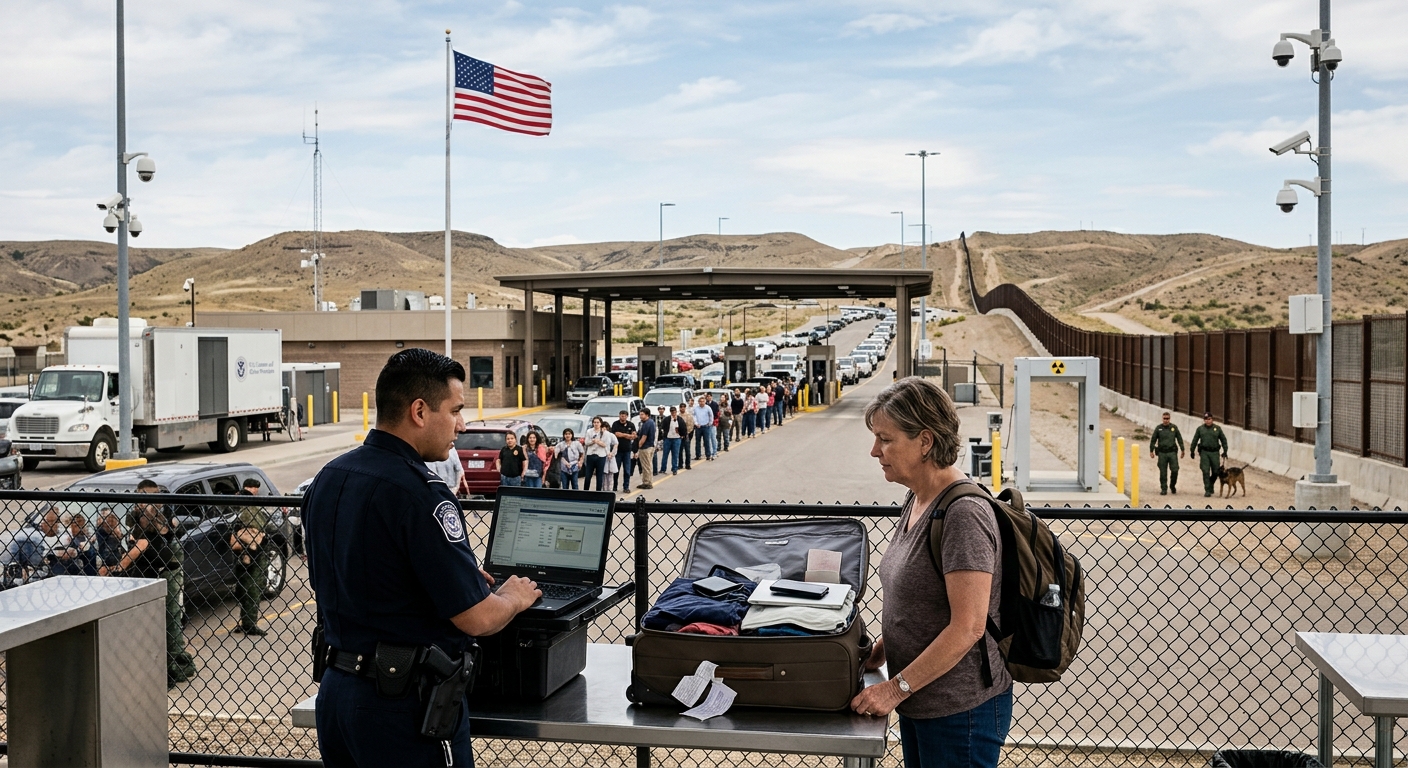
The boundary lines of any sovereign nation serve as critical junctures for both commerce and national defense. However, these geographical checkpoints often transform into ideological battlegrounds where the mandate to ensure security collides directly with fundamental constitutional liberties. Whenever international geopolitical tensions escalate—be it through military conflicts, diplomatic standoffs, or targeted strikes abroad—the ripple effects are almost immediately felt at domestic ports of entry. Travelers, particularly those bearing ethnic, national, or religious ties to regions embroiled in conflict, frequently find themselves subjected to heightened scrutiny. This phenomenon raises profound questions about the durability of constitutional protections in specialized legal zones and the extent to which foreign policy shifts can justify the erosion of domestic civil rights.
The concept of national security is paramount, yet history demonstrates that the invocation of security is routinely used as a pretext for systemic profiling. When federal agencies rely on broad demographic characteristics rather than individualized suspicion, they undermine the very democratic principles they are tasked with protecting. Analyzing the delicate balance between robust border defense and the preservation of civil liberties requires a deep understanding of legal frameworks, historical precedents, and the bureaucratic mechanisms that drive law enforcement behavior at the border.
Historical Precedents: National Security vs. Minority Rights
To understand contemporary profiling at ports of entry, one must first contextualize it within the broader history of national security overreach in the United States. Throughout the 20th and 21st centuries, periods of international crisis have consistently correlated with the curtailment of rights for specific minority populations. The internment of Japanese-Americans during World War II stands as one of the most egregious examples of domestic civil rights being entirely subordinated to unsubstantiated national security fears. In more recent history, the aftermath of the September 11, 2001, terrorist attacks ushered in an era of intensive surveillance and profiling that disproportionately targeted Muslim, Arab, and South Asian communities.
These historical episodes highlight a recurring pattern: when the government perceives an external threat, internal law enforcement apparatuses often default to collective suspicion. Instead of relying on intelligence-driven, individualized assessments, agencies sometimes cast wide nets based on national origin, religion, or ethnicity. Recognizing this pattern is essential for evaluating current border practices. It underscores the necessity of maintaining vigilant oversight over law enforcement agencies, ensuring that contemporary border protocols do not replicate the civil rights violations of the past under new geopolitical guises.
The Border Search Exception: Understanding the Legal Landscape
The U.S. Constitution, particularly the Fourth Amendment, protects individuals from unreasonable searches and seizures. However, the judicial system has carved out a significant caveat known as the “border search exception.” Courts have historically granted the executive branch broader latitude at international borders, arguing that the sovereign right to protect the nation’s territorial integrity supersedes certain individual privacy expectations. Under this doctrine, federal agents can conduct routine searches of luggage, vehicles, and persons without a warrant or individualized suspicion.
Despite this broad authority, constitutional rights do not entirely evaporate at the border. The First Amendment protects travelers against questioning that infringes upon their freedom of speech, association, and religious beliefs. Furthermore, the Fifth Amendment provides the right to remain silent and protects against self-incrimination. The tension arises when agents utilize their search authority to conduct invasive, non-routine interrogations. When individuals are detained for hours and subjected to questions about their political affiliations, religious practices, or opinions on foreign policy, it crosses the line from a routine customs inspection into a constitutionally dubious intelligence-gathering operation.
| Constitutional Right | Interior U.S. Application | Border / Port of Entry Application |
|---|---|---|
| Fourth Amendment (Searches) | Requires a warrant based on probable cause for significant searches. | “Border Search Exception” allows routine searches without a warrant or suspicion. |
| First Amendment (Expression/Religion) | Strong protection against government retaliation for speech or religious practice. | Fully applies, though agents frequently attempt to ask political/religious questions. |
| Fifth Amendment (Self-Incrimination) | Absolute right to remain silent to avoid self-incrimination. | Applies, but refusal to answer routine immigration questions can delay entry. |
A Critical Case Study: Geopolitical Tensions and Profiling Overreach
A stark illustration of how international events trigger domestic civil rights violations occurred in early 2020. Following a targeted U.S. military strike in the Middle East that resulted in the death of a high-ranking Iranian official, tensions between the United States and Iran reached a boiling point. Almost immediately, reports emerged from U.S. ports of entry—most notably along the northern border in Washington State—detailing the prolonged detention and intensive interrogation of individuals of Iranian descent. Crucially, this group included U.S. citizens and lawful permanent residents who were returning home from everyday activities, such as concerts or family visits in Canada.
Travelers reported being ushered into secondary screening areas, where they were detained for several hours in overcrowded conditions. The nature of the interrogations was particularly alarming. Rather than focusing on standard customs declarations or verifying identities, border agents asked invasive questions regarding the travelers’ religious beliefs, military service history, political views, and extended family networks. Because military service is mandatory for men in many nations, including Iran, such questions were inherently designed to cast suspicion on individuals based solely on their country of birth, irrespective of their current citizenship or lack of any criminal background. This incident crystallized the dangers of the border search exception being weaponized to execute a mandate of national origin profiling.
The Anatomy of Secondary Screening: Psychological and Legal Impacts
Secondary screening at a port of entry is a highly coercive environment. When individuals are removed from the primary inspection line, they are often separated from their travel companions, denied access to their mobile devices, and placed in holding areas with minimal amenities. For U.S. citizens and lawful permanent residents, the experience is not only legally questionable but also psychologically deeply unsettling.
The mechanics of these detentions often include:
- Prolonged Isolation: Travelers can be held for hours without clear communication regarding the cause of their detention.
- Digital Intrusions: Agents frequently demand passwords to unlock smartphones and laptops, copying sensitive personal data, communications, and photographs.
- Ideological Interrogations: Questioning often shifts from travel itineraries to aggressive inquiries about political affiliations and religious practices.
- Coercion: Detainees often feel compelled to answer constitutionally protected questions out of fear that refusal will result in indefinite detention or the confiscation of their property.
The psychological toll of this process is profound. It sends a clear message to marginalized communities that their citizenship is conditional and that they remain perpetual suspects in the eyes of the state. This alienates communities and erodes trust in law enforcement institutions.
Institutional Accountability: Memos, Denials, and Transparency
One of the most persistent hurdles in addressing border profiling is the lack of institutional transparency. Following the early 2020 detentions of Iranian-Americans, federal border authorities initially issued categorical denials, stating unequivocally that there was no national directive to target individuals based on their country of origin. However, the subsequent leak of internal memos and eventual investigations by federal oversight bodies painted a vastly different picture.
Subsequent reports from the Department of Homeland Security’s Office of Inspector General (OIG) revealed that local field offices had indeed issued directives to systematically target travelers with specific national affiliations for secondary inspection. This glaring disconnect between official public statements and internal operational directives highlights a severe accountability deficit. When law enforcement agencies operate in an environment where internal guidelines contradict public policy and constitutional standards, the mechanisms for oversight must be drastically strengthened. Transparency cannot rely solely on whistleblowers or leaked documents; it requires structural reforms that mandate real-time reporting and independent audits of secondary screening protocols.
Legislative and Judicial Avenues for Reform
Combating systemic profiling at the border requires a multi-faceted approach involving both legislative action and judicial intervention. On the legislative front, Congress possesses the authority to narrow the scope of the border search exception. Lawmakers could pass legislation requiring agents to demonstrate reasonable suspicion before conducting extensive interrogations or demanding access to electronic devices. Furthermore, strict statutory prohibitions against profiling based on race, religion, or national origin must be codified with explicit penalties for agencies that violate them.
Judicially, civil rights organizations play a crucial role in holding federal agencies accountable. By filing lawsuits on behalf of detained citizens, these organizations force the government to defend its practices in open court. Litigation not only provides a remedy for the individuals whose rights were violated but also establishes legal precedents that constrain future executive overreach. Ultimately, safeguarding civil liberties at the border is an ongoing struggle that demands constant vigilance from lawmakers, the judiciary, and the public.
Conclusion
The defense of a nation’s borders is a legitimate and necessary governmental function, but it must not become a black hole for civil liberties. The incidents of profiling tied to geopolitical conflicts demonstrate how quickly constitutional rights can erode under the guise of national security. U.S. citizens, permanent residents, and all travelers are entitled to baseline protections against discrimination and invasive ideological interrogations. Ensuring that border enforcement agencies operate with transparency, accountability, and respect for the Constitution is the only way to maintain true security without sacrificing the democratic principles the nation purports to uphold.
Frequently Asked Questions
Can border agents search my phone without a warrant?
Under current border search exceptions, federal agents claim the authority to conduct basic, manual searches of electronic devices without a warrant or individualized suspicion. However, advanced forensic searches (downloading data) generally require at least reasonable suspicion. Civil liberties groups heavily contest these practices, and the law is continuously evolving through court challenges.
Do I have to answer questions about my political or religious beliefs at the border?
You have First Amendment rights that protect your freedom of speech, religion, and association. You are not legally required to answer questions about your political opinions or religious practices. However, refusing to answer questions can result in prolonged delays, additional screening, or the temporary confiscation of your belongings.
Can a U.S. citizen be denied entry into the United States?
No. U.S. citizens cannot be denied entry into their own country. While border agents can delay citizens through secondary screening and interrogations to verify identity, a citizen must ultimately be allowed to enter the United States.
What should I do if I believe I was profiled at the border?
If you believe your civil rights were violated, you should document everything: agent badge numbers, the duration of the stop, and the specific questions asked. You can file a formal complaint with the Department of Homeland Security’s Office for Civil Rights and Civil Liberties (CRCL) and seek assistance from legal advocacy organizations specializing in constitutional rights.
References
- CBP Targeted Travelers for Secondary Inspections at the Blaine Port of Entry based on National Origin (OIG-22-09) — Department of Homeland Security Office of Inspector General. 2021-10-27. https://www.oig.dhs.gov/sites/default/files/assets/2021-11/OIG-22-09-Oct21.pdf
- CBP Policy on Nondiscrimination in Law Enforcement Activities and all other Administered Programs — U.S. Customs and Border Protection. 2023-05-18. https://www.cbp.gov/document/policies-and-manuals/cbp-policy-nondiscrimination-law-enforcement-activities
- U.S. border agency says it did not direct officers to target Iranian Americans — Reuters. 2020-01-06. https://www.reuters.com/article/us-usa-immigration-iran/u-s-border-agency-says-it-did-not-direct-officers-to-target-iranian-americans-idUSKBN1Z50Q7/
- Border Searches of Electronic Devices — Brennan Center for Justice. 2023-10-18. https://www.brennancenter.org/our-work/research-reports/border-searches-electronic-devices
Similar Articles








Read full bio of Sneha Tete


