
Civil Lawsuits for Domestic Violence Survivors
Understand how survivors of domestic violence can use civil lawsuits to seek compensation, protection, and accountability alongside criminal remedies.
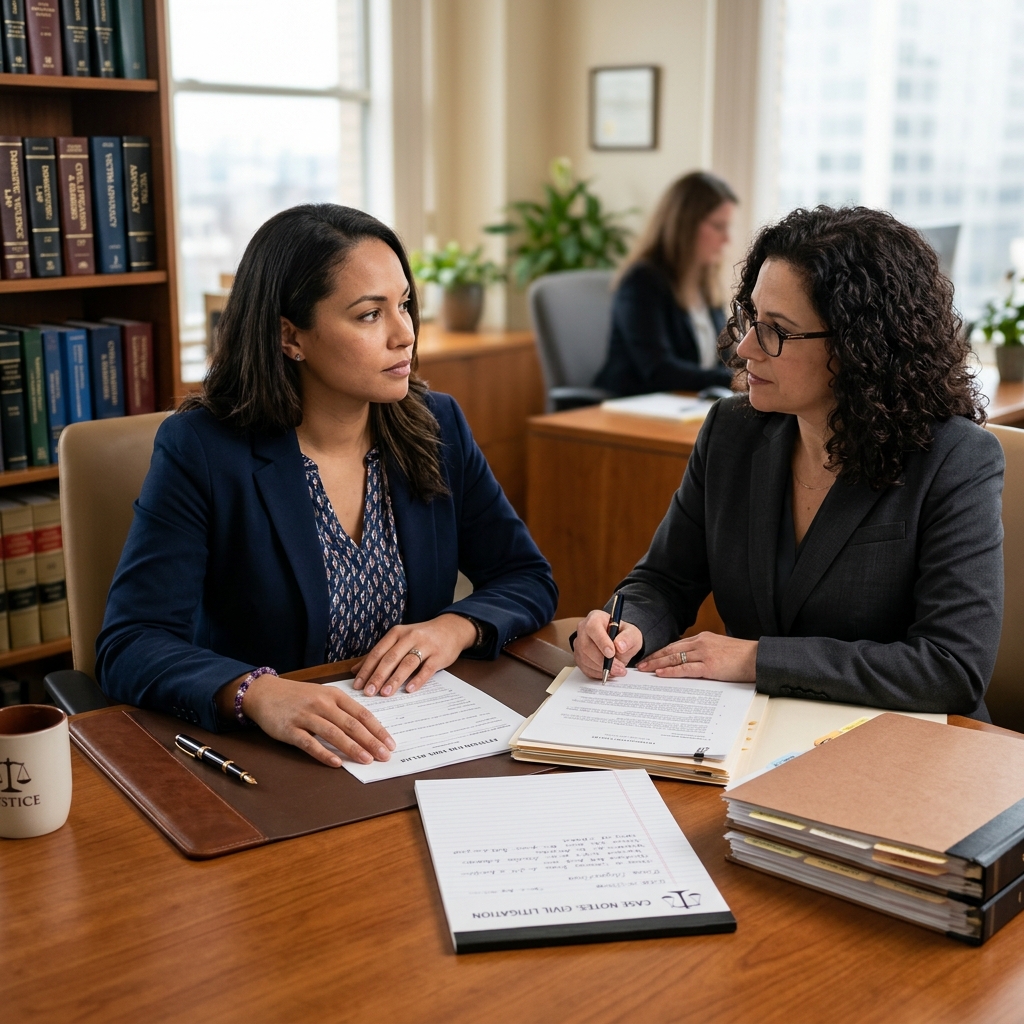
Domestic violence is not only a crime; it can also give rise to a civil lawsuit that allows survivors to seek money damages and other court-ordered relief from the person who harmed them. While criminal prosecutors focus on punishment and public safety, civil courts focus on compensating the victim and enforcing private rights. Understanding how these two systems work together can help survivors make informed decisions about safety, justice, and financial recovery.
Criminal vs. Civil Responses to Domestic Violence
Domestic violence cases often involve both criminal charges and civil claims, sometimes running at the same time in different courts. Each path serves a different purpose, and survivors may use one, the other, or both.
| Criminal Case | Civil Lawsuit |
|---|---|
| Filed by the government (prosecutor) against the accused. | Filed by the survivor (plaintiff) against the abuser and sometimes third parties. |
| Focuses on guilt, punishment, and community safety. | Focuses on compensation, accountability to the victim, and practical remedies. |
| Result may include jail, probation, fines, or criminal protective orders. | Result may include money damages, injunctions, and orders to stop harmful conduct. |
| Evidence standard: beyond a reasonable doubt. | Evidence standard: preponderance of the evidence (more likely than not). |
| Controlled largely by prosecutors and judges. | Controlled by the parties and their lawyers, including settlement options. |
Using both systems together can increase safety and help survivors rebuild financially. A criminal case may remove a violent offender from the home or community, while a civil lawsuit can help pay medical bills, replace damaged property, and compensate for emotional harm.
Domestic Violence as a Civil Claim
In many states, domestic violence is recognized explicitly as a civil tort – a wrongful act that gives rise to a right to sue for damages. For example, California law allows victims to file civil claims for domestic abuse if they meet specific criteria. Other states allow claims under general personal injury and intentional tort theories, such as assault, battery, or intentional infliction of emotional distress.
Although details vary by jurisdiction, common elements of a civil domestic violence claim include:
- Intentional abuse: The abuser deliberately engaged in violent, threatening, or coercive conduct.
- Injury or harm: The survivor suffered physical injury, emotional trauma, economic loss, or other damages as a result of the abuse.
- Causation: The abuse was the legal cause of the harm; the injuries would not have occurred but for the abusive conduct.
- Qualifying relationship: Many domestic violence statutes apply when the parties are spouses, former spouses, cohabitants, former cohabitants, parents of a child, or individuals in a dating or sexual relationship.
- Timely filing: The lawsuit is filed before the statute of limitations—the legal deadline for bringing a claim—expires.
Because these rules are state-specific, survivors are strongly encouraged to consult a qualified attorney or legal aid provider to understand the requirements where they live.
Protection Orders and Their Role in Civil Cases
Civil protection orders (often called restraining orders or protective orders) are a crucial tool for immediate safety and can interact closely with civil damage claims. A protective order is a court order telling the abuser to stop certain behaviors, such as contacting the survivor, coming near the home or workplace, or possessing firearms.
Although they are protective rather than compensatory, these orders are typically sought in civil or family courts and can support a later damages claim by documenting the abuse. For example, a Domestic Violence Protective Order (DVPO) may require the court to find that specific acts of domestic violence occurred, such as:
- Causing or attempting to cause physical injury.
- Placing the survivor in fear of imminent serious bodily harm.
- Repeated harassment causing substantial emotional distress.
- Sexual assault.
Records of hearings, affidavits, and orders can later serve as evidence in a civil lawsuit for damages. Survivors may seek both a protection order and a civil claim, sometimes coordinated by the same lawyer, especially in family law contexts.
Types of Civil Remedies Available to Survivors
A civil domestic violence lawsuit can provide several forms of relief beyond what a criminal court typically offers.
Monetary Damages
- Medical expenses: Past and future costs for emergency care, surgeries, medication, physical therapy, and ongoing treatment related to the abuse.
- Mental health treatment: Therapy, counseling, and other services needed to address trauma, anxiety, depression, or PTSD linked to the violence.
- Lost income: Wages lost from missing work, reduced hours, or job loss due to injuries or fear.
- Property damage: Repair or replacement of destroyed or damaged personal property, such as phones, vehicles, furniture, or clothing.
- Pain and suffering: Compensation for physical pain, emotional distress, humiliation, and loss of enjoyment of life.
- Punitive damages: In some jurisdictions, additional damages intended to punish particularly egregious conduct and deter future abuse.
Injunctive and Non-Monetary Relief
- Orders preventing further contact or harassment, which may complement or strengthen an existing protective order.
- Orders directing specific behavior, such as requiring the abuser to stay away from certain locations, surrender weapons, or comply with other safety conditions.
- Declaratory relief confirming that certain acts occurred and were unlawful, which can be important in related family law or immigration matters.
In some states, survivors can pursue smaller monetary claims in small claims court if their damages fall below a local threshold, often in the range of several thousand dollars. This can be a more accessible option for limited financial disputes, though complex cases involving serious injuries usually require a full civil action with legal representation.
Who Can Be Sued: Abusers and Third Parties
The most straightforward defendant in a domestic violence lawsuit is the abuser themselves. Survivors may sue spouses, former spouses, cohabitants, former cohabitants, parents of shared children, or dating partners, depending on state law definitions.
However, some situations also involve potential third-party defendants, such as landlords, employers, or others whose negligence contributed to the harm. For instance, if a landlord ignored repeated reports of dangerous behavior in violation of local laws or a duty to maintain safe premises, a survivor may have additional claims under negligence theories. These cases are complex and require careful legal analysis to distinguish between intentional acts by the abuser and negligent acts by third parties.
Key Steps in Filing a Civil Domestic Violence Lawsuit
Although procedures differ by state, the civil lawsuit process generally follows several core steps.
1. Prioritize Safety and Immediate Protection
- Call emergency services (such as 911) if you are in immediate danger.[10]
- Seek medical care promptly for injuries, both for your health and to create documentation.
- Contact a domestic violence hotline or local advocacy organization for confidential support and safety planning.[10]
- Consider filing for a civil protection order to obtain urgent court-based safety measures.
2. Consult Legal Counsel or Legal Aid
- Speak with a family law or personal injury attorney who has experience with domestic violence cases.
- If cost is a barrier, explore legal aid organizations, pro bono programs, or law school clinics offering free or reduced-fee assistance.[10]
- Discuss how a civil claim may interact with any ongoing criminal case or protective order.
3. Gather Evidence and Documentation
Evidence is central to proving abuse, causation, and damages in civil court.
- Medical records related to injuries, including doctor visits, hospital stays, and prescriptions.
- Photographs of injuries, property damage, and relevant locations.
- Copies of protection orders, police reports, and prior court filings.
- Text messages, emails, social media posts, voicemail recordings, and other communications showing threats, harassment, or admissions.
- Witness statements from friends, family, neighbors, or professionals who observed the abuse or its effects.
- Financial records showing lost wages, increased expenses, or economic impacts.
4. Filing the Complaint
The lawsuit formally begins when the survivor (the plaintiff) files a written complaint with the appropriate court.
- The complaint identifies the parties, describes the abusive acts, explains how those acts caused harm, and requests specific relief.
- Many survivors also submit a sworn statement or affidavit detailing what happened and why they need the court’s help.
- Court clerks or local domestic violence agencies can sometimes help with basic forms, though legal advice must come from an attorney.
5. Service of Process
After filing, the defendant must be formally notified through service of process, often carried out by the sheriff or another authorized official.
- The defendant receives copies of the complaint and any initial court orders.
- Proper service is crucial; without it, the court may not proceed.
6. Hearings, Discovery, and Possible Settlement
- The court may hold preliminary hearings, especially if emergency relief is requested.
- During discovery, both sides exchange evidence and take depositions (sworn testimony) to prepare for trial.
- Many cases settle before trial, with the parties negotiating a written agreement for compensation or other relief.
7. Trial and Judgment
If the case does not settle, it proceeds to trial. The judge or jury decides whether the abuser is legally responsible and, if so, what remedy is appropriate.
- If the plaintiff proves the case by a preponderance of the evidence, the court enters a judgment for damages or other relief.
- The survivor may then pursue collection through legally permitted methods, such as wage garnishment or liens, subject to state law.
Coordinating Civil Lawsuits with Protective Orders and Criminal Cases
Domestic violence survivors often navigate several overlapping legal processes. Strategic coordination can reduce stress and improve outcomes.
- Timing: Lawyers may recommend when to file a civil lawsuit in relation to a criminal case to protect the survivor’s rights without complicating prosecutions.
- Evidence sharing: Records from criminal proceedings, including police reports and witness testimony, can support civil claims.
- Consistent narratives: Survivors and their lawyers should ensure that statements in different courts are accurate and consistent to maintain credibility.
- Safety planning: Protection orders can remain a central tool for safety while the longer civil lawsuit unfolds.
Common Challenges and Practical Considerations
Filing a domestic violence lawsuit is a serious step that involves emotional, practical, and legal considerations.
- Emotional toll: Reliving abuse in depositions or at trial can be painful. Survivors may benefit from counseling and support groups during the process.[10]
- Financial realities: Collecting a judgment can be difficult if the abuser has limited assets or income. Lawyers can help evaluate whether a lawsuit is likely to result in actual recovery.
- Safety concerns: Litigation may provoke retaliation. Safety planning with advocates and careful court strategies are essential.[10]
- Legal complexity: Issues such as child custody, immigration status, and housing may intersect with the civil lawsuit and must be carefully managed.
Frequently Asked Questions (FAQs)
Can I sue my spouse or partner for domestic violence?
In many states, you can sue your spouse, former spouse, cohabitant, former cohabitant, dating partner, or the other parent of your child for injuries caused by domestic abuse. Laws that once restricted lawsuits between spouses have largely been eliminated, and domestic violence is often treated as both a criminal offense and a civil tort.
Do I need a criminal conviction before filing a civil lawsuit?
No. A civil lawsuit does not require a prior criminal conviction. While a conviction can strengthen your case, civil courts apply a different standard of proof, and you may pursue damages even if criminal charges were never filed, were dismissed, or resulted in acquittal.
What if my damages are relatively small?
If your financial losses are limited—such as modest medical bills or minor property damage—you may be able to file in small claims court, subject to local limits that can range in the thousands of dollars. Small claims courts are designed to be more accessible, though they are not suitable for complex cases involving serious injuries.
How long do I have to file a domestic violence lawsuit?
The deadline, known as the statute of limitations, depends on your state and the type of claim (such as assault, battery, or a specific domestic violence statute). Because missing this deadline can permanently bar your claim, speaking with an attorney as soon as possible is important.
Where can I get help and information?
Survivors can contact the National Domestic Violence Hotline for confidential support and referrals to local legal and advocacy resources.[10] State court websites and legal aid organizations often provide plain-language guides about protection orders and civil lawsuits for domestic violence.
Conclusion: Using Civil Law to Support Safety and Recovery
Civil domestic violence lawsuits give survivors a powerful set of tools to seek justice beyond the criminal courtroom. By combining protection orders, criminal accountability, and civil compensation, survivors can strengthen their safety, assert their rights, and secure resources needed to rebuild their lives. With informed legal advice, careful evidence gathering, and strong support networks, the civil justice system can become one more pathway toward healing and long-term stability.
References
- How to Get a Protection Order — North Carolina Judicial Branch. 2023-05-01. https://www.nccourts.gov/help-topics/domestic-violence/how-to-get-a-protection-order
- Unit 5: Overview of the Legal System in Domestic Violence Cases — Simmons University DV Training. 2020-06-15. https://dvtraining.simmons.edu/units/unit-5-overview-of-the-legal-system-in-domestic-violence-cases
- Suing a Spouse for Injuries from a Domestic Abuse Situation in California — Bamieh & De Smeth, PLC. 2022-08-10. https://www.bamiehdesmeth.com/blog/can-you-sue-your-spouse-injuries-domestic-abuse-situation-california/
- Lawsuits — North Carolina Judicial Branch. 2023-03-20. https://www.nccourts.gov/help-topics/lawsuits-and-small-claims/lawsuits
- Suing an Abuser in Civil Court — Maryland People’s Law Library. 2021-11-05. https://www.peoples-law.org/suing-abuser-civil-court
- North Carolina: Suing an Abuser for Money — WomensLaw.org. 2022-04-12. https://www.womenslaw.org/laws/nc/suing-abuser-money
- Domestic Violence Support — National Domestic Violence Hotline. 2024-01-01. https://www.thehotline.org/
Similar Articles








Read full bio of medha deb


