
Citizen’s Arrest: What You Should Know Before Stepping In
Thinking about stopping a shoplifter or detaining a suspect yourself? Learn when citizen’s arrests are legal, safe, and likely to backfire.
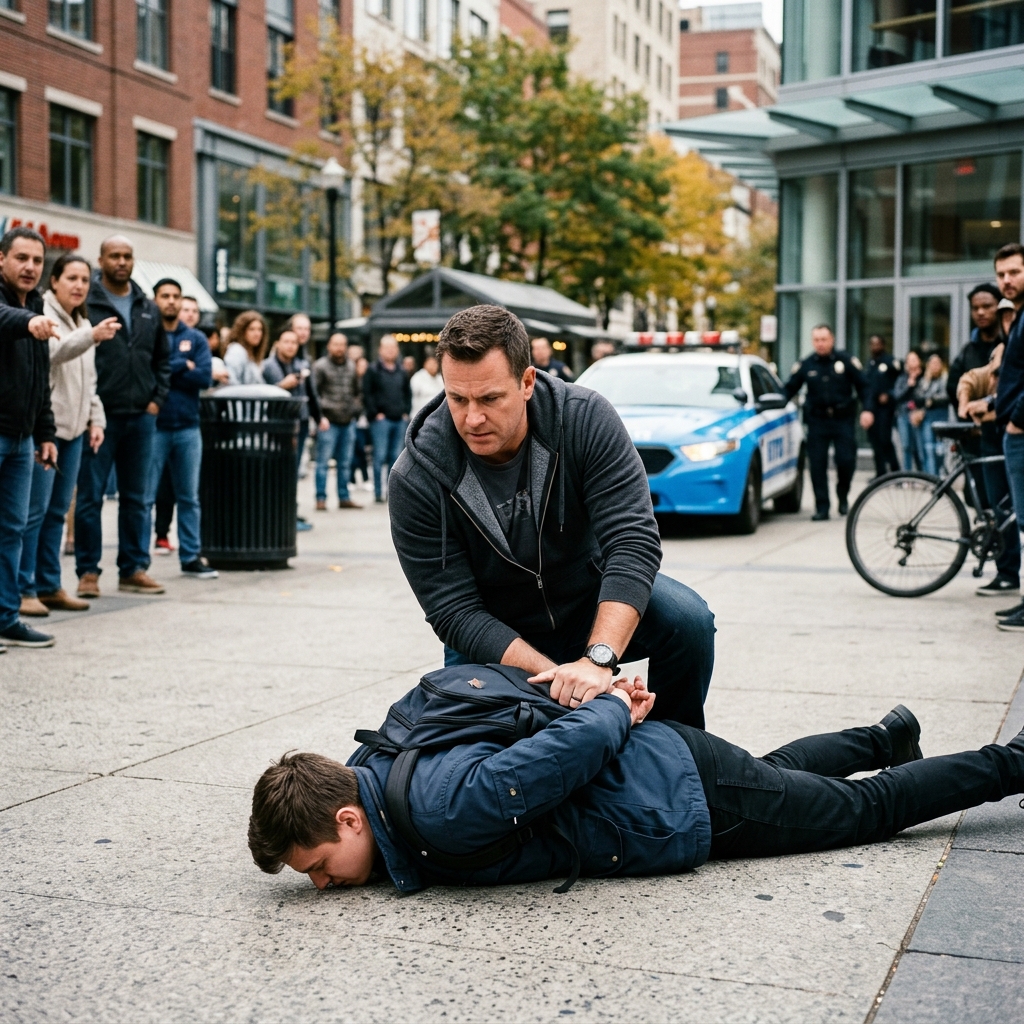
Viral videos of bystanders tackling shoplifters or chasing suspected thieves raise a serious legal question: when can an ordinary person legally detain someone and call it a citizen’s arrest? While many U.S. states recognize some form of citizen’s arrest, the rules are narrow, easy to misunderstand, and potentially dangerous if you get them wrong.
This article offers an original, practical overview of citizen’s arrest laws, focusing on typical retail scenarios like shoplifting, while explaining when you may act, what force you can use, and the legal risks if your judgment is off.
Citizen’s Arrest in Plain Terms
A citizen’s arrest is an arrest made by a private person who is not a law enforcement officer. In common law and many U.S. jurisdictions, some statutes allow a private person to detain someone who appears to be committing a crime, but only under specific conditions.
- Who can make one? Laws usually refer to a “person” or “private person” rather than “citizen,” meaning immigration status is typically irrelevant.
- What is it? Temporarily detaining someone, without a warrant, based on a crime you believe they committed, while waiting for police.
- What it is not: A license for vigilantism, punishment, or roughing someone up out of anger.
Despite the familiar phrase, citizen’s arrest is an exception to the usual rule that arrests are performed by trained officers. Courts and legislatures treat it cautiously because mistakes can lead to serious harm and legal disputes.
Core Legal Elements: Presence, Crime Type, and Probable Cause
Citizen’s arrest rules vary by state, but most follow three core ideas drawn from common law and statute.
| Legal Element | Typical Requirement | Practical Impact |
|---|---|---|
| Presence of the offense | Minor offenses must happen in your presence or view. | You generally cannot arrest someone for shoplifting you did not personally see. |
| Crime category | Felonies vs. misdemeanors; sometimes breaches of the peace. | More leeway for serious crimes; tighter rules for minor ones like simple shoplifting. |
| Probable cause | Reasonable grounds to believe a crime actually occurred and this person committed it. | Mere suspicion or a hunch is not enough; you need concrete, first-hand facts. |
Presence: Did You Personally See the Crime?
For misdemeanors and minor offenses, most states require that the offense occur in your presence to justify a citizen’s arrest. This means:
- You directly see the act (for example, someone conceals unpaid merchandise and heads for the exit).
- Or you perceive it through your senses in real time (hearing a fight, watching property being damaged).
Arresting someone based only on second-hand information, store rumors, or what others say usually falls outside the legal scope and increases your risk of wrongful detention.
Crime Type: Felony, Misdemeanor, or Breach of the Peace
States often differentiate between felonies (serious crimes) and misdemeanors (less serious offenses) when defining citizen’s arrest powers.
- Felonies: Many states allow a private person to arrest for a felony based on probable cause, even if they did not see it happen. Examples include robbery or violent assaults.
- Misdemeanors: Citizen’s arrest is usually allowed only if the misdemeanor is committed in your presence and sometimes only if it is a “breach of the peace” (for example, fighting or disorderly conduct).
Simple shoplifting is often a misdemeanor, not a felony, which narrows the legal room for a private person to arrest, especially if the value is low and there is no violence.
Probable Cause: You Need Solid Reasons, Not Assumptions
Probable cause means you know facts that would cause a reasonable person to believe a crime occurred and that this specific individual committed it. This standard is lower than proof beyond a reasonable doubt but higher than mere suspicion.
Examples of probable cause may include:
- Watching someone conceal store items and pass all points of sale without paying.
- Seeing a person forcibly take property from another and flee.
- Observing someone smashing windows and removing equipment from a closed store.
If the person has not actually committed a crime, or your belief is unreasonable, you could face civil liability for false imprisonment or even criminal charges.
Force and Safety: How Much Is Too Much?
Even when a citizen’s arrest is legally allowed, there are strict limits on the force you may use. Many statutes and court decisions emphasize that only reasonable force is permitted to detain a suspect or prevent escape.
Reasonable Physical Force
Reasonable force depends on context, including the severity of the crime, threat level, and the person’s behavior. For example, Connecticut law permits private individuals to use reasonable physical force when they reasonably believe it is necessary to make an arrest of someone who has in fact committed an offense.
- Grabbing a person’s arm to stop them from leaving may be reasonable in a shoplifting incident where they are not resisting.
- Tackling someone at full speed onto concrete might be considered excessive if there is no serious threat to physical safety.
- Using weapons or chokeholds is very likely to be viewed as unreasonable except in extreme cases involving imminent deadly threat.
Laws often emphasize that force must be proportional to the risk. You cannot escalate simply because you are angry or want to punish the suspect. Your role is to hold the person for law enforcement, not to deliver justice yourself.
Deadly Force: Reserved for Extreme Situations
Deadly force is almost never justified in a citizen’s arrest for property crimes like shoplifting. Connecticut, for instance, allows a private person to use deadly force only when they reasonably believe the other person is using or about to use deadly physical force, or inflicting or about to inflict great bodily harm.
In practice, this means:
- No deadly force to protect merchandise or prevent escape in non-violent theft cases.
- Deadly force may be defensible only when a life-threatening assault is occurring or about to occur.
Misjudging this threshold can result in grave criminal charges, including assault or homicide, and civil suits for wrongful death or serious injury.
State-by-State Differences: Why Local Law Matters
Citizen’s arrest rules are largely defined by state law, which means what is legal in one state may be impermissible in another. Some states closely track common law doctrine, while others codify narrower rights.
- Many states permit arrest by a private person for felonies, misdemeanors, or breaches of the peace committed in their presence.
- Several jurisdictions impose added conditions, such as requiring that the suspect actually committed the offense, not merely that it reasonably appears that they did.
- Some states limit citizen’s arrest to specific categories (for instance, breaches of the peace or certain violent crimes).
Because these differences can be significant, anyone considering a citizen’s arrest should understand the specific rules in their state rather than relying on general assumptions or stories from other jurisdictions.
Legal Risks: When a Citizen’s Arrest Backfires
Citizen’s arrest laws are designed to be narrow partly because the risks of error are high. If you detain the wrong person, use excessive force, or misinterpret the law, you may face serious consequences.
Civil Liability: False Imprisonment and Personal Injury
If the person you detain didn’t commit a crime, or you hold them longer than necessary, they may sue for false imprisonment or related torts. Courts look at whether:
- You had legal authority to detain them under citizen’s arrest statutes.
- Your belief in their guilt was reasonable and supported by concrete facts.
- The force used and duration of detention were proportionate and justified.
Injury caused by excessive force, such as broken bones or head trauma after an unnecessary tackle, can lead to substantial damages.
Criminal Exposure
In extreme cases, a misguided citizen’s arrest may result in criminal charges against the arresting person, such as assault, battery, or unlawful restraint. If deadly force is involved, charges may escalate to manslaughter or homicide.
Legal commentators have noted that broad citizen’s arrest doctrines historically risked abuse and vigilantism, including racially motivated targeting, which is one reason many states have narrowed or reevaluated these laws.
Practical Guidance: Should You Attempt a Citizen’s Arrest?
Legal permission to make a citizen’s arrest does not mean it is always wise to do so. Courts and scholars emphasize that citizen’s arrest is a limited tool, and misusing it can be dangerous.
Key Questions to Ask Yourself
- Is anyone in immediate danger? If there is no threat of violence, the safest option is usually to observe, document, and call police.
- Did I clearly see the crime happen? If your information is second-hand or unclear, detaining someone is risky.
- Is the offense serious enough to justify intervention? Many statutes focus more on serious crimes; tackling someone over minor property loss may not be worth the risk.
- Can I safely wait for law enforcement? If officers can arrive quickly, they are better equipped legally and physically to handle the situation.
Safer Alternatives to Citizen’s Arrest
Instead of personally detaining a suspect, consider:
- Calling 911 or store security and providing a detailed description of the person and their actions.
- Preserving evidence, such as noting the time, location, and any distinguishing features, or securing video footage.
- Avoiding physical confrontation when there is no immediate threat to life or serious bodily harm.
Legal analysis consistently stresses that, especially for property-only crimes, the public interest in safety often outweighs any benefit of a dramatic citizen’s arrest.
Citizen’s Arrest and Rights of the Person Detained
Someone subject to a citizen’s arrest retains fundamental rights, many of which are reinforced once police arrive. Official guidance from organizations like the Illinois State Bar Association highlight rights such as the right to remain silent and to be informed of charges without unnecessary delay.
From a practical standpoint, a person being detained should:
- Ask clearly whether they are being detained or free to leave.
- Refrain from physical resistance, as this can escalate risk and potential charges.
- Await police arrival and, once in custody, assert constitutional rights such as the right to remain silent and to counsel.
If the citizen’s arrest was improper, the person detained may later challenge the legality of the detention and seek legal remedies.
Frequently Asked Questions
Can I make a citizen’s arrest if I only suspect shoplifting?
Suspicion alone is not enough. Most states require probable cause and, for minor offenses like typical shoplifting, that you actually observed the person commit the offense in your presence.
Is it legal to tackle a suspected shoplifter who is running away?
It depends on your state’s law and whether the force is reasonable in light of the crime and threat level. In many situations involving non-violent property theft, tackling may be deemed excessive, exposing you to civil or criminal liability.
What should I do instead of making a citizen’s arrest?
The safest course is usually to notify law enforcement, provide detailed information, and preserve evidence. This reduces your exposure to personal injury and legal consequences while still supporting accountability.
Do I have to be a U.S. citizen to make a citizen’s arrest?
Most laws use the term “person” or “private person,” not “citizen,” so immigration status is generally not determinative. Always check local law to be sure.
Can I be sued if I get a citizen’s arrest wrong?
Yes. If the person did not commit a crime, you misapplied the law, or you used unreasonable force, you may face civil suits for false imprisonment or personal injury, and potentially criminal charges.
References
- Citizen’s Arrest Doctrine: Enabling the Modern-Day Vigilante — LSU Journal of Social Justice & Policy. 2019-01-01. https://digitalcommons.law.lsu.edu/cgi/viewcontent.cgi?article=1029&context=jsjp
- Citizen’s Arrest — Legal Information Institute, Cornell Law School. 2024-01-01 (last updated approximate). https://www.law.cornell.edu/wex/citizen%27s_arrest
- Citizen’s Arrests — Alameda County District Attorney’s Office, Point of View. 2014-01-01. https://le.alcoda.org/publications/point_of_view/files/Citizen.pdf
- Citizen’s Arrest—Standards — Connecticut Office of Legislative Research Report 98-R-0959. 1998-10-09. https://www.cga.ct.gov/PS98/rpt/olr/htm/98-R-0959.htm
- Can anyone make a citizen’s arrest? The history and legalities of citizen’s arrest laws — University of South Carolina. 2024-02-22. https://sc.edu/uofsc/posts/2024/02/can-anyone-make-a-citizens-arrest.php
- Your Rights If Arrested — Illinois State Bar Association. 2022-01-01 (approximate). https://www.isba.org/public/guide/yourrightsifarrested
Similar Articles








Read full bio of Sneha Tete




